Irish in Minneapolis react to Trump's ICE regime: 'This is just a vile thing'
Minnesotans have had enough. Small acts of resistance against the might and power of the federal government being brought to bear on their city are all adding up to more than the sum of their parts. Picture: Stephen Maturen/Getty
Donald Trump once famously — or maybe infamously — declared that he could “stand in the middle of Fifth Avenue and shoot somebody and [he] wouldn’t lose any voters, OK?”
“It’s, like, incredible,” he added.
Exactly 10 years to the day since those remarks, last Friday, tens of thousands of people took to the streets of one of the biggest cities in the US to put forward their version and say: “No, you can’t just shoot somebody and not face consequences.”
We, of course, know that the president of the United States did not pull the trigger and shoot mother of three Renee Good three times in South Minneapolis this month.
That was Jonathan Ross, an agent of Trump’s dreaded and hated Immigration and Customs Enforcement (ICE), with footage showing him calling her a “stupid bitch” after fatally shooting her so recklessly and callously.
There was another shooting in the city at the weekend, the third involving federal agents this month and the second fatal one. The footage of agents killing Alex Pretti is profoundly disturbing.
It all comes after the Trump administration’s deployment of thousands of ICE agents, who have been harassing and terrifying the residents of the twin cities of Minneapolis and St Paul in the midwest state of Minnesota since early December.
It is the second large-scale upheaval in the lives of all ordinary people in this decade after the city became the epicentre of the Black Lives Matter movement following the killing of George Floyd in 2020. Or third — if you count covid.
Minnesotans have had enough. Small acts of resistance against the might and power of the federal government being brought to bear on their city are all adding up to more than the sum of their parts. But there’s only so much they can do when, in the words of state governor Tim Walz, “you ask for peace, we give it — and we get shot in the face on the streets”.
Meanwhile, Mr Trump says he supports protesters in Iran. Yet here his well-funded, heavily armed private police force — which outnumbers the regular police five to one — is inflicting chaos on this liberal city.
The people say they are acutely aware how important it is to stand up to this now. They want the world to know what is happening. They want it to be known what they’re doing about it.
People are being pulled from their beds by agents wielding assault rifles, children are being detained and sent away on flights to destinations hundreds of miles away, and individuals with black or brown skin are unwilling to leave their home in case they don’t come back. They believe this will be unleashed on another city, and another, if it is left continue unchecked.
There’s something rotten in the state of Minnesota. And Minneapolis is teetering on the brink.
‘Not just one isolated’ incident
Drogheda native Dermot Cowley moved to the US 40 years ago. For the last 27 years, he has run O’Donovan’s pub in downtown Minneapolis — one of the last Irish-owned Irish pubs here.
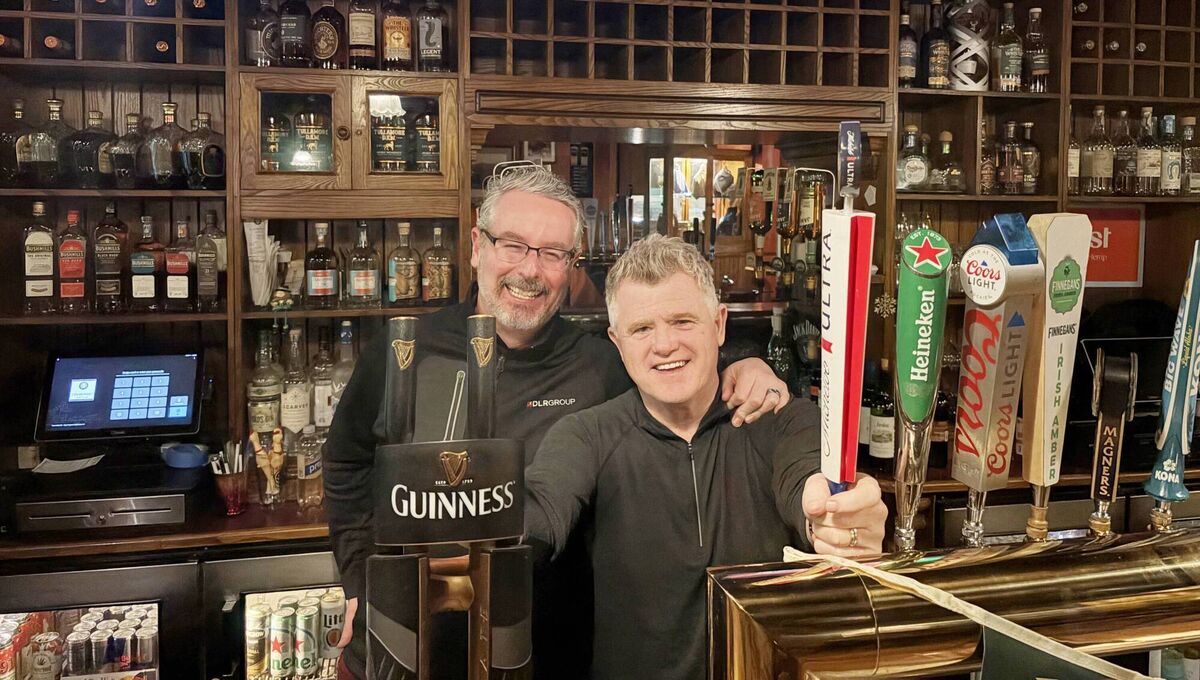
Before covid and the murder of George Floyd in 2020, the queue for his pub was out the door and downtown was buzzing. It’s right across the road from the stadiums that are home to the city’s baseball and basketball teams. He employs people from all sorts of backgrounds.
But it’s been one thing after another, and all of it adds up to keeping people away from the city. This latest action from ICE is just the latest and worst step. There’s barely any traffic on the roads and footfall was slow when the Irish Examiner visited O’Donovan’s late last week.
“It’s the energy in the city, it’s just been hindered so much by all of this,” says Mr Cowley.
“It’s not just one isolated thing, it’s a combination and we’re being showcased now on a national and world level like Minneapolis is a horrible place. Which it really isn’t.

“Probably half the restaurants in downtown are gone since covid. And the others that are open, like myself, we’re probably operating at 60% of what we used to.”
Nearing the age of 60, Mr Cowley has lived his entire adult life in the US. He says what’s happening now with ICE’s invasion of the city is unlike anything he has ever seen, ensuring any recovery in the downtown area is firmly on hold.
“I just became a grandad. She’s a little one-year-old, and I’m looking at her and thinking ‘what’s her future?’,” he says.
And my kids have coming to me going: ‘We don’t want to raise our daughter in this environment'
Although Minneapolis and St Paul historically did have strong numbers of Irish people coming over, and has a strong enough Irish-American population to sustain multiple Irish dance schools and a strong music and arts scene, the number of Irish-born immigrants living here is relatively small compared to other major US cities.
Donnelly visa
Born and raised in Tullamore, engineer Ruairí Barnwell recently moved to Minneapolis from Chicago and set up the Ireland Network Minnesota to link with other Irish-born people living in the twin cities and wider state.
“The Department of Foreign Affairs does a fantastic job connecting with the diaspora around the globe, and here in America,” he says.
“But I would say we too often lean into the ‘ah sure isn’t it great we have 32m Irish Americans’.
“There’s only about 130,000 off-the-boat Irish in America, which is way down from the ‘Donnelly visa’ days.
“In the state of Minnesota, there’s only about 500 and that’s conservative.”
The “Donnelly visa” was a special US immigration lottery programme in the late 1980s/early 1990s that gave tens of thousands of Irish people a pathway to legal residency, having been introduced by congressman Brian Donnelly.
Mr Barnwell adds: “There’s not many Irish illegals here, so what’s happening now isn’t having that direct an impact. But it’s that wider community part too.
“This is affecting the whole city what’s going on.”
‘Precaution worth taking’
Belfast-born musician Danny Diamond moved to Minneapolis in the winter of 2019, so his time here has taken in the mass demonstrations and chaos that followed the murder of George Floyd by a police officer.
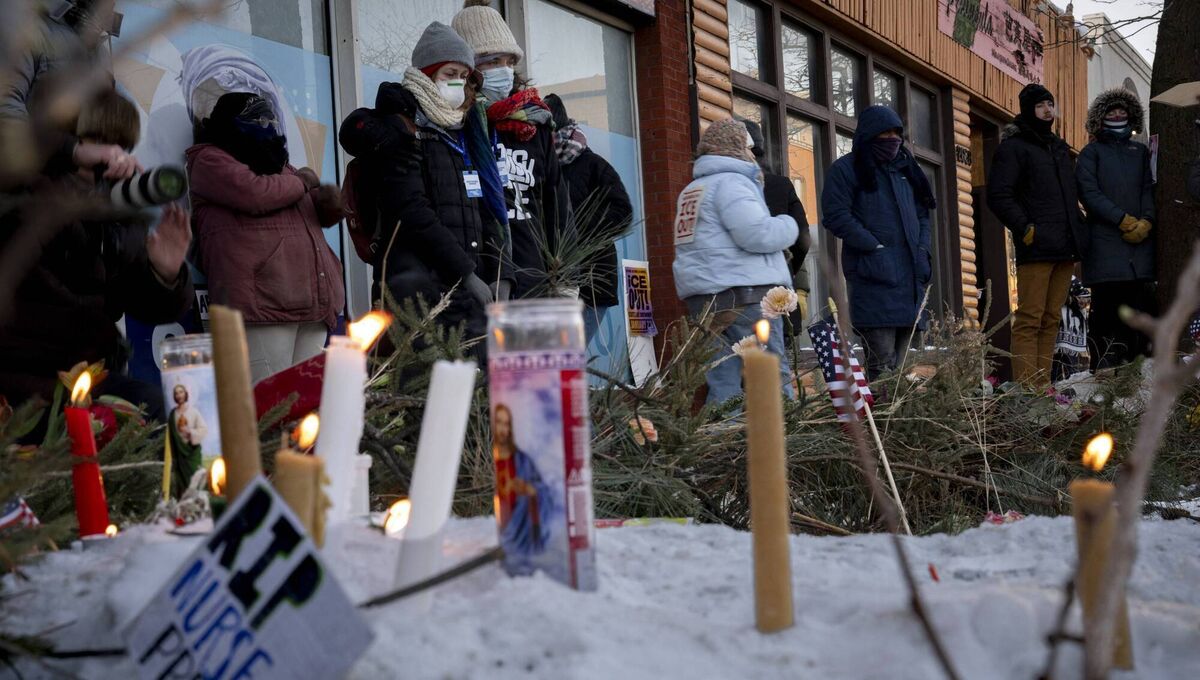
“I felt a bit stunned as it played out in front of me,” he says.
“But there was a huge energy coming off of people, the people were really rising up. It was destructive at times, but it was really powerful.
“And what’s happening now feels more oppressive. It feels like it’s coming from top down upon us, and it feels worse. But it also engenders a lot of oppositional energy, a lot of anger, and focused anger from the people en masse can do great things.”
Like so many others, Mr Diamond has taken to bringing his passport with him everywhere he goes. In case after case, it is clear that ICE is engaging in racial profiling, with people of colour much more likely to be stopped by ICE than white people.
This indiscriminate targeting is making people afraid to go to shops, work, or school. Even people with the legal right to be here — and even citizens — are being apprehended by ICE in terrifying situations before later being released because there’s no cause to keep them.
In this context, carrying your passport around is a “precaution worth taking”.

“You don’t fully realise until you check yourself and say: ‘Jesus, I’m doing that now,’” says Mr Diamond.
“My friends back home, they don’t do that. It’s markedly different.”
Despite these challenges, Mr Diamond is among the many residents of the twin cities who express pride at the action being taken against ICE.
Community activists are braving the freezing cold temperatures at all hours of the day to patrol their neighbourhood, warn others when ICE agents are in the area, and film agents to try to ensure they don’t breach people’s rights.
People are delivering food and other supplies to the homes of families who are afraid to leave the house.
Tens of thousands of people, meanwhile, take to the streets in downtown, in –25C temperatures, calling for ICE to get out of their city.
All the while they are ignoring the smears of the federal government labelling them domestic terrorists and paid agitators.
“I’m really proud that we live here, because I do feel that there must be something in this community that aggravates or threatens the regime,” says Mr Diamond .
“It’s almost like a symbol or beacon of resistance that they really want to hit here first and hit here hard. It’s horrible, but we must be doing something right to be in that position.
“If everyone helps, they can’t arrest the entire city, you know what I mean? Not yet, anyway. There’s great power in that.”
Little time for action
ICE can turn up on your street at any time. The shock-and-awe tactics of turning up at a house with heavily armed agents to arrest people can blindside people, leaving little time for action.
But communities are rallying around the communal places targeted by ICE: Schools, places of worship, even bus stops.
Aoife* began to notice attendance falling off a cliff in the aftermath of Renee Good’s murder.
“It got to a point where the school district said they had to find an alternative,” she says.
“Some of these families are not leaving their homes. When we found this out, our first concern was food— how do we get food to them without revealing who they are?
“So we have to try match up resources. And what I’m seeing is people coming together. They might not be the people who are going out protesting, but they’re collecting food and they’re getting food to hubs.”
Unions have played a role in supporting teachers through issuing guidance on how to be safe if signing up to be community witnesses to video ICE activities and get it out there to the world.
Aoife took part in this herself and faced the consequences.
“After one incident, I was followed aggressively in a car by what I think were agents trying an intimidation tactic. And again, this is in my own neighbourhood. I’m a science teacher. This is not normal.
“And then there’s this layer of guilt as well, knowing that I can just walk out and go to a grocery store and I’m safer than some of my neighbours just because of the way I look, and it’s fundamentally un-American to treat people differently, especially based on the way that they look.
This is just a vile thing. I was so upset by things that were happening last week that in my body it just didn’t feel like my own
The racial profiling is so intense that anyone who isn’t white can feel unsafe.
This immigrant hunt is based so heavily on race and “looking different” that even Native Americans in their ancestral lands are being targeted.
Mary LaGarde is the executive director of the Minneapolis American Indian Centre. She says a lot of the members of her community are afraid to leave their homes.
“Initially, I know even I was scared. Now, it’s not being scared,” she says.
“Now, it’s more [like] I’m angry. I’m angry at what is happening to our community. I’m angry that families are being torn apart and children are being detained. This is disgusting.”
She describes a situation where a Native American colleague witnessed ICE activity, but was subsequently boxed in her car by agents who had followed her.
“Our community patrols were out, and they saw what was happening, ran over there, and surrounded her vehicle, and they were able to get her safely out and into a building so that she wouldn’t be detained by ICE,” says Ms LaGarde.
“At this stage, all we want is ICE to leave Minnesota and quit terrorising our community.”
The legal route
One of the ways that communities are fighting back is through the legal route.
If someone is lifted by ICE, even in cases where their rights are breached, lawyers can still advocate for them.
Many turn to the Immigrant Law Centre of Minnesota and its policy manager, Julia Decker. Given how indiscriminate the actions are, they are advising each person, regardless of their status, to consider the worst-case scenario.
“Our detention hotline has been expanded to four days a week, with staff getting training, and the phone is just constantly ringing because it’s either people in detention or family members of people who are detained,” says Ms Decker.
She highlights how many of those detained are being taken out of the state.
They include five-year-old Liam Ramos, who was taken to a detention camp in Texas in a case that caused fresh fury last week.
His father has no apparent criminal record and a pending asylum case. They were taken away from their homes regardless. Liam’s school said an ICE agent told the boy to knock on the door and ask to be let into their house “in order to see if anyone else was home — essentially using a five-year-old as bait”.
Cases where people who were going through the correct routes to get status, or citizenship, but then get taken by ICE anyway are presenting a huge challenge for lawyers.
“It sounds like a philosophical or existential question of what does legality mean if the federal government is just passing the line of what is legal all the time?,” says Ms Decker.
When the law becomes irrelevant, what do you do? We were literally not trained to answer that question
“I think it can be scary sometimes, knowing that certainly the federal government has not been shy about its dislike for people like us who are doing this work — in addition to, obviously, its dislike of immigrants. But this is what the moment calls for [us standing up], and we’re here to do that.”
Everyone has an opinion of why Trump and his administration has chosen here for his first large-scale crackdown. Very few believe it is purely to do with immigration. This is very much a Democrat-voting state, and it has been for decades.
Governor Tim Walz was the running mate of Kamala Harris, who lost out to Mr Trump in the 2024 presidential election. Mr Trump enflamed the situation in mid-January after alleging a billion-dollar fraud involving Somali immigrants, which are tens of thousands strong in Minnesota.
Regardless of the reasons behind ICE descending in such numbers on the city, it’s happening now and nobody knows how long it will last. What most agree on is that, with each passing day, the harm deepens. Tens of thousands marched on Friday calling for ICE to get out of their city. The very next day, agents shot a man dead.
“Minnesota has had it,” says Mr Walz. “This is sickening. The president must end this operation. Pull the thousands of violent, untrained officers out of Minnesota. Now.”
Such pleas have fallen on deaf ears so far. The longer it goes on, there is fear that things could still get far worse before they get better.
- *Name changed to protect identity
CONNECT WITH US TODAY
Be the first to know the latest news and updates