‘Keep on dreaming’ if you think Europe could defend itself without US, Nato chief tells EU
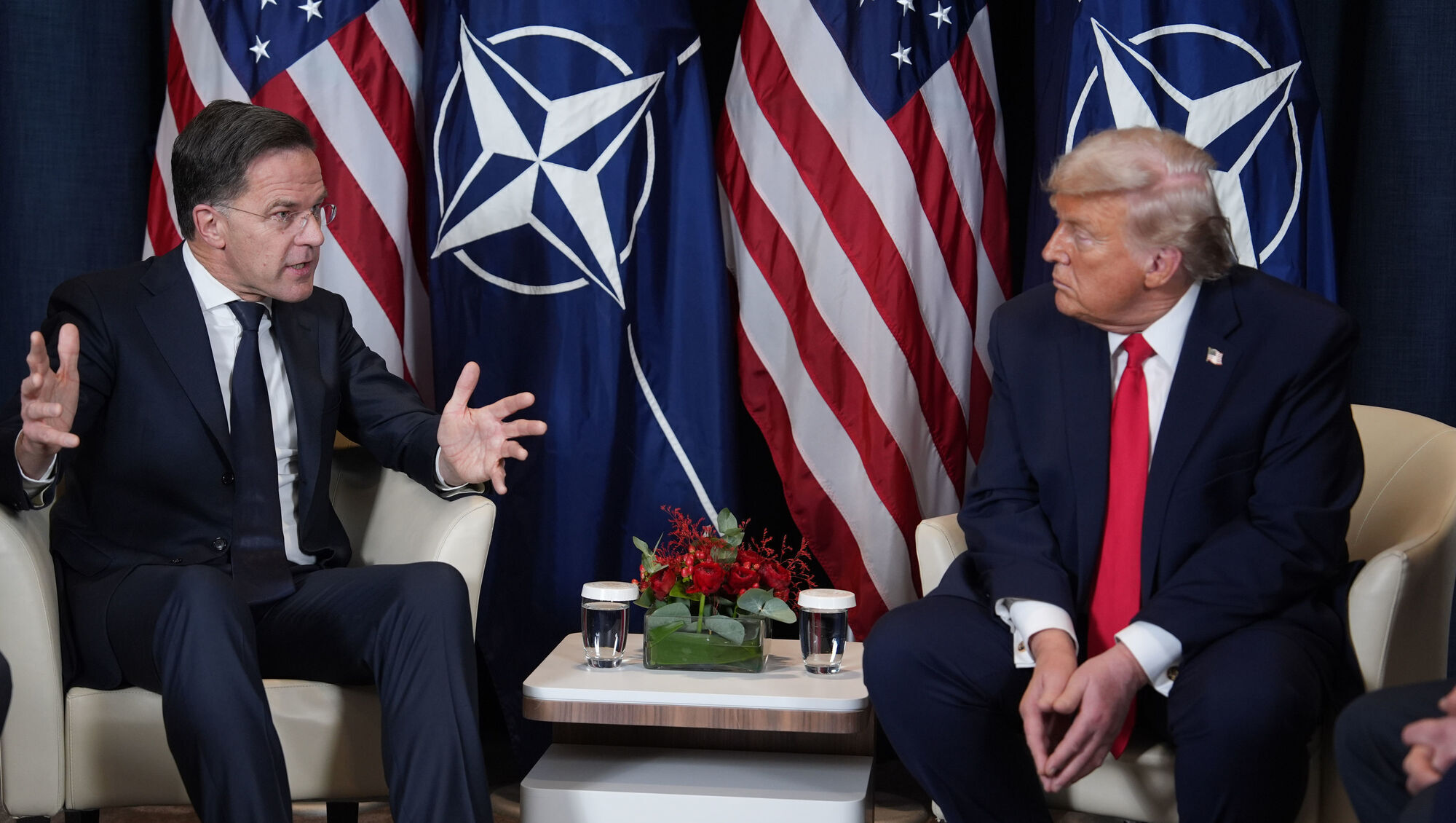
President Donald Trump, right, meets with Nato Secretary General Mark Rutte on the sidelines of the World Economic Forum in Davos last week. Photo: AP/Evan Vucci
Nato secretary Mark Rutte has told EU lawmakers that if they think the EU or Europe as a whole can defend itself without the US, they should “keep on dreaming”.
Appearing before the European parliament’s defence and foreign committees, he said Europe’s defence spending would then have to go massively up to 10%, with a further need to buy its own nuclear capability and spend “billions and billions of euros".
He also said Europe needs the US and similarly the US needs Nato. He added that even as US priorities evolve, there will “always be a very strong conventional US presence in Europe.”
Mr Rutte again defended his relationship with Donald Trump.
“Hey, listen, if somebody is doing good stuff and President Trump is doing a lot of good stuff, I believe, I know I’m irritating a lot of you again, but I think so because, as I said also in Davos, the 2% reached by all, Nato countries, … at the end of 2025, would never, ever, ever have happened without Trump.”
He added that Spain, Italy, Belgium and Canada would have not moved to increase their defence spending without Trump, “no way”. He says Trump had “one big irritant” over Europe’s lower defence spending in comparison, but insisted that is “gone” with new commitment from allies.

He also said he doesn’t mind Trump publishing his private text messages before Davos. Mr Rutte also stressed the importance of the allied contribution to Afghanistan, in contrast to Donald Trump’s comments last week.
He noted the US president’s change of tone over the weekend, and said he knows that “America greatly appreciates all the efforts being made in Afghanistan” and acknowledges the sacrifice from other countries.
Mr Rutte also acknowledged there were “very sensitive” issues to be resolved around Russian demands regarding Ukraine’s territory, but he insisted only Kyiv could make these decisions on what, if anything, can be accepted as a compromise.