Removing right to cook from Trabolgan's Ukrainian residents denies their humanity
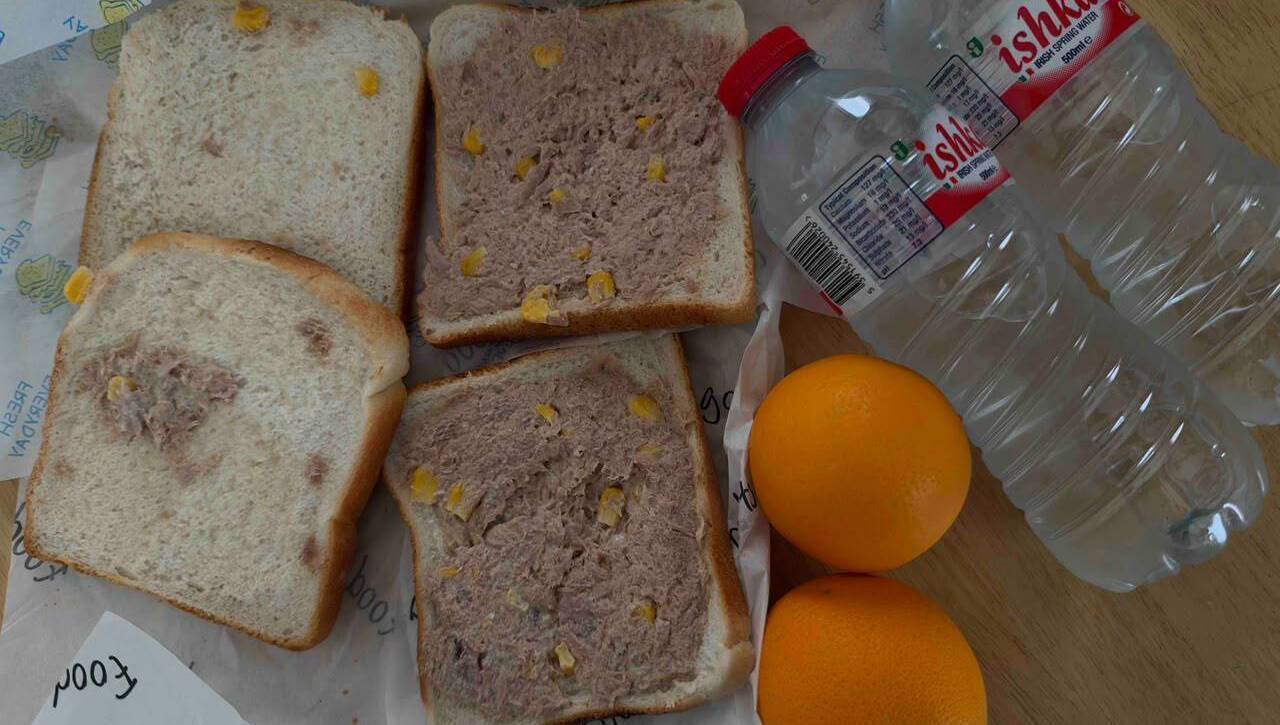
Lunch for Ukrainian residents in Trabolgan under new rules.
Cooking is one of the reasons man sought dominion over fire. Transforming produce into meals lies at the absolute centre of our humanity. We are human, quite simply, because we cook together.
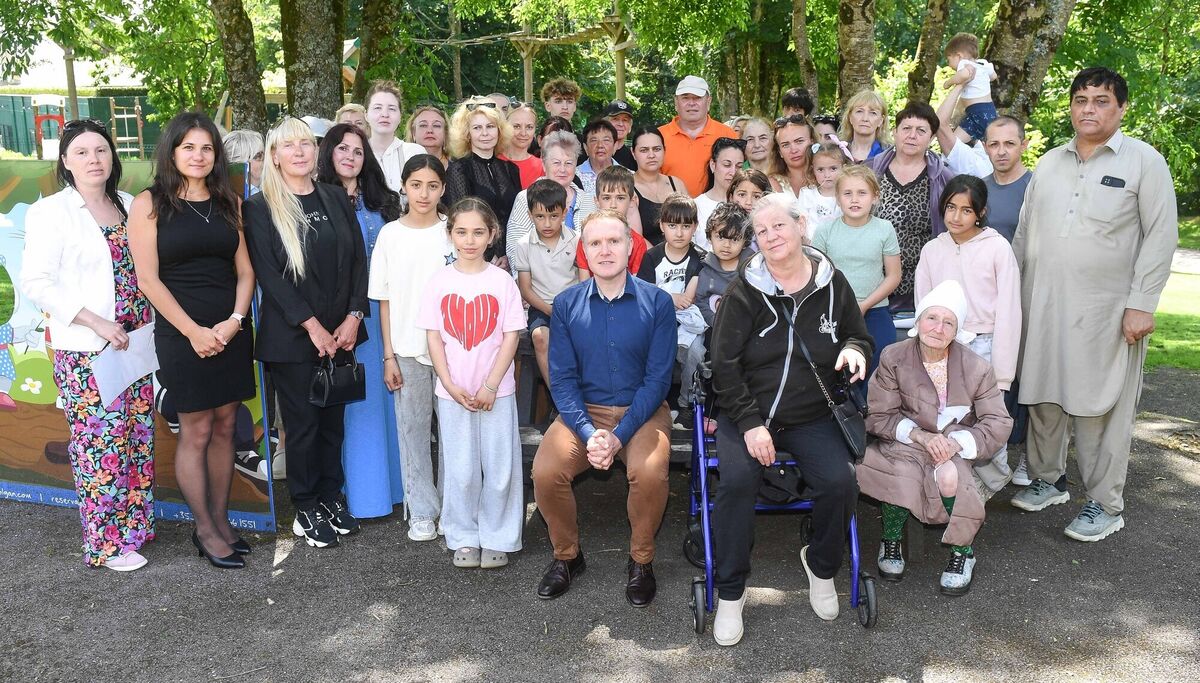
Yesterday, The Irish Examiner reported that "Ukrainian residents granted permission to stay in the former Trabolgan holiday village in East Cork say they will “no longer be able to make their own food."
This is a chilling regression in policy masquerading as an administrative adjustment. In the 2010s, there was a media storm set off by reports that the thousands of people in Direct Provision were not permitted to cook for themselves.
When the Irish Immigrant Support Centre examined the food experiences of asylum seekers in Cork in their 2014 paper titled 'What’s Food Got To Do With It?', their very first finding was that food provided in Direct Provision was "not satisfactory".
Darina Allen called the ban "barbaric". "It seems to me another kind of torture we are inflicting on people who have already suffered so much," she said during a speech at a conference in Galway in 2016.
The coverage was so relentless and constant that the canteen policy became a point of profound national shame. This forced the State to concede that forbidding people from cooking for their own families was inhumane and degrading.
Later that year, then-minister Frances Fitzgerald labeled independent cooking a very basic dignity when she discussed the move towards more "self-empowered" accommodation.
Yet, nearly 10 years later, the exact same problematic model is being resurrected.
When I was a university student in the UK, first-year students in the residence halls were not provided with kitchens. Instead, they were handed meal cards and enrolled in mandatory meal plans.
Nothing would unite every single academic discipline in the extended university universe more than the shared loathing for the monotonous, dull, and frankly fattening canteen food. Our place in university, however, was not at stake if we opted out.
Those living in Trabolgan are not granted even half of those luxuries. The residents who had only recently been approved to remain there, following a vocal campaign involving local politicians, now must pay €70 per adult and €35 per child weekly for the canteen service. This is their entire weekly food allowance.
Should they consider any other option they are at risk of losing the place they only just secured. It is reported that management said: “A refusal to pay this contribution will be considered by the department as a refusal of an offer of suitable accommodation, and you can be asked to vacate the accommodation.”
How have we ended up in a place where an administrative ‘tweak’ dictates that people fleeing war, famine, and genocide have to eat what they are bloody well told and be grateful they are fed at all?
When governments outsource essential services like social housing, long-term care, and disability support to private corporations, the resulting drive for efficiency deeply impacts the daily lives of residents.
Ultimately, every private company involved in immigration is involved for profit. This reality is unseemly at best and downright immoral at worst, especially when preserving profit margins becomes the primary MO.
So why does the government allow this? Is it the plausible deniability combined with the convenience of it? Outsourcing shifts daily operational headaches, staff management, compliance, and capital investment onto private operators.
This convenient shuffle allows government departments to claim they are containing direct administrative overhead. But if people are not what the service is actually about, then it is the people who will and do suffer.
Maybe though, it's because there is a cost-of-living crisis pushing up the price of food? The weekly shop is significantly more expensive than it was in 2016 so I’m sure that is what will be touted as the rationale behind this shift.
It may be true that the cost of providing a canteen option is only viable if everyone opts in. But if people are choosing to try and stretch their own tiny budget to feed themselves shouldn’t we let them? Especially if there are kitchen facilities?
Ten years ago the excuse was that there were no cooking facilities, but as far as Trabolgan goes there should be no such issue. “The availability of fully equipped kitchens” is noted by the spokesperson for the group still living there.
They also highlighted “all residents chose self-catering, signed the relevant forms and relied on this arrangement” and yet the facility is still choosing to move towards enforcing a canteen-only policy.
Immigration has been a highly volatile topic this year. Between our governmental changes in policy and the growing anti-immigrant sentiment associated with the rise of far-right groups globally, the climate is tense.
Has this shifting political climate around immigration in Ireland emboldened policymakers to re-implement restrictive controls that were previously rejected by the public? It certainly seems that way.
Maybe the decision-makers think we are too tired to go another 10 rounds defending people’s right to cook? It is hard to imagine a government that was put through the wringer on this very issue just over 10 years ago actively deciding to wade back into this fight. But the media and political landscapes are different now.
There is visibly less compassion for immigrants online. Anyone who writes about immigration opens themselves up to attacks from online far-right protagonists and bots. Many who took up the mantle years ago may not have the energy to do so now.
I have experience as an immigrant, having lived in the UK, Canada, the US, and France — because where I was born entitled me to the privilege of easy visa applications. And also, it must be said, because I am white.
I was lucky to be granted the right to work and as such contribute to these economies while I lived out my dreams. Life for the families in Trabolgan is much more fraught.
As Russia's full-scale war against Ukraine approaches its fifth anniversary, many Ukrainian refugees have integrated and settled in Europe. Today, over four million Ukrainians live in EU countries under temporary protection status, according to Eurostat.
Kyiv and formerly safe areas of Western Ukraine are under increasing bombardment. President Zelenskyy warned only last week that up to 20 million Ukrainians could flee to Europe if Russia wins.
The changes in Trabolgan have made us all witnesses to yet another system of containment in a world where an interminable refugee situation needs a more sustained compassionate response.
The only other place where people are expected to just eat what they are given by a State body is prison. Fleeing war should not make you a criminal.
We can debate the ethics of denying criminals the chance to cook another day, but for now, we can all agree that systematically depriving people of the right to prepare their own food strips away basic agency, and it is morally reprehensible. The people of Trabolgan deserve better.

CONNECT WITH US TODAY



Be the first to know the latest news and updates