Ireland must protect its interests by fighting back against the chilling effect on the ICC
A major global power is now simultaneously protecting suspected war criminals while undermining international systems of accountability, writes Andrew Forde
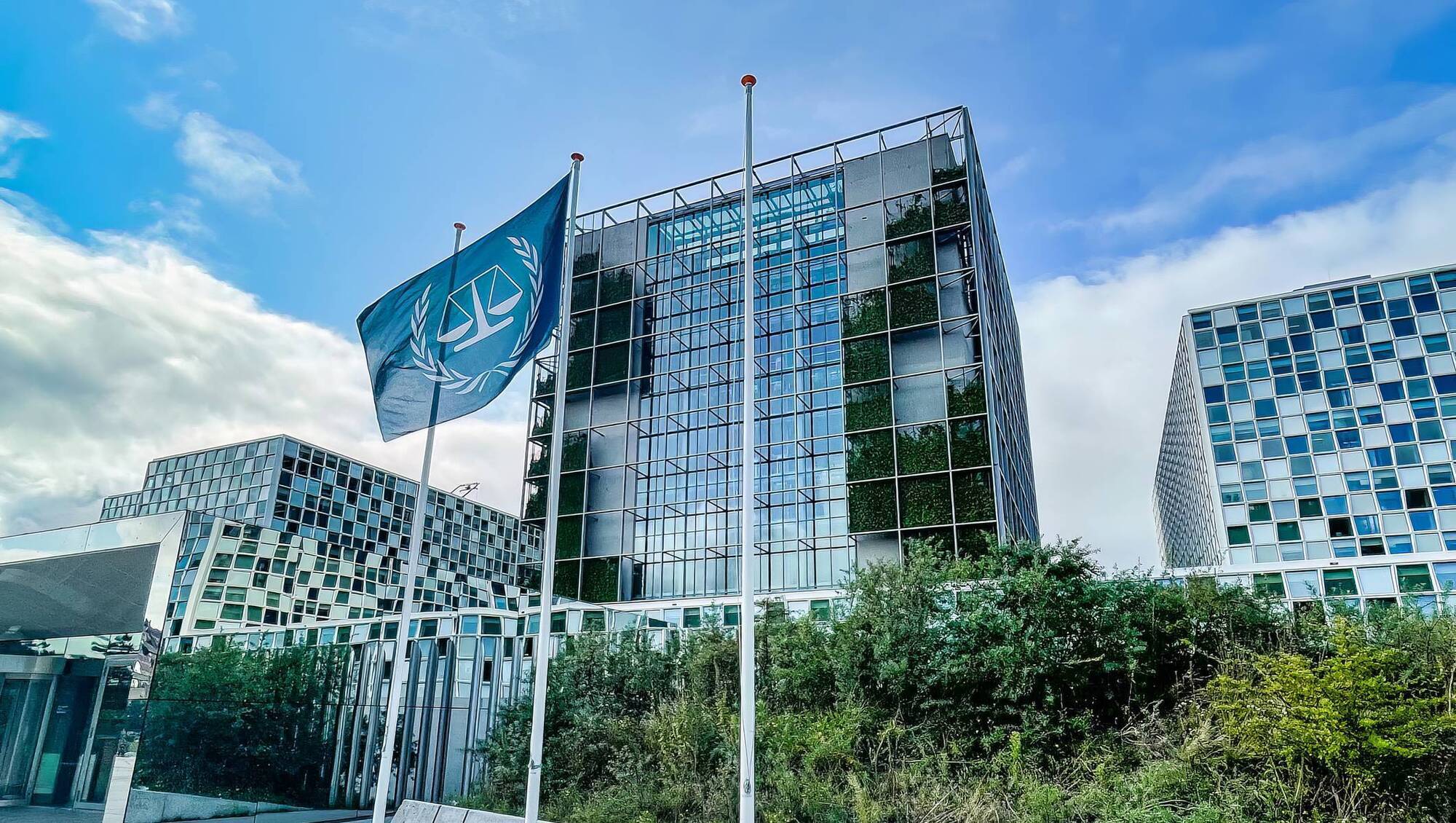
The ICC buildings at The Hague in the Netherlands. File picture

The ICC buildings at The Hague in the Netherlands. File picture

When the president of the International Criminal Court (ICC), Judge Tomoko Akane, addressed the Four Courts in Dublin, she made it clear that targeting international courts and their personnel poses an existential threat to the global legal order.

Days later, that threat materialised.

In an unprecedented act of hostility, Washington levelled a suite of sanctions directly on the ICC, promising to dismantle the court “brick by brick”. 

Weaponising economic sanctions in this way directly violates Article 70 of the Rome Statute of the ICC, which prohibits intimidation of the court. 

What’s more, this coercion is not focused only on individual prosecutors or judges — it extends to any entity, supplier, or financial institution that continues to provide services or operational support to the court.

Indicative of the turbulent times we live in — with more conflicts underway than any time since the Second World War, and millions of people besieged in Ukraine, Palestine, Sudan, and elsewhere — a major global power is simultaneously protecting suspected war criminals whilst undermining international systems of accountability.

It is easy to see this crisis as an abstract diplomatic row occurring over there, in the distance, with no consequences for Ireland. Not so. This one hits at the heart of our economic self-interest.

Irish businesses in the software, IT infrastructure, legal tech, specialised professional services, and financial services are directly exposed. Many others indirectly. 

Without the legal cover of an updated EU Blocking Statute, Irish businesses must either comply with foreign sanctions that violate EU values in a profound way, or face potentially devastating financial penalties from abroad, giving rise to a cascade of risks including limiting access to other markets.

Targeting a court in this way also threatens the entire architecture of global dispute resolution upon which international trade depends. 

If it is OK to sanction the ICC today, what stops the same coercive measures from being applied against the International Court of Arbitration, or the International Tribunal for the Law of the Sea tomorrow?

Significant risk

For a small, open, internationally trading nation whose economic vibrancy relies on international legal predictability, the risk is significant and the chilling effect is potentially enormous.

Internationally trading businesses need clarity, consistency, and certainty from the law. They need to know
that they have recourse to robust legal instruments to defend their interests. They also need to know governments have their backs. 

So, the necessity for Ireland to engage with this head on is not just a matter of lofty moral righteousness; it is a question of gritty self-interest.

For Ireland, currently holding the presidency of the Council of the European Union, we have a duty to lead the EU response with concrete legal protections by expanding and activating the EU Blocking Statute to shield the ICC, its officers, and businesses from foreign secondary sanctions. 

As the Taoiseach himself has said repeatedly, the rules-based international order is what underpins our economic security, gives confidence to enterprise, and also allows a small, open trading nation like Ireland to thrive.

Action required

Whilst Ireland does well on rhetoric, Europe is bogged down in hand-wringing. Words don’t unfreeze credit cards, unlock assets, or protect staff from secondary economic pressures.

Addressing Davos in January, Canadian prime minister Mark Carney declared that we are witnessing a global rupture in the international order.

I disagree.

Framing this crisis as an inevitable rupture implies nothing can be done. That is a dangerous mistake. International law is not collapsing; it is being actively dismantled, and the rules will only continue to protect us if we are prepared to actively defend them.

We need to break this inertia. We need to step up where it matters. And we need to do it now.

As our EU presidency nears its conclusion, our mandate on the UN Human Rights Council soon begins. The policy programme for our EU presidency placed values alongside competitiveness and security. Human rights and the rule of law are the threads that bind those pillars together. 

Leaving the ICC, its staff (including Irish staff), and co-operating Irish businesses exposed to these unacceptable coercive sanctions undermines the legal architecture we depend upon, and has a inhibiting effect on our international trade.

Championing the rule of law without fear or favour is not an exercise in provocation, it is the ultimate expression of our national self-interests. 

Ireland must step up, use the levers of our EU presidency in particular in the lead up to the European Political Community meeting in November, to push for the expansion of the EU Blocking Statute to be triggered without delay.

  • Andrew Forde is deputy director of the Dublin European Law Institute, DCU

More in this section

Revoiced

Newsletter

Had a busy week? Sign up for some of the best reads from the week gone by. Selected just for you.

Cookie Policy Privacy Policy Brand Safety FAQ Help Contact Us Terms and Conditions

© Examiner Echo Group Limited