Sarah Harte: Jason Arday made mistakes, but the dehumanising coverage left him no way back
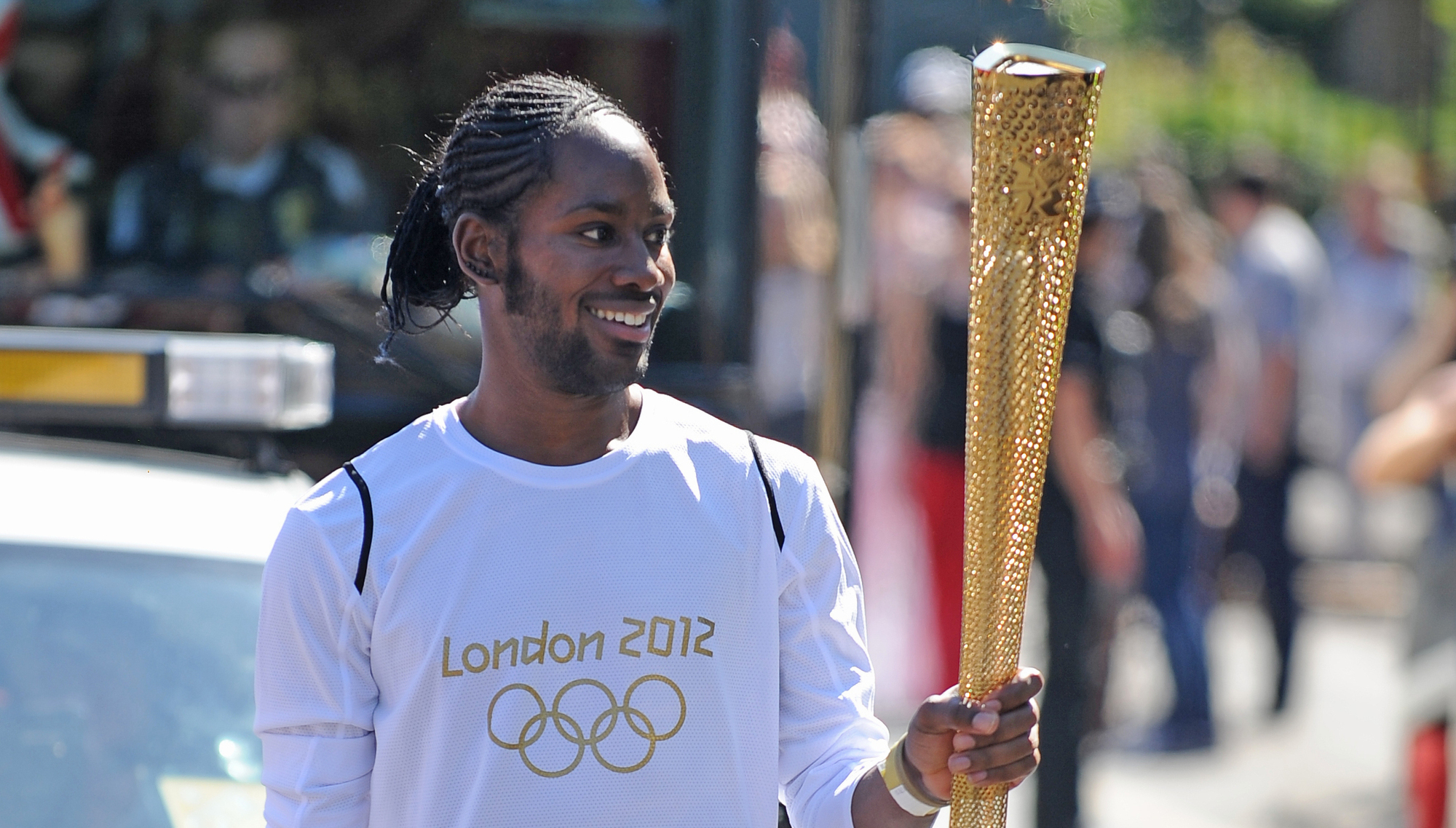
Jason Arday resigned last week as Cambridge University’s youngest ever Black professor after accusations of plagiarism and glaring questions about inconsistencies in his personal biography and achievements. He was found dead last Friday, aged 41. File photo

Over the years, I’ve often wondered what kind of culture we live in when an accusation of a mistake can become a sustained campaign against a person.
How do we investigate an allegation and hold people accountable, without dehumanising them, while also leaving room for them to come back from a public mistake?
A professor of sociology, Jason Arday, was Cambridge University’s youngest-ever black professor.
He resigned last week after accusations of plagiarism and glaring questions about inconsistencies in his personal biography and achievements. He was found dead last Friday, aged 41.
Just hours before his death, a fellow Cambridge academic professor and director of the Autism Research Centre, Simon Baron-Cohen, received voice notes from Jason Arday saying how he couldn’t go on.
The media are asking Cambridge University whether they overpromoted a man described as vulnerable and whether he received the right kind of support when he came under pressure.
Arday had questions to answer. Cambridge has big questions to answer. The media may have been justified in investigating. None of that answers the question of what happens when scrutiny becomes dehumanisation.
The Good Law Project, a British non-profit organisation that defends marginalised groups and other public figures, is demanding an inquiry into whether the media coverage was excessive.
I stayed away from writing about it because, in certain quarters, it struck me as a pile-on.
The sheer number of articles about Arday in one British broadsheet this summer felt less like a series of reports and more like a campaign, but that’s my subjective opinion.
It’s hard to imagine what Jason Arday went through. Unless you have experienced the sudden dismantling of your private life in public, you can’t imagine what that kind of exposure feels like from the inside.
I have a small, imperfect point of reference.
In a chapter of my life now firmly closed, I was a bystander to a ‘scandal’ that dominated the Irish news headlines. The sheer volume of coverage of the incident, at times invasive and personal, stood out.
It necessitated a media blackout in my house. Television and radio were turned off. No newspapers were allowed into the house. I accepted calls from a tiny handful of close friends.
I had nothing to do with the incident that sparked the story, but I was peripherally dragged into it because of my personal connections at the time and, presumably, for "colour".
After several traumatic days holed up like a fugitive, I ventured out to a local shop, only to see my face on the front of a tabloid newspaper (an old photo from years before). I felt like a small, trapped animal.
What Arday went through was on another level. It’s hard to get your head around the number of articles written about him, both in the UK and internationally.
Jason Arday had a prestigious international academic career with a high profile in certain limited circles, although most of us hadn’t heard about him until two months ago. The other part of this equation was race.
Race doesn’t mean every criticism of Arday was racially motivated. Your skin colour does not delegitimise criticism.
But as a black academic, he was promoted as a symbol of diversity and inclusion, which meant that in an era of divisive and tedious culture wars, scrutiny of his mistakes would inevitably be met with heightened hostility. That’s a lot of weight on one man’s shoulders.
Diversity, Equality, and Inclusion policies exist because people of colour do not enter institutions on a level playing field.
Yet institutional sensitivity around race can sometimes make legitimate criticism more difficult for liberals whose "great white fear" is that any criticism will be interpreted as racism.
This can result in a strange paradox. A person elevated and promoted as a symbol of inclusion can become more exposed, rather than less, when the political mood turns against them. Arday may have fallen foul of that paradox.
For the avoidance of doubt, this is not some sly backdoor argument against DEI. It’s just that the machinery meant to protect him may, in some ways, have exposed him more.
When the inevitable criticism then came from those hostile to DEI, Arday became a proxy for a much larger political argument.
The coverage of Arday was part of a wider culture of naming and shaming.
On social media, commentators act as judge, jury and executioner in one fell swoop.
Who are those people? Well, often they’re us.
The dynamics and impact of public shaming on individuals were described in an article in April from a university in Indonesia, entitled Social psychological analysis of cancel culture and collective aggression on social media.
This article, with an unfeasibly long title, warns of a shift from legal sanctions towards "instantaneous and large-scale digital social sanctions".
It cautions that punishment can become disproportionate to wrongdoing, with few "clear mechanisms for rehabilitation".
Even if you’re not well-known or don’t have a public profile, the febrile dynamics of online life can turn an ordinary person into a lightning rod for feelings of loathing or outrage at remarkable speed.
He would appear to have inflated some of his backstory. It’s interesting to see who gets away with inflating their achievements. I was reading a post this week on LinkedIn about Donald Trump’s ‘first’ from Wharton Business School.
Back in the early 2000s, I clearly remember having a conversation with somebody who had done business with Trump in the 90s and was defensive about it.
He cited Trump’s first from Wharton as evidence of his intelligence, and I just laughed loudly, which offended him. Although he was a bright man, it hadn’t occurred to him that rich people bought their way into top universities.
Very few of us are one thing or another. We can’t be summed up solely by our mistakes or even our academic achievements. The problem is when investigation seems to morph into collective punishment before the facts have been properly established.
Arday, in an interview with a British newspaper in June, said: "I don’t think people realise that there’s a human being at the end of this. And they don’t realise that human being is someone’s father or son."
There’s a line between accountability and annihilation.
Jason Arday resigned on August 5, but the coverage did not stop. His death nine days later does seem to pose the admittedly hard-to-answer question: at what point does legitimate scrutiny cease to serve the public interest?
As I write this article, it occurs to me that I may be part of the problem. My main question, as the Indonesian research touches on, is whether there can ever be any rehabilitation.
Somebody may have erred. Accountability is obviously necessary, particularly when somebody reaches an exalted position, although we live in a time when the rules are suspended on that front for the rich.
But surely there has to be an endpoint to the punishment when somebody makes a mistake.
CONNECT WITH US TODAY



Be the first to know the latest news and updates