David O'Mahony: Nineties’ action movies may be long ago but they have a message for current AI slop

David O'Mahony is nostalgic for the action movies of the 1990s. And while many are not classics, they do realistically tell the tale of human endurance against the odds, thanks in large part to their use of practical effects and set designs and not the CGI fakery of modern films.  
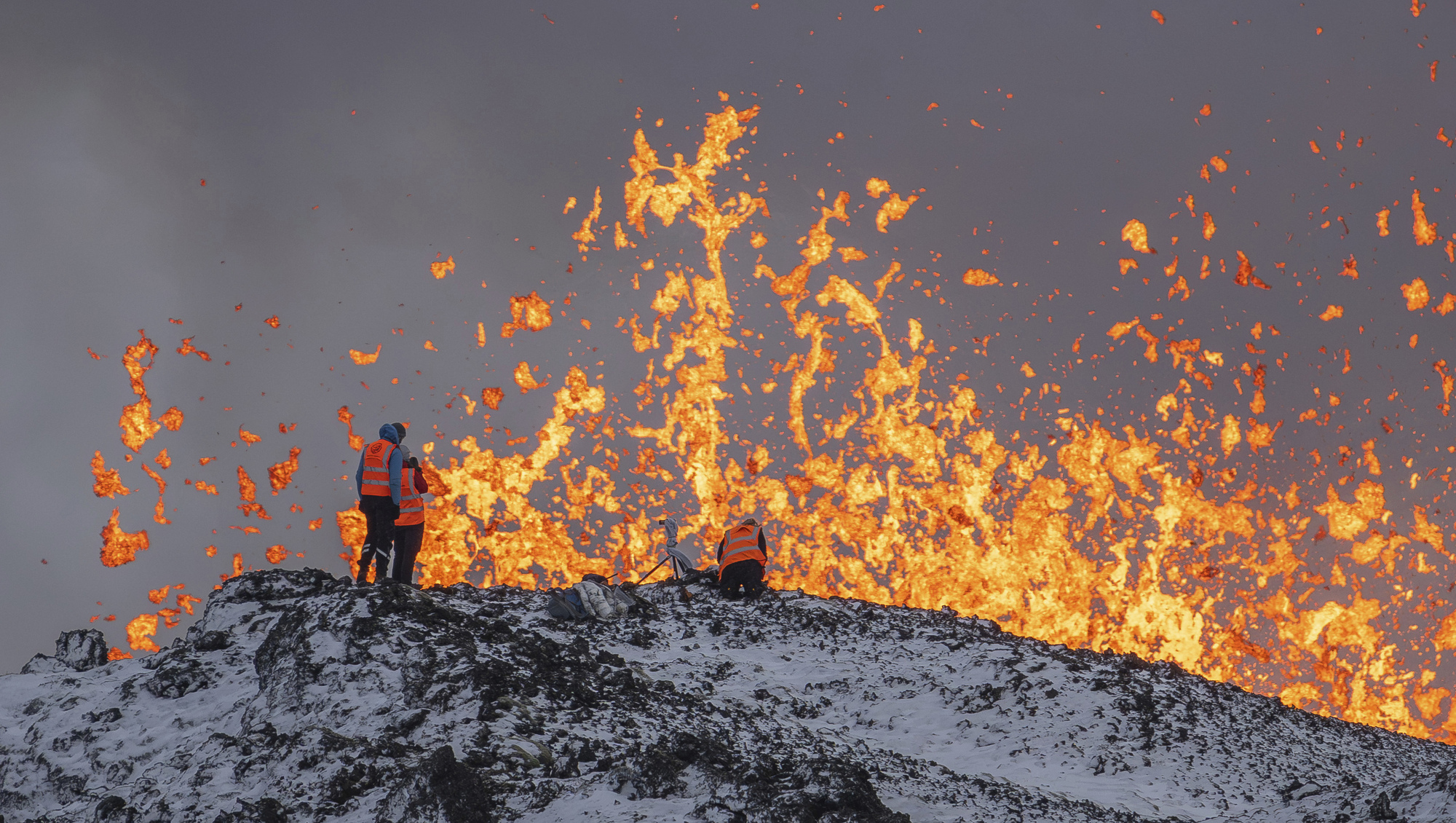
An eruptive fissure of an active volcano in Grindavik on Iceland's Reykjanes Peninsula. Movie reincarnations can only achieve recreations with practical effects and models rather than with CGI or AI creations. Picture:  AP Photo/Marco Di Marco

An eruptive fissure of an active volcano in Grindavik on Iceland's Reykjanes Peninsula. Movie reincarnations can only achieve recreations with practical effects and models rather than with CGI or AI creations. Picture:  AP Photo/Marco Di Marco

Sometimes all you need is a bit of escapism. Actually, maybe more than sometimes. It’s been one of those lifetimes.

My wife and I don’t get to watch films together as often as we used to, so when we do we try to make it count. And we’ve been on a sort of retrospective, nostalgic trip recently, even if it has at times taken us two, even three nights to watch an entire movie (thank you to our three children there).

Could be that we’re gently moving on in years, could be that we’re both of a historical frame of mind (my wife teaches classics as well as history and English).

Sometimes the kids come along for the ride. We introduced them to the breathtaking Christopher Nolan film Interstellar recently, and it was such a hit with one of the boys that he went out and bought books on how black holes work. I could think of a few people who could do with being launched into one, so maybe in a couple of years I’ll be writing a column about how my son invented the Phantom Zone from Superman.

That led our cinematic odyssey to revisiting Nolan’s landmark Batman trilogy. What a career Heath Ledger might have had. No motion capture or overwhelming CGI. Just performance, makeup, and practical effects in as many places as possible — the series holds up in a way that many more recent films don’t. Tom Hardy didn’t strap on a muscle suit for filming The Dark Knight Rises like a lot of actors do; he strapped on acres of actual muscle instead. Most of the time, when things explode in those films, it’s because there was an actual explosive somewhere.

Pierce Brosnan and Linda Hamilton in the 1997 disaster flick, 'Dante's Peak'. 

So when we had the chance to watch films where things go boom, there could only be one outcome: the 1997 volcano movie Dante’s Peak, closely followed by the other volcano movie of that summer, the Tommy Lee Jones one imaginatively called Volcano (it does exactly what it says on the tin, to be fair).

You thought I was going to say some other film, didn’t you? The one where Anne hath a will, Anne Hathaway, and all that jazz. But plot twist: I haven’t seen it.

I’d like to think the 1990s weren’t that long ago but, well, as I’ve pointed out before my daughter refers to the 1980s as “the olden days”, and the Nineties aren’t much different as far as a seven-year-old is concerned. And yet, the way practical effects influence those films is a soothing antidote to the AI slop that keeps intruding on my well-curated social feeds.

And anyway, do disaster movies ever really go out of style? There remains something oddly awe-inspiring at how little we can really do in the face of natural disasters. Mitigate, maybe. Evacuate, certainly. Prevent, no. And maybe that speaks to something buried (or not so buried) down in my psyche, given how well known I am in our family for building volcanoes in Minecraft. Or, indeed, burning forests down (calm down, this is a game — I’m not a Republican).

Now when I saw awe-inspiring, I mean on film, at least; with my in-laws having had their ground floor wrecked by flood waters some years back, actually living through a force of nature is something quite different. Ask the people (and animals) of Pompeii, or the people in France and Spain who’ve seen their homes destroyed by the wildfires. There’s a video circulating of an old marble mine breaking up in India. There are several “walls” of marble that begin to splinter and collapse one by one, until suddenly the entire mountainside disintegrates and collapses into the ravine. There was no stopping that.

Neither of those films will ever bother the lists of classics, but then they were never supposed to. They were about destruction and the endurance of the human spirit in the face of hideous odds.

They would have been disposable enough in their time, and indeed you can tell when the writers of Volcano just sort of gave up on reality — having spent ages establishing that Los Angeles is gridlocked due to an eruption, somehow tonnes of explosives are fetched, distributed, and rigged to explode with less than 20 minutes before the lava hits. Reality, what reality?

CGI characters in the  movie 'Avatar: The Way of Water'.

Still, though, despite some now-dated CGI lava the action is driven by explosions, sets, vehicles, and most importantly people. The idea that an entire set might be generated on green screen, like in Avatar, was a generation away, and the film is all the better for it (think of how much better The Abyss is for using giant water tanks and hydraulic sets than for relying on computer graphics).

Dante’s Peak is less about the eruption and more about trying to save lives in the face of the inevitable, a more grounded story where the devastation is reliant heavily on practical effects. The town is choked with ash (grey paper that’s been shredded) and a bridge is swept away in melted snow (a large model including remote control cars).

There’s something in the fact that Dante’s Peak, the lower budget and less spectacular one, did better at the box office. You can only stretch reality so much before it breaks and people tune out.

Looking at the way filmmaking is going, amid a push from studios for greater use of AI, important directors like Nolan, Guillermo del Toro, and others continue to show that practical effects, set designs, and other tangible elements continue to make for better films.

Maybe the Nineties were onto something. Just not, we’ll all agree, fashion.

  • David O'Mahony is Irish Examiner assistant editor and a writer

More in this section

Revoiced

Newsletter

Had a busy week? Sign up for some of the best reads from the week gone by. Selected just for you.

Cookie Policy Privacy Policy Brand Safety FAQ Help Contact Us Terms and Conditions

© Examiner Echo Group Limited