From fighting Covid to tackling cancer: Could mRNA vaccines transform medicine?
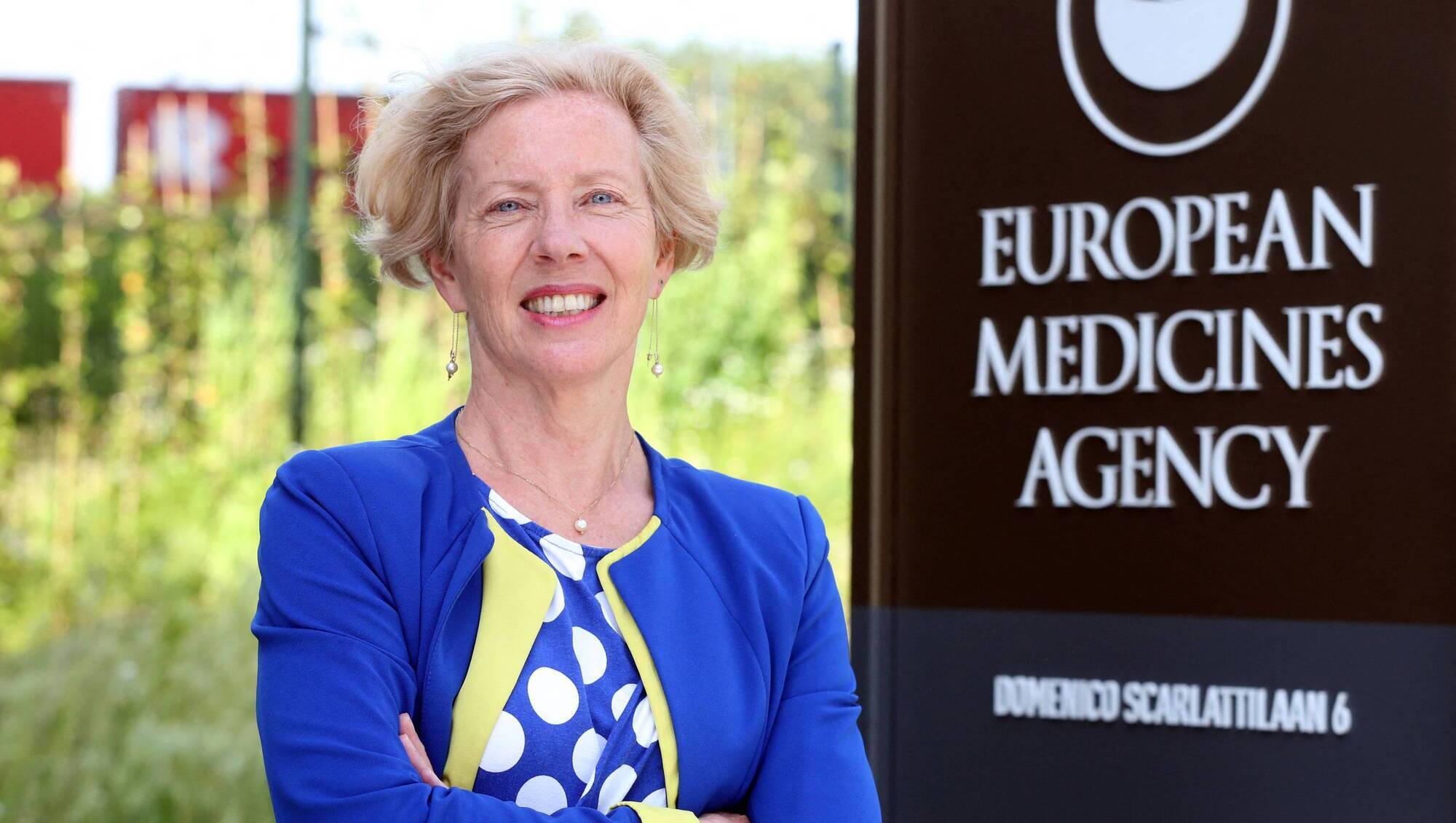
Emer Cooke, executive director of the European Medicines Agency: 'Vaccines are one of the most effective public health interventions that have ever been developed. They have saved lives and they continue to save lives.' Picture: FRANCOIS WALSCHAERTS/AFP via Getty Images
The European Medicines Agency this week predicted a “revolution in science and medicine” could come from the use of mRNA vaccines, with trials expanding into the treatment of cancer or heart disease.
The prediction came as Emer Cooke, the Irishwoman who heads up the EMA, called on parents who may have questions about childhood vaccines to seek out trusted fact-based sources of information for answers.
The mRNA vaccines made global headlines when those developed by Pfizer and Moderna were the turning point in the fight against covid-19. That development followed years of little-known research which is now being boosted by millions of dollars or euros from investment funding.
Marco Cavaleri is the head of public health threats at the EMA and sees exciting potential in recent trials of mRNA in tackling other diseases.
“The biggest area that we are seeing really growing in numbers of candidates tested in clinical trials, is cancer. So the concept of personalised treatment of cancer is really high on the innovation agenda,” he said.
"And it’s not just cancer, it’s also cardiovascular disease, it’s also autoimmune diseases so really we could see a revolution in science and in medicine with this technology."
The idea behind personalised medicine is each patient gets a variation of the treatment based on the characteristics of their cancer or other illness.
Mr Cavaleri pointed to developments just this month in potential treatment for melanoma skin cancer when speaking to reporters at the EMA headquarters in Amsterdam.
Trials showed a personalised mRNA vaccine cut the chance of skin cancer returning or the patient dying by 42% when used with an immunotherapy medicine, the vaccine manufacturers MSD and Moderna said.
Mr Cavaleri described these findings as “a potential breakthrough for the future”.
He acknowledged it was early days, adding: "So it can happen also that we will see some failures but the road is paved towards exploring more in depth the ability of this technology for delivering products in a personalised way that would treat cancer."
The mRNA technology could also be used, he added, in treatment with CAR-T therapy for blood cancers.
Ms Cooke also stressed “very impressive” innovations in the vaccine world but acknowledged the growing hesitancy around vaccines since the pandemic.
She took up the role of executive director in 2020, becoming the first woman to do so in the EMA’s quarter-century history, and she led the EU rollout of covid-19 vaccines.
Appointed initially for five years, her position was extended last year until her planned retirement next year.
She spoke of how, when her own now-adult children were young, she had them vaccinated against illnesses, including her daughter getting the HPV vaccine.
This offers protection against cervical cancer. Global evidence now is this vaccine is set to eliminate deaths from this devastating cancer.
“Vaccines are one of the most effective public health interventions that have ever been developed. They have saved lives and they continue to save lives,” Ms Cooke said.
In the area of childhood vaccines, she spoke of “some challenges” now to the uptake of measles vaccines.
In Ireland last year, the MMR vaccine uptake among children aged 24 months was only 86.3%. This is below the target of 95% needed to prevent outbreaks.
Ms Cooke told the she would advise parents to ask questions if they are unsure about vaccination.
“I would advise you to go to trusted sources of information such as the European Medicines Agency. We really put a lot of effort into putting out fact-based information,” she said.
“We work with pediatricians, communications specialists. We try to ensure that the information we provide is unbiased, based on the science, independent and we try to put it in a way that’s easily understandable as well.”
She said the EMA works with patient groups to make sure information addresses people’s everyday concerns.
“But honestly, I think the scientific figures showing the lives saved by vaccines are very impressive and I think people have just forgotten,” she said.
"And I’m just afraid people haven’t seen the diseases because vaccination has been so successful and that they can’t imagine a world where these diseases will come back. That’s one of the frightening things."
Before the measles vaccine was introduced in 1963 around the world, major epidemics broke out regularly, causing an estimated 2.6 million deaths every year, the World Health Organisation said.
“There’s been huge advances and we want that to continue, and that’s part of the message that I would like to share," Ms Cooke said.
She cautioned: “We now have children dying of diseases like measles or diphtheria, and we know the vaccines can provide protection. I think this is a challenge we really have to take on.”
Speaking about choices, she said: “I don’t believe any parent sets out to do harm to their child by avoiding a vaccine. That’s not the reason, I think it’s all about getting the message right.”
That messaging by the EMA about vaccines and medicines is becoming more visible globally as the American approach changes.
Read More
In just one example last month President Donald Trump proposed — without sharing any evidence for this — that vaccine makers split some childhood shots into five separate doses, which he believes will result in a reduction in autism rates, an idea repeatedly debunked by scientists.
Ms Cooke said the EMA worked very closely with the US FDA (Food and Drug Administration).
“One of the challenges for us is how we address sentiments that maybe are coming from the US system and how we ensure that we can provide the right information to counter anything that is either wrong or mis-informed,” she said.
“That is something that we really try to do.”
A page on the EMA website titled “Vaccines: concerns, questions and false claims” answers common questions.
“We either try to come out with something publicly or we develop lines to take for our network so [the national health authorities] have the fact-based information to counter some of the challenging assertions that may be coming from the US,” she said.
The vaccine seminar also heard from Heidi Larson, professor of anthropology, risk and decision science at the London School of Hygiene and Tropical Medicine.
She described how multiple studies show vaccine hesitancy is growing, and in 2022 she was part of the latest analysis of the state of vaccine confidence in Europe.
“If you don’t understand what is behind it, we are never going to get it right in terms of how we engage and how we approach [people who are hesitant],” she said.
Part of this is understanding the influence of family, friends, religion and other non-medical sources of information, she added.
“It is again and again repeated that healthcare professionals are the most trusted. But who else are people trusting?” she said.
She also raised concerns about the role of America now in the health community, using an image of Robert F Kennedy Jnr, the US secretary of health.
She described the US as a “huge propagator” of global misinformation around vaccines.
“It’s really had a negative impact, and this was before the current administration, which has made things even more complicated in terms of policies coming out that totally contradict Europe and other countries; it confuses the public,” she said.
She said how, during the pandemic campaigns, questioning vaccines merged with other protest groups, adding: "They had the shared theme of against government control or freedom, liberty."
This has made it more challenging to discuss vaccine hesitancy, as people say their issue is not with any particular jab but about liberty.
CONNECT WITH US TODAY



Be the first to know the latest news and updates