Gareth O'Callaghan: Ireland's heatwaves are becoming hotter, longer and harder to ignore

Heatwaves, both hotter and longer, will now be a regular feature of the summer calendar. For those concerned about the destructive nature of global warming, that points to a damning prospect for future generations. Picture: Ben Birchall/PA Wire

For the first time in memory, I witnessed an episode of thermal throttling while on the train last week. No need to call security, or pull the emergency chord. It was happening on my phone. This smart device that has spent more time in my company than any human was having a heat seizure and all I could do was watch.
I had booked a window seat but the heat of the sun through the glass was too much for the Android. The device became so hot I couldn't hold it. I watched in horror as the screen flickered wildly and then died.
Slowly it began to cool, but there were no vital signs. I thought I’d lost it. By the time I arrived in Dublin, normal service had resumed.
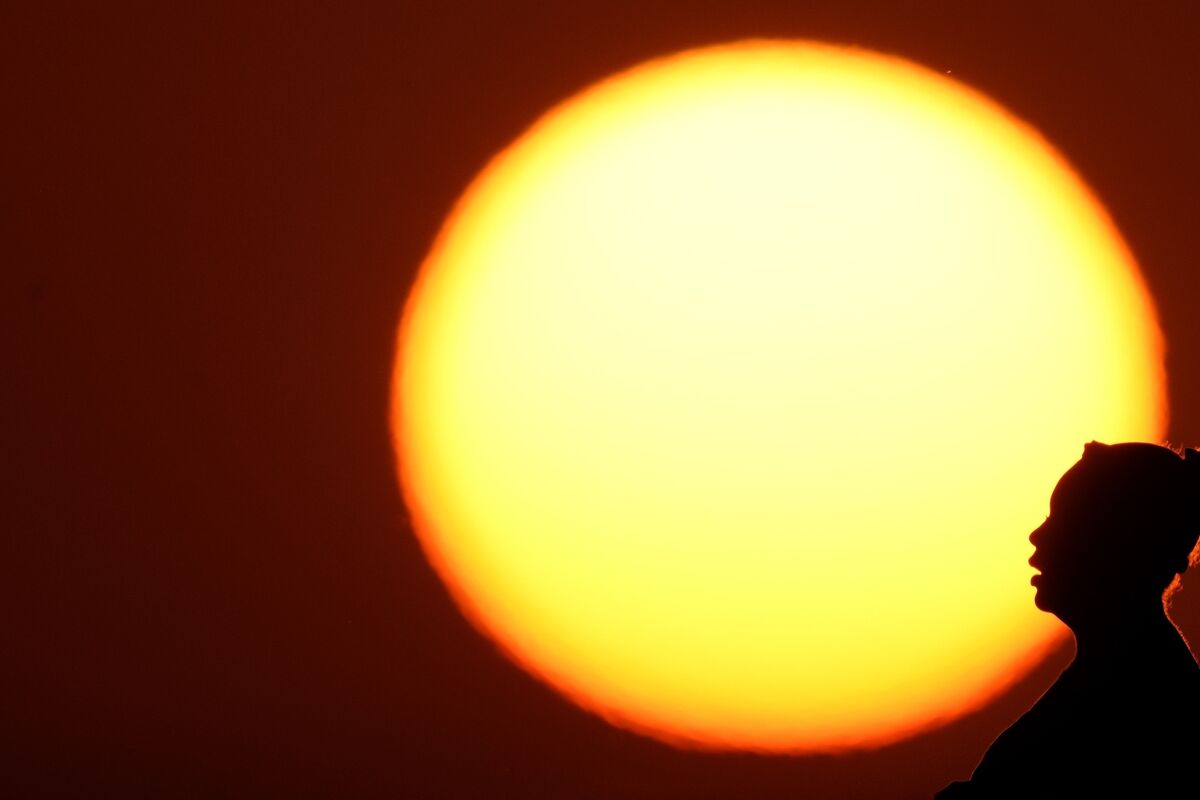
If this had been 4th century CBE, I’d probably believe I was being punished for my overreliance on technology by the Greek god Helios, the personification of the sun, who drove a winged fire-breathing chariot across the sky terrifying his followers; but if this was ancient Greece, I wouldn’t know what a phone was.
So was the seizure caused by the global warming effects of climate change? Unlikely. Thermal throttling is a protective mechanism in smartphones that reduces the device’s performance to prevent overheating and protect the components in the phone’s hardware. Technology hates extreme heat.
Depending who you’re having the conversation with, climate change is either an unspoken concern or a conspiracy theory. For many academics who have spent their careers studying its effects, it has now become our generation’s greatest moral imperative.
Read More
If you believe climate change is a naturally occurring fact of life, and none of it is our fault, then you’re just trying to avoid blame. But it’s interesting you also appreciate that climate change is real.
Then there are those who believe 97% of climate change scientists who have concluded that human-caused climate change is happening are lying.
I am not a scientist or a climate change activist, nor am I a conspiracy theorist. But, like many, I have a vested interest in this planet because it’s where I live and right now there’s nowhere else.
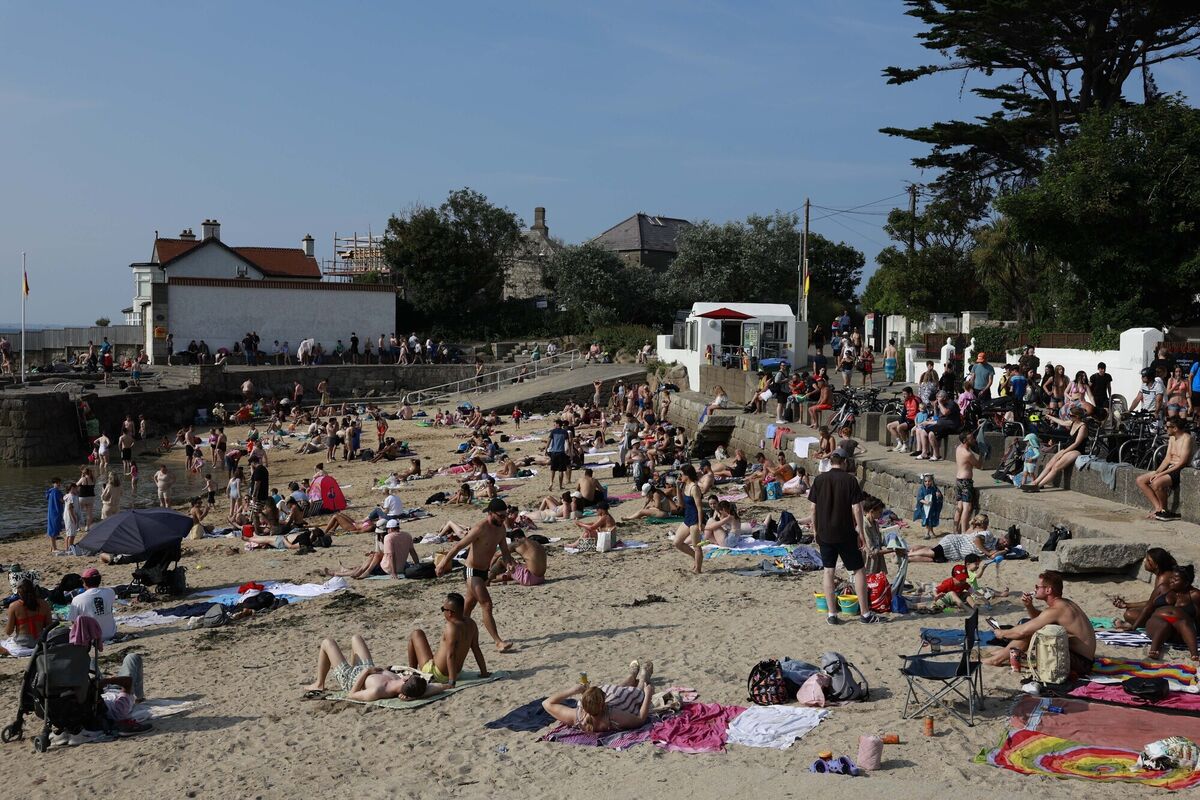
We’re in mid-summer, and we are enjoying (or enduring, depending on how you feel about intense heat) one of the hottest periods on record. It’s what most of us want at this time of year, which is the reason we travel to Spain and elsewhere. So why are scientists losing sleep over the current heatwave?
It’s because climate change is making heatwaves of this intensity longer and more frequent. Without the effects of the current levels of human-made greenhouse gas emissions, this heatwave should only be occurring once every 50 years or so, according to a 2025 study based in southeast England. Now we’re seeing its effects at least once every five years.
Earlier this month, temperatures challenged the all-time national high of 33.3C recorded in Kilkenny in June 1887.
I like to think I’m a 1976 heatwave veteran. I was 15 and knew nothing about climate change. It was probably the most laidback summer of my life. It was warm from start to finish, but what most of us forget is the duration of the heatwave. It lasted only two weeks, from August 14-27. We also had a nine-day heatwave in June when the mercury topped 31.5C in Kilkenny.
By comparison, while it was shorter in duration, it was even hotter than what we just endured these past two months. So how would the 1976 August heatwave feel if it had occurred now, 50 years later?
According to Met Éireann, 16 of our 20 warmest years on record have been since 1990. Warming has been happening at the rate of 0.33C per decade since 1993, having jumped from 0.07C before then, which means the 1976 heatwave would have seen temperatures last week as high as 34C, possibly higher.
Looking back at 1976, it felt for most of us who lived through it like a freak event. Perhaps it might have been if we forget about the summers of 1995, when the mercury hit 30.2C at Shannon Airport in June and 30.8C in August, and 2022 when Dublin’s Phoenix Park basked in 33C heat.
Heatwaves, both hotter and longer, will now be a regular feature of the summer calendar. For those concerned about the destructive nature of global warming, that points to a damning prospect for future generations. Across Europe, well over 10,000 more people died at the height of this month’s heatwave than would normally have been expected.
Meanwhile, 2003 stands as the deadliest summer in Europe so far for heat, with over 70,000 deaths. But it feels as though that level of loss of human life has not had the impact it should have had. It seems we forget easily when we’re not impacted personally.
During the summer of 2012, passengers onboard Flight 3935, scheduled to depart Washington, DC, for Charleston, South Carolina were told over the intercom to collect their carry-on luggage and leave the plane quickly.
As they all gathered below, they noticed the wheels of the US Airways jet had sunk 4in into the black tarmac, so deep a tow truck couldn’t budge it. The ground looked like wet cement. Eventually, a bigger truck pulled the plane out of the grip of the molten tar and it departed three hours behind schedule. Most of the passengers seemed more concerned by the delay than the weather extremes.
So begins one of the finest books I’ve read about the myths that are conveniently clouding the climate debate. Naomi Klein’s changed any misgivings I might have been harbouring about climate change.
It’s ironic a passenger jet that burns up 100bn gallons of fossil fuel every year, releasing the equivalent of 1bn tons of CO2 greenhouse gases that trap heat in our atmosphere, became a global-warming victim of its own success.
Our global economy is now relying on “dirtier and more dangerous versions” of the conventional sources of fossil fuels it once used, including coal from detonated mountains, oil from deep-water drilling, and gas from hydraulic fracturing (known as fracking).
Then there’s climate expert Jeff Goddell’s bestseller, , in which he talks about how heat is the primary driver of the climate crisis, from massive hotter wildfires to melting Antarctic icesheets the size of large countries. Heat, he says, is the invisible killer force that is shaping and reshaping our world.
Europe is now the fastest warming continent on the planet, warming at more than twice the global average. Widespread power cuts made heatwave conditions even more unbearable across France this month, with retirement homes being left without air-conditioning in 40C heat. Portable generators luckily resolved the issue.
It has all the hallmarks of what Goddell calls a “heat Katrina” effect, evoking a heat dome comparison to Hurricane Katrina which struck New Orleans in 2005. Because of our reliance on air conditioning, if a heat Katrina effect struck a major European city during a period of extreme heat, then the death toll would be off the scale.
Klein and Goddell are among many fine writers to warn us about global warming, and the human-led factors that are accelerating it, but there’s not as much interest in their cautionary research as there could be.
How do you convince people who just want to enjoy an unexpected heatwave in a country where rain is its middle name that what is happening is now more dangerous and life-threatening than many of them want to believe?
Humanity has become too selfish and too greedy to rise to the challenge of these wake-up calls, which leads me to think we’re no better off than the ancient Greeks in how they prayed to Helios the sun god in the hope he would spare them from being burnt alive.

CLIMATE & SUSTAINABILITY HUB
CONNECT WITH US TODAY



Be the first to know the latest news and updates