From Gaza to AI, Michael D Higgins warns of a world losing its moral compass
Michael D Higgins is frustrated with his left ankle.
The 85-year-old former president of Ireland has an agenda of work ahead of him, and right now, his balance is holding him back.
"I'm a bit challenged lately. I had a good recovery from my stroke at the end of February 2024, but one part of it that didn't recover was my left ankle, and that's why I'm not as steady as I was," he says, before adding: "I have a lot more to write, you see."
Thankfully, the academic, poet, thinker, campaigner, and former politician doesn't need his feet to continue with much of his work, which in recent weeks has included delivering speeches on human rights in the EU; another on poverty; and a third in a family resource centre.
He also has recorded a new collection of poetry, due out next month, and has plenty to say on everything from Gaza to the triple lock defence policy, AI, and Tony Blair.
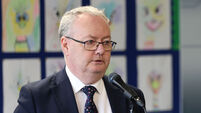
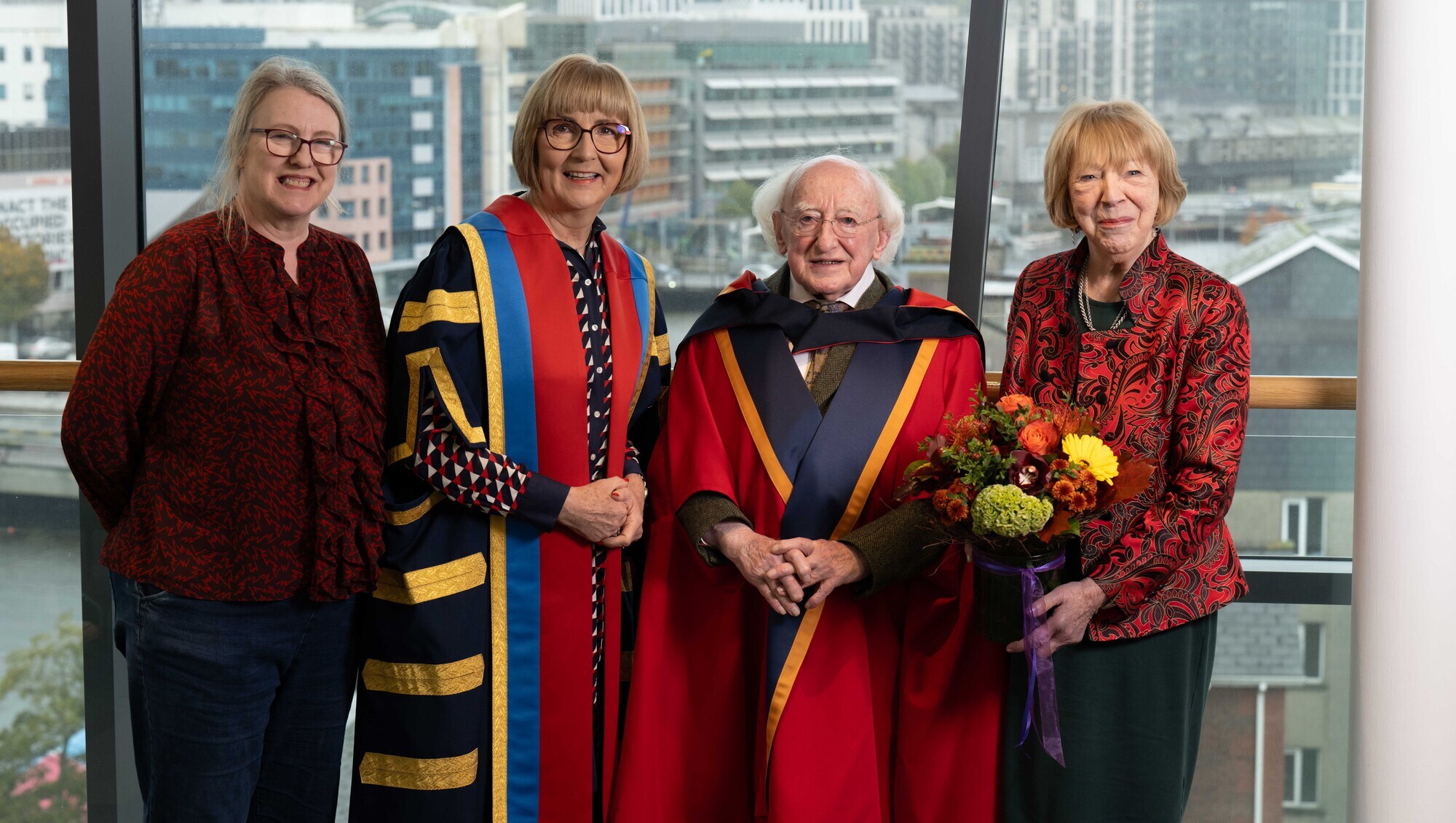
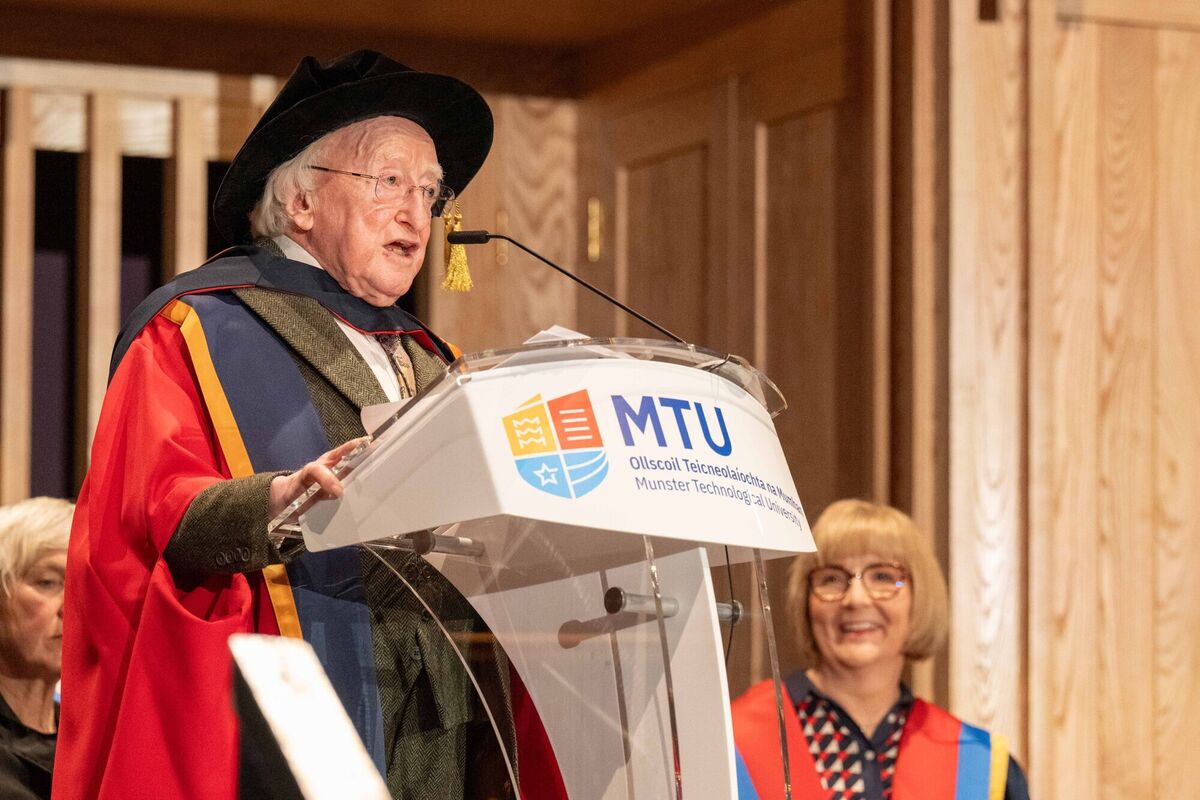
On Thursday, he was in Cork, where he was awarded an honorary doctorate by Munster Technological University (MTU) in recognition of his “outstanding contribution to Irish public life, the arts, culture, education and human rights”.
As storm Austen rolled in over the River Lee, he sat down for almost an hour with the , offering up opinions on everything from this weekend's presidential elections in Brazil to concerns around global food security and the trade union movement in Ireland.
Read More
Gaza and the suffering of the Palestinian people is an issue close to his heart and a topic that he frequently circles back on.
"I think that the European Union, both as it is and into the future, has been severely damaged by the absence of any moral position [on Gaza]," he says.
"How can these people be aware of all of this and not call it a genocide?" he asks bluntly.
"Gaza, for example, was self-sufficient in fruit and vegetables. Now, one of the significant factors of why it is genocide is the idea of the destruction of the land in such a way that it can't ever be a liveable space again."
Higgins, who came under fire and was accused of being antisemitic for his outspoken remarks during his time in Áras an Uachtaráin, says he has "paid a high price" for speaking up and criticising Benjamin Netanyahu's actions in Gaza, Lebanon, and the West Bank.
Pointing to a certain level of "propaganda", he says "there was natural damage to me" which was also "damaging to Ireland and its reputation".
But Higgins is not prepared to alter his language and is quick to take aim at former British prime minister Tony Blair, who was appointed to the founding executive board of Donald Trump's so-called Board of Peace.
"The Board of Peace and Tony Blair. For God's sake," Higgins says, throwing his arms in the air.
Citing the Middle East Quartet, set up to mediate the Israeli–Palestinian peace process, which Blair sat on between 2007 and 2015, Higgins adds: "He was eight years a representative of the quartet, I was in Israel and Palestine during those periods, and he never lifted a finger that would favour a single Palestinian.
"In fact, he took a number of decisions that weakened what was already a weak structure, the Palestinian Authority in Ramallah. Oh, disaster!
"But of course, he's now representing an investment company," he says of the Board of Peace.
Higgins is exercised about the vast amounts of land that are now being taken from Palestinians by violent Israeli settlers and highlights the 80 US, Israeli, and British volunteers who were detained by the Israel Defence Force in recent days while they were helping with the olive harvest near Bethlehem.
The group included the New York Democratic congressional nominee Brad Lander, several rabbis, and Israel’s former deputy attorney general.
Given the number of illegal settlements now being created in the West Bank, does he believe a two-State solution is still a viable option?
"How can you speak meaningfully about a two-state solution if you won't speak about the borders of the Palestinian state, but even more importantly, the borders of the Israeli state?
"Where I can't see is where it's going, but what I actually see as totally empty is members of the European Union talking about the two-state solution when they're unwilling to say whether they're going to oppose the settlements."
Higgins is also critical of the role the UN has taken and questions the level of commitment to regain land that has been taken from Palestinians.
"My own view is that when I look back on it over the years that I've been involved, the Arab League, in a way, should have done so much more in relation to addressing the issue of return, the issue of land rights, and the issue of law, but it almost suited some of them to be able to have a Palestinian issue to put on the table, and I think that's a tragic letting down of the Arab world."
Having moved back to Galway last year after two terms in the Phoenix Park, Higgins admits that he has had more time to think.
Climate change, he fears, is not getting the attention that it requires.
"The most important issue of all is the intergenerational justice issue. To know what is happening and to consciously choose not only to ignore it, but to actually expand on what's destroying it.
"This is a time where we're nearing the end, where we're almost at the end point in relation to climate change, when it will be too late."
He agrees that the current coalition has been able to row back on some of the climate measures because it does not have a smaller left-leaning party like the Greens or the Labour Party to keep it in check.
Higgins is also critical of the Government on the move to end the triple lock system for the deployment of troops abroad, which was fiercely debated before being voted on in the Dáil this week.
Foreign affairs minister Helen McEntee argued that the five members of the UN Security Council —France, the UK, China, the US, and Russia - decide how we contribute to certain international missions. The Government contends that removing the triple lock will allow for the continued deployment of Irish peacekeepers.
But Higgins believes that we are "absolutely" sliding into military alliances.
"I think that it's less than honest not to give the full story when you're talking about going into preparatory alliances, and I really do feel that because I dealt with senior army people in my 15 years as president.
"In fact, actually, what you're having, and critics are right in saying it, is that people are sliding into things rather than choosing to decide to go into things."
Higgins goes on: "What will be the source of our peacekeeping? This is the thing. You've lost the United Nations [element of the triple lock], let's deal with that one.
"So the very point is: Where are you going to go? How are you going to assist? Are you going to wait for the African Union? Are we going to Africa? For instance, in relation to South or Latin America, are we going?
"Supposing you were a voter, and you were being asked the question, are we going to wait for the European Union to tell us where to go to become active for peace? The evidence is that the European Union is not in favour of that kind of peace."
Instead of abandoning the triple lock, a renewed effort should go into addressing the failing structures of the UN, he argues.
Separately, Higgins is alarmed by the potential damage AI, social media, and other technologies pose.
As president, he enjoyed meeting young people at the annual Young Scientist competition in the RDS.
However, he says he always asked the winners of the competition to think of the impact of the work.
"I believe that there are some forms of capitalism that cannot be reformed, and I believe that there are new forms of capitalism which can threaten democracy, in relation to the communications, the media, and technology.
"I see us on the verge of the most complete colonisation through the failure to regulate and address the issues posed by technology," he adds.
In reflecting on more than eight decades of living, it's perhaps apt that he finds himself back on a third-level campus.
"One of the most satisfying periods in my life was when I was teaching in university. I enjoyed it. And at that time, it was a kind of primitive instinct... you had a natural impulse to want to share what you knew."

CLIMATE & SUSTAINABILITY HUB
CONNECT WITH US TODAY



Be the first to know the latest news and updates