Clodagh Finn: Female cycling pioneers were told they risked ‘bicycle face’, but time has not removed barriers
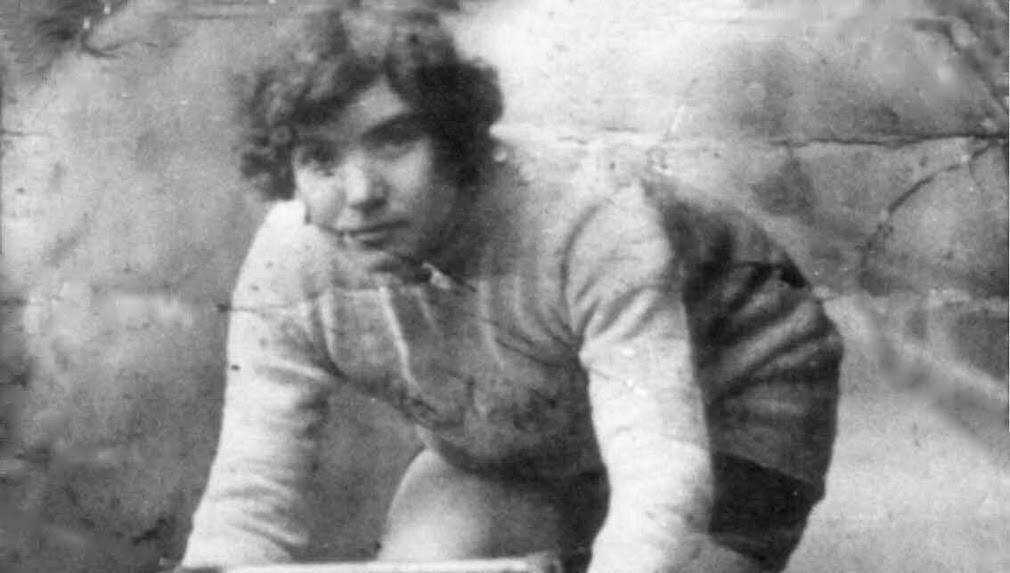
Alfonsina Strada is still the only woman to have taken part in the Giro d’Italia although, happily, a new generation of female professional cyclists are breaking through the many obstacles to shine nationally and internationally
Clodagh Finn: Female cycling pioneers were told they risked ‘bicycle face’, but time has not removed barriers

The only woman to ever take part in the Giro d'Italia men's race was Alfonsina Strada.

If a woman was brave — and foolish — enough to get on a bike a little over a century ago, she was in danger of developing “bicycle face”.


Bicycle face? Yes, that awful condition which brought a ruddy flush to the cheeks and a strained expression to the muscles of the face.

In other words, a look common to all cyclists but, as doctors warned in the late 19th century, it could induce nerve problems in women or even dementia.

Worse still, one female doctor issued a dire warning that too much cycling could turn a woman’s “feminine charms” into “masculine traits”.

None of it was true. There wasn’t a single shred of scientific evidence in the manufactured condition known as “bicycle face”; it was merely social control dressed up as pseudoscience in a vain bid to curb the freedoms that cycling had opened up for women.

HISTORY HUB

If you are interested in this article then no doubt you will enjoy exploring the various history collections and content in our history hub. Check it out HERE and happy reading

By the 1890s, several million of them all over the world were on the move and chaperone-less.

More alarming still, the cycling craze brought with it changes in fashion. It marked a considerable victory for the rational clothing movement, which campaigned for practical clothes that allowed women to move more freely.

Skirts got shorter and bloomers became the radical cyclewear of choice.

Kate Meyrick, the Irish nightclub owner who gained fame and notoriety in London’s roaring 1920s, claimed to be the first woman to ride a bicycle here. As a young girl — and tomboy — she said she took turns on her bike around the garden of the family home in Dún Laoghaire, Dublin.

Another Irish woman, Sophie Bryant, is also said to have been the first Irish cyclist. Bryant was born down the road in Sandymount, but two decades before Meyrick, so she might just have the edge on that historic claim.

Bryant certainly kept up cycling into adulthood, unlike Meyrick who was too busy entertaining celebrities, royalty, and gangsters at her nightclubs in between stints in jail.

By contrast, Bryant made a career as a mathematician, social reformer, and suffragist, also finding time to advocate for the outdoors. She rowed, swam, and cycled. At age 72, she was still climbing in the Alps and sadly died there in a hiking accident in 1922.

Different set of firsts

Beatrice Grimshaw, the Antrim-born writer and adventurer, chalked up a different set of firsts. In 1891, she moved to Dublin to take up a post as a sports journalist and later sub-editor on the Irish Cyclist & Athlete Journal, which was part-owned by the so-called father of Irish cycling, RJ Mecredy.

In her spare time, Grimshaw took to her bike with impressive vigour often completing 100-mile cycles. In 1893, she entered the record books when she rode 212 miles on her Rover bike in a 24-hour marathon — the first woman to do so.

(She would later sail away to the South Pacific to spend 27 years exploring Papua New Guinea, but that’s a story for another day.)

I thought of our early cyclists this week as the Giro d’Italia’s women’s race gets underway just before the men’s tour finishes in Rome.

Distinct and separate races with a single exception. In 1924, Alfonsina Strada, aged 33, entered the men’s stage race and finished it despite jeering crowds and a sneering press.

Both changed their tune, however, when they realised that this woman of 5ft 2” was determination personified

She provided a welcome distraction in a year when the usual stars weren’t racing.

The race was some 100 miles longer then, with 12 stages that took in 2,245 miles on the roughest roads and the steepest climbs through rock-strewn mountain passes. Like the other riders, Strada was responsible for her own repairs and carried spare tyres across her shoulders.

She fell a number of times and fixed several flats. At one stage, she damaged her handlebars and fixed them with the handle of a broom. She rode on regardless and finished the race, unlike two thirds of the field. Just 31 of the 90 riders completed the punishing circuit that year.

She was feted by Benito Mussolini and the Italian king, Victor Emmanuel III. She never rode the Giro again — she wasn’t allowed — but she did continue her cycling career, racing in Italy and Europe. When she retired, she opened a bicycle shop in Milan.

'Devil in a dress'

What is striking about her story is that, despite social conventions, she was encouraged to cycle as a young girl. The neighbours might have nicknamed her the “devil in a dress”, and older people blessed themselves when she whizzed by, but her father believed in her. He traded 10 chickens to buy her a bike when she was a teenager.

At 13, she won for first race, took home a pig as a prize, and ignited a lifelong passion. She had a second supporter in her husband, Luigi Strada, (which, pleasingly, is also the Italian for “road”). He bought her a bike as a wedding gift, acting as her coach.

She cycled all of her life and, towards the end of it, invested in a motorbike

One day in September 1959, after riding it to the Tre Valli Varesine bicycle road race, she returned home and told her neighbour that she had had a great day. She died moments later of a heart attack. Two wheels to the very end.

She is still the only woman to have taken part in the Giro d’Italia although, happily, a new generation of female professional cyclists are breaking through the many obstacles to shine nationally and internationally.

If they don’t know about Alfonsina Strada’s courage and endurance, they might draw from cycling pioneers closer to home. Although our focus is earlier, you can’t write about Irish cycling without doffing a cap to Isabel Woods, the cycling legend who held eight Irish records in the 1950s.

Here’s one of them: In June 1955, she cycled the 600-plus kilometres from Mizen Head, Cork, to Fair Head, Antrim, in a time of 23 hours, two minutes, and 10 seconds. That record wasn’t broken until 2007, when Rose Leith set a new record of 21 hours, 40 minutes, and 21 seconds).

Isabel was at the finish line to congratulate her successor. Last November, she celebrated her 97th birthday by set-dancing at her home outside Lisburn. She said that she has no notion of stopping.

School trends

Given this inspiring heritage, it is beyond dispiriting to find that young Irish girls now baulk at the thought of cycling.

One in 25 boys cycle to school in Ireland, but just one in 250 girls do, we were told during National Bike Week earlier this month.

It was so depressing to hear young women speak of the joy of feeling the wind in their hair as they cycled to school, but then say they had been put off by the stigma, the jeers, and taunts of boys and men, and the fact that their school uniform skirt is a difficult beast to manage on a bike.

Where is the rational clothing movement when you need it?

Some schools have changed the uniform rules to encourage cycling, but why not all?

There are other concerns too — safety and availability of cycle routes, for instance — but it was still shocking to hear that just 30 of the 700 students at one Dublin school cycle to classes on a daily basis.

That is considered quite a lot given the national average.

How bitterly ironic that a new set of barriers — the modern version of “bicycle face” — is stopping girls using what was hailed as the “freedom machine” 140 years ago.

x

More in this section

Revoiced

Newsletter

Had a busy week? Sign up for some of the best reads from the week gone by. Selected just for you.

Cookie Policy Privacy Policy Brand Safety FAQ Help Contact Us Terms and Conditions

© Examiner Echo Group Limited