Colin Sheridan: How the World Cup became a history lesson for my children
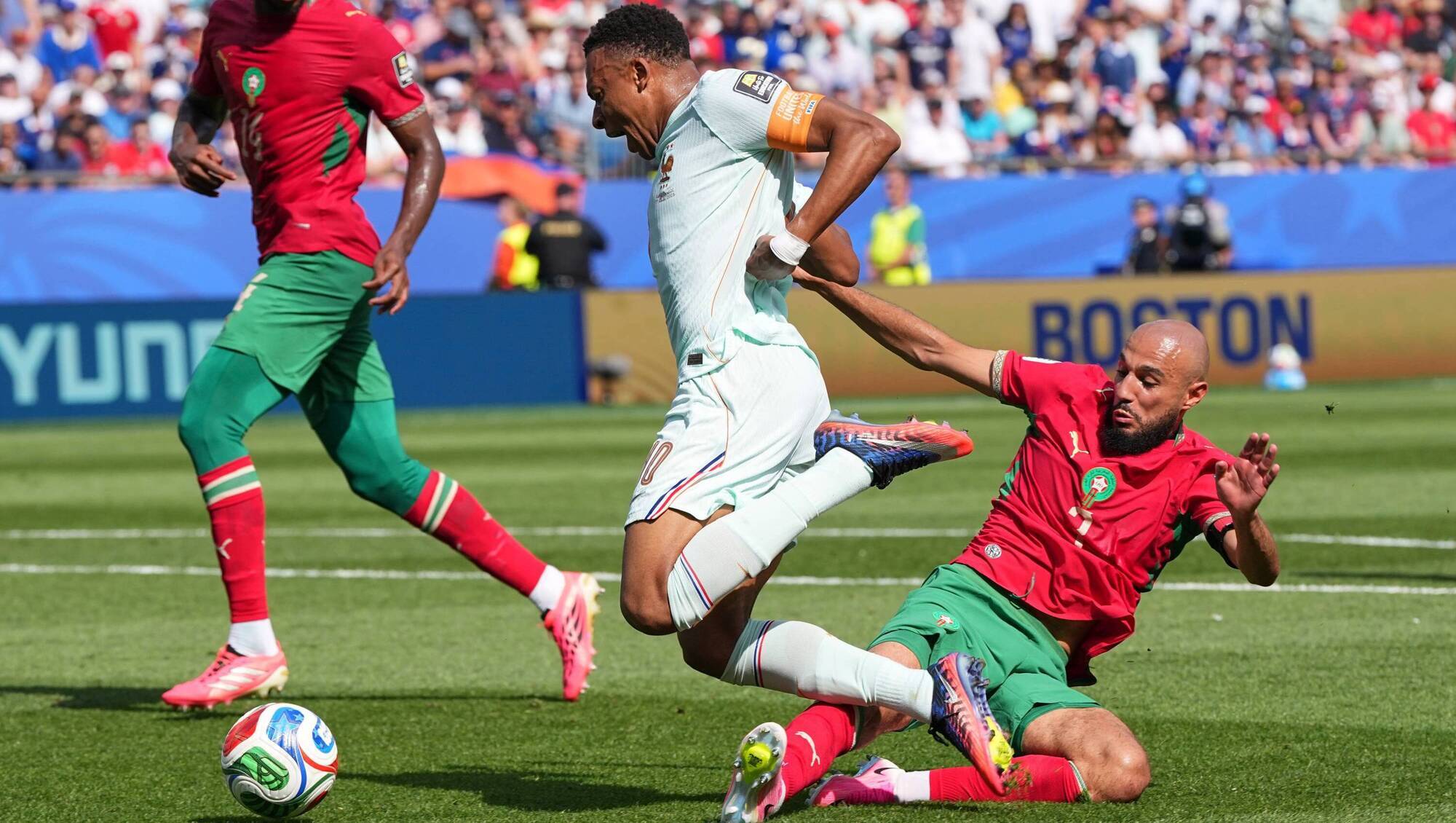
France's Kylian Mbappe is fouled by Morocco's Noussair Mazraoui during the World Cup quarter final match between France and Morocco. Picture: Martin Meissner/AP

There is an old line, usually attributed to Ambrose Bierce, that war is God's way of teaching Americans geography. Watching this World Cup beside my children, I have come to the conclusion that World Cups are a parent’s way of teaching children history. Or, more accurately, they are a child’s way of forcing parents to learn history before confidently pretending they knew it all along.
I thought this would be easy.
“We’re supporting Senegal,” I announced one evening, with the confidence of a man who lived in Dakar for three years (I did not).
“But why?”
Children possess an almost supernatural ability to cut through adult bullshit.
HISTORY HUB
If you are interested in this article then no doubt you will enjoy exploring the various history collections and content in our history hub. Check it out HERE and happy reading
They don’t care about your carefully assembled moral framework.
They don’t care that you’re halfway through what you imagine to be a beautifully nuanced explanation.
They don’t care that you’re trying to get them to bed before the second half.
“But why?”
That question should probably be stitched onto every parliamentary flag in the world.
Why?
Why did Belgium become so rich? Why do Moroccan and Algerian players speak French?
Why does everybody want England to lose so badly, other than English people, and then only English people who live south of the Severn.
Why does Iran keep appearing in stories that seem to involve everybody except Iran?
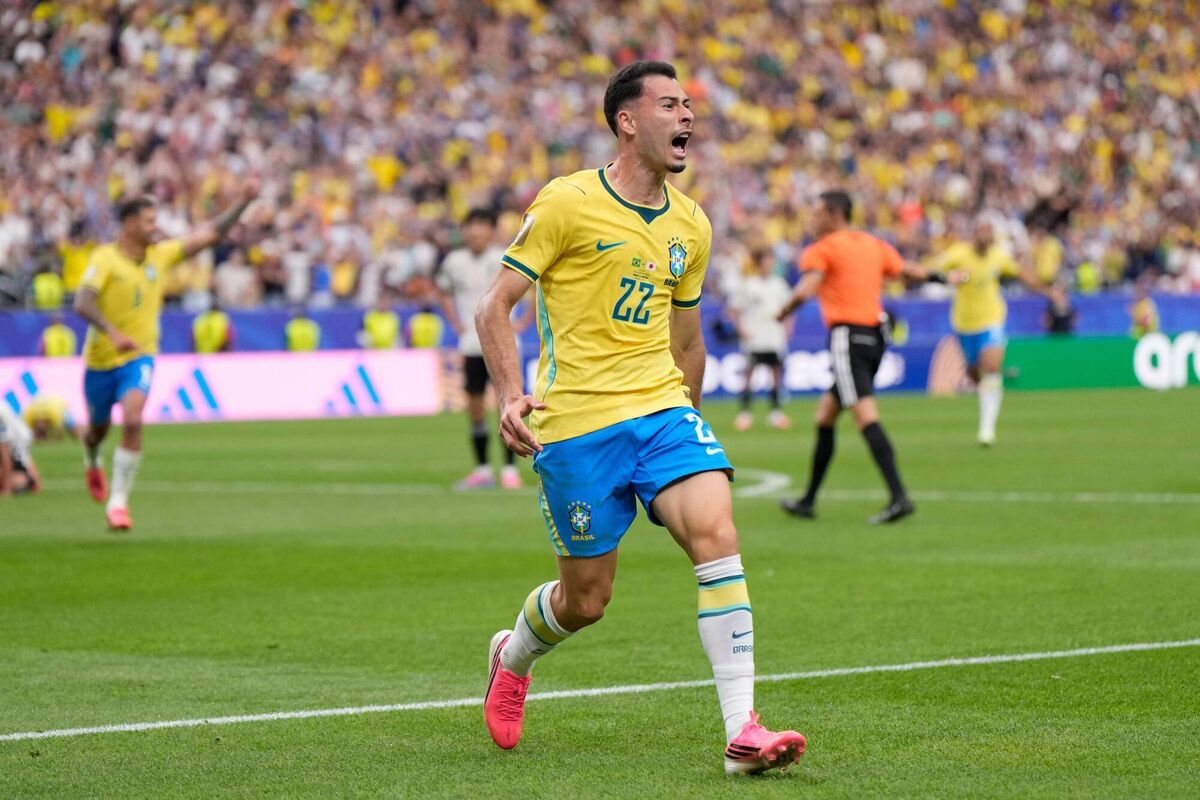
Why does Brazil have footballers who look like Vinicius Junior, footballers who look like Alisson Becker, footballers who look like Raphinha, and footballers who look like Martinelli? How can they all be Brazilian?
You begin the evening discussing football.
You end it explaining slavery, empire, migration, coups, violent resource extraction, and the peculiar European habit of colouring in other people’s countries on maps as though they had won them in a raffle.
Take Belgium. Belgium weren’t even playing the Democratic Republic of Congo. They were playing Senegal.
Yet the minute Thibaut Courtois appeared on the television, I found myself trying to explain King Leopold II.
Imagine explaining to a child that one European king effectively ran the Congo as his own private, sadistic commercial enterprise.
That millions died through forced labour, disease, famine, and violence as rubber and ivory flowed back into Europe.
That severed hands became part of a system of terror and accounting.
“But why?”
Exactly.
There isn’t a grown-up answer that doesn’t sound utterly deranged when repeated back by a child. France wasn’t much easier.
How exactly do you explain Algeria?
Read More
How do you explain that France spent more than a century insisting Algeria wasn’t really a colony at all, but part of France itself? That independence required one of the 20th century’s most brutal wars?
That Morocco lived under a French protectorate for decades? That the echoes of both histories still shape politics, immigration and identity today?
“But why?”
Spain? Now there’s an evening gone.
Try explaining that men arrived on one continent and mistook it for another, planted flags, claimed kingdoms they had never seen, brutally dismantled civilisations older than many European states, extracted extraordinary wealth, and then had the audacity to call it discovery.
“But why?”
England? Ah here, are we pulling an all-nighter?
At one point the British empire coercively controlled around a quarter of the world’s land surface.
That sounds terribly impressive until your child asks why anybody thought owning a quarter of the planet was a reasonable ambition in the first place.
“But why?”
Again.
The US introduces a different conversation altogether.
America doesn’t generally fit the classic European colonial model, yet its fingerprints are all over modern geopolitics.
Iran alone opens conversations about the 1953 coup, sanctions, regional power struggles and interventions that continue to shape lives generations later.
Children don’t know the language adults have invented to soften these things.
They don’t say “strategic interests” or “regional stability” or “western values”.
They simply ask why one country keeps interfering in another. And suddenly the vocabulary adults rely upon begins to sound suspiciously flimsy.
The funniest part of all this, though, was that my neat little theory about supporting the formerly colonised nations lasted approximately four minutes.
Because then came another question.
“But Belgium’s players didn’t do any of that.”
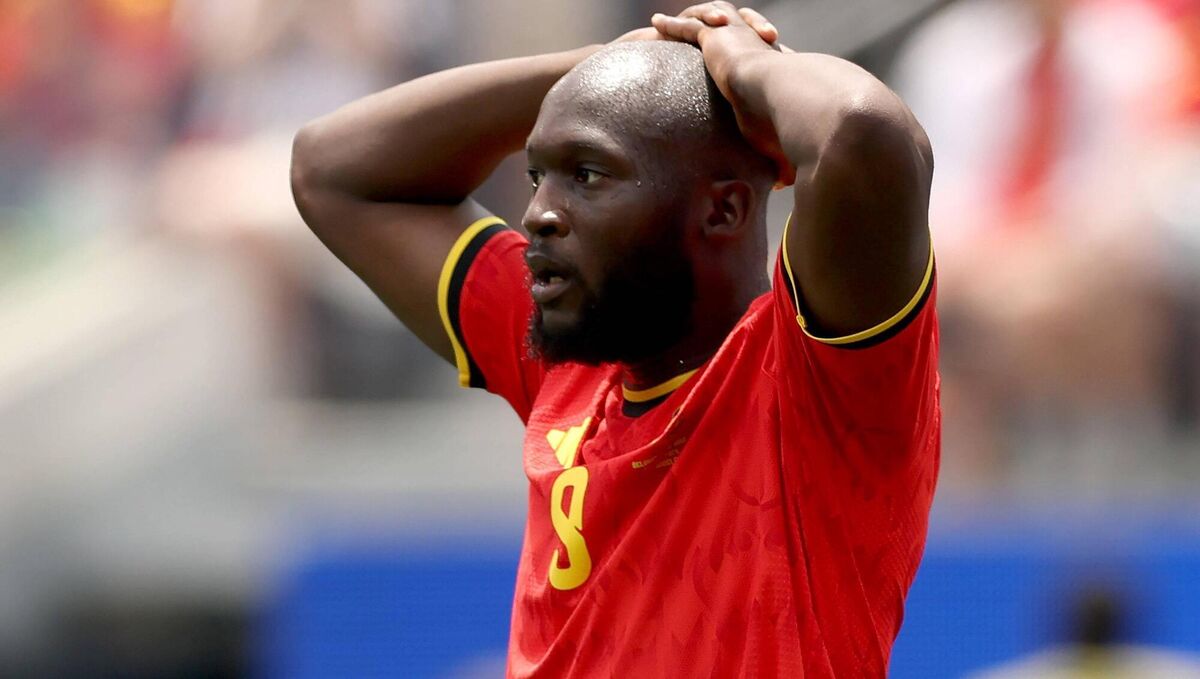
No, they didn’t. Romelu Lukaku’s parents came from the Democratic Republic of Congo.
Jeremy Doku’s family heritage is Ghanaian.
England’s squad reflects families with roots in Jamaica, Nigeria, and Ghana.
France’s team is unimaginable without
generations whose family histories stretch across North and West Africa. The displaced descendants of empire now wear the shirts of the empires.
History, once again, refuses to cooperate with simple moral arguments.
And Brazil complicated matters still further.
“Why does Vinicius look different from Alisson?”
Because Brazil imported more enslaved Africans than any other country in the Americas.
Because Indigenous peoples, enslaved Africans, and successive waves of European and later Asian migration all helped shape the country that exists today.
One innocent question about a goalkeeper becomes a conversation about five centuries of human history.
Nobody tells you parenting involves this.
By the knockout stages another pattern emerged.
Senegal were gone, joined by DR Congo, Morocco, Algeria, Cape Verde, Tunisia, Egypt.
Iran, tellingly, were gone just in time for their country to be bombed yet again.
Many of the countries carrying the deepest historical scars quietly disappeared while the wealthier football nations, with their sprawling academies, billion-euro leagues, and immense football infrastructures, kept advancing.
That isn’t because history decides football matches, money usually does.
The inequalities that shape the global economy have a habit of finding their way into sport.
Wealth builds coaching systems, academies, facilities, and pathways that poorer nations simply cannot match.
Argentina remains the glorious exception that proves football still allows genius to upset the odds, but exceptions only prove the rule.
Adults — like governments — can become remarkably skilled at talking around history.
We invent euphemisms and sanitise atrocities.
We describe invasions as expansion, occupations as administrative, and exploitation as development.
Children have no interest in any of that. They strip away the diplomatic language, the political spin, and the comfortable myths with two
devastating words.
“But why?”
And somewhere between trying to explain Belgium, France, England, Spain, Iran, Brazil and America, I realised this tournament hadn’t really been teaching my children history at all.
It had been teaching me.
Because if the explanation sounds ridiculous when spoken aloud to a 10-year-old, perhaps it deserved to sound ridiculous all along.
War may once have taught geography. This World Cup has been teaching history.
More importantly, it has reminded me that the best historians in the house are usually the smallest ones.
CONNECT WITH US TODAY



Be the first to know the latest news and updates