Clodagh Finn: An extraordinary, ordinary Irish woman who built community and connections
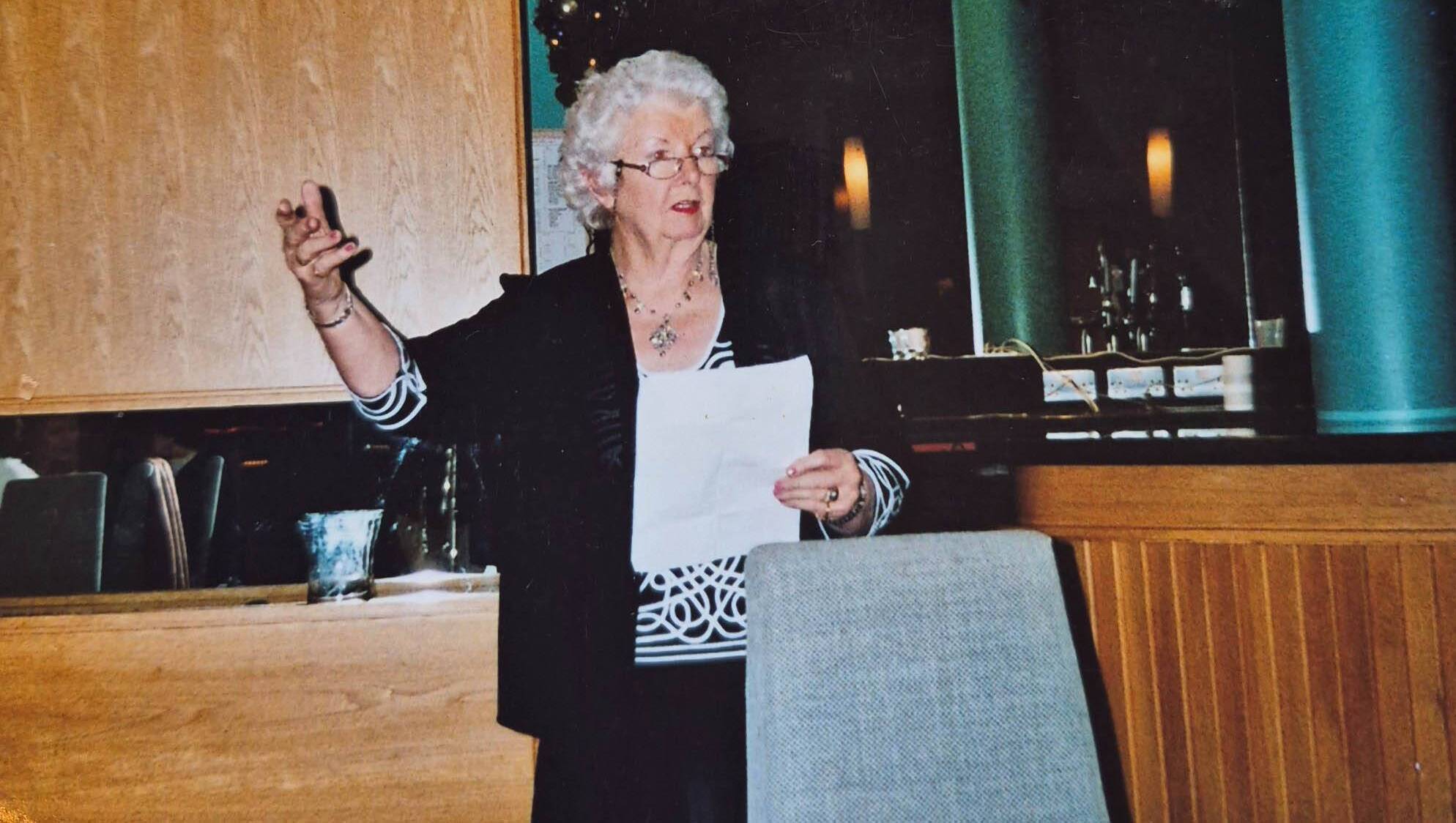
Celine Slattery was still singing her party piece Patricia the Stripper in her 90s, just one amusing detail in the legacy of a woman who did so much to shape and enhance the town of Tralee.

The anthemic boom of is lodged in my head because I’ve been watching the video on repeat. Not the Miley Cyrus version, but the one lip-synced by four Kerry women in their 70s and 80s who belt it out with impressive élan.
One of them, Celine Slattery, even takes up a sledgehammer, à la Miley (though fully clothed), to drive home the point that you can be cool, relevant and ridiculously good fun at any age.
She was 86 when she joined Phil Daly, Marian Dillon and Mary O’Donnell in 2016 to make a video that went viral after it was shot by StoryStock Media in Tralee.
The women, all members of the active retirement group Probus, wanted to challenge perceptions of age and tell young people that, despite their differences, they were right there behind them.
“I hate the word ‘old’,” Celine Slattery said at the time, opting to be called ‘mature’ instead.
In her 90s, she was still singing her party piece . She performed it “to tremendous applause”, to echo Chris de Burgh’s lyrics, at the end of inspiring talks given regularly to students of the former education minister (and teacher) Norma Foley at Presentation Convent Tralee. (Both women are also past-pupils.)
Celine used to joke she would be remembered only for her rendition of the slightly ribald number and, to be fair, it does stick in the memory. It will, however, be just one amusing detail in the legacy of a woman who did so much to shape and enhance the town of Tralee in her 10 decades on this earth.
In the starkest contrast to Miley’s wrecking ball, Celine Slattery, who died last month aged 96, was a woman who constructed things, very often out of nothing. She was a builder of community, of connections, of organisations, of possibility.
As a young woman, she joined the Red Cross and went on to either co-found or help run a range of local organisations: Tralee Development Association, the Kingdom County Fair, Tralee Tourism and the Rose of Tralee Festival accommodation office, to name a few.
All of them had one thing in common — to improve and promote Tralee.
The ethos of community, she said, came from her father PC (Patrick Cornelius) O’Mahony, secretary of Kerry County Council. “He always said if you can do anything for your community, do it,” she told Maurice O’Keeffe in an interview on ‘Irish Life and Lore’, the brilliant oral history archive he co-founded with his wife Jane.
In the same interview, she offers a fascinating account of growing up almost in step with the nascent Irish State.
Born in 1930 in Killarney, Celine O’Mahony was the youngest of 10 (“I was the last offence, your Worship,” she quipped) and was raised by parents who had been involved in the War of Independence. Her father was jailed for his IRB activities and later lost a job because of them, while her mother Kathleen Fleming was a member of Cumann na mBan.
Both of them were heartbroken by the divisions and bloodshed that followed in the Civil War, but their heroes emerged from that time: Roger Casement and Eamon de Valera.
Celine, a staunch supporter of Fianna Fáil, later met Dev in person when she was part of a Red Cross delegation attending his presidential inauguration in 1959. It was a moment she cherished.
Casement was long dead before she was born, but she heard about him because her father gave regular lectures in Tralee recalling the time he met the nationalist and humanitarian in the early 1900s in Brazil. Roger Casement, consul-general in Rio de Janeiro from 1906, crossed paths with Celine’s father, who was stationed there with the Western Telegraph communications company.
He described Casement as a great humanitarian and a beautiful man.
While those early experiences made an impression on Celine Slattery, she says her parents never influenced her. “You asked questions, but you made up your own mind.”
The family moved to Tralee in the 1940s and after finishing school, she got a job in Kerry County Council, working for a decade in the rates department and motor taxation.
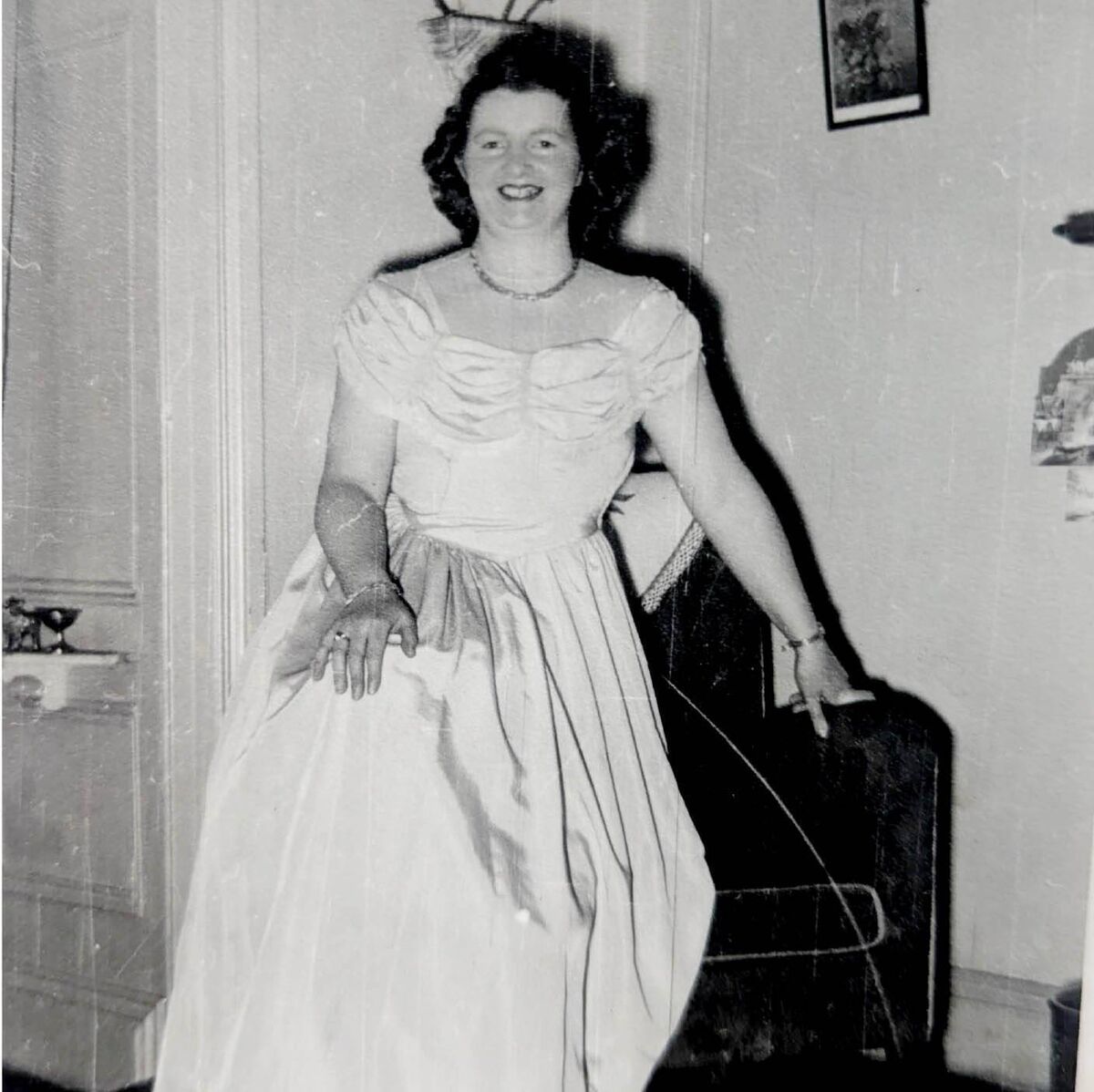
In the 1950s, she spent six weeks driving around France and Spain with friends, an unusual venture for women at the time, but one that ignited a lifelong love of travel.
She married Paddy Slattery in 1960 and, like hundreds of thousands of Irish women, was effectively forced into early retirement by the marriage bar.
Her work in the community, though, was only getting started. She had a busy home life with three children (Emer, Con and Orla), but still found time for voluntary work. Through the Tralee Development Association, she got involved in the Kingdom County Fair, an agricultural show set up in 1948 to bring rural and urban communities together.
It is still going strong and swings into gear next weekend with its familiar mix of livestock competitions, showjumping, dog shows and arts and crafts.
I’m a huge fan, partly because my mother’s irises always won a prize there and also because it was where I got my very first wage packet. Thanks to Celine Slattery.
Her youngest daughter Orla was a dear school friend and a number of us got jobs at the entrance turnstiles. Call it ‘pull’ if you must, but I loved everything about the event — the pageantry, the animals in quarters so close you could feel their breath on the back of your hand, the endless bustle, and the ferocity of the competition between the makers of sponges and fairy cakes.
Even then, I had a sense of how Celine Slattery, and other women like her, made things happen.
As her daughter Orla recalls, if someone had a complaint, she would ask them to join the organising committee so they could do something about it.
The seeds of the Rose of Tralee Festival were sown at that fair too. It had a carnival queen and that inspired the idea of starting a festival with ‘Roses’.
At the time, there were only two hotels in the town and Celine Slattery ran what was grandly described as the festival accommodation bureau. It enlisted the help of ordinary people, asking them if they would host people in their spare rooms.
Some were appalled, but others thought it a wonderful idea and a great way to earn some extra cash ahead of the new school year.
In any event, Celine was determined to showcase Tralee as a tourist town; the gateway to the Dingle peninsula and other Kerry destinations. Her early flair for marketing met with much opposition, though. “It was harder to sell tourism to the people of Tralee than it was to sell Tralee to the tourists,” she said.
Much of the work she did voluntarily, at times from donated rooms in local pubs or businesses but very often at home.
As Orla recalls: “As a child I never knew if a phone call I answered might be to do with a Holstein Friesian judge, an accommodation query during the festival or a request for Mamma to give a motivational speech [She was secretary of Toastmasters].
“Mamma never said no to a request for help. Instead, she accepted every one with enthusiasm, bringing her sharp intellect and brilliant organisational skills to any endeavour she turned her hand to while ensuring everything at home still ran smoothly.”
When she took a full-time post as constituency secretary to Fianna Fáil TD Denis Foley, she considered it a dream job: “I wanted to help people and do something for them,” she said.
Did she ever consider going into politics herself? She did not because, as she told Maurice O’Keeffe: “I can be too cranky and I’m very outspoken.”
Well, that depends on your point of view. In a tribute this week, Ms Foley (daughter of Denis) described her as a marvellous raconteur, “dedicated to drawing people together for the betterment of all”.
She did just that, one of the extraordinary ordinary Irishwomen who worked tirelessly to build the fabric of our towns and villages.

CONNECT WITH US TODAY



Be the first to know the latest news and updates