Clodagh Finn: A champion of science who had the gift of inspiring wonder
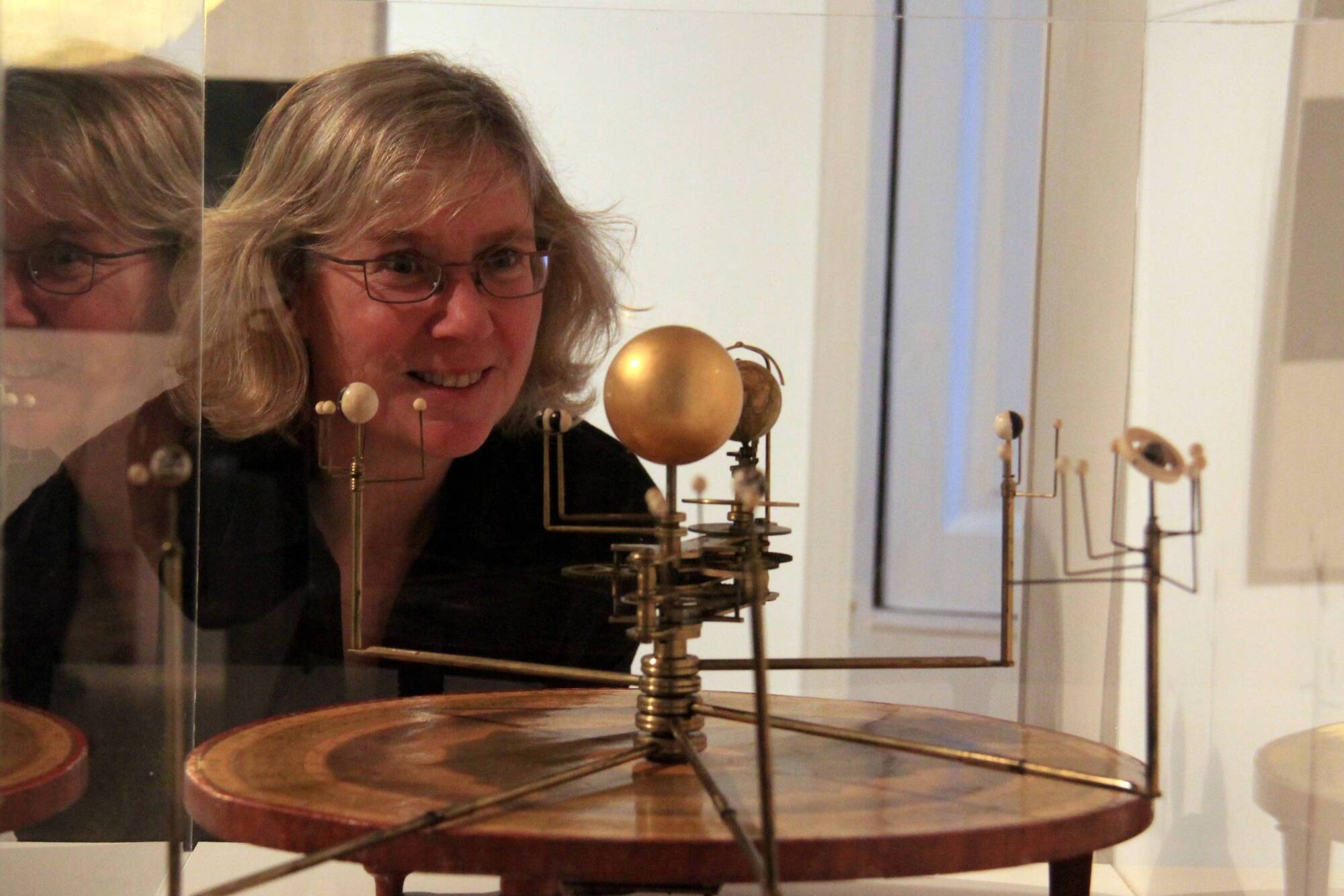
Mary Mulvihill looking at an orrery at an exhibition in Dublin. Picture: courtesy of Dr Brian Dolan

On Wednesday, the Mary Mulvihill award of €2,000 will be presented to a third-level student whose entry to the science-media competition shows the same kind of curiosity, creativity and story-telling imagination as the woman the prize is named for.
This year’s theme is time.
There’s something very poignant about that because almost 11 years have passed since Mary Mulvihill died, aged 55, in June 2015, yet — happily— the memory of her pioneering work and considerable legacy still burns bright.
To those who do not know her, Karlin Lillington, journalist and friend, offered this impressive summary of her accomplishments in an obituary; she was a “science writer and broadcaster, editor, speaker, blogger, tour guide, and outstanding advocate for Irish science and technology and particularly, Irish women of science”.
Read More
HISTORY HUB
If you are interested in this article then no doubt you will enjoy exploring the various history collections and content in our history hub. Check it out HERE and happy reading
She also captured something of Mary’s insatiable curiosity with this moving paragraph: “I can hardly believe that I won’t run into her at a science event somewhere soon, hear her call out a friendly greeting, and get a merrily delivered earful of exciting science and tech happenings that I should attend, or read, or listen to, or watch out for.”
That enthusiasm bursts through the pages of her reissued book, , a county-by-county exploration of Irish mysteries and marvels (Four Courts Press).
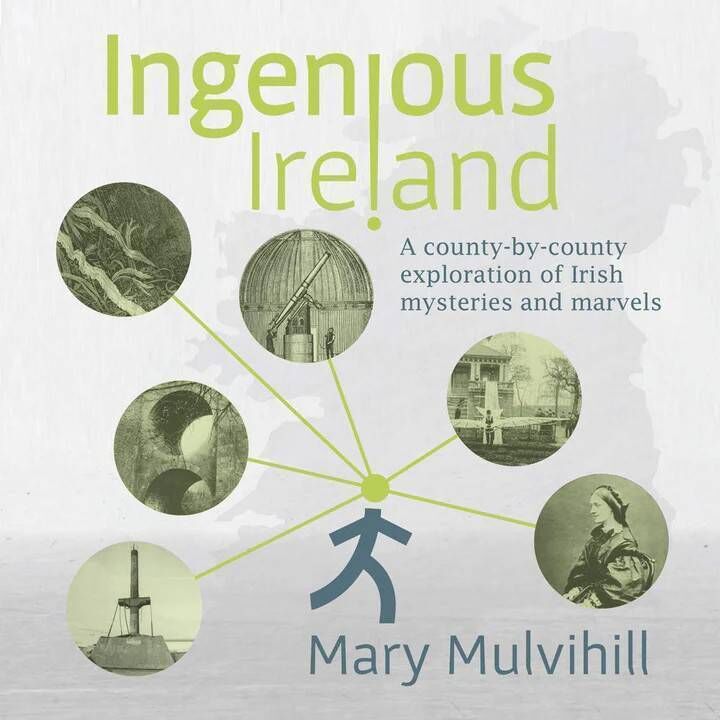
Here’s just one tiny snippet that presented itself as a marvel to me. Did you know there’s a planet called ‘Ireland’?
Me neither.
To quote Mary: “Minor Planet Ireland is a small asteroid or minor planet (specifically, MP 5029) lying in the asteroid belt between Mars and Jupiter. It was named, in 1995, in honour of the 150th anniversaries of the GSI (Geological Survey Ireland) and the University Colleges in Cork, Galway and Belfast.”
It was discovered by US astronomers, Carolyn Shoemaker and her husband Eugene (Gene) Shoemaker. Both were world-renowned and Carolyn, who died recently, at the age of 92, in 2021, was a comet and asteroid hunter. She discovered over 30 comets and more than 500 asteroids.
I mention her work because one of Mary Mulvihill’s enduring legacies is her tireless advocacy of women in STEM (science, technology, engineering and mathematics).
As her friend Fiona Doris, volunteer guide and storyteller, puts it: “Every year we hear stories of how people were impacted by meeting her; in some instances, they were inspired to change their choice of study or career.”
Indeed, Fiona says that it was under Mary’s wing that she developed a taste for storytelling and tour guiding.
“Her passion for science communication and all aspects of Irish natural and cultural heritage didn’t make her a proselytiser, or anything like that. Sometimes she saw things in people that they weren’t aware of themselves. Mary always listened deeply and chose her words wisely especially when people asked her advice.”
She helped many others when she co-founded Women in Technology and Science (Wits), an advocacy group that brought women across all Stem sectors together.
She was the organisation’s first chair and went on to edit two important books published by Wits.
The first, published in 1997, tells the story of 15 of our ‘scientific grandmothers’, the women scientists whose pioneering work in the 18th, 19th and 20th centuries paved the way for others.
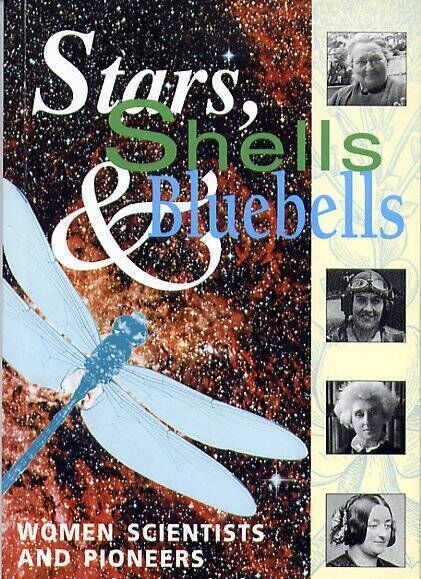
Happily, many of the women featured — Cynthia Longfield, Ellen Hutchins, Maude Delap, Sophie Pierce (subject of June O’Sullivan’s historical novel The Sky Is Not Enough) and Agnes Clerke are better known now.
Interesting fact: dragonflies were once known as the “devil’s darning needles”.
I leafed through it a few years ago when someone kindly lent me a copy but it appears hard to source now. Perhaps it might be reissued like .
By contrast, you’ll get a copy of the 2009 follow-up, , without any difficulty. A kindle version costs less than the price of a pint, and there’s ateing and drinking in it.
To return to the aforementioned Karlin Lillington. She has a great entry on Donegal-born mathematician, Kathleen ‘Kay’ McNulty Mauchly Antonelli (1921-2006). Her essay begins with this wonderful line: “The first ‘computer’ was not a machine — it was a woman.”
She goes on to explain that the term was the job title given to women in the 1890s who manually computed complex astronomical calculations. Later it applied to the dozens of women employed by the USA military during World War Two to manually calculate the flight path of a bullet or shell from the moment it left the muzzle of a gun until it landed.
Among those hired by the military was Kathleen ‘Kay’ McNulty, who would go on to become one of the world’s first computer programmers.
She was one of the six so-called ‘ENIAC (Electronic Numerical Integrator and Computer) women’, who programmed the very first digital computer, built during WWII.
“With no manual, they had to understand how the machine was built and worked, and together they helped to inaugurate the field of modern computing,” the chapter explains.
And here’s an interesting statistic from 1942 America. After excelling in maths at school, Kay McNulty went on to study it at Chestnut Hill College for Women, a small Catholic college in Philadelphia. Just three women of the 92 in her class graduated in maths.
It was second-nature to her, though: “In those days not many women majored in math. I always had an interest in statistics, and I thought, well, I might work in an insurance company or something. I just didn’t know. I just knew I loved math; that was the only thing I was really good at. It was one of those subjects you don’t have to study. No matter what the problem is, you just sit down and work it out like a puzzle.”
In providing a forum to write about these women, Mary Mulvihill helped many others pursue careers in science.
Her own personal hero was Charles Darwin and, according to friends and family, she would have added the word ‘woman’ to his advice: “A man who dares to waste one hour of time has not discovered the value of life.”
She was on a mission to champion science and to tell Irish people of their ingenious forebears. She did that in many media. She edited and hosted science programmes on RTE Radio1 and Lyric FM.
She ran guided tours and later produced audio guides and podcasts, leaving behind an accessible record of her work in science and technology.
Given that she honoured the people who went before her, it is entirely fitting that the Mary Mulvihill Association has done the same for her since it was set up ten years ago by friends and family.
There is now an award in Mary’s name. Her archive has been safely deposited at Dublin City University and, in 2023, an exhibition drawing on Ingenious Ireland ran at the Little Museum in Dublin.
There is also a plaque marking her contribution to Irish science journalism at her former home on Manor Street, Stoneybatter, Dublin.
In the same way that she was a custodian of our scientific heritage, the association formed in her memory has done exceptional work as custodian of her legacy. Perhaps as important, if not more, it has also given us a template on how to stop history gobbling up the contributions of so many brilliant women.

CONNECT WITH US TODAY



Be the first to know the latest news and updates