'We feel lost, we don’t know what to do': Ukrainian residents told to leave Cork hotel in three months
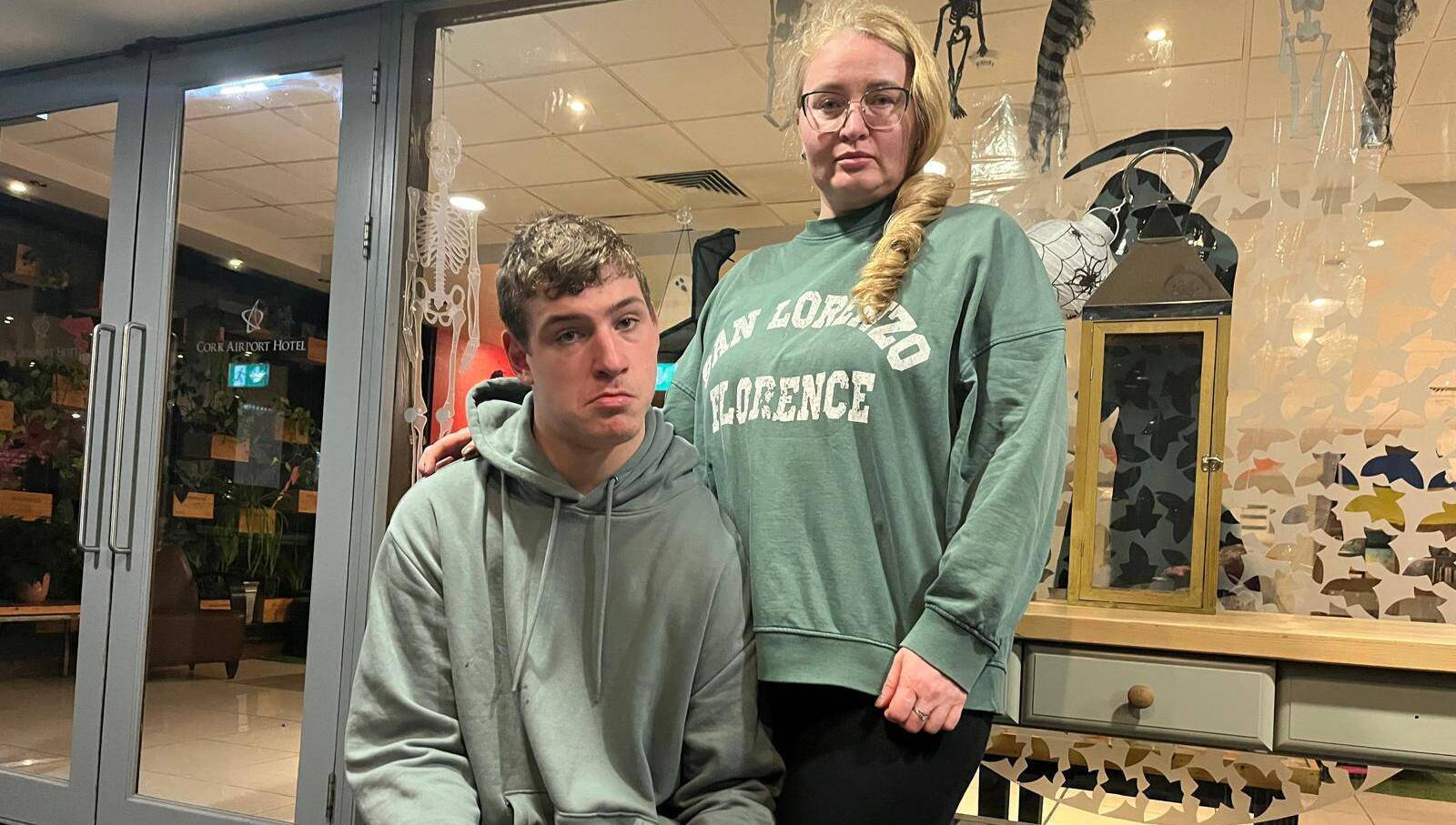
Max and Natalia Taranchuk are facing uncertainty as they must leave their current accommodation in the old Cork Airport Hotel. Picture: Donal O’Keeffe
Last Friday night, the former Cork Airport Hotel was shrouded in mist and fog, and some of its 89 Ukrainian residents were in tears as they struggled with the news they have three months to find new accommodation.
They are among 299 Ukrainian refugees across Cork City and county, and almost 3,000 nationally, who were last week served with notice to quit their State-contracted commercial accommodation by January 31, 2027.
This comes as the Government continues to phase out the Beneficiaries of Temporary Protection (BOTP) scheme, which was established in March 2022 under the EU Temporary Protection Directive.
According to Central Statistics Office (CSO) figures, more than 122,600 Ukrainians were issued BOTPs since Russia’s full invasion of 2022. As of June, more than 84,700 were still based in Ireland.
The State pays for accommodation, utilities, and meals, and instead of standard social protection, recipients are paid €38.80 per week per adult and €29.80 per child. That payment ceases if beneficiaries have an income of more than €125 per week.
The BOTP scheme will close for new applicants in March 2027, and the EU temporary protection framework is due to run out in March 2028, and with it the BOTP scheme.
Figures published in April showed 16,000 Ukrainians were living in hotels and B&Bs which had been paid for by the State.
Read More
The Government announced in May Ukrainians who arrived in Ireland before March 2024 and were housed under the scheme would no longer be entitled to State-contracted commercial accommodation.
In 2024, the BOTP scheme cost the State €1.16bn. According to justice minister Jim O’Callaghan, that figure was reduced in 2026 to €606m, and next year it will be further reduced to approximately €177m.
In July, the Department of Justice contacted about 5,000 Ukrainians in 190 centres across the country to inform them their accommodation arrangements would end in October.
The following month, the department published figures showing that 2,300 Ukrainians had left State-provided accommodation in the previous two months.
Some accommodation centres are in the process of either returning to the hospitality industry or adopting other State contracts for international protection.
Last Friday, the latest round of notifications landed in accommodation centres across the country, with almost 3,000 Ukrainians given three months’ notice they need to move out. Of the 299 Ukrainian people affected in Cork, 89 are staying in the old Cork Airport Hotel.
Speaking to the outside the hotel in the mist and rain — management insisted, regretfully, that interviews could not be carried out inside — residents said they had not been completely unprepared for the bad news, but were still upset by it.
All who spoke emphasised they were very grateful to Ireland for giving them refuge, but some became distressed as they considered their futures.
One woman, Nataliia Tarhanchuk, said she and her son, Maksym, arrived in Ireland in 2022 and have been living in the hotel since September 2025.
Maksym, who likes to be called Max, is 18, and suffers from a rare genetic disorder, as well as numerous associated diagnoses and medical conditions. He has undergone several complex operations and continues to receive specialised treatment, including at The Crann Centre in Ovens and at Enable Ireland.
Max is currently in his final year in Coláiste Éamann Rís and is studying for his Leaving Cert. Natalia is his sole carer. She said she was very uncertain about their future.
“We feel upset, we feel lost, we don’t know what to do next,” Natalia said.
“We don’t know if the Government will move us to another accommodation centre in another place; we would have to start all over again, and we would lose all of Max’s connections in the medical system.”
In August, BOTP recipients currently living in centres which are due to close and who have additional needs or feel that they cannot manage in independent accommodation, were invited to apply to the department for continued State-supported accommodation. That application process closed on September 11.
The Department of Justice said those who applied for continued accommodation are currently being advised of the outcome of their applications, and those who did not apply or were unsuccessful would need to vacate their homes by the end of January.
Natalia said she has heard from other Ukrainians who have already been moved from State-contracted accommodation they only received a decision two weeks before the date they had to leave their homes.
“We don’t know about the decision, and we don’t know the location we could be moved to, so it is very difficult,” she said.
“What will happen to children who are already attending schools and receiving specialised educational support? How will the interests of children with disabilities and special educational needs be protected?
Vitalii Solianikiov is 55 and is currently unable to work due to long-term disability caused by an accident in which he broke his back and knee.
“I would say that maybe 80% of people living in this accommodation have disability in their lives, physical or mental, themselves, or a child, or they are old people.
“It is very worrying for these people, because there is no housing for them to go to; everybody knows there is a housing crisis in Ireland.”
Despite his own disability and his uncertainty about his future accommodation, he was philosophical, saying: “Me, I don’t worry, life is life, shit is happening”.
One woman, who gave her name as Inna, said she and her husband, who is diabetic, came to Ireland in 2022 with their daughter, who is now 10.
“This hotel has been our home for so long; we have just three months to find a place, but that’s impossible,” she said.
“We both have full-time jobs, but when we reply to ads for houses, we don’t even get a reply. I have been looking for six months and no replies. It is impossible.”
Kristina Gerasymova is 43 and works part-time as a chef. She and her daughter came to Ireland from Kyiv in March 2022.
“My daughter is 11; she came here when she was six,” she said.
“I left my son in Kyiv; he is 25 now, and he is a soldier. He is fighting for Ukraine, his father is a driver in the emergency services. My son said, ‘Mom, I can’t keep you safe; take my sister and go'.
“He should be an engineer; he was in university, but I am so proud of my son; he is a hero.”
She said while she was concerned about being without accommodation, Ireland was still a better place to be than Ukraine.
“It’s more safe to live in a tent and be homeless in Ireland than to go back to Ukraine, where the Russians are still bombing us and killing us every day and every night,” she said.
CONNECT WITH US TODAY



Be the first to know the latest news and updates