Supermarket disruption will occur again as AI makes hacking easier, says cybersecurity expert
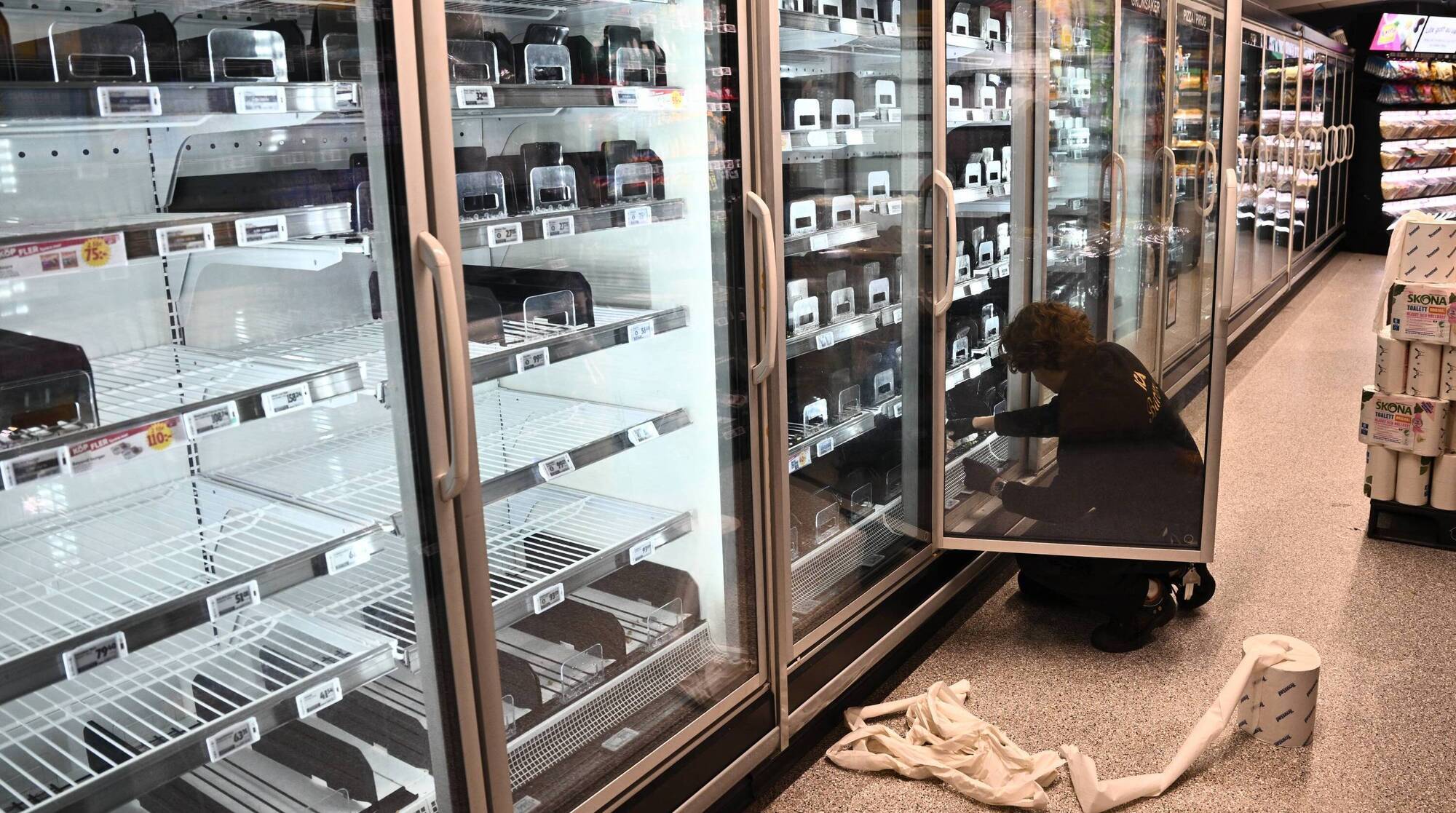
An employee cleans freezers that are out of power at an ICA supermarket on Odengatan in Stockholm, on Monday after a number of ICA and Coop stores have suffered problems with their refrigerators and freezers overnight. Photo: Fredrik Sandberg/TT News Agency/AFP via Getty Images
Artificial intelligence (AI) is making it much easier for hackers to cause huge disruption, a cybersecurity expert has warned, following a Europe-wide attack that left stores throwing out refrigerated and frozen produce, including SuperValu.
Musgrave, which owns Supervalu, confirmed that a cyber incident had affected refrigeration systems of a certain model in 13 stores.
The retailer said its monitoring systems alerted it to the attack and it “took immediate action” by removing all chilled and frozen products in the affected stores from sale. It reported later that the issue had been resolved, with replenishment of chilled and frozen ranges in the affected stores underway.
Ireland was one of seven European countries where an attack of this nature was reported, just weeks after hundreds of French supermarkets were hit by a similar cyberattack, with some fridges heating up to 50C overnight.
Read More
Ronan Murphy, founder of cybersecurity firm Smarttech, said it was “a huge concern” that incidents like this will continue to occur, as anything that has an internet connection is “hackable”.
He said: “The whole world is running on software now, and AI has the ability to write software fast, but that means it knows where the weaknesses are and how to break in.”
He added that it was interesting that nobody has claimed responsibility or looked for ransom money related to this or the French attack weeks ago.
“You have to assume a nation state is trying to undermine people’s trust in their state; the signs would be pointing to Russia or even Iran.”
Brian Honan, CEO of BH Consulting, said that there were “challenges associated with more and more smart devices that are all connected to the internet".
He said it is “not uncommon” for fridges and other devices belonging to large companies to be connected to the internet to enable manufacturers to remotely monitor and manage them, “but if they are connected to the internet, they can be vulnerable to a cyberattack.”
These can be harder to tackle than traditional crime, he said.
“Attackers can cover their tracks using various techniques such as Virtual Private Networks (VPNs) and the dark web, and due to the interconnectivity of the internet, attacks can come from anywhere in the world.
“We don’t know where they’re originating, so for law enforcement to try to detect who is behind them is incredibly difficult”.
Even if the attack is traced back to a particular person’s computer, law enforcement cannot prove exactly who was sitting at it, he added.
Professor Utz Roedig at University College Cork’s computer science department said the motive was “unclear and unknown”, as there seemed to be no direct financial benefit to the attack, just disruption.
Other Irish retailers do not seem to have been affected by the cyberattack, with a Lidl Ireland spokesperson saying their stores were trading as normal and adding: “At Lidl, we take the safety and security of our IT systems and infrastructure extremely seriously and have robust procedures and processes in place to safeguard our network.”

CONNECT WITH US TODAY



Be the first to know the latest news and updates