Ukrainian accommodation contracts to be phased out from October
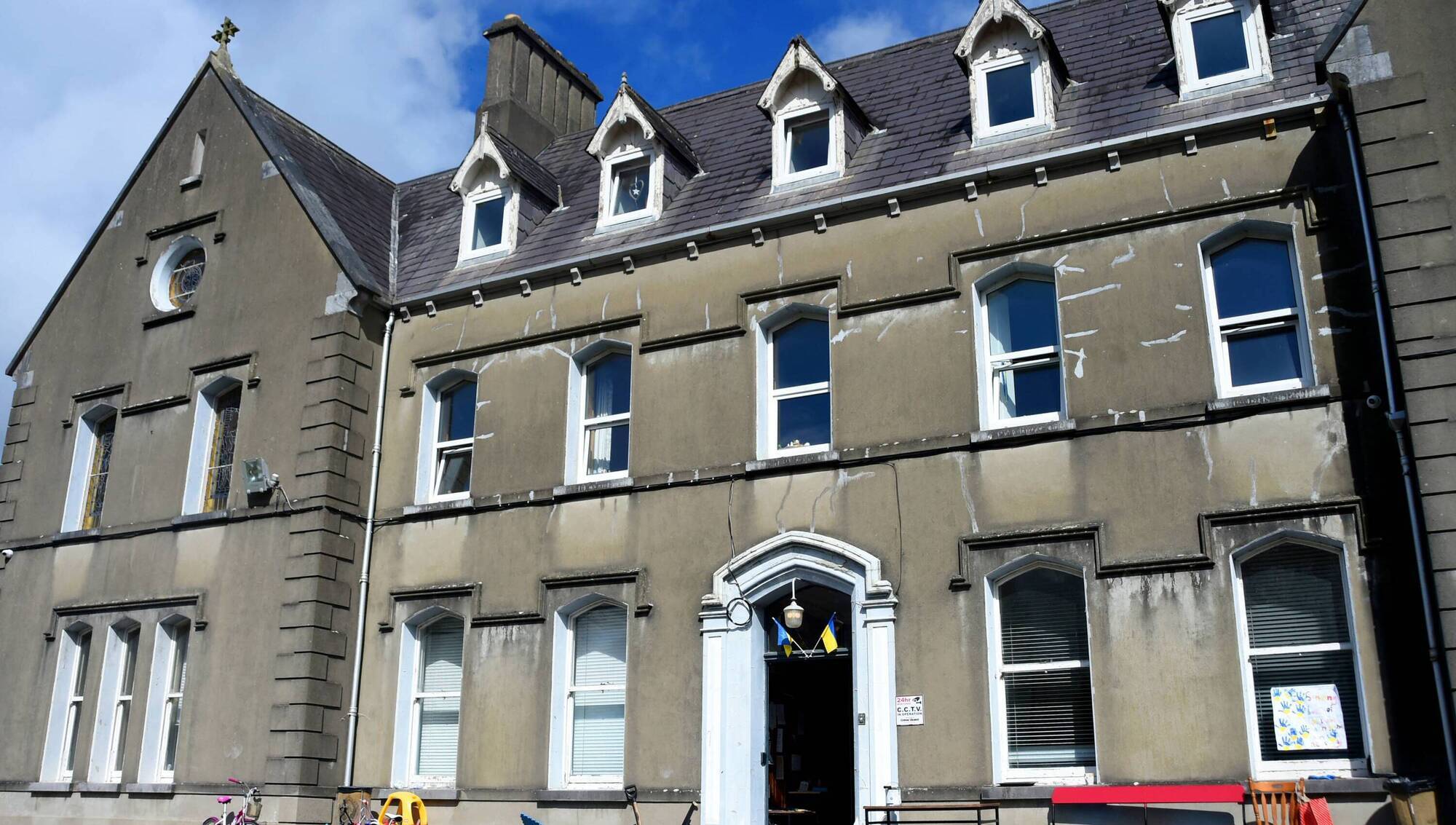
Convent Sanctuary, Buttevant, Co Cork, was one of the buildings used to house Ukrainian families. File picture: Larry Cummins
Contracts will be terminated in four steps in October, November, January, and February and are not part of the Department of Justice’s designated accommodation centre portfolio.
Refugees will be given a three-month notice period of termination of their accommodation, though ministers have been told this may not always be possible.
The Cabinet Subcommittee on Migration has been briefed on the latest arrangements.
The Government announced in May that a number of changes would be made to the scheme around Ukrainians in Ireland, including the phase-out of state-contracted commercial accommodation, a reduction in the payments made to households hosting Ukrainians, and the development of a voluntary return programme.
The withdrawal of State-provided commercial accommodation is targeted to end by next March.
There are around 16,000 people in commercial State-supported accommodation and over 40,000 people in subsidised accommodation in private homes.
Once individuals leave the State-contracted commercial accommodation and move to independent accommodation
arrangements, they will be entitled to standard social welfare assistance, equivalent to that of Irish citizens, subject to meeting the eligibility conditions.
The Cabinet subcommittee was told the changes will, for the most part, affect those who arrived in Ireland before March 2024.
Those who have been in accommodation will be expected to make their own accommodation arrangements from that point on.
For those who may require continued accommodation in an alternative setting, an application process will open if they can demonstrate a continued need for accommodation.
People who are unable to transition to independent living from State-contracted commercial accommodation can still apply for assistance from a crisis team on a case-by-case basis.
However, it is expected that this will be in high demand, and those with "significant medical conditions" will be among those applying.
Where an application for accommodation has been rejected, an appeals process will be available to review decisions.
However, the sub-committee was told that this policy "should not" increase homelessness.
Those who are successful will be accommodated in a designated accommodation centre, of which there will be "a number" around the country.
This accommodation will be in larger settings, and ministers were told that there is "no guarantee" it will be in the same area in which a person currently lives.
This accommodation will primarily be in converted buildings and refurbished properties, along with some hotels and B&Bs where suitable.
The sub-committee was told that while efforts will be made to continue to accommodate those with HSE care plans within their current Community Health Organisation areas, this may not always be possible.
Ministers were told that the department is to begin a pilot of the application process for those seeking further accommodation in Citywest Hotel, where around 1,000 Ukrainian refugees live.
Anyone not availing of continued accommodation will be required to vacate the hotel by the end of September, it is understood.

CONNECT WITH US TODAY



Be the first to know the latest news and updates