The promise of Nuremberg was accountability. The world is still struggling to deliver it
Eight decades after the landmark trials, courts can establish responsibility, but powerful states still determine whether justice can be enforced
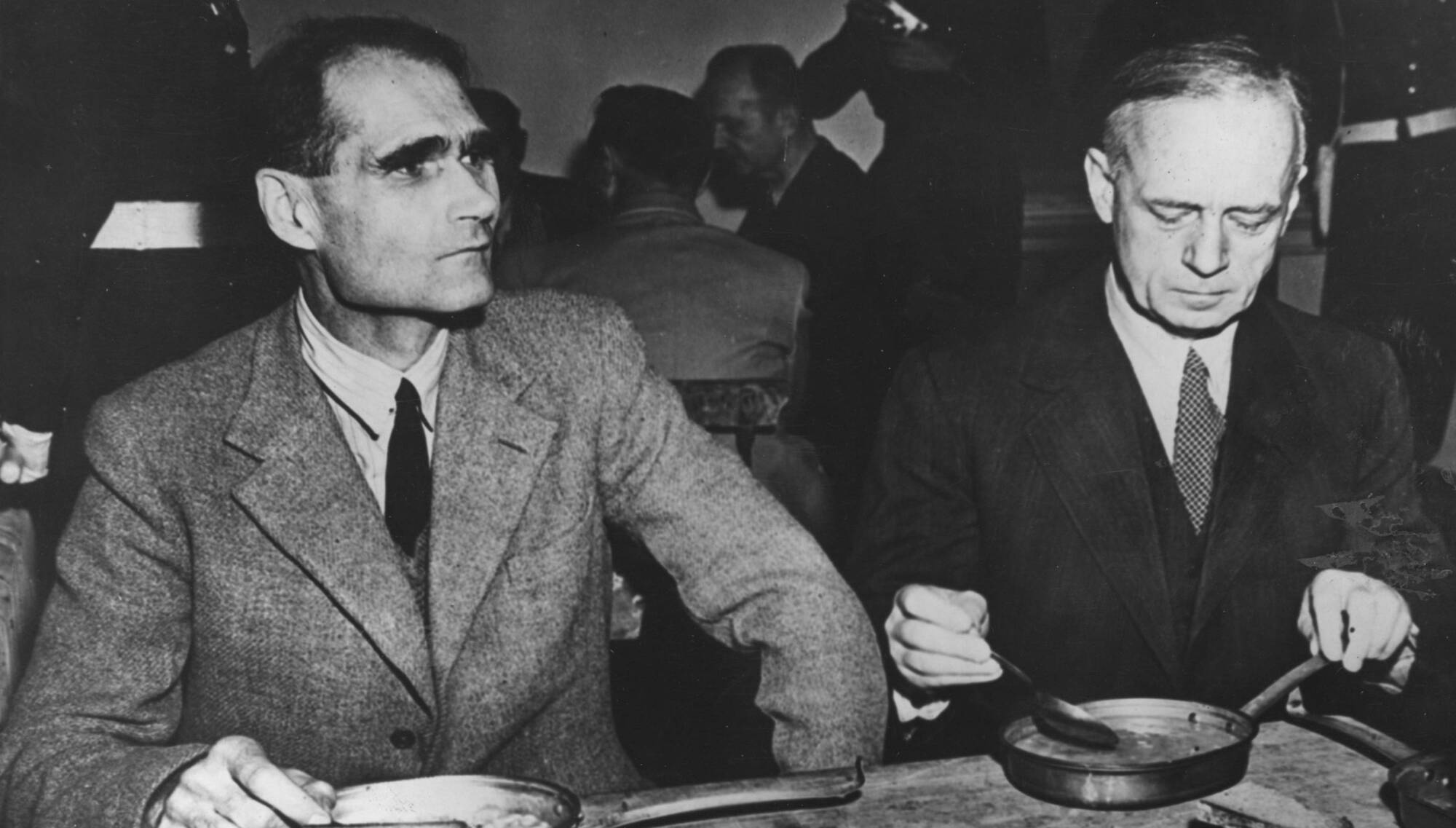
26th November 1945: Ex Nazi officer Rudolf Hess eating a meal with fellow Nazi Joachim Von Ribbentrop at Nuremberg court house during their war crimes trial.  File picture: Reg Speller/Fox/Getty

26th November 1945: Ex Nazi officer Rudolf Hess eating a meal with fellow Nazi Joachim Von Ribbentrop at Nuremberg court house during their war crimes trial.  File picture: Reg Speller/Fox/Getty

The men in the dock had once exercised power over the lives of millions. In Nuremberg, they listened through headphones while lawyers examined what they had done with it. The photographs have become familiar enough to obscure the extraordinary proposition being tested: The conduct of a state could create criminal responsibility for the people who directed it.

On October 1, 1946, the International Military Tribunal delivered its verdicts against the surviving leadership of Nazi Germany. Some 80 years later, those proceedings remain a point of reference whenever the world discusses bringing the architects of atrocities before a court. They also expose how often the promise of accountability depends on who has the power to resist it.

The tribunal convicted 19 defendants and acquitted three — 12 received death sentences, including Martin Bormann, who was tried in his absence. Ten were hanged later that month. Hermann Göring killed himself before his execution; Bormann was subsequently established to have died during the final days of the war.

Individual responsibility also places a limit on collective blame. A prosecution must establish what a particular person did, ordered, or enabled. Nationality cannot supply that proof. This matters as much to the credibility of a verdict as the strength of the evidence: Justice must resist the generalisations that have so often enabled mass persecution.

Hitler was already dead, as were Heinrich Himmler and Joseph Goebbels. Nuremberg could not put the entire regime on trial. It could establish that political office and military rank provided no automatic escape from responsibility for crimes committed through that regime.

HISTORY HUB

If you are interested in this article then no doubt you will enjoy exploring the various history collections and content in our history hub. Check it out HERE and happy reading

The United States, Britain, France, and the Soviet Union supplied judges and prosecutors. Proceedings had begun in November 1945 in the Palace of Justice, in the city associated with the Nazis’ mass rallies. Defendants had lawyers and the opportunity to challenge the case against them. The acquittals demonstrated that prosecution was not supposed to guarantee conviction.

Much of the evidence came from the regime’s own records. Bureaucratic documents helped connect policy to its consequences. Film brought images of the camps into the courtroom. The machinery
of persecution had generated material that could be examined after those who operated it lost control of the state.

The charges included crimes against peace, war crimes, and crimes against humanity. Genocide appeared in the indictment, but the tribunal did not deliver convictions for genocide as a separate offence. The convention defining that crime followed in 1948. Remembering what Nuremberg actually decided matters when its name is invoked in today’s arguments.

Its principles were affirmed by the United Nations and formulated by the International Law Commission in 1950. They made individual responsibility explicit. Domestic legality did not remove responsibility under international law. Acting as head of state did not remove it either. Following orders was no complete defence where a moral choice had been possible.

For soldiers, that last principle has an immediate meaning. A chain of command allocates responsibility; it cannot simply dissolve it. For governments, the implications are equally uncomfortable. The language of necessity cannot, by itself, turn whatever a state chooses to do into something lawful.

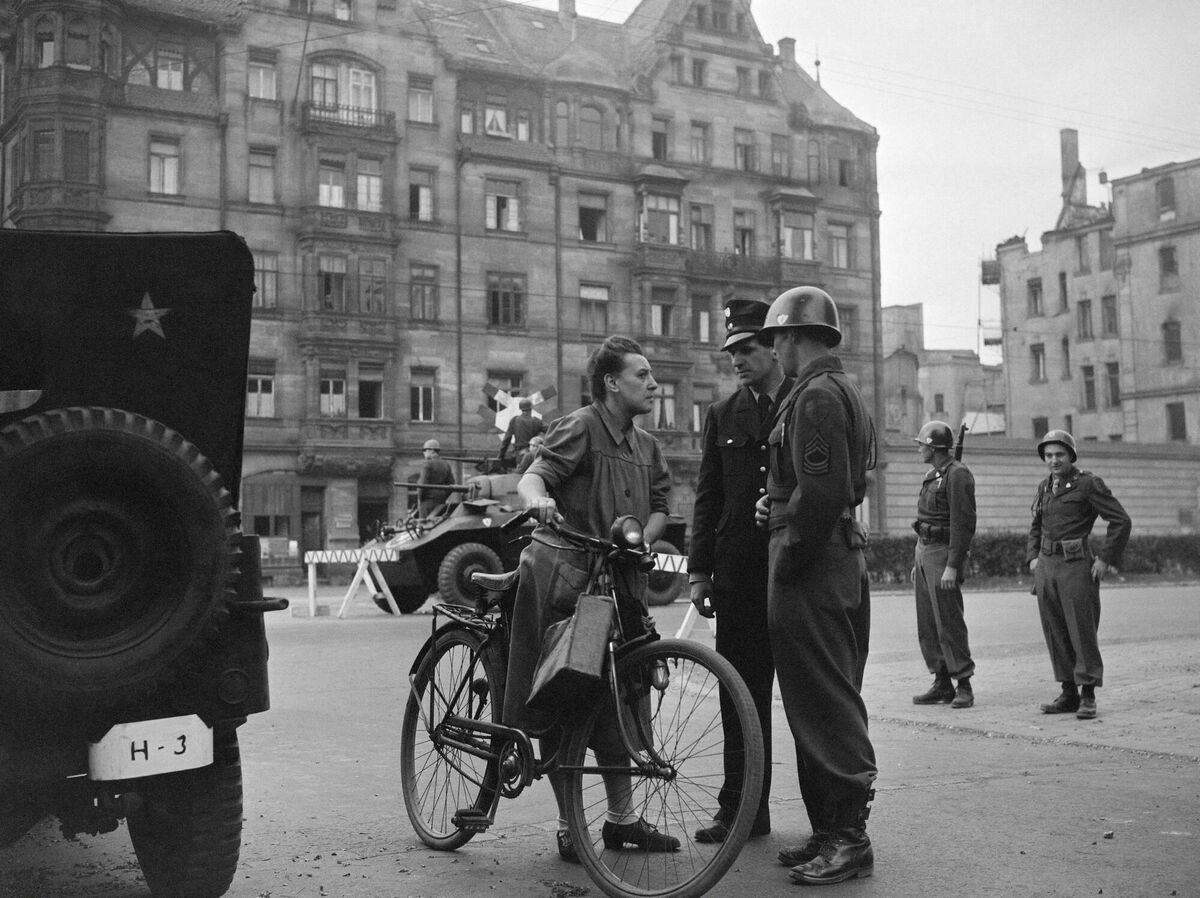
A policeman and a soldier talk with a woman while surveying the street near the law court of Nuremberg on September 1946 during the trial against the surviving leaders of the Nazi machine. File picture: AFP/Getty

Nuremberg’s authority nevertheless contained a contradiction from its inception. The victorious powers established the court and prosecuted their defeated enemy. The tribunal’s jurisdiction concerned the European Axis, not the conduct of its judges’ governments. It was a major advance in criminal accountability, created within a political settlement whose limits were unmistakable.

Robert H Jackson, the chief American prosecutor, understood the danger. In his opening statement, he warned that the standards applied to the defendants would become standards by which history judged their judges. His ambition required a principle that would survive a change in the identity of the accused.

That remains the difficult part.

The tribunals for the former Yugoslavia and Rwanda later demonstrated that international prosecutions could produce convictions. Ratko Mladić’s convictions for genocide, crimes against humanity and war crimes, and his life sentence, were upheld in 2021. Such judgements cannot restore the murdered, but they establish responsibility through evidence and give survivors a record that denial must confront.

The International Criminal Court (ICC), established under the Rome Statute, sought to make that work part of a permanent institution. It is distinct from the International Court of Justice, which deals with disputes between states. The ICC prosecutes individuals. Its reach is determined by jurisdiction and admissibility rules, rather than a general licence to try anybody accused anywhere. It has no police force capable of collecting a president from his residence. Arrest depends on cooperation by states. A warrant can restrict travel and impose political costs yet still fail to bring its subject into custody. Governments remain the link between a court’s decision and the person it wants to try.

In March 2023, the ICC issued an arrest warrant for Vladimir Putin over alleged war crimes involving the unlawful deportation and transfer of Ukrainian children. In November 2024, it issued warrants for Benjamin Netanyahu and Yoav Gallant over alleged war crimes and crimes against humanity in Gaza, including starvation as a method of warfare.

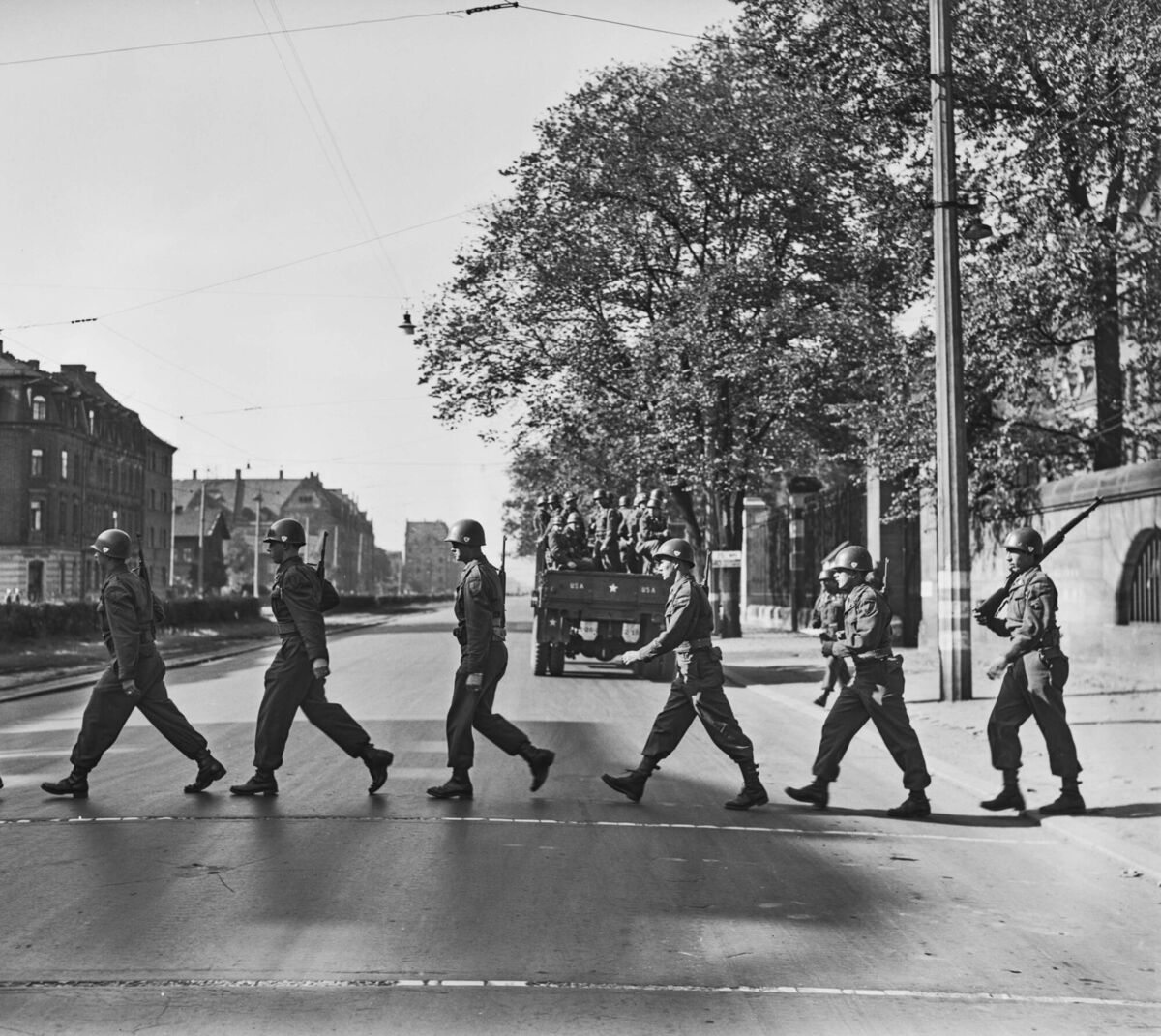
Soldiers of the United States Army crossing the street near the Palace of Justice during the trials of the Nazi leadership on the September 30, 1946 at Nuremberg, Germany. Picture: Fred Ramage/Keystone/Hulton Archive/Getty Images).

Those warrants are not convictions. They reflect judicial findings of reasonable grounds to believe the individuals bear responsibility for specified crimes. Israel disputes the court’s jurisdiction and rejects the allegations. The distinction between accusation and conviction is essential to the legal process Nuremberg helped develop.

Supporting that process cannot depend on approving of its targets. A government that welcomes scrutiny of its adversaries while seeking protection for its allies is deciding whose alleged victims merit access to justice. The resulting message reaches beyond any one case: international law operates only as far as powerful states permit.

This week’s anniversary comes with a particularly revealing contemporary development. On September 29, the ICC’s Assembly of States Parties announced its next session would move from United Nations headquarters in New York to The Hague. The reasons included US sanctions against elected court officials and visa restrictions affecting participation.

The meeting, scheduled for late November and early December, concerns the oversight and management of the court. Its relocation is an administrative decision with a political meaning. Eighty years after an American prosecutor helped articulate the case for international criminal accountability, sanctions imposed by the United States are obstructing the participation of people responsible for that system.

There is a temptation to treat such contradictions as proof that international justice has always been a fraud. That would also suit those who want it dismantled. Courts preserve evidence, test allegations and sometimes secure convictions that once appeared politically impossible. Their achievements are real even when their reach is unequal.


The question for Ireland and other states professing support for international law is what they will do when defending it becomes inconvenient. Funding institutions, protecting their independence and meeting obligations to cooperate require decisions that speeches can avoid. Credibility accumulates through those decisions, particularly when an ally is involved.

Nuremberg’s anniversary should be a test of that willingness. Its defendants had been defeated and were available to their prosecutors. The harder task is sustaining accountability when an accused leader retains office, commands an army, or enjoys the
protection of a powerful friend. Eighty years on, the distance between recognising responsibility and enforcing it remains the measure of the promise.

x

More in this section

Lunchtime News

Newsletter

Get a lunch briefing straight to your inbox at noon daily. Also be the first to know with our occasional Breaking News emails.

Cookie Policy Privacy Policy Brand Safety FAQ Help Contact Us Terms and Conditions

© Examiner Echo Group Limited