Colin Sheridan: Art will always be political, whatever Ed Sheeran says
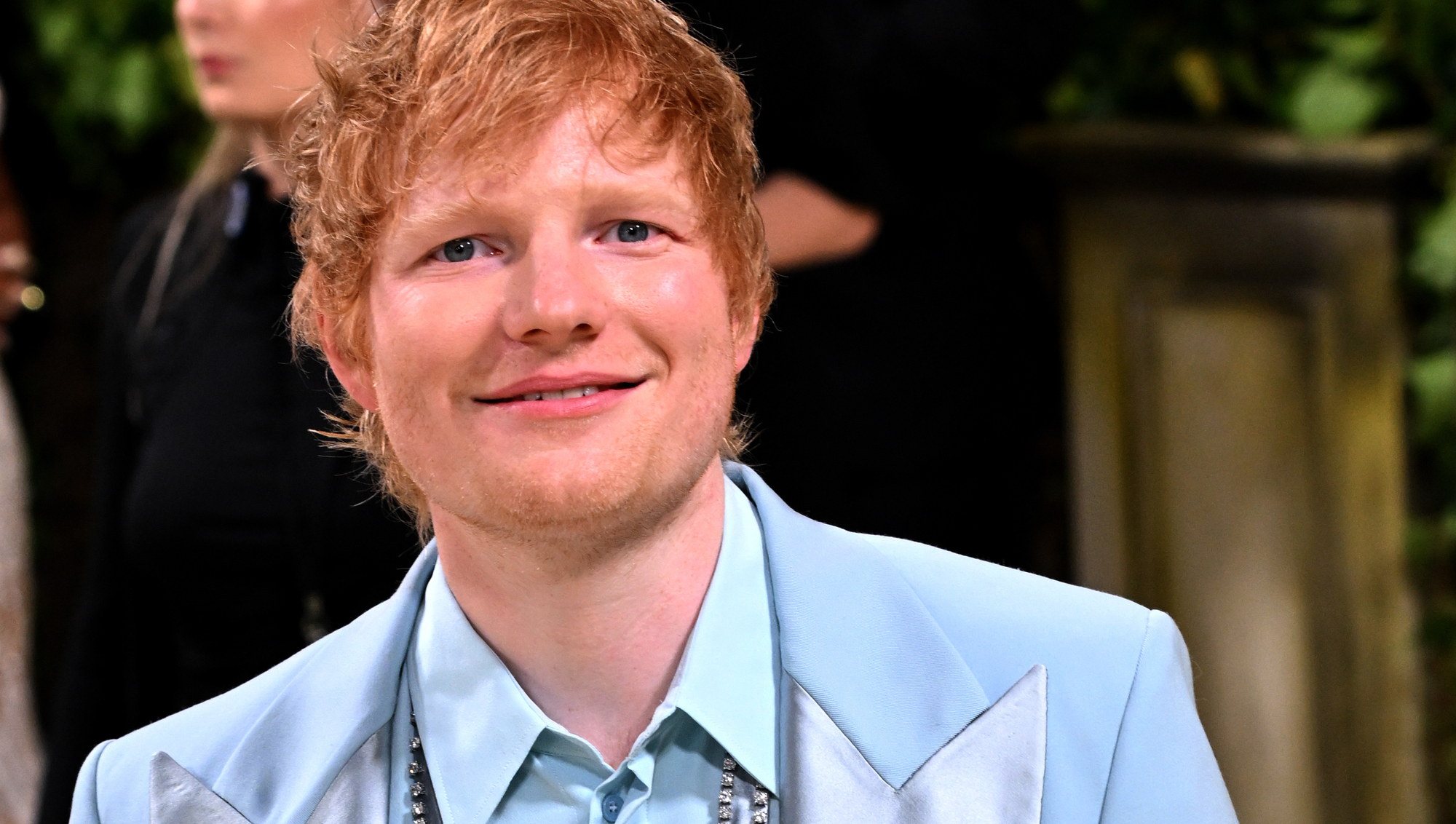
Nobody needs Ed Sheeran’s political philosophy. I would happily live without it. What I cannot accept is the proposition that a man who has become fabulously wealthy within the music industry can watch its powerful figures punish another artist for saying 'Free Palestine', continue as before, and call his own position neutrality.

If, as many great artists have tried to tell us, all good art is political, then Ed Sheeran’s music is terrible.
I had hoped to never write about Sheeran. I suspect many readers had hoped never to read another word about him. But the most revealing thing to emerge from the Macklemore affair is the idea we are asking too much of a pop star by expecting him to have a political opinion.
Nobody needs Ed Sheeran’s political philosophy. I would happily live without it. What I cannot accept is the proposition that a man who has become fabulously wealthy within the music industry can watch its powerful figures punish another artist for saying “Free Palestine”, continue as before, and call his own position neutrality.
That is a very intentional political opinion. And it is the one that allows the show to go on.
Sheeran says the decision to remove Macklemore from his tour was the promoter’s. Really, who cares. The interesting question is what the biggest artist on the bill did when the people who controlled the venues made their demand.
He has since spoken about the suffering in Gaza and about how painful this has been for him. By doing so the way he did, he compounded the notion of a man utterly devoid of emotional intelligence. Such is the extraordinary privilege of the very rich that even their discomfort can become the centre of the story anchored in ambivalence about a genocide.
Read More
A slaughtered people and Macklemore — the man who actually lost his place on the tour — become a supporting cast in the emotional ordeal of an untalented, entitled troubadour.
We need to stop pretending music, film and sport are innocent places into which politics occasionally barges, uninvited and badly dressed. The politics are in the ownership, the contracts and the decisions about who is expendable. They are in whose art is profitable enough to sell but whose voice is considered too risky to hear.
In 1989, the Grammys introduced an award for rap performance but kept its presentation off television. Rap could enrich the industry; its artists had to fight to be seen collecting the prize.
Hollywood’s politics are there before anyone walks onto a red carpet. Only four directors of the top-grossing films of 2023 were women of colour. That is what thousands of decisions about talent, trust, money and audiences look like when added together.
An Irish actor who succeeds in that world deserves credit for the work. Success does not make the world that rewards it apolitical. If a reporter asks a difficult question to Cillian Murphy, Paul Mescal or Saoirse Ronan, I would hope for an honest answer. I might disagree with it. At least there would be something to disagree with.
I know the objection. We all live inside systems we dislike. I write in Ireland, pay taxes here and benefit from an economy closely bound to the United States. Ireland trades extensively with Israel. I cannot announce my opposition to what is happening in Gaza and pretend that announcement lifts me cleanly out of those relationships. Most of us have to work, buy things and raise families in a world we cannot simply refuse to enter.
That is an argument for recognising the compromises we make. It is not a lifetime exemption from examining them. Above all, it is not a persuasive defence for people whose wealth gives them choices most of us will never have.
There is a moral obligation that grows with the power you acquire and the rewards you take. If an industry has made you extraordinarily rich, you owe more than a shrug when it punishes somebody with less power for speaking.
And then comes the familiar challenge: what about the Uyghurs? I care about the Uyghurs. What is being done to them matters. So do Sudan, Congo and every other place whose people are invoked for 30 seconds as a reason to stop talking about Palestinians. If you ask me about the Uyghurs, I will talk about them. I would also like to hear what you think is happening to them, and what you want done about it.
Suffering is not a contest, and concern for one people does not use up a person’s capacity to care for another. Palestine is an especially urgent test of our honesty because the states and institutions to which we are tied are implicated in what happens there.
We can see the connections. We can see the human consequences. We can see, in this small episode on a concert tour, how readily a powerful person’s wishes prevail over a less powerful person’s words.
Nobody can answer every question. Nobody needs to perform outrage on demand. But when the question is put to you, and you have grown disgustingly rich inside the system being questioned, an honest position is the least you owe the people living with its consequences.
Sheeran was entitled to make his choice. He is entitled to explain why he made it. He is even entitled to find the criticism upsetting. What he is not entitled to is the comforting fiction that only Macklemore brought politics onto that particular stage.

CONNECT WITH US TODAY



Be the first to know the latest news and updates