'Love alone isn’t enough': Dogs Trust census reveals the pressures of keeping dogs in Ireland
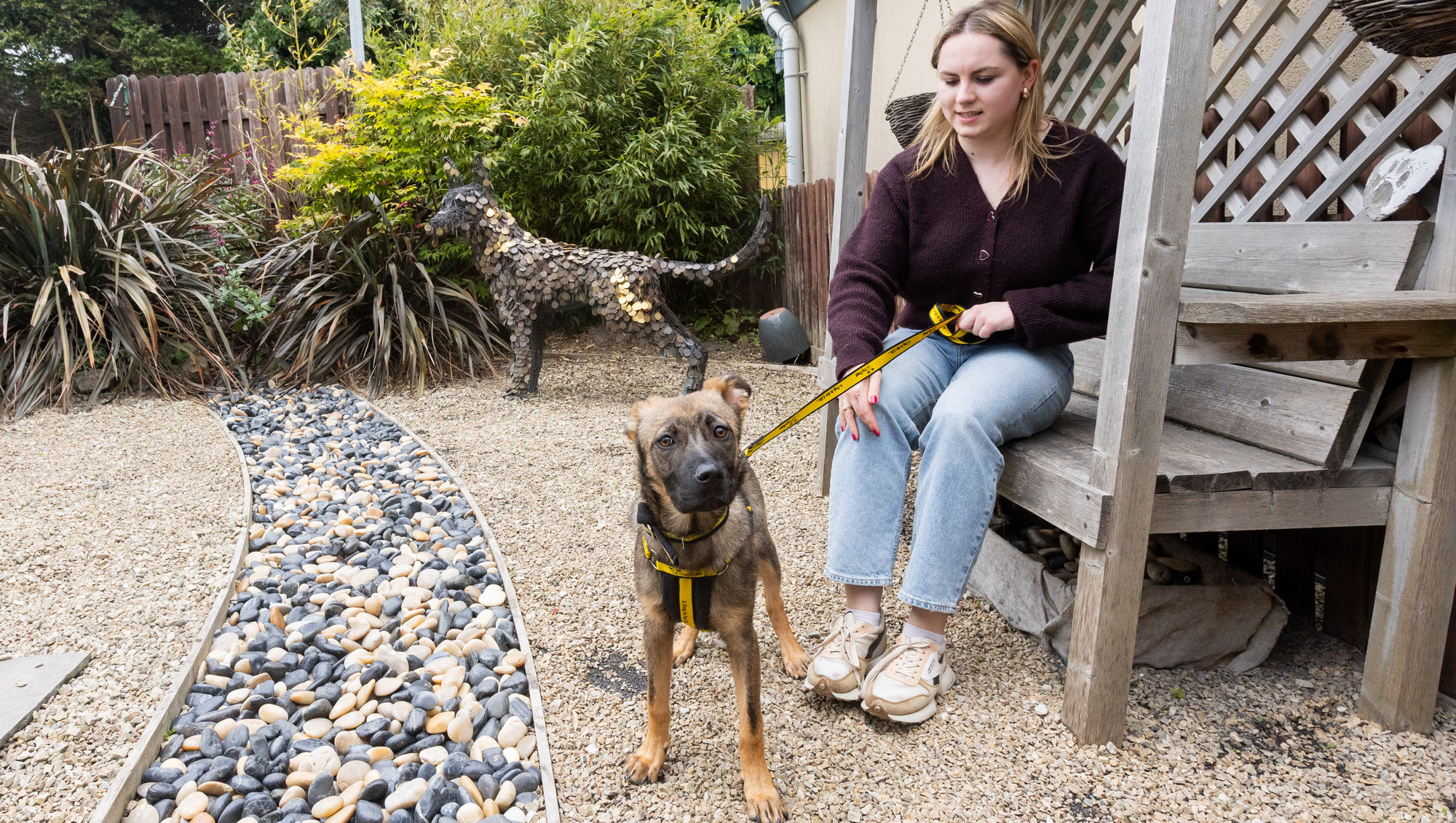
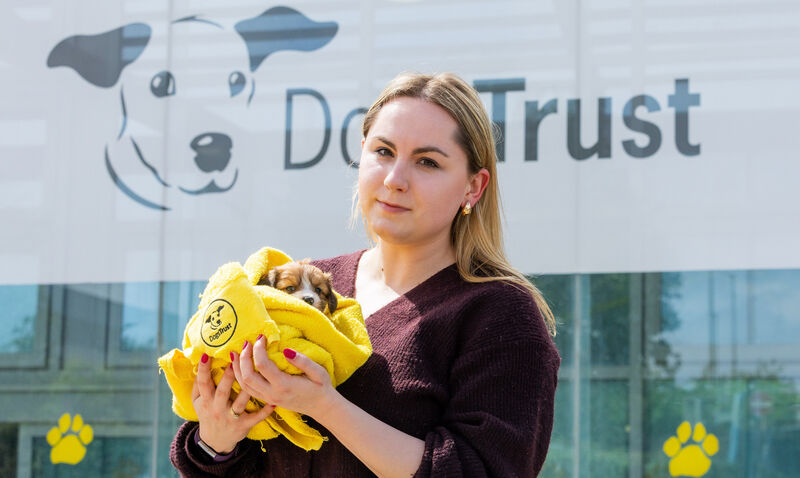
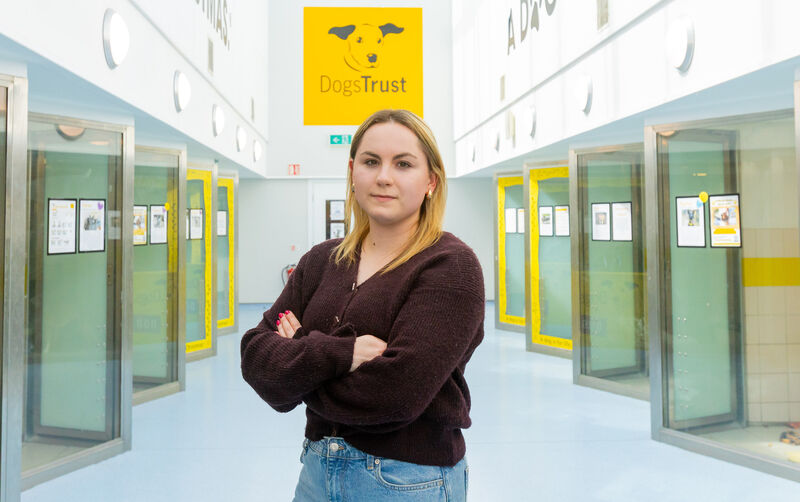
Communications manager for Dogs Trust Paulina Padlo with Zeus a Belgian Malinois Cross at the Dogs Trust Centre on the Ashbourne Road, Dublin. Photo: Gareth Chaney
From puppy farms and spiralling vet bills to the housing crisis and the heartbreak of losing a beloved pet, the latest Dogs Trust census published today paints a revealing picture of Ireland’s relationship with dogs.
Dogs Trust Ireland’s headquarters in Dublin is a facility few members of the public ever see. The sounds of dogs barking echo around the reception.
Visitors arrive excited about what they will see — all kinds of beautiful dogs, each with a story that rarely begins well. Abandoned, dumped, or surrendered under pressure, few arrive here with anything resembling good news.
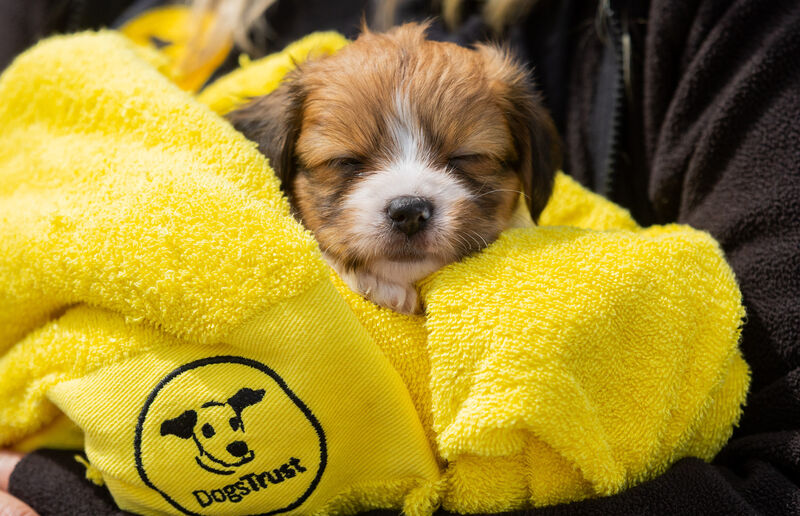
Further back, hidden from public view, is the country’s only dedicated canine maternity unit. It is a quiet, tightly controlled space where pregnant rescue dogs give birth under veterinary supervision.
Some are surrendered by owners who can no longer cope. Others come from local authority pounds. Some are transferred from smaller rescue organisations that simply do not have the facilities to cope with heavily pregnant dogs or newborn litters.
Read More
For Dogs Trust communications manager, Paulina Padlo, the maternity unit is one of the most striking parts of the entire operation. “We have pregnant dogs coming in from all sorts of situations,” she says.
“What makes us different is that we have a maternity unit where they can safely give birth and raise their puppies. That’s something quite unusual for a rescue organisation.”
She is keen to stress how unique the facility is. “I don’t think many rescues have anything like it.”
Staff are careful about when they enter, mindful that many of the mothers are stressed, protective, and recovering from birth. The priority is calm, stability, and safety for both dogs and newborn puppies.
Each litter remains with its mother for at least eight weeks. During that time they receive vaccinations, veterinary treatment, and around-the-clock care.
Three staff members live on-site full time to support this process. Their job includes night feeds, medication rounds, and responding to emergencies.
“They’ll wake up in the middle of the night, do their rounds, make sure every puppy is bottle fed.”
While mother dogs are encouraged to care for their litters, that is not always possible.
“We do rely on mums, but sometimes they won’t have milk, or they reject the pups,” she says. “There are loads of different cases where we have to step in.”
The scale of care required is significant.
Dogs Trust Ireland currently employs around 102 staff, with up to 200 dogs in its care at any one time across its Dublin centre, regional re-homing sites, and foster network.
Since opening its re-homing centre in 2009, the charity has re-homed more than 24,000 dogs. Yet despite those figures, the pressures facing dogs — and the people who care for them — continue to grow.
At the heart of that pressure is funding none of which comes from the government. “We don’t get any government funding,” Ms Padlo says simply.
“The vast majority of our funding comes from our donors and supporters. We wouldn’t be here without them.”
A smaller portion comes from Dogs Trust UK, which helps support the Irish operation, but the organisation remains heavily dependent on public generosity.
Running costs, she says, are substantial. “I would say hundreds of thousands a year,” she explains. “All the feeding, all the vet treatments, staff salaries — the dogs alone take up a lot of that.”
The organisation is careful with spending, particularly when it comes to staffing. “We do take care of our staff,” she says.
“They’re paid fairly. You can’t run this place without good people.”
Even with strong staffing, the pressures on the system are constant. So far this year, Dogs Trust has received more than 1,200 surrender requests.
Housing is one of the most persistent and fast-growing pressures facing dog ownership in Ireland. “Many landlords do not allow dogs,” Ms Padlo says.
“People are forced to look for a different place for months. So they either give up the dog or become homeless.” It is a situation Dogs Trust staff encounter repeatedly, often with little room for easy answers.
“We never want to judge,” she says. “At least they’re coming to us.”
Ms Padlo is also frank about the alternatives people sometimes consider.
“They can just drive out and dump them, or tie them to a tree or a lamppost. Sadly, this happens quite often.”
The organisation has taken in dogs abandoned in exactly those circumstances. For staff, it reinforces the idea that surrender — however painful — is often the least worst option.
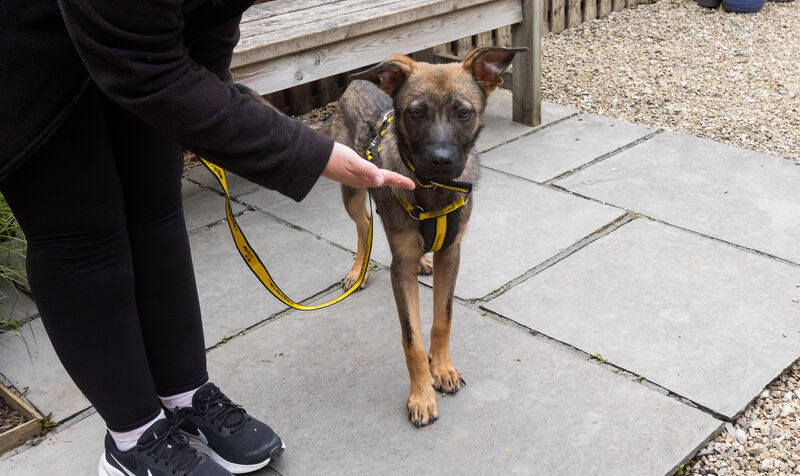
Alongside housing and behavioural challenges, time is the third major factor.
“People’s lives change,” Ms Padlo explains. “They become parents, they go back to work, they’re in the office full-time. They feel they don’t have enough time for their dogs.”
She notes that the reality of long-term ownership is often underestimated.
“They didn’t realise dogs need more than walking,” she says. “They can live 16 or 17 years."
Those pressures are reflected in Dogs Trust data. Behavioural issues account for a significant proportion of surrender requests, particularly in adolescent dogs.
“Last year, 42% of surrender requests involved adolescent dogs,” she says. It is a life stage that can catch owners off guard.
“A puppy is cute and manageable,” she explains. “Then suddenly they’re louder, more excitable, harder to control. People become overwhelmed.”
Rather than simply responding to the trend, Dogs Trust has developed targeted training programmes for adolescent dogs in an effort to intervene earlier.
The organisation’s broader approach increasingly focuses on prevention rather than crisis response — education, behaviour support, and advocacy alongside rescue work.
Nowhere is that more visible than in the findings of the latest Dogs Trust census, which highlights growing concern around puppy farming and irresponsible breeding.
People often assume licensed breeding automatically means responsible breeding, she said, but that is not always the case.
“People may be told a breeder is licensed,” she explains. “But they don’t always know how to verify that, or what paperwork they should be seeing.”
The consequences can be long-term and severe. “Poor breeding can lead to inherited health issues, behavioural problems, and welfare issues that don’t show up until months or years later,” she says.
Inside Dogs Trust, staff regularly see the aftermath. “Some dogs arrive fearful and withdrawn,” she says. “Others are absolutely traumatised.”
To support them, the charity employs a dedicated team of behaviourists. Their work is not simply about making dogs re-homable, but about recovery.
“We see dogs coming from puppy farms that are absolutely traumatised,” Ms Padlo says. “We help them work through that.”
Behaviour, she adds, is often misunderstood. Dogs showing aggression or fear are frequently labelled as “badly behaved”, but underlying causes are often more complex.
“In reality, pain, illness and anxiety are often behind it,” she says. “A dog might be communicating discomfort in the only way it knows how.”
That understanding shapes Dogs Trust’s educational campaigns, which aim to change how owners interpret behaviour before situations escalate.
The organisation is also increasingly engaged in public policy debates, particularly around housing.
Its campaigns calling for improved access to pet-friendly accommodation have gathered thousands of signatures, and Ms Padlo says the conversation is slowly shifting.
“There is a growing recognition that dogs are part of the family,” she says. The shift is echoed in how people talk about companionship, mental health, and daily life.
“Dogs help people stay active,” she adds. “They give routine and structure. For many people living alone, they are everything.”
Perhaps the most emotional shift in attitudes is around grief. For years, pet loss was often minimised or dismissed.
“That stigma is still there,” Ms Padlo says. “People feel they should just get over it.”
Dogs Trust has been working to challenge that through its “It’s Not Just A Dog” campaign.
Research commissioned by the charity found that more than half of dog owners were as affected, or more affected, by the loss of a dog than by the loss of a human family member.
Yet very few seek formal support. “I think only about 1% of people felt comfortable seeking counselling,” she says.
That gap, she believes, speaks volumes about how society processes grief. “We don’t want people to feel embarrassed about it,” she adds.
The organisation has introduced memorial walks and called for employers to offer compassionate leave following the death of a pet.
Back at the maternity unit, however, the focus returns to the immediate work: feeding, cleaning, healing, and preparing dogs for new lives.
Each pregnant dog that arrives carries its own history — sometimes of neglect, sometimes of abandonment, sometimes of simple economic pressure. Taken together, those stories form a wider picture of Ireland in 2026.
A country where love for dogs has never been stronger — but where the realities of housing, cost, and modern life are making that love harder to sustain.
“The country has never loved dogs more,” she says.
The challenge now, she suggests, is building a society that can support that love for the long term — not just emotionally, but practically, financially, and structurally.
And for Dogs Trust, that means continuing to evolve beyond rescue alone.
“We can’t just deal with the aftermath,” she says. “We have to try and prevent it from happening in the first place.”
One of the clearest themes running through this year’s Dogs Trust census is that Ireland’s relationship with dogs is becoming more complex, not simpler.
Ownership is more informed than it once was, but also more pressured. Expectations are higher, but so are the costs — financial, emotional, and practical.
Veterinary bills in particular have become a flashpoint. The census highlights how routine care is still manageable for many households, but unexpected illness can quickly escalate into costs running into thousands.
Ms Padlo says:
“For some people, it’s manageable. But when something serious happens, it can become overwhelming very quickly.”
The organisation points to research showing that a significant proportion of owners struggle with vet expenses at some stage, with knock-on consequences for animal welfare and surrender rates.
“Even food costs are now an issue for some households,” she adds. “Especially where dogs need specialist diets.”
While Dogs Trust avoids framing these challenges as individual failures, staff see the impact daily: dogs arriving in the system not because they are unwanted, but because their care has become unsustainable.
That nuance is important to the organisation. It is also reflected in how staff speak about surrender cases more generally.
One of the most striking examples in recent years involved Toby, a 12-year-old spaniel who had originally been adopted as a puppy from Dogs Trust.
His family had spent months trying to secure rental accommodation after their landlord decided to sell the property. Despite repeated searches, they could not find a home that allowed pets.
“They absolutely loved him,” Ms Padlo says. “They were heartbroken.”
Eventually, faced with an impossible choice, they surrendered him.
The story did not end there. After being re-homed again through Dogs Trust, Toby eventually found a new family who heard about him through a radio appeal.
It is the kind of outcome the charity hopes for, but does not always see. “Not every case resolves like that,” she says.
Behind each surrender request is a different pressure point: housing, behaviour, finances, or time. Increasingly, it is the intersection of all four.
Behavioural issues in particular remain one of the most common reasons dogs enter the system, especially during adolescence.
“It’s that stage people don’t always expect,” Ms Padlo explains. “A dog that was easy as a puppy suddenly becomes more challenging.”
The census found that adolescent dogs accounted for a significant proportion of surrender requests last year, a trend Dogs Trust has responded to with targeted training programmes designed to intervene earlier in a dog’s life.
The organisation’s philosophy has shifted in recent years from reactive rescue to preventative support — a recognition that re-homing alone cannot solve the scale of the issue.
Dogs Trust now runs structured training programmes for owners and professionals, including its Lead & Learn Academy, aimed at improving standards in dog care and behaviour support.
“We can’t just wait for dogs to come through the door,” Ms Padlo says. “We have to work upstream as well.”
That includes helping owners recognise early signs of behavioural stress, understanding developmental stages, and knowing when to seek support before problems escalate.
It also includes challenging long-standing misconceptions about behaviour itself.
“People often assume a dog is being stubborn or badly behaved,” she says. “But very often there’s something else going on — pain, anxiety, or fear.”
Inside the centre, behaviourists work daily with dogs arriving from a wide range of backgrounds: puppy farms, neglect situations, or disrupted homes.
“We see dogs that are absolutely traumatised,” Ms Padlo says. “Part of the job is helping them learn to trust again.”
Beyond the centre itself, Dogs Trust is also increasingly active in policy discussions — particularly around housing.
Its campaigns calling for more pet-friendly rental options have gathered widespread public support, including tens of thousands of petition signatures.
“There’s been a shift,” Ms Padlo says. “People are starting to see dogs as part of the family, not as an optional extra.”
The change is reflected in how dogs now fit into daily life. They travel on holidays, sleep on sofas, and increasingly occupy roles once reserved for human companionship alone.
For many owners, they are central to mental well-being.
“They give structure, routine, and companionship,” she says.
But alongside that emotional value comes a deeper vulnerability — particularly when those relationships end. The census highlights Dogs Trust’s ongoing work around pet bereavement, an area that remains socially under-recognised.
Research commissioned by the charity found that more than half of dog owners reported being as affected, or more affected, by the loss of a dog as by the loss of a human family member.
Yet formal support remains rare. “Only a very small percentage seek counselling,” Ms Padlo says. “There’s still a stigma around it.”
The organisation’s “It’s Not Just A Dog” campaign aims to challenge that perception, encouraging people to speak more openly about grief and seek support when needed.
It has also called for workplace policies to evolve, including the introduction of compassionate leave following the death of a pet.
Back in Dublin, the maternity unit continues its quieter work — far removed from policy debates or census figures.
Newborn puppies sleep in heated enclosures. Mothers rest, recover, and gradually regain strength after birth. Staff move carefully between kennels, monitoring, cleaning, feeding, and responding to whatever the day brings.
Each dog represents a different entry point into the system: a financial crisis, a housing issue, an unexpected litter, or simply a life that changed direction.
Taken together, they form a wider picture of Ireland for 2026 — a country where affection for dogs is not in question, but where sustaining that affection has become increasingly complicated.
“The country has never loved dogs more,” Ms Padlo says. “But love alone isn’t enough.”
What is required now, she suggests, is infrastructure to match emotion — housing systems that accommodate pets, education that prepares owners to be responsible dog owners, and services that intervene before crises occur.
Because while Dogs Trust will always exist to rescue, re-home, and rehabilitate, its ambition is increasingly to make itself less necessary in the long term.
“We don’t want to just be dealing with the fallout,” she said. “We want to stop it from happening in the first place.”

CONNECT WITH US TODAY



Be the first to know the latest news and updates