The hardest part of your dog dying isn't just losing them. It's that you decide when they go

I never imagined that my Mitzi, my leader of the pack of six, my constant, my shadow, would be the one I’d be writing about like this so soon after telling her story two months ago. Picture: Alison O'Reilly
I wrapped my dog Mitzi in her favourite blanket and faced her towards the window in the veterinary hospital, where the sky stretched out in an impossible, indifferent blue.
My friend Karen opened the window a little, just enough to let the air move, just enough to imagine her small spirit would have somewhere to go. I told her I loved her. I kissed her soft head and thanked her for everything, for every ordinary day that now felt extraordinary.
The vet leaned in and said, "Are you ready?"
I spent an hour talking to my dog and taking photos and videos, and I'm never going to be ready to let my dog go, so I kept reminding myself, the longer you leave this, the more she will decline, you have to let her go.
I had asked the vet about the injections beforehand, and if there was going to be one to sedate her before the final injection to put her to sleep. I did not want my girl to be upset in any way; this was the time to have her relaxed and calm.
The first injection went into her front leg. Mitzi lifted her head a bit. I said: “It’s ok Mitzi, you’re going to have a lovely sleep now” as the first began to work. The tears were sitting in my eyelids waiting to rain down my face, but I held off as I didn’t want Mitzi to see me upset. I wanted her to know it was ok to go.
As she sat calmly in my arms, the vet placed her hand on my shoulder and whispered: "I am going to give her the injection now." Then, almost like a blessing, she whispered, “Good night, friend,” to my little Mitzi.
The room became unbearably quiet. Time slowed in that cruel, suspended way it does when you know what is coming but cannot stop it. The vet’s voice was gentle, careful, as if even sound itself needed to tread lightly. She kept her hand on my shoulder.
I held myself together in that moment. I don’t know how. I held back the sob that was clawing its way up, the panic, the desperate instinct to say “wait” even though there was no waiting left to give.
I stayed still and calm for her. I wanted her last moments to feel safe, to feel like love and not fear. So, I kept it all inside until I really knew — she was gone.
And then it broke. Mitzi was gone. My little girl had passed on after I made the agonising decision to put her to sleep.
Wrapped in her blanket, I sank to my knees.
The kind of grief that has no language, only noise. It is a pain I have never, ever felt in my life.
In January, a paper published by Maynooth University’s Professor Philip Hyland in the Department of Psychology found that the death of a pet can be as deep and as distressing as that of a person. It also found that prolonged grief disorder (PGD), which is a psychiatric disorder, can only be diagnosed following the death of a person.
However, it found that despite “considerable evidence that people have strong attachments to their pets and suffer high levels of grief in their death, the current psychiatric guidelines don’t allow for the diagnosis of PGD following the death of a pet". When asked to identify the bereavement that caused them the most distress, 21% of people in the Maynooth study chose the death of a pet.
The study, titled No pets allowed: Evidence that prolonged grief disorder can occur following the death of a pet, found that people can experience clinically significant levels of PGD following the death of a pet.
There were two core systems: Longing for the deceased and preoccupation with the deceased, and a set of ‘associated’ symptoms including intense emotional pain, feelings of guilt or sorrow and difficulty accepting the death.
Study author Prof. Hyland said that PGD guidelines should be expanded to include pets.
"Considered in light of evidence that people view grief related to the death of a pet as less legitimate than grief related to the death of a person, and that many people grieving the loss of their pet feel embarrassed and isolated as a result, the decision to exclude pet loss from the bereavement criterion for PGD can be viewed as not only scientifically misguided, but also as callous," he said.
In 2022, Dogs Trust Ireland launched a campaign for employers to offer paid compassionate leave when a pet dies. The charity’s research found 51% of pet owners felt the loss was similar to human bereavement.
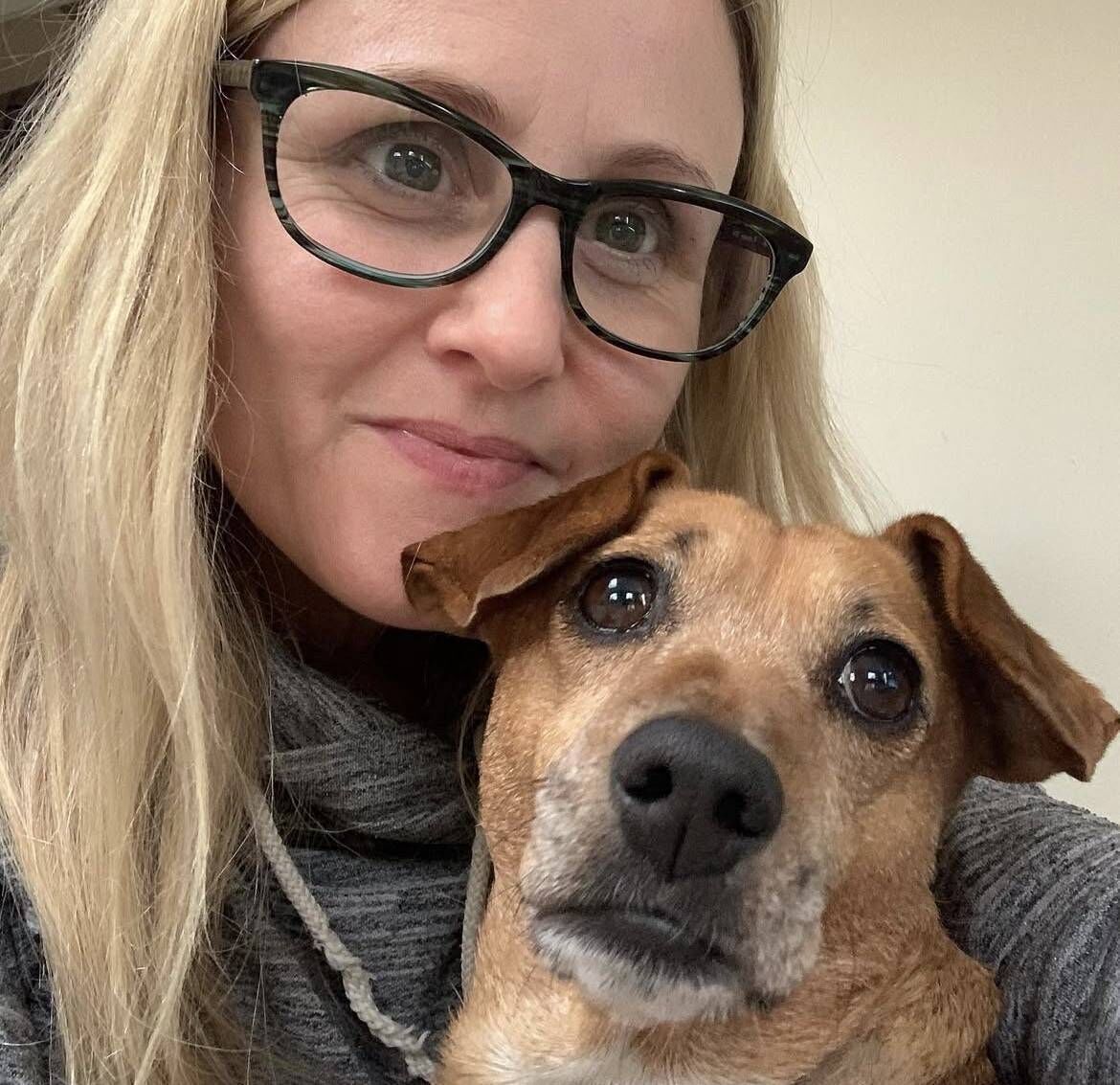
In January, I wrote about my six rescue dogs and the thousands that are abandoned. I thought I understood what it meant to love a dog, to advocate for them, to speak for them. But I didn’t understand what it would feel like to have to make that decision, the one you know is an act of love, and yet feels like betrayal all the same.
I never imagined that my Mitzi, my leader of the pack of six, my constant, my shadow, would be the one I’d be writing about like this so soon after telling her story two months ago.
She was around 13 years old. I had her for seven years, but the sanctuary told me she was at least five or six when surrendered with her sisters. The 13 years of presence, of personality, of quiet companionship, were gone. I don’t know what the start of her life was like, but for seven years, she wove herself so completely into my life that I didn’t see where she ended and I began.
And then, in the space of a week, everything changed.
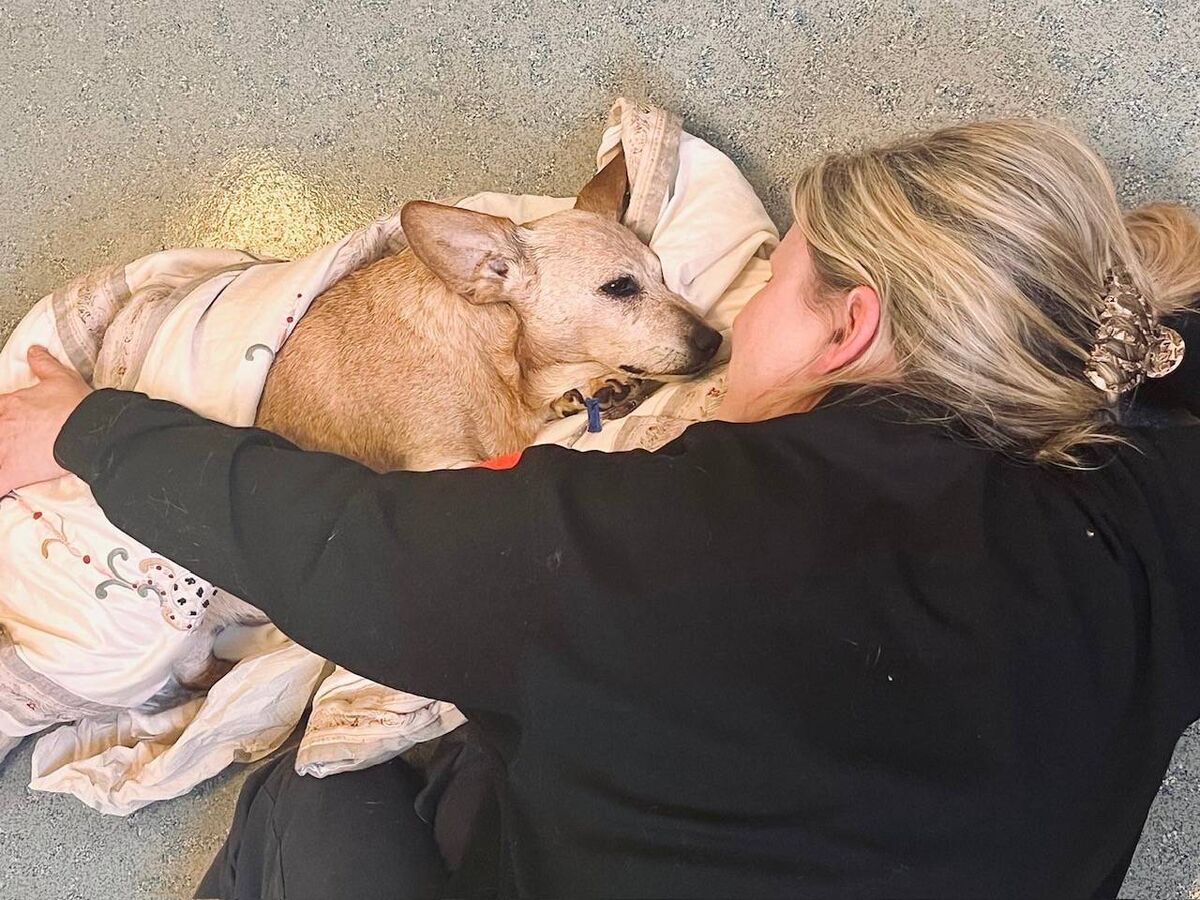
Chronic kidney failure. Such clinical words for something so devastating. There was no dramatic moment at first, just a gradual dimming and a tiredness, maybe, that she carried before I was ready to see it. Suddenly, there it was, the reality I couldn’t outrun.
The hardest part isn’t just losing them, it’s the one where you have to decide when they go. People don’t talk enough about that moment and the weight of it.
Sitting in a room knowing that your love for them has to be bigger than your need to keep them. That the greatest kindness you can offer is also the thing that will break you most. You look at them, and you search for permission. And somehow, in ways you can’t explain, they answer.
Mitzi trusted me. That’s what undoes me. She trusted me to bring her home, to feed, protect and care for her. And in the end, she trusted me with the final decision. She didn’t fight me, and she didn’t resist. She just stayed, as she always had, right there with me. And so, I held her as she slipped away.
She had a really tough week of being flushed out at Anicare vets in Clontarf in Dublin as they threw the kitchen sink at her to try and save her. But it did not work.
Every day I dropped her off for treatment, and every evening I picked her up in tears and panic, over “will she survive? Is this her time?”. I never prayed so much in all my life to save her. She had been treated for a week, and I took her home for the weekend.
She gave me a lovely day on Saturday. She walked around out front, she ate and drank, but that feeling of dread never left me. I wondered if this is Mitzi’s euphoric last moment, or if she is recovering. The sickness hung around in the pit of my stomach, and I knew time would tell.
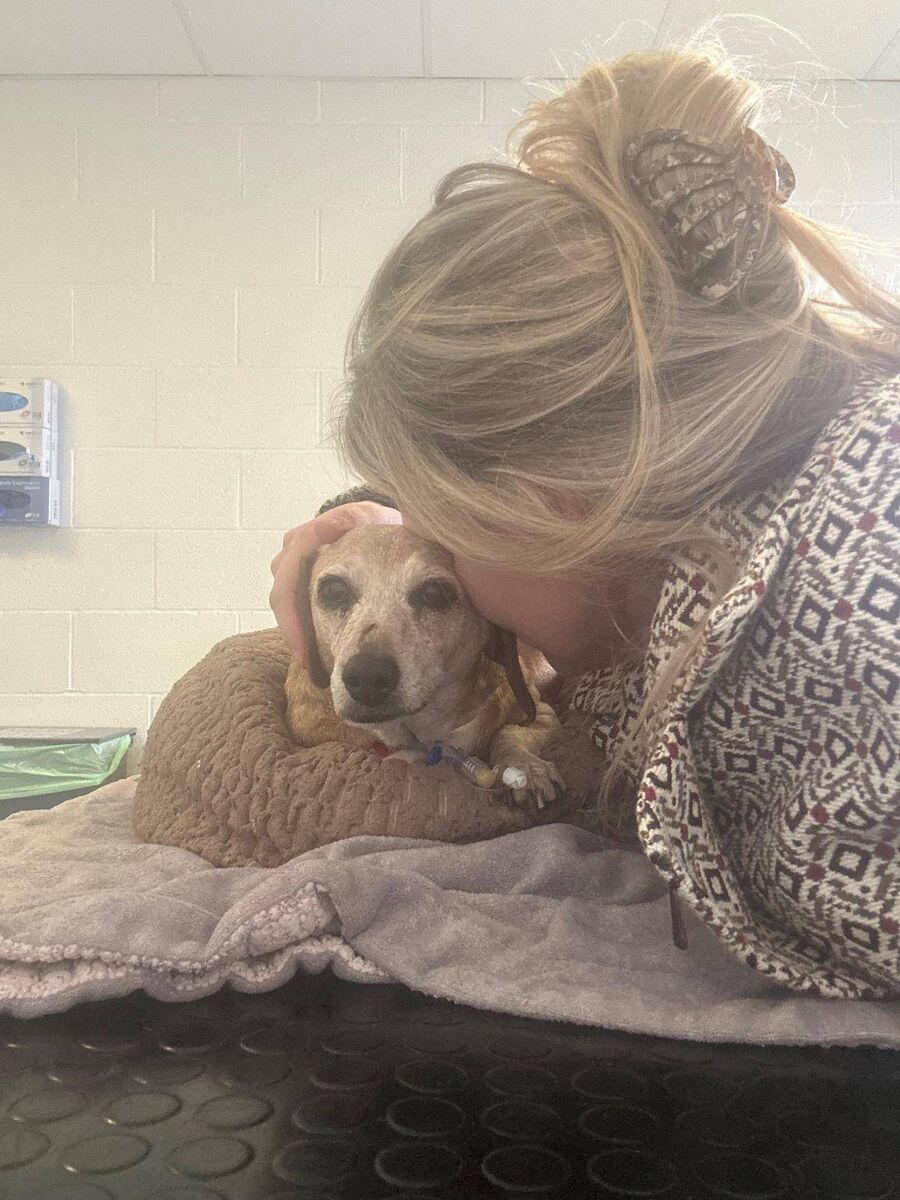
That night, I finally went to my own bed, having slept on the couch with her all week. I was in a deep sleep when the other dogs barked like crazy at 5am. I woke up panicking and ran downstairs. They were barking at nothing. Or so I thought. Then I saw Mitzi was not flat out on the bed; instead, she was sitting up, her breathing slightly elevated.
"Is this Mitzi’s message?" I thought. I rushed her straight to the vet’s hospital, and they told me she was stable and her breathing was ok for now, but they wanted me to wait as the vet was busy with emergencies.
"If her breathing changes, call me," said the vet nurse. An hour later, her breathing did change, and she was put into an oxygen crate, and they tried to clear the fluid from her chest.
"It will take a few hours to work," she said, "so go home." And sadly, they were unable to stabilise her and I had to make that horrific decision.
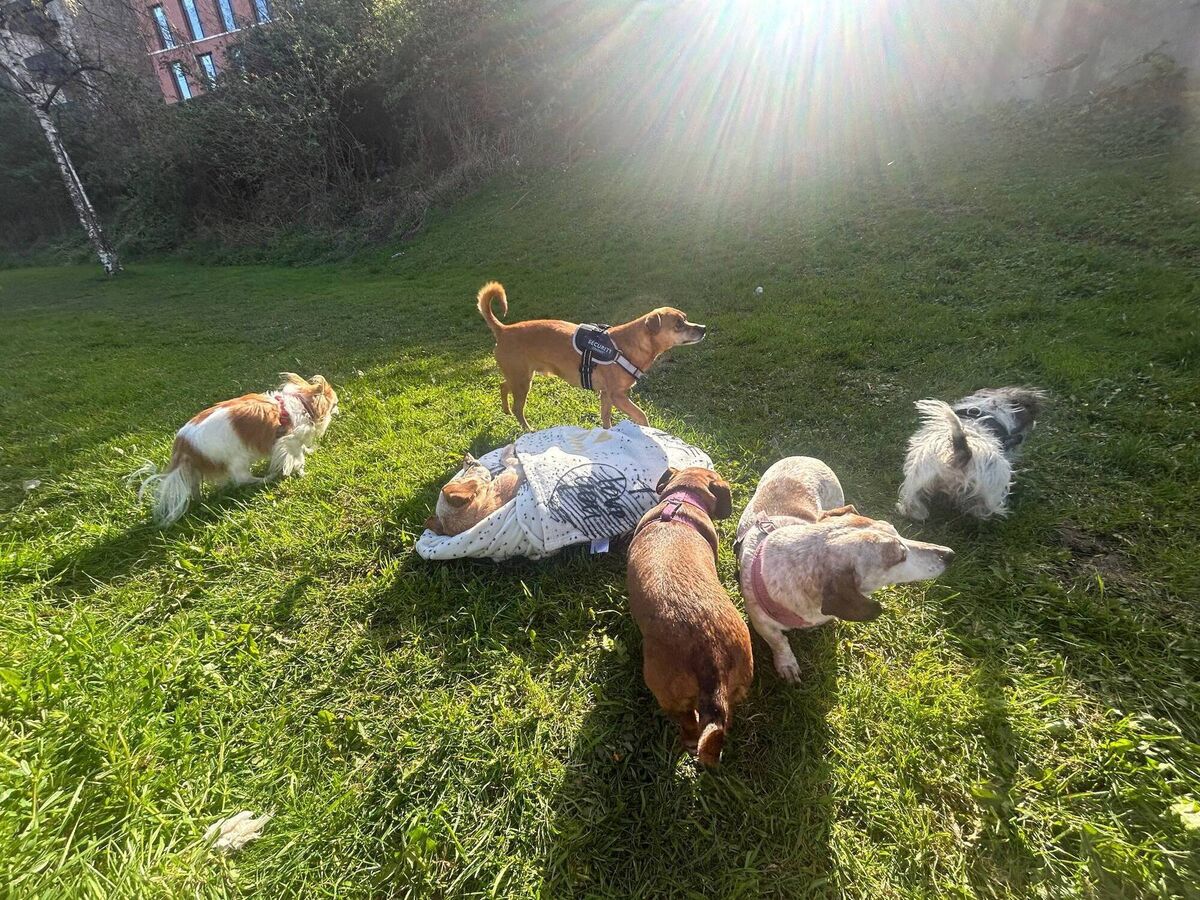
I brought her home and laid her on the couch for the night, as the other dogs needed to know. Then we gathered her up and took her on a last walk through the park as the sun shone on her body while she lay in the grass.
I rang Cavan Pet Cremations. I had written about them before, and the opening of the crematorium was in memory of owner Ralph Dunne’s own dog, Garfield, Ireland’s only Crufts winner.
Mitzi passed on Sunday, and we drove up the next day. They laid her out on a beautiful altar where you can say your goodbyes. It is all so respectful and kind.
We went to the nearby hotel for lunch until the phone call from Ralph came saying: "Mitzi’s ashes are ready." I didn’t want to go without taking her with me, so we waited.
What we don’t hear so much about is the cost of everything, between Mitzi’s IV flush, scans, blood tests, meds, and treatment at her own vet and the vet hospital, it costs around €1,800.
It was €250 to cremate her, and that included a beautiful box of ashes, and a treasured bag of poems, sunflower seeds and gifts. I had to borrow the money, and I would have borrowed more if I knew she would be okay. As I had rescued Mitzi halfway through her life, I couldn’t find a plan for insurance because of her age.

In the week since her passing, there is a strange, unbearable stillness that has followed.
I don’t know how to explain the emptiness she’s left behind. I still catch myself looking for her out of habit, only to remember, again and again, that she isn’t there. I have five other dogs to care for, and I am trying my best because I told Mitzi I would.
But I do know this: loving her was worth every second of this pain.
Because grief, as unbearable as it is, is the price of something extraordinary. It is the echo of love that had nowhere else to go. And if I had to make that choice again — to love her, to lose her, to hold her in that final moment — I would. Every single time.
Good night, my beautiful Mitzi.
Thank you for everything.

CONNECT WITH US TODAY



Be the first to know the latest news and updates