‘After working through fears of free birth and hospitals, I decided I would stay home’
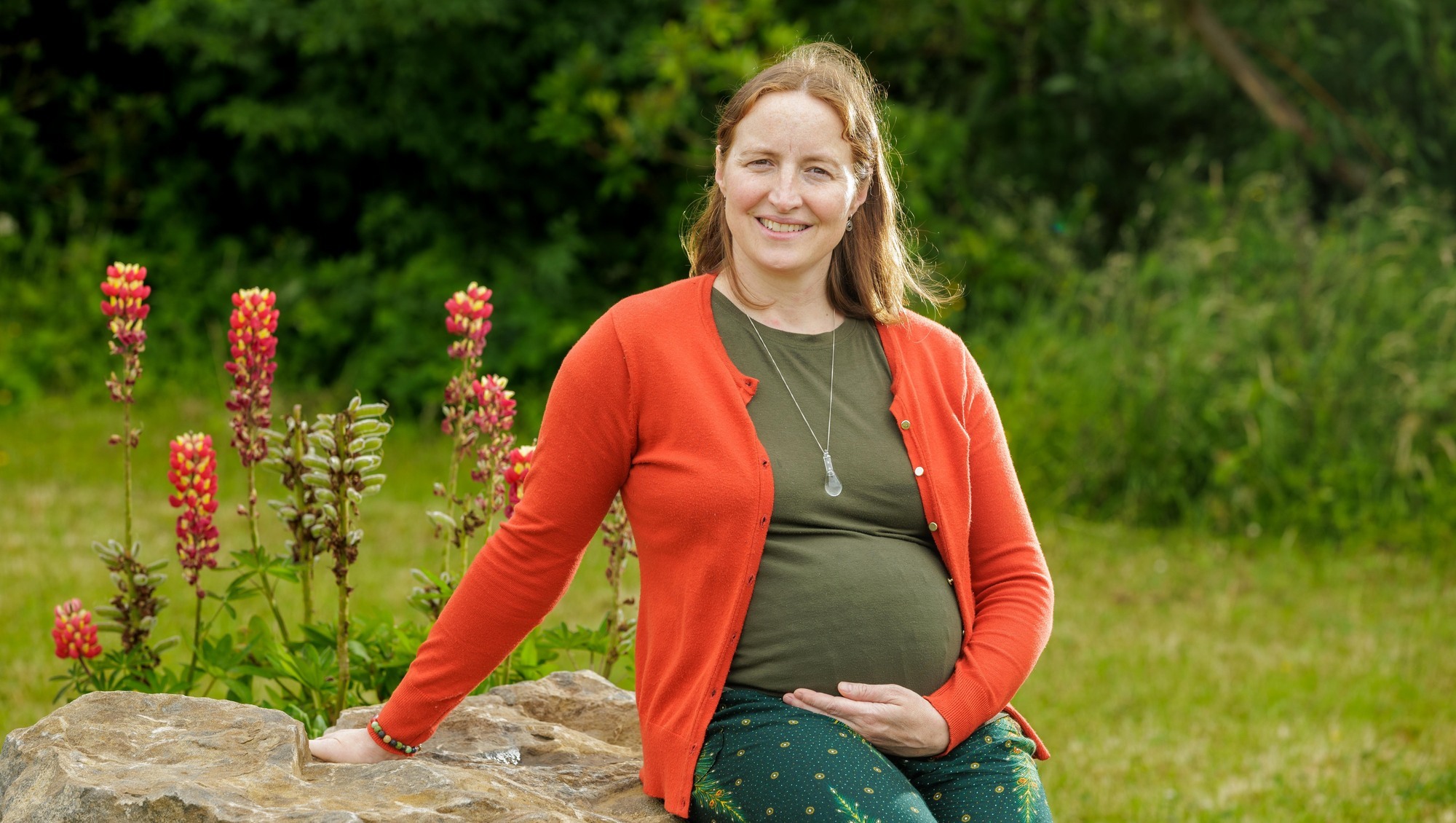
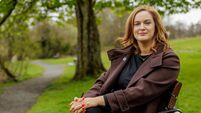
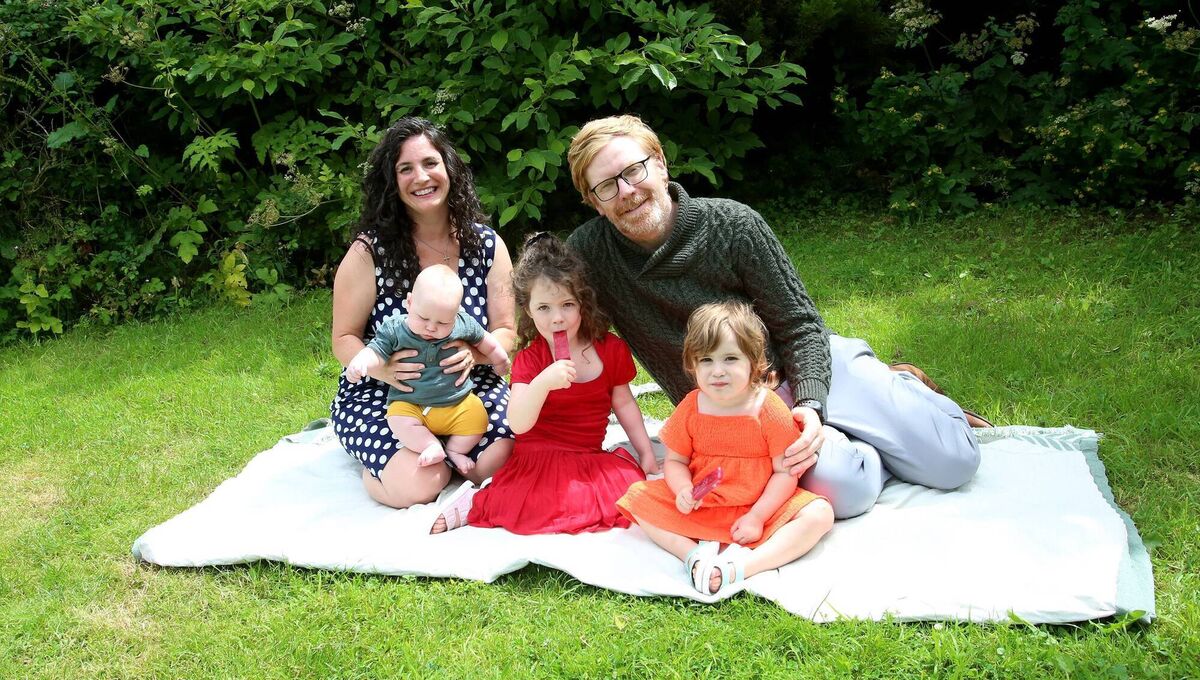
Sligo-based Jenni Garvey, mother of three, who is considering options for the birth of her next baby, due in November. Picture: James Connolly
Amid the renewed focus on choice in maternity services in recent weeks, one small but growing group of women want to put their right to free birth on the radar.
A free birth is when women give birth without a registered healthcare professional present in a region where medical care is available.
It is a planned decision, often decided upon months beforehand. It is not supported in any way by HSE hospitals.
Three women spoke to the about their free births.
Jillian Molloy had three free births, the first in Kerry and then two after moving to Kildare.
“I don’t think that’s what everybody needs to do with their pregnancy, but it was exactly perfect for me,” she said.
Read More
She described living with a chronic auto-immune condition and how this led to a crisis of faith in many ways.
A researcher by profession, she turned that focus on pregnancy, saying: “All of a sudden, I was learning more and learning there is a natural flow to how birth is meant to go.”
She heard about free birth while taking a doula training course. Doulas are not medical professionals, but they support pregnant women in other ways.
“Immediately, my body just lit up with this peace and joy,” she said.
“I called my husband, and I was like: ‘OK I’m going to have kids, but it’s going to be like this.’”
Leonie Quinn in Wicklow had a different experience, saying: “Going from before I had children thinking ‘I would definitely have children in hospitals’ to now doing a birth without anyone here seems a bit crazy, but it’s the system that made me go this way and my experiences.”
Ms Quinn’s first birth was in a hospital and she was given a caesarean as her daughter was in breech position.
“To me that was about the only thing I hadn’t wanted,” she said.
“But that’s what I got, so that’s where this all started.”
She opted for a “beautiful” homebirth with Private Midwives Ireland (PMI) for her second pregnancy, but it had closed when she was pregnant again last year.
Jenni Garvey experienced midwifery-led care in Canada and Australia, having travelled and lived in both with her husband.
Her first was planned as a hospital birth but she said labour started at home, “so it was essentially an accidental homebirth”.
The second birth happened before a homebirth midwife arrived, and she said: “It was essentially an unassisted birth accidentally.”
Now settled in Sligo, she discovered homebirth was not available through the HSE or PMI for different reasons.
She knew women who move county so they can access the HSE service and others who hired an international travelling midwife to live with their family.
“At the end of the day, after working through my fears of both free birth and hospitals, I ultimately decided I would stay at home,” she said.
“Because that’s where I felt safest, for as long as I felt comfortable, where my baby and I were OK.”
During almost a month of conversations with this reporter, they said free births are not for everyone. The women highlighted potential risks, but they also think hospitals are not for everyone.
Ms Garvey has advocated for changes in the system publicly through various organisations.
It is not that many decades since many Irish babies were delivered at home with help from district nurses known as Jubilee nurses. It is likely too births went unassisted at a time when nurses travelled mainly by bicycle.
But now that hospitals are a common option, how many free births happen here?
Emily Moffatt is an assistant professor in midwifery at Trinity College Dublin. She is working on a PhD about free births in Ireland and is a part-time midwife with the HSE’s homebirth service.
“There’s no research really in Ireland about free birth,” she said.
“None of the hospitals collect statistics openly. I’ve done an FOI [Freedom of Information] recently looking for those statistics, they’re not available.
“It’s very similar in other countries.”
Ms Moffatt said many women do not admit they had a free birth because “there is a stigma associated with it”. Others “dip in and out of the services”, she said.
A planned free birth is different from women delayed from getting to a hospital on time, so the child is “born before arrival”, she added.
She sees the closure of PMI last summer as a turning point as, despite the high costs, it covered areas the HSE did not and eligibility thresholds differed.
“The whole public and private obstetric debate has really highlighted women’s desire for continuity of care, and to be cared for by a trusted support person,” she said, adding this is about “psychological” safety.
“And then there is an aspect of feeling safer outside the system. That is against the typical discourse which says it’s much safer to have your baby in the hospital.”
She points to reforms under the maternity strategy recognising birth trauma, but said advocates want this to go further.
“It’s very important also to say that every midwife is trying their best, and not trying to be part of a system that traumatises women,” she said.
Ms Moffatt is also aware of interest in wild pregnancy.
This has been popularised online by the controversial American group, the Free Birth Society.
It means women avoid all healthcare, including GPs or pre-natal scans, during pregnancy.
“It’s happening here. It isn’t as common as free birth, but it does happen,” she said.
Krysia Lynch is co-chair of Aims Eire, a maternity advocacy group made up of former directors and committee members of Aims Ireland.
“We would regard free birth as a choice and an option, a choice would imply you have other choice or it’s a choice among many choices,” she said.
“However, for a lot of people who take that option, it’s because it’s the only option available to them.”
Options such as homebirth after caesarean, midwifery-led units, or private obstetrics are either not available or not available everywhere, she added.
More acknowledgement is needed, she said, that some women have “negative experiences” in hospitals often to do with control or lack of it.
“What it all calls for is greater understanding of why women choose to do this,” she said.
“The risks are there, and I think women do know them if they plan a free birth and they are willing to take the risks.”
One obstetrician aware of the increasing number of free births and concern about this in health services wished to speak anonymously so they could contribute more freely.
“The real question is not where the birth takes place or what the setting is,” the consultant said.
They suggested birth centres, as promised in the maternity strategy, are needed as another option for women.
“I strongly believe if there was a fully functioning homebirth service that the vast majority of women who have chosen a free birth would go for a home birth,” they said.
“There can be anxiety among the healthcare workers too.
“An anxiety they are not covered and the woman could sue them.
“That is often why a healthcare practitioner might come across as harsh, or unbending, or not allowing [a procedure] but that is anxiety speaking.”
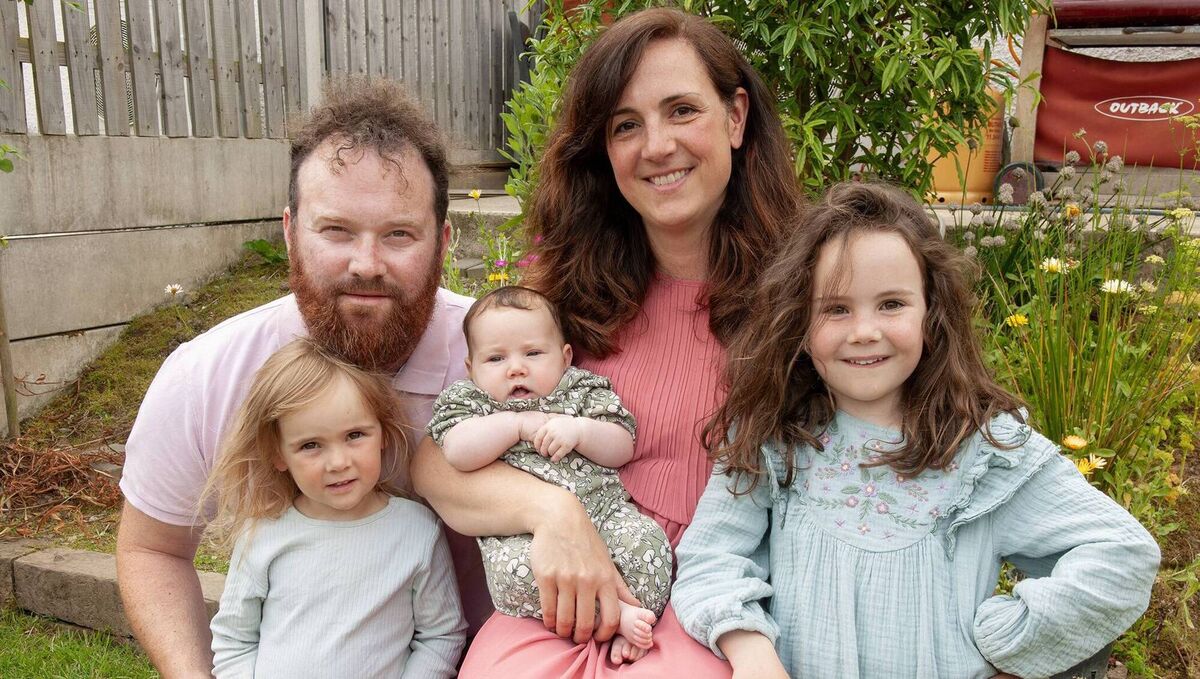
Leonie Quinn and her husband have three girls “all pink and glittery” in Wicklow, each with different birth stories.
Their youngest was born in a free birth in April, and Leonie said: “For me, it all came down to a lack of choice rather than actively choosing free birth.”
Roll back to 2020 and their first girl was born in hospital by choice.
During the labour, Leonie was told she needed a caesarean because her daughter was breech.
She said: “That was about the only thing I hadn’t wanted. But that’s what I got so that’s where this all started.”
Her journals show she felt “the control was taken from me the moment the decision was made”.
She opted for homebirth next time with Private Midwives Ireland (PMI) . The HSE does not offer homebirth after caesarean.
She continued hospital scans, adding that the birth was “all very nice and a completely different experience” to before.
Last year, she was devastated when PMI closed.
For her third pregnancy, she switched to a smaller hospital and hired a doula after ruling out that going to Northern Ireland or home to Germany as “too complicated”.
Meanwhile, free birth was on her radar.
“If I hadn’t had the second birth at home that went so well, I wouldn’t have considered it for the third. This way, I thought I already know my body can do it,” she said.
She had “open discussions” with hospital staff, adding: “There was a chance for the hospital to say: ‘We will really look after you here.’
“That was where I was hoping the discussion with the midwife and consultant would go.
“I think being in control is what I like, and that’s what I lost the first time. So my final decision was to say at home if everything goes well. I didn’t want to put this positive birth experience above living. I also didn’t want to be traumatised again, they were my two sides of the decision.
“I had a very supportive husband.”
On the day, her birth went “faster than I expected” from around 4.30am.
“The doula was here at 7am and the baby was born at 07:50am,” she said.
Their daughter was born in their bedroom, and she said: “I always felt safe and in the right place with what I was doing.”


CONNECT WITH US TODAY



Be the first to know the latest news and updates