The agonies and ecstasies of adopting a rescue dog — or two
There’s a particular kind of love that comes with a rescue dog. It’s definitely not easy, but it is real and worth it.
The agonies and ecstasies of adopting a rescue dog — or two

As a rescue dog mom, I end up regularly checking in on Instagram for stories from all kinds of rescues, and one of the most depressing constants is how quickly animals are returned

I will say this at the beginning of the story. At the end, the dog dies. That’s the inevitable truth of it.

I didn’t grow up with dogs. Flee, my first, arrived into our lives in 2012, when I was in my forties. Like a lot of modern love stories, it began online.


I first saw her face on the Dogs Trust website. This small, tilted, anxious blonde head, looking into the camera with her dark Malteser eyes slightly warily, caught my attention in a way that other more boisterous or confident dogs didn’t. I went out to meet her, and then my husband came out with me, and two days later, she was home with us forever. And that was that.

Or more realistically really, that was just the beginning.

Our human lives are so much longer than those of our dogs, but our lives are made better, warmed, and comforted, given lessons in purpose and ritual and connection and comedy, by the presence of our dogs. Understanding that presence will be gone, before you are able for it, is just part of the deal. You need to know and accept it.

Flee enjoying a summer's day

There’s a particular kind of love that comes with a rescue dog. It’s definitely not easy, and it’s hardly ever instant or immediate. But it is real and worth it.

Flee was a tricky girl, with no interest in other dogs, who hated every hideous cold floor tile she touched with her delicate, sensitive paws, and approached rain with a sense of profound personal offence. But she also had this habit of total joy. The word ‘walk’ would send her into a state of wild anticipation. Every day, it was as if we weren’t headed to the same old park we always went to, but to Glastonbury, or the Oscars, or some shimmering, ecstatic, once-in-a-lifetime event.

She died in February 2024. I still can’t really talk about the last day we brought her down to the vet. Philip couldn’t have been kinder, and it was her time, and me, my husband, his sister — the people she loved best in the world — were there with her but left without her.

Grief for any dog is appropriately and directly proportionate to the happiness of the life they had with you, and the space they leave empty in your life when they go. So we were completely bereft without Flee.

Flee tucked up under her blanket

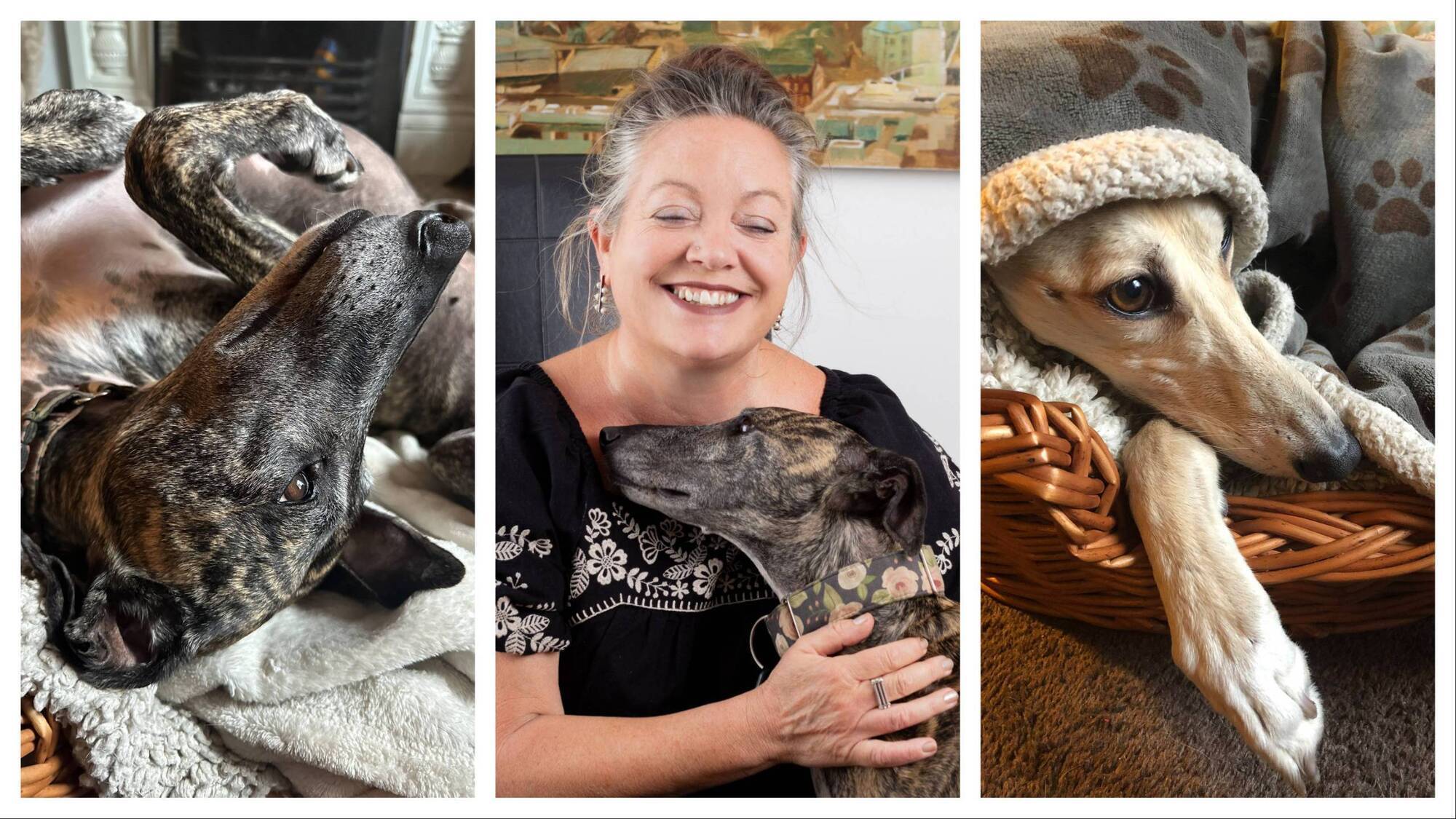
For what felt like a long time, I absolutely could not imagine another. And then, as is only right and proper, I could. Tabitha — Tabby, she is a tiger-ish brindle who looks like a big cat — came to us in January last year from My Lovely Horse Rescue.

These two lurchers I have been lucky to have in my life — quirky, long-nosed, busy-eared, violin bow-legged sloths who are basically the laziest creatures alive — are cartoon dogs. They both share certain non-negotiables: a loathing of the cold, or heatwaves (these sighthounds have little body fat, so they get very hot or very cold, very fast), a finely tuned umami-focused palate (vintage cheddar for Tabby, Parmesan for Flee), and a way of quickly becoming the most important, entertaining, endearing, centre of attention.

I couldn’t recommend lurchers more highly. Smashers.

Long-limbed Tabby relaxing at home

Where Dogs Trust is structured, funded, staffed by professionals doing exceptional work at scale, My Lovely Horse is something else entirely. It’s one of the countless Irish volunteer-led operations that seems to be powered entirely by love and sheer force of will. MLH is a place where animals of every kind — dogs, horses, pigs, donkeys, goats — are taken in because someone, somewhere, decided they were not important, were disposable.

In my experience, spending any time around organisations like this makes you feel at the same time massive hope and massive despair. Hope, because these incredible, dedicated, good people show up, over and over, against horrible odds, to do the work. And despair, because they have to.

Sure, adopting a rescue dog can be seen as an act of kindness. It certainly is for that dog, but it is self-care for you too. You end up learning so much more from them than they likely ever will from you, about patience, acceptance, understanding. Particularly patience.

The 3:3:3 rule is the standard in rescue adoption. Three days to decompress. Three weeks to begin to understand the patterns and rhythms of a new place. And then three months to start to feel at home. It’s a useful way to look at things, because what any rescue dog needs more than anything, especially at the beginning, is time.

And time is so often what many dogs don’t get.

Tabby chilling out on her back

As a rescue dog mom, I end up regularly checking in on Instagram for stories from all kinds of rescues, and one of the most depressing constants is how quickly animals are returned. Puppies brought back after a weekend because they’re “too much work”. Dogs, who’ve been carefully matched with new owners, rejected if they don’t immediately settle, like any of us could suddenly flick a switch and feel right at home.

Watching these hard-working rescues having to start again with some poor creature who thought they were home forever seems to me an echo of the disconnect around how we value animals in this country. Because alongside the many underfunded, overstretched rescue organisations that depend on donations, fundraisers, ‘fiver Fridays’, and the goodwill of volunteers, is a greyhound racing industry that receives tens of millions of euros in state support each year.

Personally, I think the contrast is brutal, and impossible to reconcile. On one side, a funded system where dogs are a commercial asset. They are bred, raced, and often destroyed or kicked to the kerb if they don’t perform. On the other, a loose network of random passionate individuals and charities picking up the pieces.

Accounts like Dog Law Ireland document, in forensic detail, the realities in this country of puppy farming, feeble enforcement, and the mortifying gaps in our animal welfare system. We have to do better.

And what also needs recognising and supporting is the life-changing nature of rescue. And all the old, or abandoned, or lost dogs, the puppies and mongrels and purebreds and breeders’ leftovers that, because of the tireless work by these organisations, are given a chance.

They need hope, and love, and time. Belief, time, and attention.

Flee had that. Tabby does now.

Six questions to ask yourself before you adopt a dog

  • Do I have time for a dog?
    Dogs want company. Can you be at home with your dog for at least part of the day? And if you can’t, can you organise someone like a dog walker or day care? You’ll also need to spend time training your dog, walking them and playing with them every day.
  • Is my lifestyle dog friendly?
    Dogs need stability and consistency. Are you prepared to adjust your life to fit in with being a dog owner? Can you tweak your work hours to be at home more often?
  • Do you have a safe, outside space for your dog?
  • Can you provide them with a suitable diet?
  • Can I afford a dog?
    Remember, you will have your dog for the rest of their lives -– with some breeds, this can be as long as 18-20 years. As well as the initial costs, there are ongoing costs like food, grooming, insurance, toys and treats, and dog care/dog walking. There will be unexpected costs too, like vet bills that your insurance may not cover.
  • Will a dog fit in with my family?
    Not all dogs will slot in with your family, whatever shape or size that family is. Taking your children or dogs with you to visit the dog you’re hoping to adopt is a good way to gauge how they might get on.

The Dogs Trust adoption process

  • Fill out an application form
  • Home visit Once your application has been reviewed, the rescue organisation will organise a home visit to ensure your home environment is suitable for a dog.
  • Meet and greet At this stage you will be invited to meet your chosen dog. It’s best for all members of your family, including any other pets, to come along to this meeting.
  • Final paperwork is signed All paperwork is completed and the adoption fee is paid. This fee is €275 for an older dog (€325 for a puppy). All adopted dogs are microchipped, vaccinated and vet checked – the fee covers this cost. In general, the average time frame for the adoption process is about three to four weeks.

x

More in this section

Lifestyle

Newsletter

Eat better, live well and stay inspired with the Irish Examiner’s food, health, entertainment, travel and lifestyle coverage. Delivered to your inbox every Friday morning.

Cookie Policy Privacy Policy Brand Safety FAQ Help Contact Us Terms and Conditions

© Examiner Echo Group Limited