The story behind the Parnell Square attack
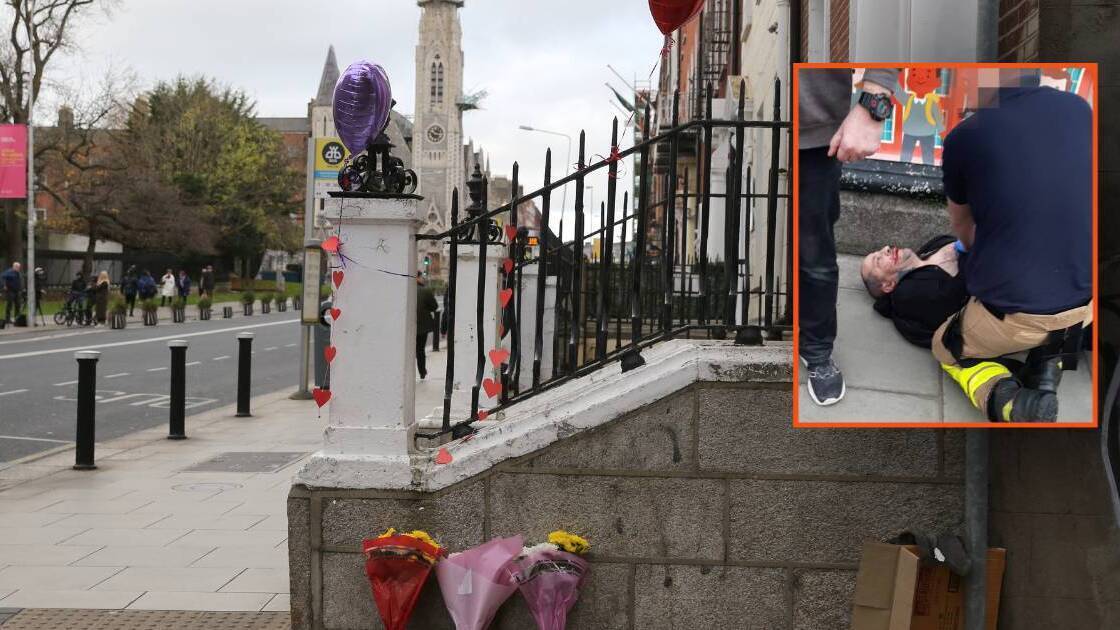
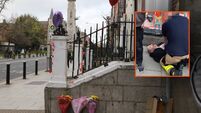
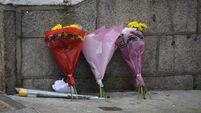
The attack on Parnell Square East in November 2023 sparked riots across Dublin city and left one girl with life-changing brain injuries.
Creche worker Leanne Flynn was zipping up the coat of one of the little boys in her care when she noticed Riad Bouchaker darting towards a five-year-old girl further up the line.
Bouchaker pulled a knife from the rucksack strapped to his chest and began ferociously jabbing at the girl before Ms Flynn ran at him, grabbed him by the coat, and swung him around to face her.
Bouchaker had a confused look when he saw her.
She was the only adult within distance to intervene but he hadn’t expected her to risk her life in this way.
He stabbed her in the back, threw her across the pavement, and resumed his attack on the children.
Ms Flynn tried to get back at him, but the stab wound had punctured her lung, severed her spleen, and exposed her organs.
She was in agony and already beginning to struggle to breathe.
In the chaos that followed, as the children either ran screaming or stood still in shock, one little girl suffered an 8cm gash to her head and had a fragment of her skull removed.
Another boy received a laceration to his neck and another a slash wound across his chest.
A little girl’s hair was cut, and other attempted stabs and slashes poked holes in jackets and bags the children were wearing.
Within about seven seconds of when Bouchaker threw Ms Flynn across the pavement, the first passersby intervened.
Warren Donohue had been walking with his family when he saw Bouchaker grappling with Ms Flynn before turning his attention to the children.
Mr Donohue didn’t hesitate. He ran towards Bouchaker and punched him across the jaw.

Caio Benicio had been driving his motorcycle down Parnell Square when he saw what was happening, dismounted, and struck Bouchaker on the head with his helmet.
Alan Loren-Guille was 17 at the time and had arrived in Dublin one month earlier to work in a city centre restaurant.
When he saw Bouchaker in the distance carrying a weapon and struggling with Ms Flynn, he ran towards him.
By the time he arrived, others were already grappling with Bouchaker, so Mr Guille grabbed the assailant’s right hand and forced the knife from his grip.
As he did so, he suffered a scratch to his finger and a nick to his face.
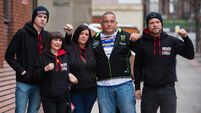
Siobhán Kearney, whose brother was a victim of the Stardust nightclub fire, told the court how she was taking a smoking break from the high-profile inquest into his death when she heard Ms Flynn’s screams, saw the knife, and immediately ran towards danger.
She jumped on Bouchaker’s back and saw the knife fall to the ground. She kicked it away and told someone else to get rid of it.
Anger spread as people realised what Bouchaker had done, and when he was brought to the ground, people threw kicks at his head and his body.
Ms Kearney, seeing that Bouchaker was unconscious and no longer a threat, linked arms with another woman, formed a ring around Bouchaker and shouted: “We are not savages, this is not how we do things.”
She may have saved his life.
But just a few feet away, on the pavement of Parnell Square East, a tragedy was unfolding.
The five-year-old girl Bouchaker had attacked before Ms Flynn had a chance to pull him away was lying lifeless on the pavement, the colour quickly draining from her skin.
Conor Garvey was driving an ambulance to the Rotunda Hospital when someone on the road began "frantically" waving his arms at him.
He immediately saw the little girl and noticed a member of the public had begun CPR.
Mr Garvey took a defibrillator from the ambulance and attached the pads to the child.
He noticed she had a laceration on her chest with blood oozing out rather than spurting, indicating there was little pressure in the heart.
She had no pulse and didn't appear to be breathing, he said.
The defibrillator indicated that there was no electrical activity from her heart and advised against carrying out a shock.
Mr Garvey continued CPR until advanced paramedics arrived.

Dr Peter Harper happened to be cycling in the area when he saw the commotion.
He helped to insert a tube into the girl’s throat so that air could get into her lungs, but he could see how pale she was and recognised the signs of cardiac arrest.
CPR was not going to save her if there was no blood to pump around the body, he said.
He believed the only way to save her would be to get her into surgery immediately.
Dr Lisa Corley, a paediatric registrar at the Rotunda Hospital, had heard about what was happening and asked her supervisor for permission to go and help.
When she saw the girl on the ground, she immediately ordered blood to be sent over.
Dr Michael Boyle, the head of the neonatal department at the Rotunda Hospital, also rushed to the scene after hearing about the stabbing.
When he saw the girl on the ground with grey skin and no pulse, he thought she was dead.
He said the decision was taken to get her in an ambulance immediately and carry out a transfusion on the way using the blood Dr Corley had ordered.
He knew there was no cardio-thoracic surgeon at the nearby Temple Street Children's Hospital, but he also knew she wouldn’t survive the journey to anywhere else.
Doctors "went against protocols and just ran with things", Dr Boyle said, because they needed to act as quickly as possible.
While the ambulance transported the little girl, Dr Boyle ran to Temple Street and told the emergency staff that the patient was not to come to them.
That would only delay getting her into surgery.
He ran to the operating theatre to make space and asked a colleague to call the Mater Hospital to get them to send a heart surgeon immediately.
Luckily, a large operating theatre happened to be free.
Dr Harper brought the girl in and continued to work on her until other surgeons arrived.
They opened her chest to massage the heart, and closed the perforation to the right ventricle that had caused the blood loss and cardiac arrest.
It was enough to keep her alive, but the following days, weeks and months would illustrate just how much she had suffered in the 40 minutes before the surgery.
More than a dozen witnesses gave descriptions of the horrific scene they stumbled on as they strolled, drove or cycled the city’s streets that afternoon.
However, as the trial judge and lawyers for the prosecution and defence pointed out, their memories were often conflicting and went contrary to the medical evidence and the CCTV footage.
The defence lawyer who cross-examined witnesses was at pains to explain that he was not accusing anyone of lying when he pointed out the inconsistencies in what they believed they had seen.
Rather, he said, their recollections had been distorted by the frailty of human memory, the trauma they had suffered and the high level of media and everyday discussion the stabbings had inspired.
They had clearly come to give honest evidence, but their memories had failed them, he said.
Several witnesses were certain they had seen Bouchaker cast Ms Flynn to the side and grab multiple children before repeatedly plunging a knife deep into the chest, neck or stomach of one child.
However, the CCTV footage and medical evidence showed that only the first child who Bouchaker attacked suffered a deep stab wound before Ms Flynn threw herself in harm’s way.
Much of Bouchaker’s defence against the attempted murder charges was that if he had wanted to kill children, he would have succeeded, given the size of the knife and the frailty of his intended victims.
They argued that witnesses had been mistaken in believing that Bouchaker was trying to stab the children, but rather that he was recklessly waving the knife around in a bid to frighten and intimidate.
However, the jury did not accept that defence and the girl who suffered the stab wound to the heart will suffer the consequences of what Bouchaker did for the rest of her life.
Dr Louise Baker has been the girl's paediatrician in Temple Street Hospital since she arrived.
Within 24 hours of the surgery, she said the girl suffered seizures which showed that her brain had suffered severe damage.
She remained in the Intensive Care Unit (ICU) until January 2024.

As she began to awake, Dr Baker said she showed obvious signs of "severe dystonia", which she described as an "extremely painful" condition causing contraction of the muscles.
The muscles in her gut were also affected, causing her such extreme pain when she ate that she was twice more admitted to the ICU.
To this day, she has no control over her hands, arms or legs and is distressed by the difficulty she suffers in communicating between her brain and her limbs.
She is fed through a tube into her stomach because she cannot swallow safely on her own.
Her family has moved home to be nearer to a disability network team and to find suitable accessible accommodation for the girl's ongoing needs.
She requires multiple mobility aids, a hoist, a wheelchair and a "huge amount of equipment" going forward, Dr Baker said.
She has a lifelong, limiting severe physical disability and is at risk of ongoing painful muscle contractions, spinal curve, scoliosis, gut dystonia, and pain.
She is non-verbal and communicates only by blinking.
Aoife Mahony is a consultant paediatrician with the Children's Network Ireland.
She said the girl suffered a severe neurological disorder as a result of her injuries.
Her painful dystonia causes her to struggle with motor movements, and she cannot stand, bear her own weight or walk independently.
Dr Mahony said she has struggled to carry out a full neuropsychology assessment because of the girl's difficulties with communication.
She said she does understand some things and her "eyes light up, and she smiles" when she sees something she likes, but she finds detailed communication difficult.
Dr Mahony said doctors are trying out new technologies, particularly to do with the eyes, that might help her to communicate.
However, she said that is slow, and nobody is sure how successful it will be.
She is now attending a school for children with complex needs, and for the rest of her life she will require regular physiotherapy, occupational and language therapy along with psychological support.
Dr Mahony said further rehabilitation gains are possible, but research shows that the most significant gains following a brain injury occur in the first year.
Professor Ann Brannigan, a consultant surgeon in the Mater Hospital, detailed the injuries to Ms Flynn.
Her lungs had collapsed and were filled with blood.
Her diaphragm had burst, and she had a laceration to her spleen which was causing significant blood loss.
Prof Brannigan said she decided to remove Ms Flynn's spleen because, if she had not done so, the patient would have gone into cardiac arrest.
Surgeons also repaired the damage to her stomach before moving her to the intensive care unit.
She remained in hospital until December 20 and remains at increased risk of infectious disease due to the loss of her spleen.
All of that devastation was caused by one man who had decided earlier that day to arm himself with a knife and to attack the most vulnerable victims he could find.
Not much is known about Riad Bouchaker’s past, but during a pre-trial hearing last year in which the trial judge found he was fit to stand trial, a psychiatrist gave evidence detailing some of his background.
Bouchaker told the psychiatrist he was born in the Algerian capital, Algiers.
He gave conflicting accounts about his parents’ and siblings’ lives, at times saying there was a history of mental illness in his family and at other times denying any such issues.
The doctor found that Bouchaker tended to fill gaps in his memory by making things up rather than saying he didn’t know.
He also didn’t appear to understand the seriousness of the charges against him and displayed “inappropriate jocularity”.
That jocularity was evident during his trial when he frequently burst into laughter at inappropriate times, including when the CCTV footage showing the attack had just brought the court to shocked silence.
In his interviews with the psychiatrist, Bouchaker claimed to have had problems with his memory as a child and said he didn’t do well at school.
Having completed secondary-level education, he said he worked as a butcher in Algiers.
The psychiatrist also noted that in 2021 a social worker had recorded Bouchaker’s brother telling her that Riad had “not been right” for about five years.
His family, the brother said, was becoming increasingly worried about him.
Det Sgt Padraig Cleary told the trial that Bouchaker moved to Ireland in the early 2000s.
He became an Irish citizen, and prior to these offences, he had not been convicted of any crime.
During one of his Garda interviews, he claimed that he never goes out and the only person he ever sees is his brother.
The mosque that he attended on the day of the attack was not one that he frequented, and the people there did not know him.
In 2021, doctors diagnosed Bouchaker with a benign brain tumour.
He had an operation, but due to complications, he had to have part of his skull removed.
He was left with his brain exposed on one side and a mild cognitive impairment.
In 2023, he was living at a hostel operated by the De Paul homeless charity on Little Britain St in Dublin city centre.
On the morning of the attack, CCTV footage showed him walking from the hostel to the Ilac Centre.
He met his brother there and asked him to translate a letter he had received.
His brother told him that the letter said he needed to supply extra documents to avail of the basic supplementary welfare allowance.
However, the date had passed by which he was required to send the extra documents and his application had therefore been rejected.
Bouchaker tore up the letter and threw it toward a Christmas tree in the Ilac Centre.
He would later tell gardaí that he was upset by the rejection and felt he was entitled to sickness benefits because of an injury to his shoulder and the surgery to his brain.
He went back to his hostel and left a short time later carrying a rucksack with a brand new, 36cm carving knife inside.
He was also pulling a luggage bag with some clothes and his Algerian and Irish passports inside.
Bouchaker then went to a Mosque on Talbot St.
CCTV footage showed him inside the Mosque, opening the luggage bag and displaying its contents to another man.
Bouchaker would later tell gardaí that he wanted to leave the bag at the Mosque and told the man to donate its contents, except the passports. He would be back for those, he said.
Read More
Having left the luggage bag behind, Bouchaker walked on towards Parnell Square with the knife still inside his rucksack.
As he walked, he attracted the attention of several passersby.
CCTV footage showed people turning to look at him as they walked, and one woman heard him saying “shit Irish, shit fucking Irish”.
She confronted a group of tourists for laughing at him.
Bouchaker walked on, arriving at Parnell Square at about 12.30pm.
He walked around the back of the Delfin English Language school and glanced over a wall at children playing in a nearby school.
When gardaí showed Bouchaker CCTV footage of his movements, Bouchaker repeatedly claimed that he was sick, not in his right mind at the time, and did not mean to hurt anyone.
When Garda Conor Mackey asked him why his anger at the social welfare refusal made him attack children, Bouchaker replied: "I don't know why I did that.
"My mind feels like there is no brain in my head. It feels squeezed, smashed. Do whatever you want to me, guys."
He repeatedly thanked God that all the children survived, adding: "They did nothing to deserve what happened to them, but it wasn't me in my right mind."
In Bouchaker's seventh and final interview, Det Gda Gary Moran put it to Bouchaker that he had searched for a specific school on his mobile phone, asked people for directions to a school, and inquired as to what time classes would finish.
The garda played CCTV footage which he said showed Bouchaker about 30 minutes before the attack following a group of "taller, bigger, older" children who were accompanied by adults.
Gda Moran said he believed Bouchaker was "about to attack" those children but decided it was too risky.
Bouchaker said these were the actions of someone who is sick. "If I wasn't sick, I wouldn't," he said.
Gda Moran suggested that Bouchaker demonstrated "restraint and patience" as he waited in the Parnell Square area for another 37 minutes. "I was not in the right state of mind," Bouchaker said.
Gda Moran reminded Bouchaker that many times during his interviews he had thanked God that none of the children had passed away and they were ‘OK’.
Gda Moran added: "The children are not OK, you are wrong about that. The full effects of this will live with those children forever. They're not OK, so you can stop saying that."
Gda Moran added: "When you attacked these children, when you stabbed them with your knife, Leanne protected them. So when you thank god [that nobody passed away], don't bother, you can thank Leanne. And you stabbed Leanne as well."
Gda Moran suggested that Bouchaker knew "exactly" what he was doing and when Ms Flynn tried to prevent him from stabbing the children, he stabbed her so he could return to attacking the children.
Gda Moran then showed Bouchaker a still image of the girl who died and was revived at the scene. Bouchaker responded: "I'm a believer. I would not hurt anyone. I would not harm anyone."
Gda Moran said: "You went for the smallest children you could find. Leanne intervened, you stabbed her and went back to the children. You demonstrated a full mind, made decisions and carried out this attack."
Bouchaker replied: "That's wrong. I'm not in my mind. I was not in my right state of mind. I did not know what doing. I did something wrong to children."
When Gda Moran put it to him that he had waited until the street was emptied of adults, Bouchaker said: "I'm sick".
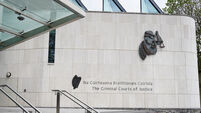
Bouchaker’s claims that he was not in his right mind did not provide him with a defence under the Criminal Law (Insanity) Act.
At the time of the stabbings, he had a mild cognitive impairment but psychiatrists who assessed him said he understood the nature and quality of his actions and knew that it was wrong to stab children.
In his closing speech to the jury, Karl Finnegan, senior counsel, asked why, if Bouchaker did not intend to hurt anyone, he had brought a knife, waited for the perfect moment, and attacked a group of vulnerable five and six-year-olds.
He described Bouchaker’s claims as ‘absurd’ and asked the jury to reject them and find him guilty.
Following the attacks, a riot in Dublin saw arsonists, looters and thugs cause over €5m in damage to the city centre.
Bouchaker's lawyers asked the jury not to listen to the "shrieking for vengeance" from the mob, but to apply themselves coldly and dispassionately to the evidence.
The jury spent about five hours considering their verdicts over two days and asked for exhibits and transcripts of various statements to be made available to them.
They also had access to all the CCTV footage that the prosecution showed during the trial.
Since receiving numerous blows to the head following the attack on Parnell Square, Bouchaker now suffers a more serious brain injury.
The injury was severe enough that one psychiatrist argued that he was not fit to stand trial.
However, a psychiatrist called by the prosecution disagreed.
Mr Justice Hunt ruled that despite Bouchaker's cognitive limitations, he could be accommodated and was capable of mounting a defence and understanding the nature of the charges against him.
Bouchaker has been in custody in Cloverhill Remand Prison throughout his trial.
He remains in custody and will be sentenced later this year.
The charges of attempted murder and causing serious harm each carry potential life sentences.