Meet Ger Deering: Ireland's 'old-fashioned' Ombudsman and Information Commissioner
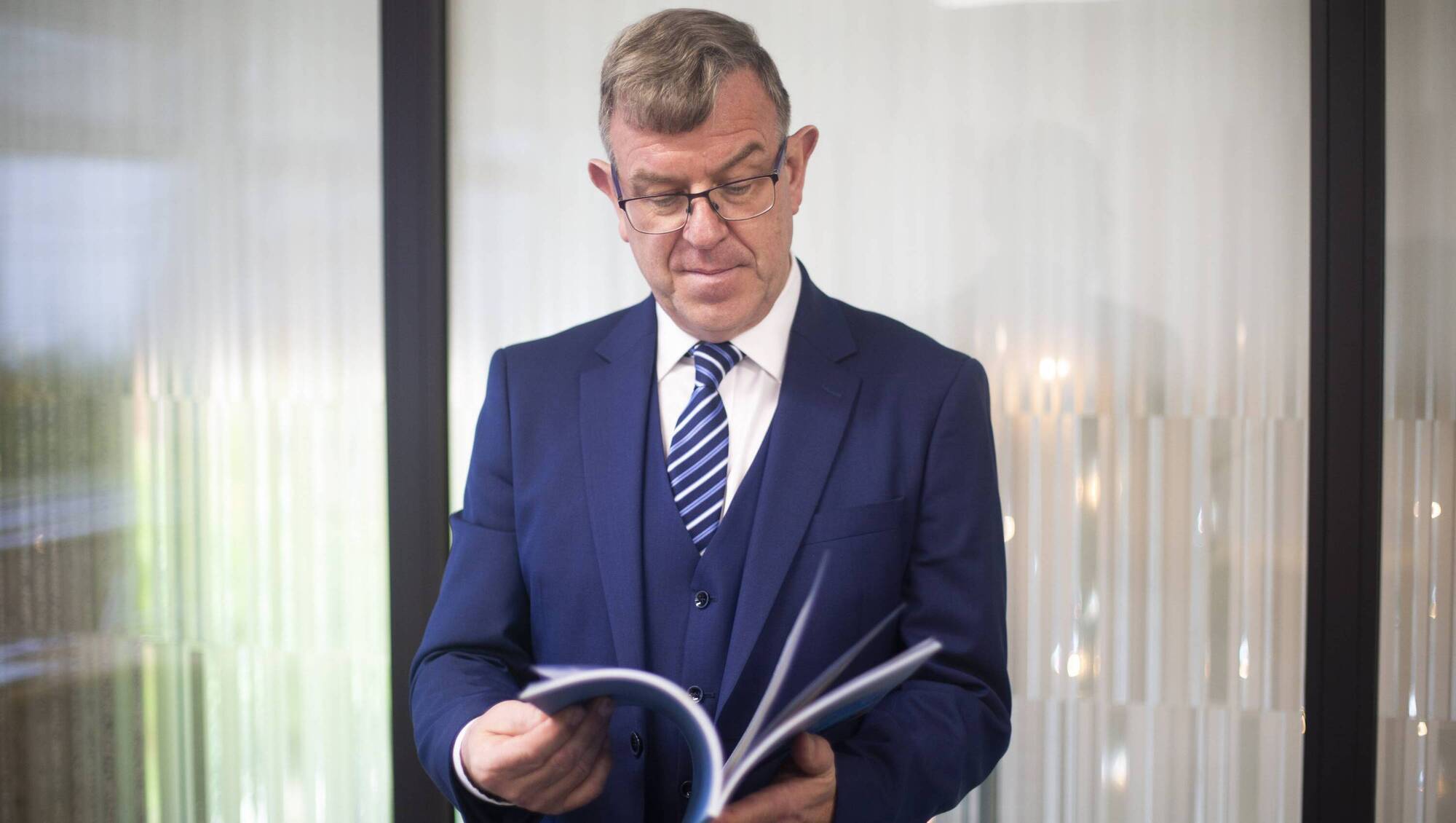
Ombudsman Ger Deering: 'We can break down that wall but it is important to note — we are neutral, we're independent, and we're impartial.'
In an age of apps, AI and increased digital automation, Ger Deering is not ashamed to say he is a bit “old-fashioned”.
Instead of direct messaging or emailing people, the Ombudsman and Information Commissioner for Ireland actively encourages his staff to pick up the phone and talk to people.

“We use what I call an ‘old-fashioned innovation’. We actually use the telephone,” he said.
“You see it now in both the private and the public sector, trying to find a telephone number on a website can be quite a challenge these days.
“Yet, in our office, we find that we can resolve about 80% of the complaints that come to us in under three months.
“How do we do this? We are always picking up the phone to the complainant, asking them what the problem is. Then we call the service provider who is being complained about.
“By actually talking and — more importantly listening — to people, we get a far better understanding of what the problems and what the solutions are.
Speaking to mark the publication of a history of the Office of the Ombudsman since it was set up in 1984, he added: “Sometimes the issue is we can't get to talk to anybody.
“There really is an app for absolutely everything but sometimes we need human interaction, and this is where systems can sometimes fail.
“An online process will probably work for 90% of people. But what do you do when it doesn't actually work, when you have a kind of an exceptional situation, or a different situation, or you just need to talk to somebody, or to get an explanation?
“That’s the issue at the heart of a lot of the complaints we deal with.”
Some of his office's achievements have included the abolition of the convention of dependent domicile in 1986, following the intervention of the ombudsman.
Up to that date, a wife was regarded as having the same ‘residence’ as her husband even if he was living abroad. This resulted in women — whose husbands had deserted them and were living outside Ireland — being denied social welfare benefits.
Other areas where the ombudsman has influenced change relate to the unfair treatment of co-habiting couples.
The Office of the Ombudsman has also been a key player in protecting and promoting the right of people with disabilities under 65 living in nursing homes to have more suitable accommodation and conditions.
Meanwhile, its actions have also led to the full implementation of the Magdalen Restorative Justice Scheme, improvements in the handling of complaints by hospitals and the refunding of more than €365 million to medical card holders over the years.
But Mr Deering says he just feels that, in general, changes that have impacted on issues around equalities are among the main ones “not to be complacent about”.
“The role of the ombudsman has been to the fore in some of the changes that have happened over time.
“If we jump to today, I would say to people — let's not be complacent.
“We have made huge strides and improvements in terms of equality and a whole range of areas, but we can never become complacent because they could very easily be rolled back again.
“That's why I think the work we do in terms of the role of the ombudsman calling out things, identifying wrongdoing, and constantly holding the government to account is an extremely important part of our democracy.”
Asked what he thinks could get “rolled back”, he replied: “You look at what you see and hear online in terms of equality.
“To date, we have in Ireland had some really innovative and open advances in terms of equality over the decades.
“I'm thinking in particular here about women, gay people and all the various minorities who have had their rights and entitlements either restored or strengthened.
“But we are all now hearing a different narrative now and if we don't look after the gains we've made, we could risk rolling them back in certain areas.”
Asked if he feels there is an intolerance creeping in into that narrative, he replied: “Sadly, yes.”
A sign he sees regularly these days in public places is a simple example of what he means.
“I think it's strange that when you go in today to your local supermarket or your local nice, friendly cafe, there are signs asking people not to treat staff badly.
"Being nice to people is something we should be taking for granted, and something that we should be assuming that everybody is going to be treated with respect and dignity."
He added: “We are definitely seeing, unfortunately, an increase not just in the public sector but across the board of inappropriate behavior by a small group of people but nonetheless it is serious.
"It's also not just on social media, some public servants and other people providing a service are experiencing this firsthand.”
Officially, the ombudsman's role is to examine complaints from members of the public who believe they have been unfairly treated by certain public service providers.
These include government departments, local authorities, the HSE, and both charities and voluntary bodies that deliver health and social services on behalf of the HSE.
In the six years to and including 2024, complaints had risen by over 30% from 3,664 in 2019 to 4,778 in 2024.
“We level the playing pitch between an individual and an institution or a big organisation, and we give a voice to a person who maybe feels they've come up against a brick wall, “ he said.
“We can break down that wall but it is important to note — we are neutral, we're independent, and we're impartial.
“We're not a champion of the complainant because we don’t want to lose our independence or our impartiality.
“We are that independent, impartial voice that can listen to both sides, and then come up with a reasonable outcome, and we really are solution-focused.
“The role of an ombudsman is to be an alternative to courts. Our process is more informal and can often deliver broader systemic changes.“
He said another important role of the ombudsman is not just to try and find a solution for an individual, but everyone who uses the service that was initially complained about.
He added: “It's very much about also improving public services for everybody who wants to use public services.
“It isn't just about the individual complainant, it's actually about improving the service for everyone who uses the service someone has complained about.”