Everything you need to know about Ireland's new autism protocol
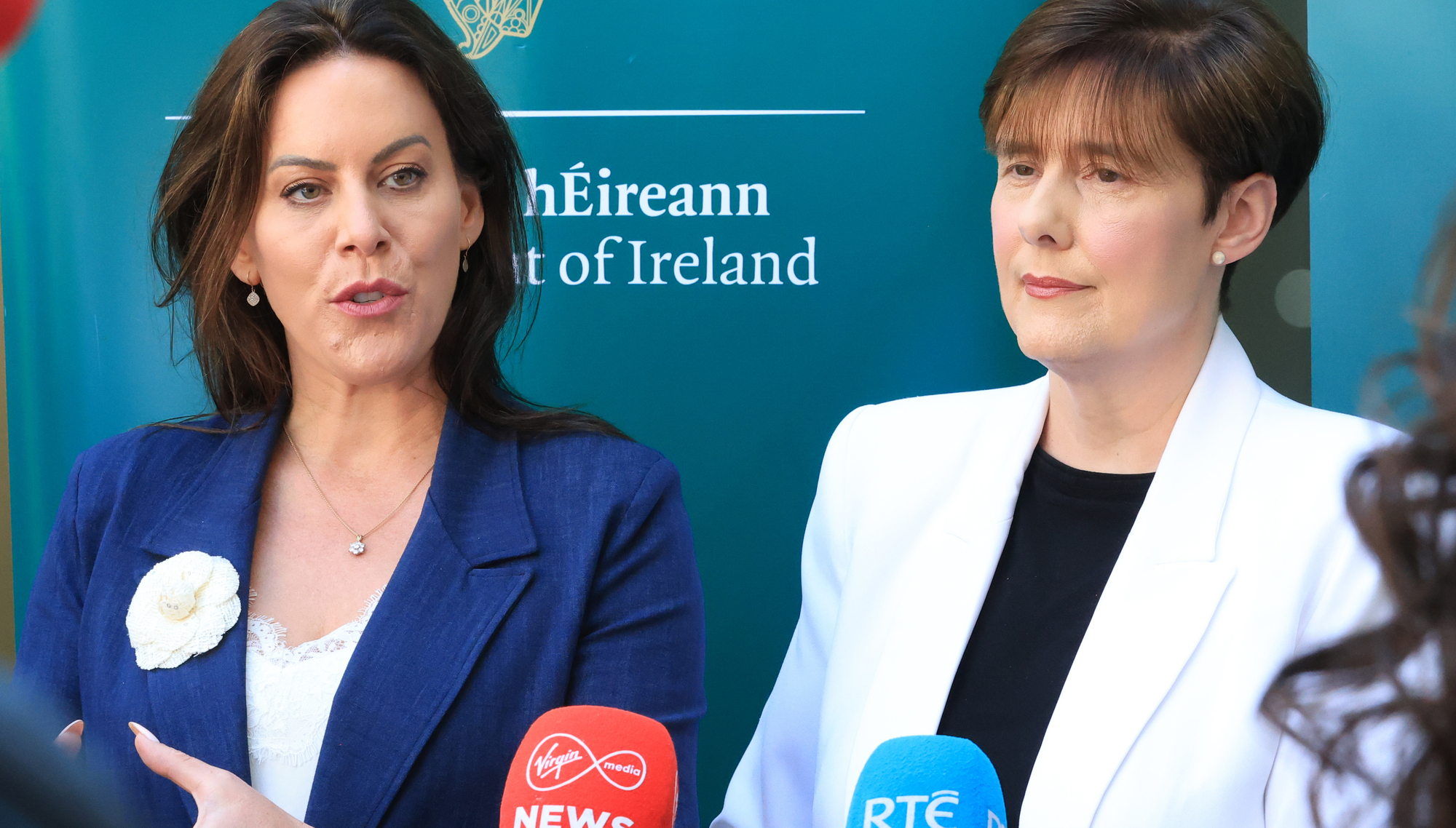
Health minister Jennifer Carroll MacNeill and minister for children, disability and equality, Norma Foley at the launch of the Autism Assessment and Intervention Pathway Protocol. Picture: Sasko Lazarov/Photocall
Any child or adult thought to have a pattern of differences or difficulties in social function, communication or sensory experience can apply.
It is the first time adults are included in publicly-funded assessments.
It will begin rolling out from July, the HSE said.
Clinicians can choose from three tiers of assessment based on the person’s needs.
Clinicians working for the HSE or private providers as well as organisations funded through Section 38 and 39 arrangements will be able to use it.
Autism assessment for people with “clear presentations”; extended assessment for people with “unclear presentations”; continuing assessment for people with continuing unclear presentations.
If a clear decision cannot be made at Tier 1 for example, the clinician can move to the next level.
The outcomes for each child or adult can include individual targeted supports and/ or access to more universal help.
Staff will have a manual which suggests how long an assessment should take and they will decide what is the best amount of time for the person.
No it will not. It will run in parallel so people can also request an assessment of need if they wish.
Disability minister Norma Foley described the protocol as “a faster, more efficient, more impactful pathway for autism assessment".
She also said: “Teams using the protocol should be able to assess more people in a shorter time” than currently.
The move is part of the government’s response to shocking waiting lists for the assessment of need.
National autism charity AsIAm has estimated this is now, on average, 27 months. Parents have also gone to court to seek assessment within the legally mandated times.
Yes; they included Adam Harris who is also chief executive of AsIAm.
He welcomed the policy but sounded a cautionary note, stressing the frustrations many autistic people face.
“The protocol will succeed or fail based on the resourcing,” he said.
Other autistic people were on the working group as well as a parent of an autistic child.
Grainne Morrison sounded a note of caution based on her years helping her child, saying: “A pathway, no matter how well designed, requires commitment, investment and on-going evaluation.”
Staff working for any team following this protocol must be registered.
This could mean Coru, the regulator for health and social care professionals, the Nursing and Midwifery Bord of Ireland, Irish Medical Council or Psychological Society of Ireland.
A team should include people with knowledge of autism, autism assessment and neurodiversity among other skills.
HSE regions offering primary care, disability and mental health will be supported by new in-reach teams.
Each will have a psychologist, occupational therapist and speech & language therapist.
However those professions are already in very high demand including for schools, children’s disability network teams and older people’s services.
HSE chief executive Anne O’ Connor said it has to be creative in finding solutions.
“In this case we’re ensuring that all graduates are offered jobs, we’ve done that again this year,” she said.
There has been “a very significant uptake of those roles”, she said.
The three ministers present acknowledged there are already funded roles in the HSE including for therapists which are not being filled due to shortages.
- Niamh Griffin, Health Correspondent


CONNECT WITH US TODAY



Be the first to know the latest news and updates