New autism protocol aims to tackle waiting lists for assessments of need
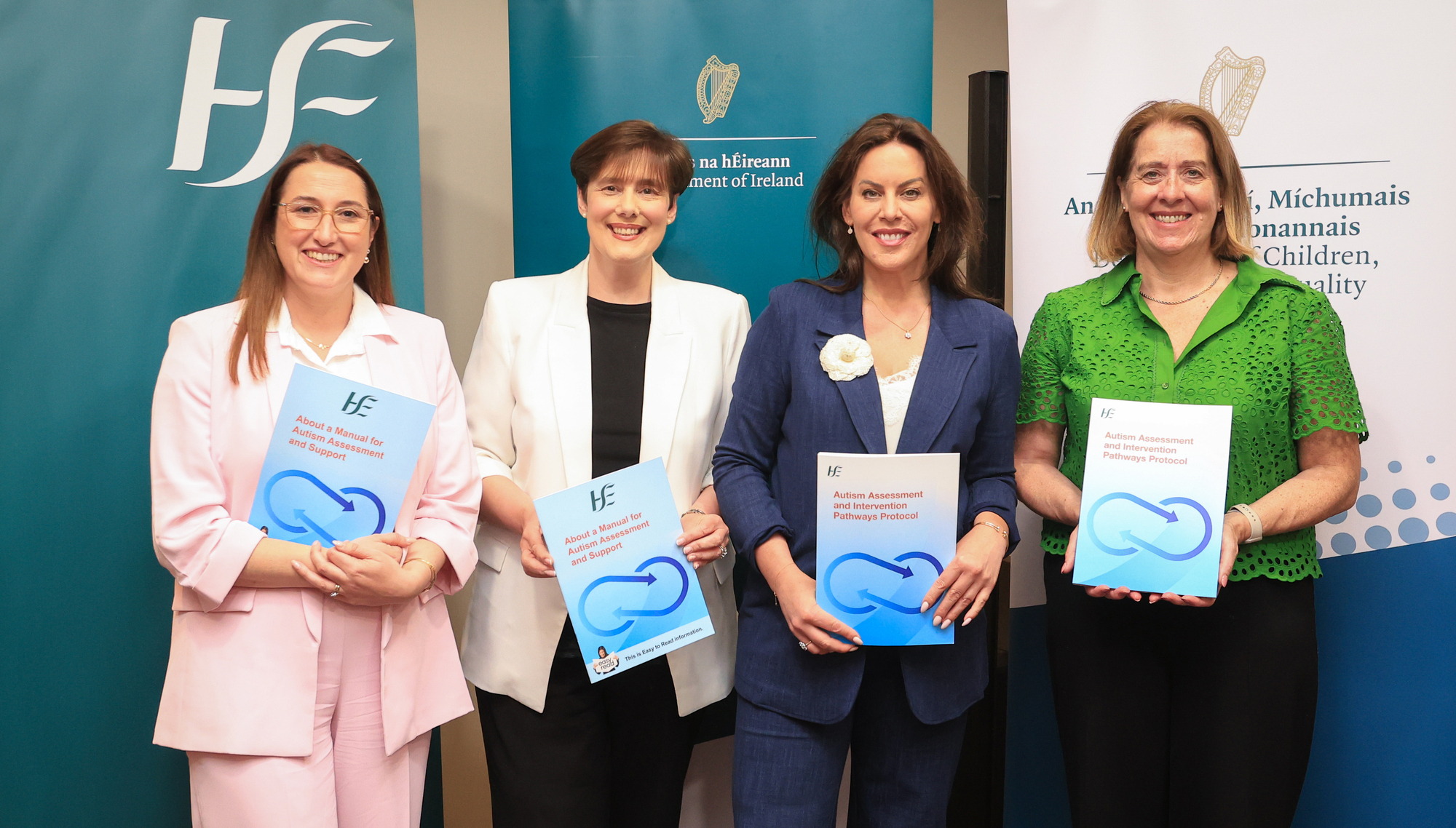
(Left to right) Emer Higgins, minister of state at the Department of Children, Disability and Equality with special responsibility for Disability, Norma Foley, minister for Children, Disability and Equality, Jennifer Carroll MacNeill, minister for Health and Anne O'Connor, HSE CEO at the launch of the Autism Assessment and Intervention Pathway Protocol. Photo: Sasko Lazarov/Photocall Ireland
A new autism assessment launched on Tuesday will not be rolled out until July at the earliest, with advocates warning that funding and staffing are needed to ensure it makes a difference.
It is part of a Government response to spiralling waiting lists for assessments of need. Average wait times can now reach 27 months even though there is a statutory legal timeframe of six months.
The protocol was described as a new way to do assessments for children, running in parallel with the existing system and, for the first time, extending to adults.
National autism charity AsIAm chief executive Adam Harris was on the programme board and said: “I think there needs to be a recognition that today is just a first step.
“There’s a huge body of work to be done to communicate what is published today to families in a way that is widely understood. I think there’s a real challenge to ensure we don’t just publish a policy, but that it is now implemented and delivers for families.”
Mr Harris said the protocol is not an alternative to the assessment-of-need process as this remains in place.
“The protocol will succeed or fail based on the resourcing,” he said. “I think it’s welcome there has been specific teams announced as part of today’s launch but what the proof will really be in is the ability of these teams to be resourced and stood up across the country.”
Three government ministers and the head of the HSE also attended the launch.
HSE chief executive Anne O’Connor said: “Implementing the protocol in the HSE Health Regions will begin in [the third quarter of the year, July to September], supported by in-reach teams."
These teams include professions already in high demand such as psychologists, occupational therapists, and speech and language therapists.
Ms O'Connor acknowledged pressures on the workforce. “In this case we’re ensuring that all graduates are offered jobs. We’ve done that again this year,” she said.
There has been “a very significant uptake of those roles”, she said.
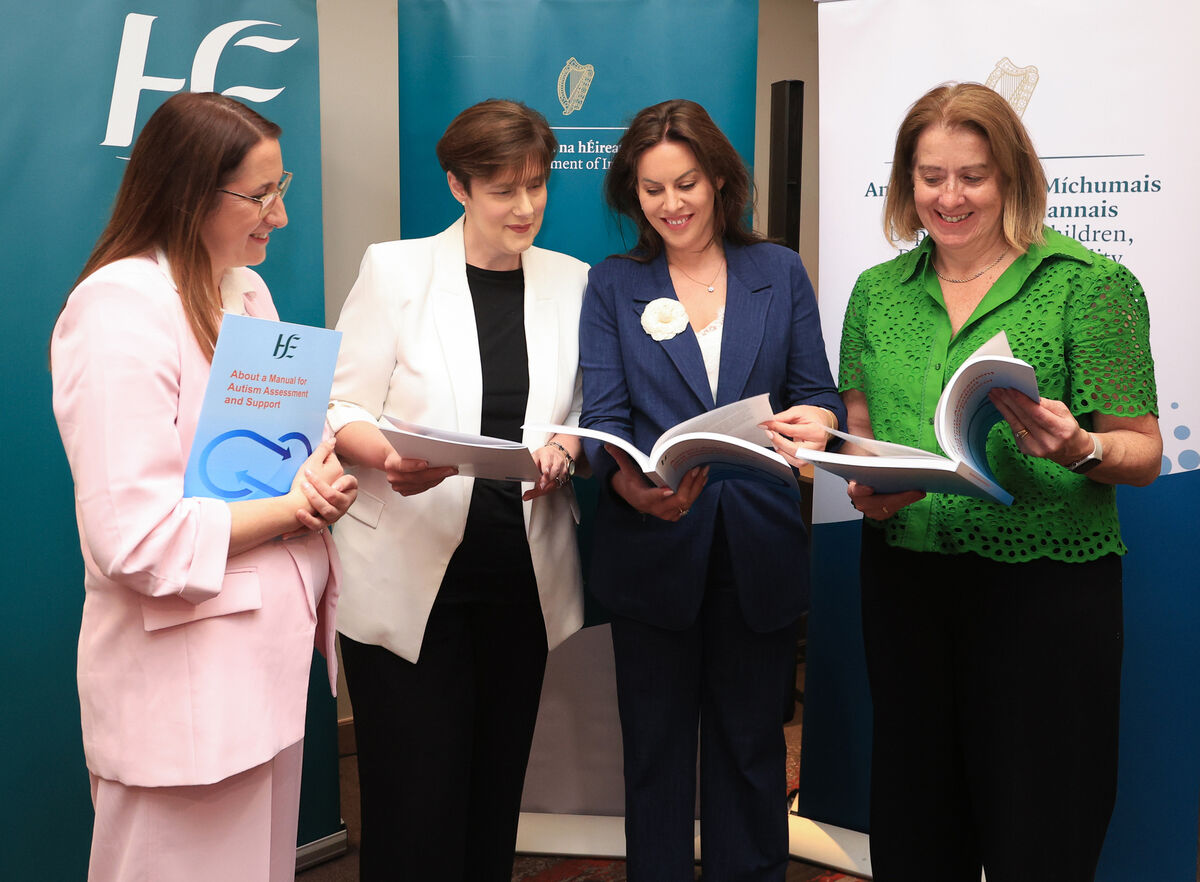
Health minister Jennifer Carroll MacNeill was asked how the protocol will cut waiting lists for assessment of need.
She said: “It’s going to streamline pathways so you’re not having multiple referrals made to multiple teams who are then trying to advance independently and not necessarily talking to each other and parents having to replicate the conversations they’re having.”
Disability minister Norma Foley told the the Government accepts that “the assessment-of-need process as it currently exists does not work".
The protocol is simply one change being made to improve access, said Ms Foley, adding: “If it’s done and if it’s delivered as it's envisaged, that will be a positive step forward.”
She described the protocol as “a faster, more efficient, more impactful pathway for autism assessment".
Minister of State with special responsibility for disability, Emer Higgins, said the in-reach teams will work across disability, primary care, and mental health services to help those staff deliver this change.
“Adults can self-refer, or parents and guardians may refer children if they believe they have autism,” she said.


CONNECT WITH US TODAY



Be the first to know the latest news and updates