Government urged to introduce multi-year funding allocations to departments
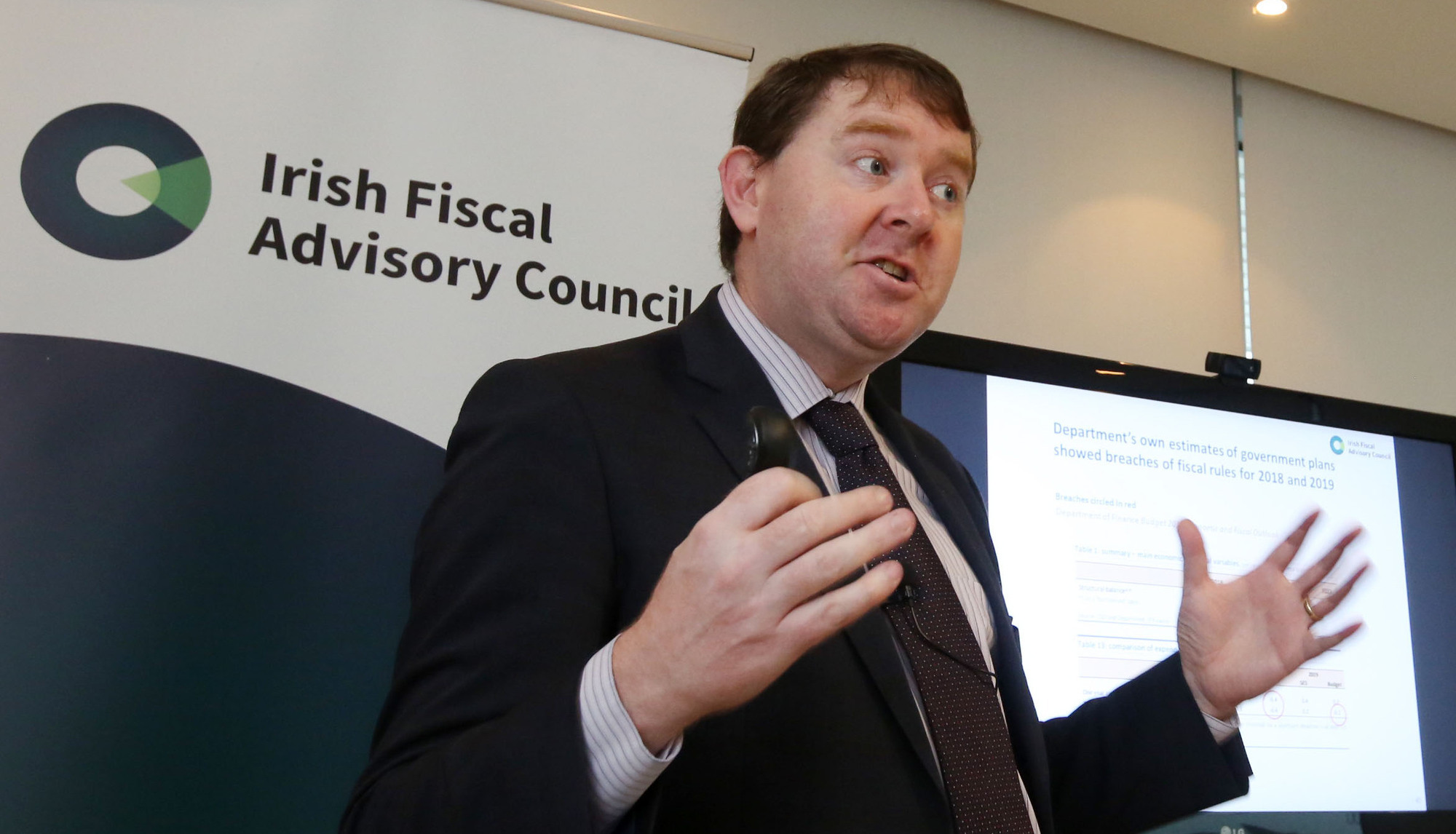
Seamus Coffey: 'A big improvement would be to move away from single-year budgets.' File picture: Sam boal/Rollingnews.ie
The State's financial watchdog has urged the Government to end annual budget battles by introducing multi-year funding allocations to departments.
Irish Fiscal Advisory Council (Ifac) chairman Seamus Coffey has hit out at the current system of single-year budgets and suggested departments that overspend one year should have that amount taken out of their allocation for the following year.
"A big improvement would be to move away from single-year budgets," he said.
"Rather than having these rounds of negotiations or fighting over the additional spending every year, give departments the ability to plan over three or four years, so move away from the annual set piece of these speeches in the Dáil and actually have our budgeting put on a multi-year purpose.
"And if a department overruns in one year, it costs them the following year. They have a cumulative budget available over four years, and if they want to go through that in the first year, what that means then they have to claw it back in years two, three and four," the economist told members of the Oireachtas budgetary oversight committee on Wednesday.
Read More
He pointed out that more than €4bn in supplementary estimates has been allocated to cover overspends this year "with not one objection".
Labour TD Ged Nash took issue with this statement, saying that he had objected to funding large overruns, but the structures to allow opposition to hold the Government to account on spending do not exist.
Mr Nash said the annual budget "allows the Government to control the agenda", which is serving the media and not the general public, with leaks and speculation starting months in advance.
Mr Coffey also warned that the "staggering" amount of corporation tax collected from multinational pharma companies is just as vulnerable as revenue collected from the tech sector.
He told politicians that tech companies had traditionally been viewed as "more footloose" than pharmaceutical firms with manufacturing facilities here.
However, he warned that this is no longer the case.
Just three multinational firms — Apple, Microsoft, and Eli Lilly — accounted for 46%, or around €13bn, of Ireland's total corporation tax collected in 2024.
"The value on the exports would suggest that it's not just the manufacturing value that's being linked to Ireland, but also the IP [intellectual property] value, patents, etc seem to be linked in some cases.
"So, there's risks of the success of these products, and then there's risks of the companies themselves restructuring," Mr Coffey said of Ireland's pharma sector.
He suggested that spending plans are outstripping the sustainable revenues because of the overreliance on corporate tax revenues.
Robert Kelly of the Central Bank agreed that there are signficant "vulnerablities" when it comes to the relience on corportation tax.
CONNECT WITH US TODAY



Be the first to know the latest news and updates