Large budget package and tax cuts will only drive up prices, finance watchdog warns
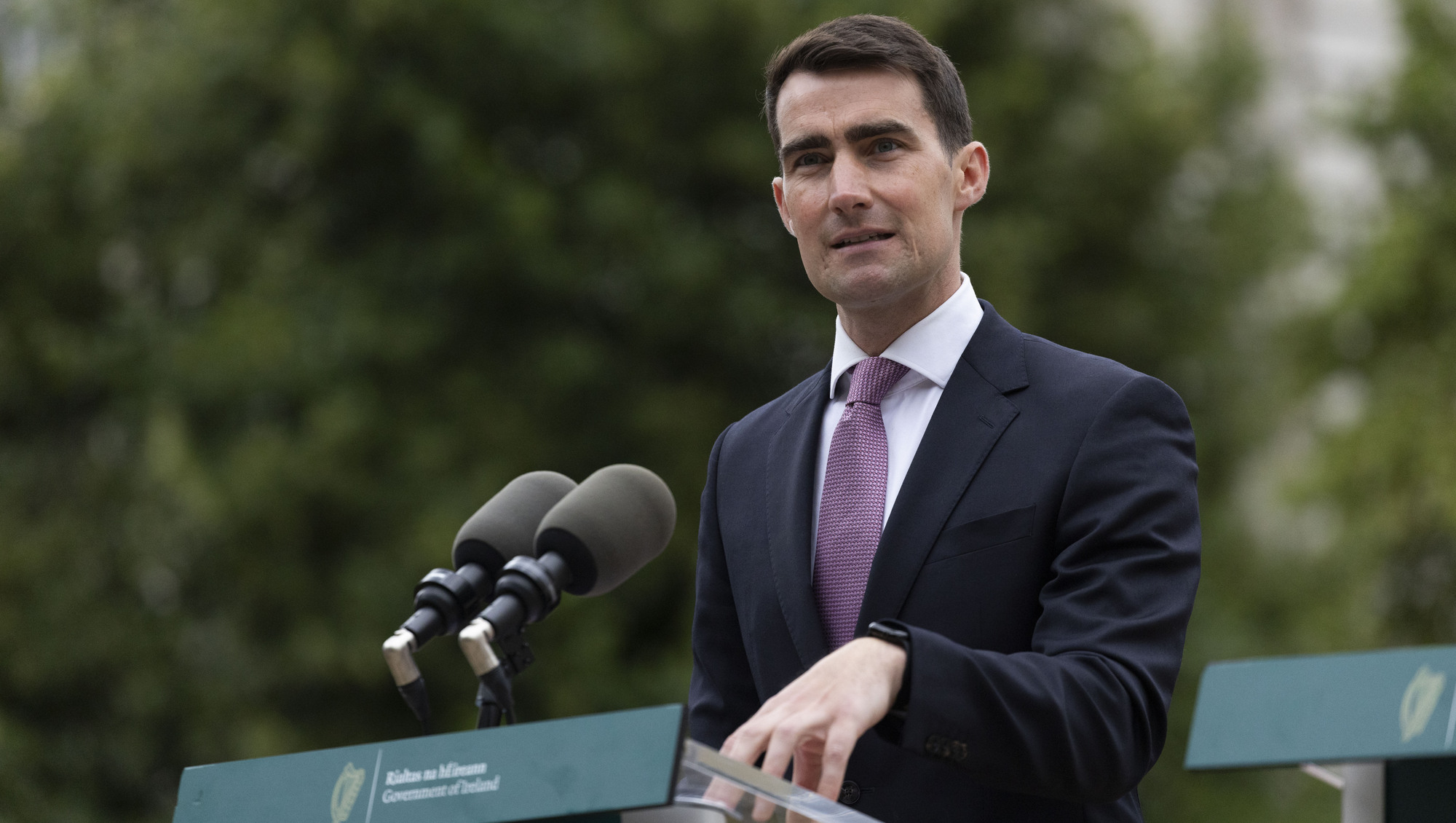
Public expenditure minister Jack Chambers has told ministers they need to find further savings and efficiencies within their existing allocations before they will be granted additional money. Picture: Sam Boal/Collins Photos
The Government has been warned a large budget package will only drive up prices and its plan to increase spending by 6% is not appropriate given the current state of the economy.
In its pre-budget statement, the Irish Fiscal Advisory Council (Ifac) also criticises the fact spending overruns by the Government have now become routine.

Acting chief economist at Ifac Niall Conroy said the budget announcements each October have become “really a starting point” due to the overruns and the “budget package was likely to be much larger than what is announced”.
“A big part of that is because spending overruns have been so large and have been so complex in recent years," he said.
The Government is due to publish a tight Budget 2027 on October 6.
Public expenditure minister Jack Chambers has told ministers they need to find further savings and efficiencies within their existing allocations before they will be granted additional money.
According to the summer economic statement, the budget will include a package of €8.5bn, with €1.5bn of this due to be spent on tax cuts, and the remaining €7bn going towards new spending measures and continuing existing levels of services.
This implies a net spending increase for 2027 of 6%.
Read More
Ifac said a 6% increase in spending was higher than the sustainable growth rate of the economy of about 5% and was not appropriate for the current position the economy is in.
It said there “isn’t a very compelling case” for a large budget package from the Government this year.
It said over the past decade, spending overruns have averaged more than €2bn per year in today's terms. The last time spending was at, or below, budgeted levels was in 2013.
Niall Conroy said in headline terms, the Irish economy was still “performing extremely well”.
“Employment is still growing, wages are growing in the economy, and essentially what that means from a finances point of view is that this doesn't look like an economy that requires support for budgetary policy,” he said.
Mr Conroy said all the indicators point to an economy that was “performing quite well in aggregate” and what that meant was “there isn't a very compelling case for a large budgetary package to support an economy in this position”.
"If there was to be a large budgetary package, the main impact you would see would not be an increase in employment or economic activity, but likely an increase in prices,” he said.
Mr Conroy also pointed out the Government was planning on running “relatively modest surpluses”, despite taking in significant sums of money in corporation tax, which is projected to be €35bn this year.
Ifac criticised the Government for not saving more of the corporation tax receipts it is generating, especially since by the end of the decade it may need to borrow money to properly fund its two wealth funds.
Based on Government projections, Ifac warned for every €8 in corporation tax received between 2027 and 2030, only €1 would be saved, with the rest being spent.
"We think Ireland should be running larger surpluses at the moment. We should be saving a greater share of corporation tax receipts,” Mr Conroy said.
"If we were saving a greater share of those corporation tax receipts, you would be able to make your contributions to the Government's two savings funds without needing to borrow to do so.”
Ifac made a number of recommendations to the Government as part of its pre-budget statement. It said net spending growth should be limited to a more sustainable rate, the Government should set “realistic spending ceilings” for next year and beyond, and introduce a fiscal rule to guide budgetary policy.
It added the Government should run larger surpluses to reduce the need to borrow money in the coming years for the two wealth funds.