Wild Matters: The symbiotic nature of midsummer meadows
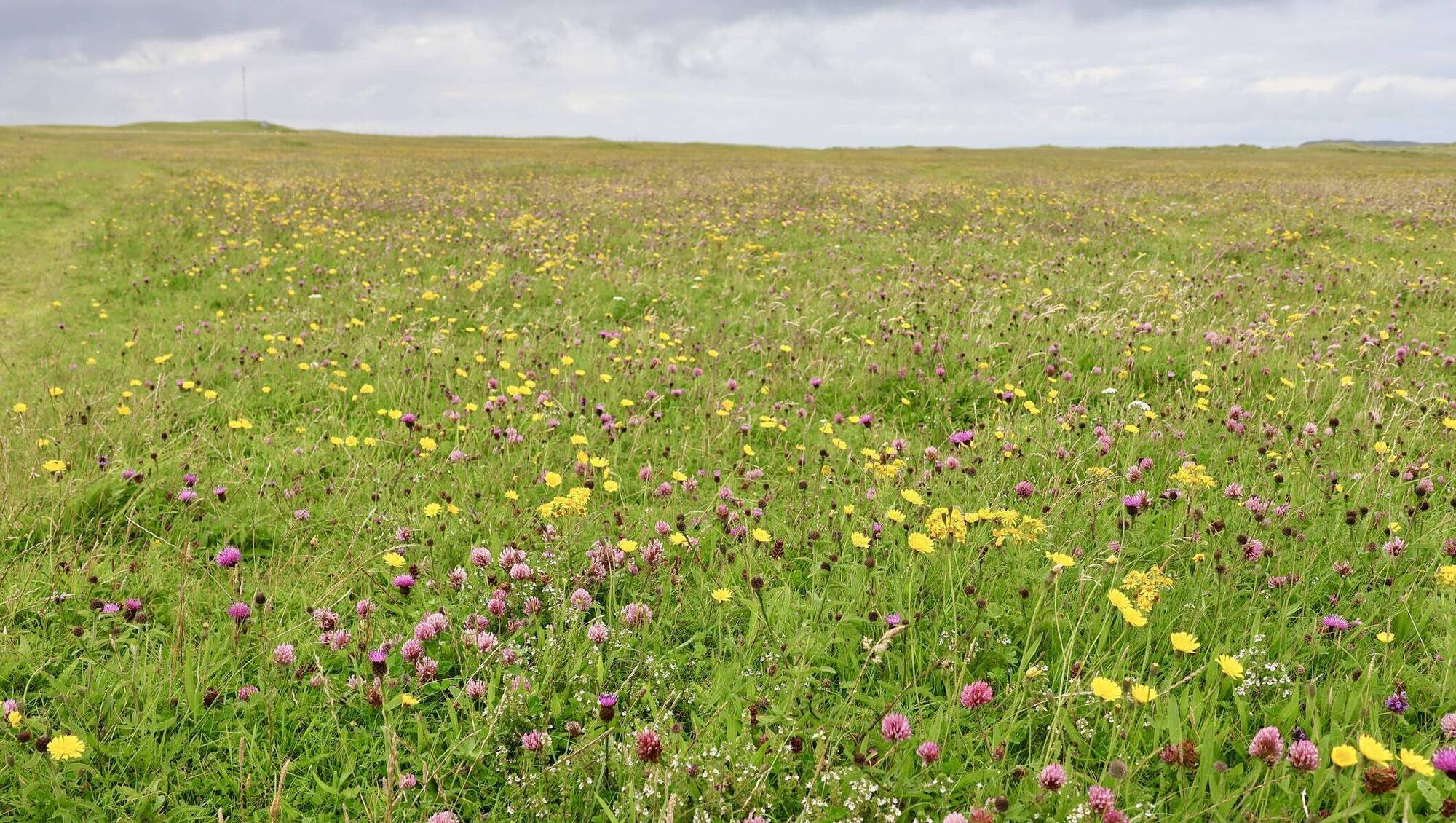
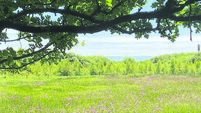
All over Ireland, midsummer meadows are glorious right now. Bright pinks of ragged robin mingle with tall stems of delicate meadow buttercup in richly textured swards.
We talk a lot about ‘wild’, a popular term that is now widely used to sell deodorant, books, foods, events and holidays. The idea of being free of control or cultivation clearly appeals to our times. But when it comes to nature conservation, ‘wild’ isn’t always the best approach. In Ireland, as with much of western Europe, rich cultural landscapes have been farmed for millennia. Our grasslands exist because people have been grazing farm animals or cutting hay to feed those animals. Pastures and meadows are ‘semi-natural’ habitats that have been shaped by human hands since farming cultures first arrived here in Neolithic times, around 6,000 years ago.
All over Ireland, mid-summer meadows are glorious right now. Bright pinks of ragged robin mingle with tall stems of delicate meadow buttercup in richly textured swards. Pastures crammed with wild orchids host an array of colourful butterflies feeding on the nectar of assorted wildflowers. When we stay quiet and listen, we can hear the characterful calls of grasshoppers coming from among the tall grasses.
Rather than assuming that agricultural land exists exclusively to produce commodities and nature exists separately, in ‘wild’ places, we must get better at acknowledging that there can be great synergies between farming and nature. For thousands of years, these cultural landscapes of species-rich semi-natural grassland habitats have been rich in wildlife and productive as farmland. Covering over half of the land area, they are characteristically Irish and fundamental to biodiversity across this island.
Meadows that grow tall, flower and set seed before being cut for hay later in the summer can be home to oxeye daisy, yarrow, wild carrot, nitrogen fixing vetches, yellow rattle, and bright pink ragged robin in parts. Cutting hay or haylage later in the summer maintains the meadow species that support a wealth of invertebrates which in turn are sustenance for insectivorous birds, frogs, bats and other mammals. On grassy pastures, grazing cattle or sheep maintain the habitat as a grassland and prevent its natural succession into scrub and woodland, which for many wild species, is crucial. Calcareous grasslands, for example, are among the most species rich of all grassland types, rich with wild orchids, wild thyme, lady’s bedstraw, and dozens of other wildflowers and their array of invertebrate dependants.
Of the 100 species of wild bees that are native in Ireland, many are grassland specialists. Each species of mining bee, for example, burrows out little holes in the ground for their nests, some in sandy soil and others in clay banks. They depend on species rich grassland management for the richness of wildflowers that provide them with nectar and pollen, and for their nests to remain undisturbed in early summer.
Most of the 7 different grasshopper species in Ireland depend also on the existence of species-rich grassland habitats. Right now as the mid-summer approaches, grasshoppers can be heard from 15 metres away, each species making a distinctive sound, just as a wren, a blackbird and a cuckoo have distinctive calls. Grasshoppers, beetles, shield-bugs, ladybirds, meadow spiders and hoverflies are all part of intricate workings of these habitats, some pollinating wild plants and maintaining soil fertility, each group keeping the others in check, as well as providing sustenance for lots of other creatures higher up the food chain, including farmland birds.
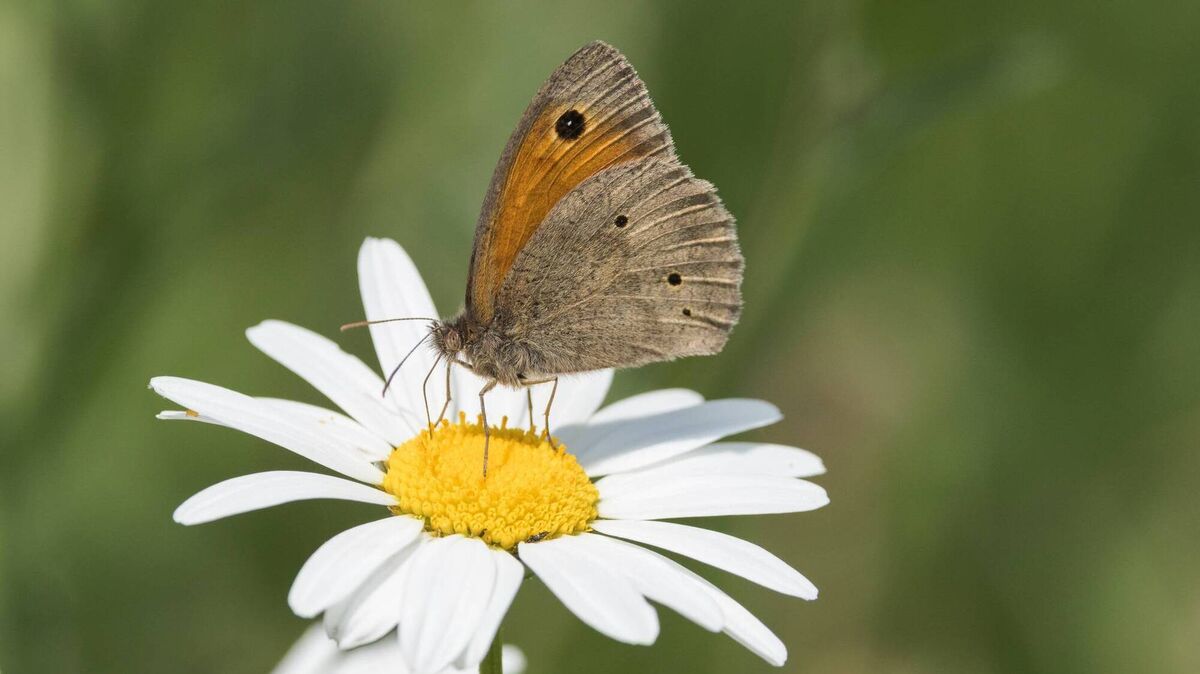
But the nuances of how these grasslands are managed can mean life of death for all the wild inhabitants. As land is pushed toward to increasing productivity, with more and more slurry and chemical fertilisers being applied, the diversity of wild plants and animals plummets. Wild orchids, for example, depend on tiny filaments of fungi in the soil that help orchid seeds to germinate and nourish young orchid plants as they grow. Most of the 29 species of wild orchids that are native here are sensitive in this way, and in just 40 years, the orchid filled meadows that were common and widespread across Ireland have become a rarity. One third of wild, native bee species are threatened with extinction. Many of the butterflies that depend on species-rich grasslands have been experiencing plummeting populations. Meadow browns, for example, a butterfly characteristic of meadows, have experienced population decline of a whopping 69% between 2008-2023.
Milk production increased by more than 40% between 2015 to 2020. This intensification of the dairy industry goes hand in hand with a large-scale conversion from species-rich pastures to monocultures of nutrient hungry ryegrass. As commodification replaces diversity, perennial ryegrass has become one of Irelands most common plant, leaving little room for wild orchids, mining bees, grassland butterflies, crickets, grasshoppers, swifts, swallows, or ground nesting birds such as skylark, lapwing, and curlew. In addition to driving out terrestrial wildlife, increasing fertiliser use is causing catastrophic pollution in rivers, lakes and estuaries.
Witnessing this is hard. People I meet all over the country are distressed by the rapid annihilation of Ireland’s farming heritage and biodiversity. Knowing that there are readily deployable and effective solutions is some comfort, though it can also be immensely frustrating when we see that -despite the availability of public funding to redress the devastation - there is a reluctance among state and industry organisations to implement solutions effectively.
Species rich grasslands are now one of the most threatened habits in Ireland. Restoring this rich heritage of great grassland may not as popular a concept as rewilding, though neither is it a niche conservation challenge. These grasslands are a living exchange between culture and natural heritage. They represent our dependence on the land and the dependence of the wild inhabitants of these landscapes upon us. It is up to all of us, whether farming or otherwise, to be aware and involved of the unfolding catastrophe, because continuing declines are not inevitable. If once common orchids, bees, butterflies, wildflowers and farmland birds are to be part of our future, we must act now for effective restoration, especially as a major part of the first National Nature Restoration Plan that is currently out for public consultation.
- The first public consultation on Ireland’s draft National Nature Restoration Plan is now open for submissions until the end of June.
The National Farming For Nature Festival is a practical, farmer-led event, where farmers sharing what’s working for their farm & their pocket. See Farming for Nature Festival 2026 | Practical Farmer-Led Event

CONNECT WITH US TODAY



Be the first to know the latest news and updates