Lesser spotted: This elusive leopard is somewhat of a 'ghost'
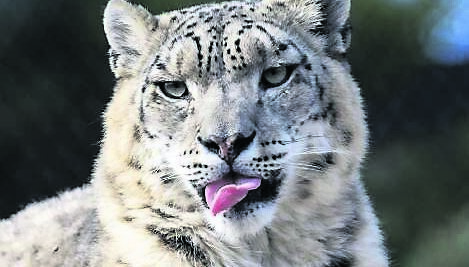
Kulbhushansingh Suryawanshi wanted to study snow leopards, the world’s most secretive wild cats. However, during a two-month search, Peter Matthiesssen, author of (1978), had failed to glimpse even one of them. "You will never see a snow leopard," a professor advised Suryawanshi, "you won’t get enough data to write your thesis." But this graduate student would prove him wrong.
That Suryawanshi hails from Maharashtra made his choice of subject particularly challenging. British Raj officials used describe the lowland Indian summer as ‘beastly hot’, whereas snow leopards live high in the Himalaya at -40 degree temperatures. Also, altitude sickness can kill even experienced mountaineers. No, I have not misspelled ‘Himalaya’; it’s a plural noun in Nepalese, without an ‘s’, Suryawanshi tells us in his , just published.
All big cats, he says, breed well in captivity and visitors to Dublin Zoo will know this mountain ghost, the only large carnivore living exclusively at high altitudes.
The species is more closely related to the tiger than to the ‘common’ leopard. Whereas the latter is a highly adaptable species, even taking up residence in Indian cities, the ‘ghost’ is a specialist, at home only on the highest mountains.
Able to climb steep rock faces, the snow leopard’s forelegs have great flexibility and its big paws serve as snowshoes. A long bushy tail ensures balance and doubles as a scarf when the cat is at rest. The eyes are placed widely apart for stereo vision. Sharp teeth can slice through frozen meat and extra-wide nasal cavities help breathing the thin mountain air. Due to the configuration of its throat, a snow leopard can’t roar.
Sharing apex predator status with the wolf, the snow leopard’s prey of choice is the blue sheep, "a unique species of wild goat with sheep-like traits’" Studying them proved crucial to Suryawanshi’s research. But the snow-cat will take livestock opportunistically. Unlike wolves, which roam in packs, snow leopards are solitary hunters. They never attack people.
The oldest known wild snow leopard reached the age of 15. A zoo-dwelling one died at age 22. According to Stanford University scientists, there have never been more than 14,000 snow leopards alive at any time and their ‘effective population size’ is between 2,500 and 4,000. Of the eight billion people alive today, only about 20,000 selected individuals (our ‘effective population size’) would be needed to pass all human genetic mutations from one generation to the next.
But Suryawanshi’s approach to his subject is wide-ranging. His research covered the cat’s interactions with humans. Spotting the elusive ghost in the wild has become something of a tourist attraction, which may not be a welcome development; images of mountaineers queuing on the litter-strewn summit of Mount Everest come to mind.
In Ireland, we persecuted our apex predator, the wolf, into extinction. Does a similar fate await the Himalaya’s iconic cat? The respect the beast commands, even among herders who endure its raids on their corrals, suggests that, although endangered, it should manage to survive.
Suryawanshi’s semi-biographical book is a joy to read.
- Kulbhushansingh Suryawanshi. . 2026.
CONNECT WITH US TODAY



Be the first to know the latest news and updates