Wild Matters: Nature restoration in action through pioneering projects
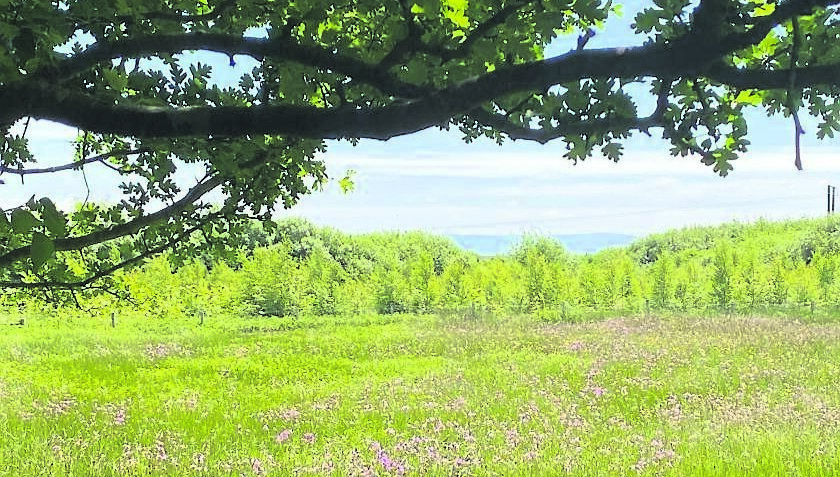
A meadow full of ragged robin at the Barna Way in Co Kerry, also home to hoverflies, wild bees, and butterflies. Picture: Anja Murray
In the green filtered sunlight at the woodland edge, I caught sight of the gentle gait and fiery golden hues of a Silver washed fritillary butterfly. Adults emerge at the end of June and are on the wing through July and August, fluttering around the trunks of hazel, birch and oak, soaking up the sun’s rays from woodland glades and hedgerow perches.
Unusually for a butterfly, the female does not lay her eggs on the leaves or stem of the caterpillar's food source. Instead, she places each egg in a crevice of tree bark, a metre or two up from the woodland floor, directly above a clump of wild dog-violets. Each caterpillar that emerges in August immediately goes into hibernation for the winter. Upon awakening the following spring, the caterpillar will drop to the ground, land on the heart shaped leaves of blossoming dog violet, and feed specifically on these leaves, close to the base of the tree. Once the caterpillar has eaten its way through spring and emerged with wings in high summer, the cycle begins again.
Right now, on the slopes of Esk Mountain, Silver washed fritillaries are out in numbers, along with an abundance of other butterflies: ringlet, meadow brown, speckled wood, green veined white, red admiral, small heath, grayling, painted lady, and holly blue. There, straddling the border between Cork and Kerry, a 280 acre nature restoration project is underway. Straight rows of conifers that were planted in the 1960s are being gradually thinned, allowing pioneering birch trees, adaptable willows, leafy hazel and even small oak saplings to reestablish themselves. As broadleaved trees reclaim their rightful place on these mountain slopes, the population of native butterflies is expected to recover too, along with a myriad of other invertebrates, birds, and mammals, all hungry for the return of the habitats that evolution has uniquely equipped them to thrive among. In parts of the site that were never planted up with confers, where grazing was long ago abandoned, wild native rainforest has established, providing the seed source for natural regeneration across the site.
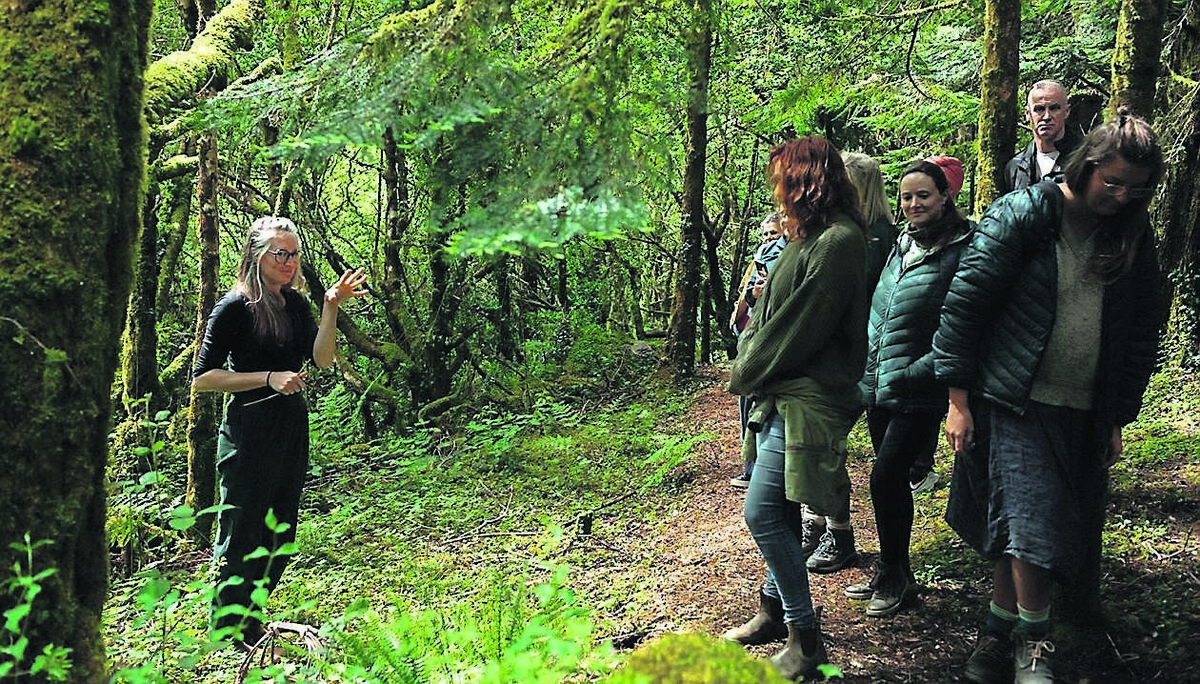
But unfortunately, native tree saplings aren’t the only things setting down roots here. The custodians at Esk have spent several years now battling the infestation of invasive rhododendron. Its dense shade and noxious, waxy leaves smother out the woodland ground flora, depriving butterflies, moths, shield- bugs, bees and rare arboreal ants access to essential resources. Their loss is bad news also for woodland birds and mammals dependant on an abundance of invertebrate life.
CLIMATE & SUSTAINABILITY HUB
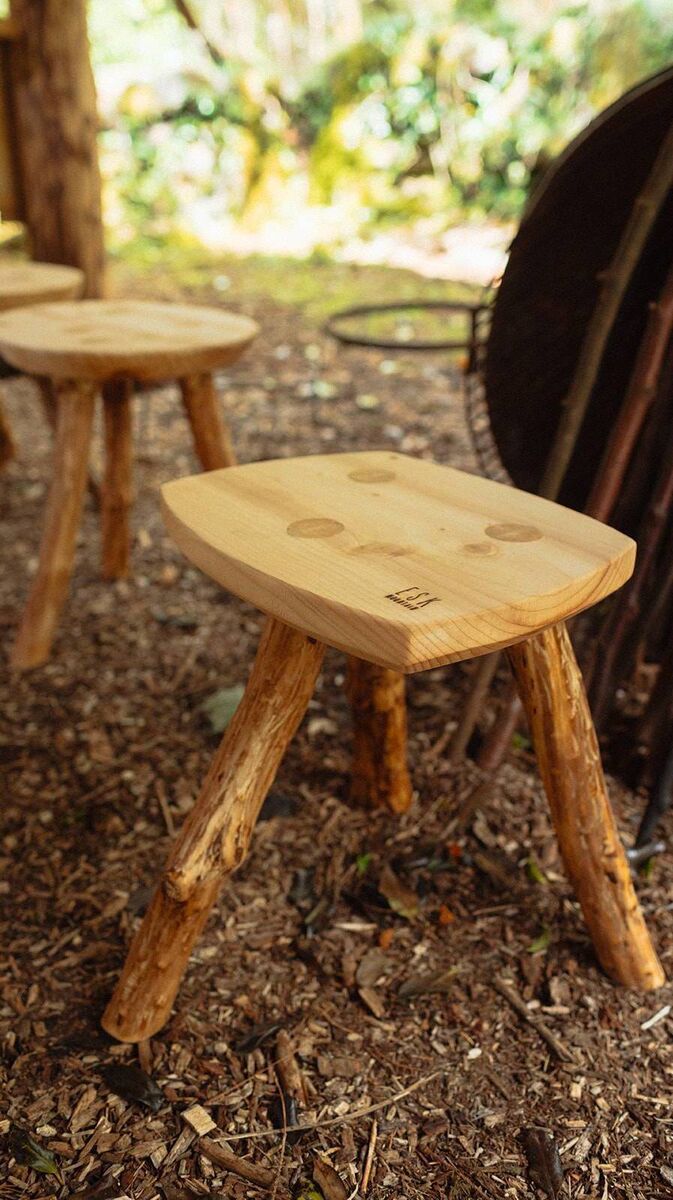
But rhododendron removal is notoriously labour-intensive work. At Esk, volunteers have been recruited to help battle the rhododendron, and wooden stools are hand crafted on site from rhododendron trunks, sold to visitors to help raise funds for conservation work. Foraging trails and visitor experiences are all part of their strategy to make this nature restoration project feasible.
Further up the mountain slopes, a small herd of Dexter cattle and Tamworth pigs have also been co-opted in to the conservation work. Using electronic collars to restrict how far the cattle wander, technology allows grazing to be targeted where it is most needed, thus maintaining the integrity of species rich rough grassland habitats there and controlling another invasive species, the purple moor grass that takes over open uplands.
All over Ireland, similar projects are underway, where privately owned land is being actively managed for conservation, powered by people who care. Acting upon the imperative to tackle biodiversity loss and restore habitats, these people are putting their own time, energy, and resources to taking practical action. Together, such projects comprise an impressively effective grass roots movement that is rapidly gaining momentum across the country, largely independent of state. Pioneering approaches straddle the imperative to earn money from the land, to avail of farm subsidies, and restore ‘at risk’ native habitats. People whose motivation is altruistic and leaning to the future.
Only an hour east, near Skibbereen, I visited a family who have been actively restoring habitats across 40 acres. In this case, rare-breed Dromeann cattle graze among the wood pasture and the nut trees planted 20 years ago provide an annual crop. Dromeann is an ancient Irish breed of cows known for their docile nature and hardiness. By carefully managing the grazing, the abundance and diversity of wild flowering plants across the rough fields, riverside pasture, and grazed agroforestry is impressive. The enthusiasm of the family as they describe the dragonflies and damselflies that are thriving in the riverside wet meadows and open woodlands is truly heartening. This is a much-needed antidote to the knowledge that populations of many butterfly, moth and wild bee species have been taking a nosedive in recent decades.
Near Ballybunion in Kerry, I visited another farm where nature is bouncing back rambunctiously. An enormous meadow brims with the vivid pink flowers of ragged robin and the air above is alive with hoverflies, wild bees, and butterflies, all soundtracked by the soothing summer hum of grasshoppers and crickets. The ‘Barna Way’ exemplifies how protecting nature, growing food, celebrating creativity and building community can have a transformative impact. There, across 20 acres of an old family farm, meadows, woodlands, wildlife ponds and organic fruit and vegetable gardens are managed with care. Social farming is a core part of the work at the Barna Way too. The team here are “propelled by an accelerated sense of urgency around food insecurity, the climate crisis, biodiversity loss and forced migration”.
At the other end of the country, in north Leitrim, a small community group called ‘Our Native Glens’ have been restoring degraded habitats by clearing invasive Himalayan Balsam and rhododendron from sensitive areas with teams of volunteers. In autumn, they save wild tree seeds that will help restore native woodlands in years to come. Regular, free community events to engage and inform are all hosted on a shoestring budget. Even without land, it is truly inspiring to witness what can be achieved by a dedicated team of volunteers who can work with landowners to restore valuable habitats.
Right across Ireland, dozens of such restoration initiatives are effectively combatting the loss of nature across landscape and habitat types. Countless families, community groups, farmers, angling groups, Rivers Trusts, environmental NGOS and social enterprises are taking on the task of invasive species removal; protecting the places where butterflies live; woodland regeneration; river restoration; and much needed advocacy and outreach too. Projects also provide opportunities for people to come together in meaningful ways.
I don’t believe that the scale of nature restoration we need so urgently now can be achieved by individuals acting alone, nor is it the responsibility of private landowners to tackle the biodiversity crisis. However, the crisis cannot wait for bureaucratically overburdened government bodies and politically stifled state agencies to scale up their response, much as this is a crucial framework for wider action.
We need to celebrate, encourage and nurture the diversity of approaches now blooming: pioneering projects in which ecological insights are acted upon with innovative methods alongside tried and tested solutions, where people power is a core part of nature restoration across the country.

CONNECT WITH US TODAY



Be the first to know the latest news and updates