Choosing connection over screen time — Why good phone habits start with us, not our kids
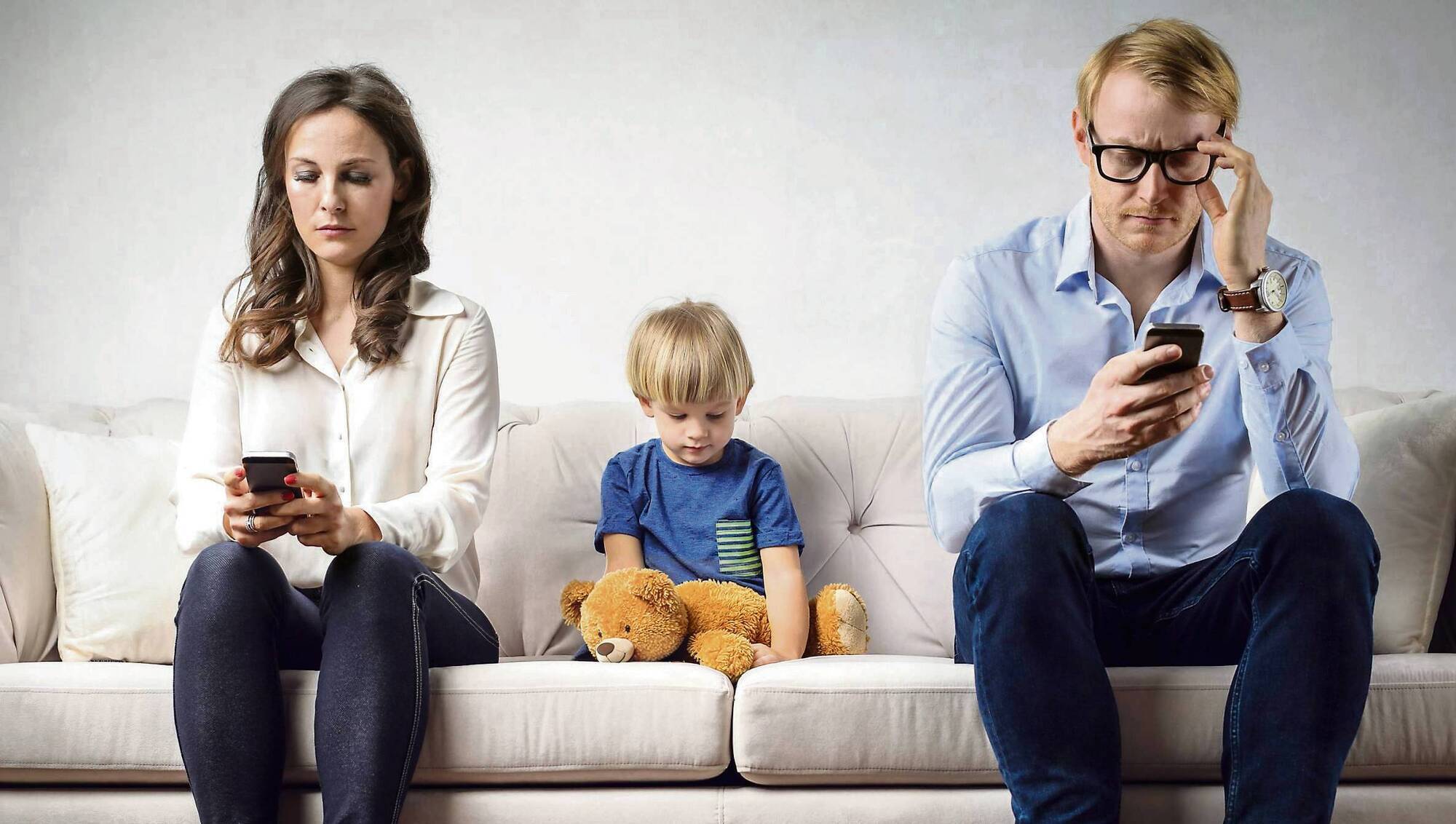
Prioritising quality time with children over screen time can help strengthen family relationships
63% of kids aged eight to sixteen believe their parents don’t realise how much time they spend on their phones. Picture: iStock 

63% of kids aged eight to sixteen believe their parents don’t realise how much time they spend on their phones. Picture: iStock 

My child’s hooked on her phone, I can’t get her off it — is yours the same?

If you’re the parent of a child in possession of a smartphone you’ve most likely had countless conversations along these lines with other parents. And if your child’s in primary school, the topic of ‘when’s the right age to get them a smartphone?’ has probably been in the top three of school gate conversations.

Discussion about problematic smartphone use tends to focus on our children’s usage — but what if the lens swivelled around and looked at parental smartphone behaviour, particularly when with our children?

Research out this summer did just that. Virgin Media O2’s 18-month study into the digital wellbeing in Britain found parents of under-18s spend more than two hours a day using their smartphones unintentionally — and are significantly more likely than non-parents to fall into unintentional smartphone habits.

The study, which generated more than 16,000 responses, found 76% of parents saying they often pick up their phone without thinking, compared with 57% of non-parents. Almost half check or pick up their phone 30 or more times daily without a specific reason, and, as a result, spend two hours on their phone unintentionally every day, around 40 minutes longer than the average adult.

Dr Mary O’Kane, lecturer in psychology and early childhood with the Open University, is not surprised by the findings. “If you’re at home all day with younger children, you can feel a bit cut off from the world. I’m not surprised more parents say they often pick up their phone without thinking, compared to non-parents — non-parents have more freedom to engage in whatever activities they choose without having to consider who’s taking care of the kids.

“The responsibility of parenting can leave less time to engage in adult life — the temptation to use the phone to check what you might be missing out on can be great. It can feel like a bit of ‘me time’. And algorithms are designed to keep us engaged with devices, to keep us scrolling — when you’re in a situation where you’re under stress, or lacking other adult company, you may be even more prone to this.”

The study also explored how children aged eight to 16 experience their parents’ unintentional smartphone use. It reported that 63% believe parents don’t realise how much time they spend on their phones, 58% wish their parents were more present when they’re together, and more than half say parental phone use causes them to miss important family moments.

And nearly half say they’ve had to repeat themselves because a parent was using their phone, while 34% say a parent has missed something they wanted to show them.

Interrupting interactions

Two terms come to the fore in discussions of parental-smartphone-use-in-presence-of-children: ‘technoference’ — the small interruptions technology creates in our face-to-face relationships — and ‘parental phubbing’ or effectively snubbing someone in favour of our phone.

O’Kane says the danger is that instead of enjoying time with our children, we spend the time scrolling and miss out on the ordinary moments of childhood, which include real opportunities for connection. “We know quality parent-child interactions have a very positive impact on child outcomes. When we spend time focused on our screens, we interrupt these face-to-face interactions.”

But she is adamant about not making parents feel guilty. “We all struggle with this. We all get sidetracked by our phones sometimes. And being distracted by phones occasionally won’t harm our children — what’s important is being aware of our phone usage and trying to get the balance right. Reducing the time spent on phones and focusing instead on having quality interactions with our children will strengthen our family bonds.”

Senior paediatric clinical psychologist Dr Claire Crowe agrees that occasionally checking a message is not going to damage a child — after all, parents work, organise family life and maintain relationships through their phones. “The concern is the pattern, particularly when children repeatedly experience a parent as only partially available.”

Crowe says research increasingly links parental phone distraction with poorer parent-child relationships, lower self-esteem, and greater depressive symptoms in adolescents. “It has also been associated with children’s own problematic smartphone and internet use.”

She highlights the impact of parental smartphone use — when their children are present — across the different childhood stages. “For babies, we worry about a parent missing a facial expression, a sound, or a bid for connection.”

In the case of older children, she says parental attachment to their smartphone can take on a different meaning — ‘there’s something on this screen that’s more interesting or important than you are right now’.

“Primary-school children make hundreds of small bids for parental attention: ‘Look at this. Guess what happened. Watch me. Can I tell you something?’ They can look trivial to an adult, but developmentally they’re important. Our response communicates: ‘I see you. What interests you interests me. You’re worth listening to. You’re a worthwhile person.’ We’re creating their core beliefs — their sense of themselves now and into the future.”

By adolescence, she says, bids for mum or dad’s attention can become much less obvious. “A teenager may hover in the kitchen, make an apparently throwaway comment or start talking when you’re walking away from them. If we’re habitually looking at a phone, we can miss the small opening through which a much bigger conversation might have emerged.”

Crowe points to a 2025 study of more than 60,000 participants, which found a direct link between parents’ problematic phone use and their children’s similarly problematic use. “Children learn far more about technology from watching us than from listening to our rules about it. It’s difficult to convince a 13-year-old that phones don’t belong at the dinner table when mam or dad’s phone sits beside the plate.”

Tech influencers

O’Kane says our phone behaviour “very much influences our children”, even if they’re too young to have a phone.

“The day will come when we give them a phone and start to set boundaries for them — difficult if we’ve been modelling very different boundaries ourselves. If they see us use our phones as an escape from the real world, or as our main source of interaction, it’s very likely they’ll follow our example.

We [need] to develop healthy phone habits if we want our children to do the same.

O’Kane says it is important to be emotionally aware when with our children — and not digitally distracted. “Child development research consistently shows children learn best through meaningful interactions with caring adults in familiar contexts. The ordinary, everyday moments of family life, of connection and conversation, are so important to our children’s learning. To parents, simple experiences can feel monotonous, but these little family routines help us build connection and lasting relationships with our children.”

O’Kane recommends:

Set up daily phone-free times when you’re connecting with your children — put your phone on silent, turn off notifications. Spend that time, maybe at the playground, focusing on your children.

Make car journeys phone-free zones. Drop-off and pick-up journeys should be a time to communicate with children, to check in on how their day has been.

Keep school mornings tech-free. Focus on and connect with children as everyone gets ready for the day.

Make bedtime rituals tech-free. Background phone pinging while reading a bedtime story distracts everyone.

Plan some family activities away from technology — family board game evenings, outdoor activities, whatever would strengthen emotional connection. No matter a child’s age, spend mealtimes phone-free — a great time to chat about your day.

Crowe says the solution isn’t parental guilt or abandoning smartphones. “It’s creating predictable moments of full attention — meals, school pick-up, the first few minutes when a child comes home, bedtime, or simply putting the phone down when a child begins telling us something.

“Children don’t need our undivided attention all day — they do need regular experiences of having it.”

She says the most useful question for parents isn’t ‘How much time am I spending on my phone?’. Rather, it’s ‘What does my child experience when I’m on it?’.

More in this section

Lifestyle

Newsletter

Eat better, live well and stay inspired with the Irish Examiner’s food, health, entertainment, travel and lifestyle coverage. Delivered to your inbox every Friday morning.

Cookie Policy Privacy Policy Brand Safety FAQ Help Contact Us Terms and Conditions

© Examiner Echo Group Limited