Why a Cork doctor believes the answer to better health starts in the kitchen
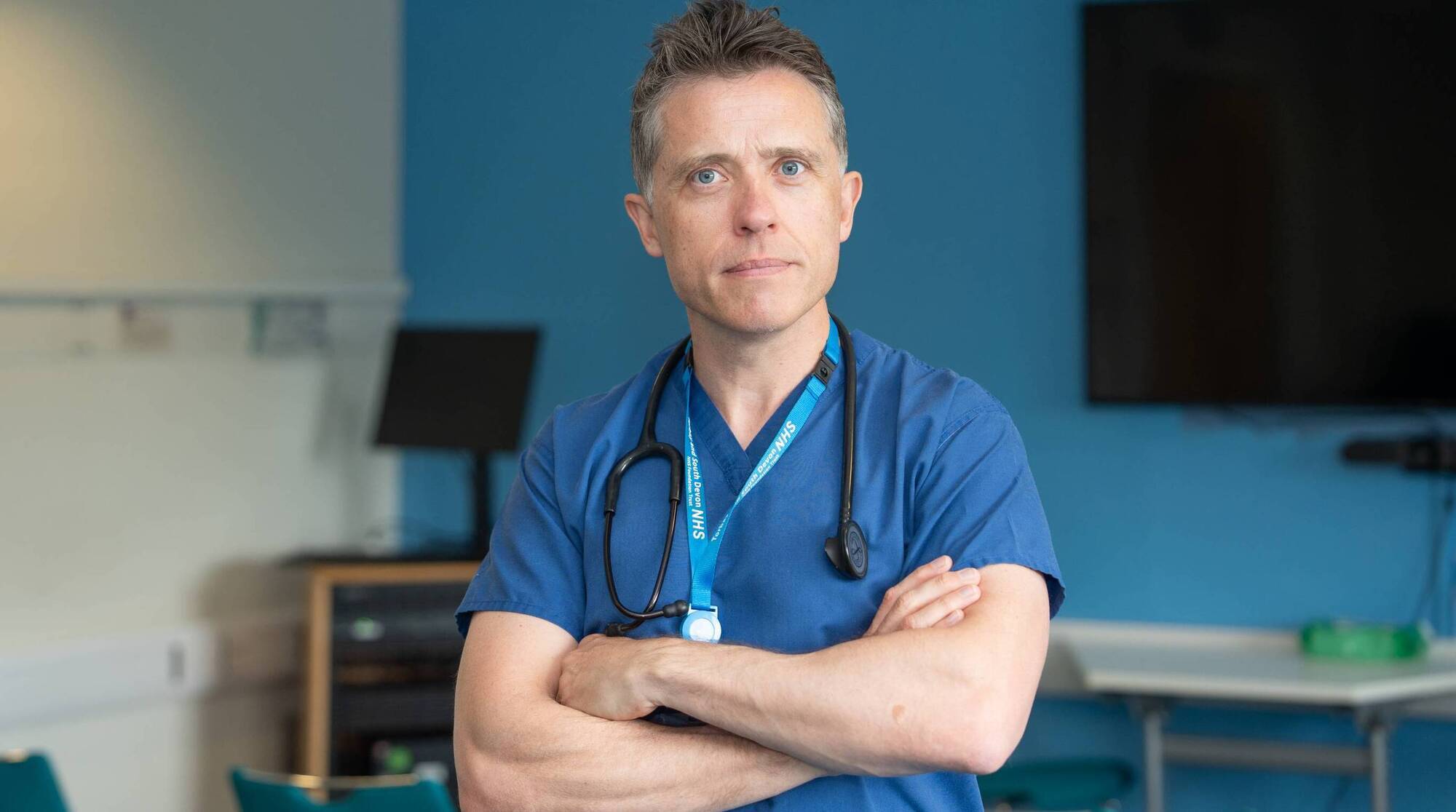
Dr. Alan Desmond, Picture: Simon Day Photography
“The most powerful tool we have to transform our health isn’t a high-tech prescription or the latest online wellness trend — it’s the food on our plate.”
So says Dr Alan Desmond, a consultant gastroenterologist, from Blarney in Cork, who’s known globally for promoting a whole food plant-based diet.
The heart of his latest book, What Your Doctor Isn’t Telling You About Food, is about solving this issue. As a doctor himself, he says the answer to what they’re not telling us is “far too much”.
According to the Cork man, right now, food is the main driver of poor health.
“Across Europe, around 800,000 people die every year because of the way our modern food system has reshaped how we eat.”
That food — originally called a standard Western diet but now becoming the standard global diet — is typically high in meat, low in fibre, and high in junk food. Desmond says this diet is one of the major forces driving heart disease, increasing the rates of type two diabetes and obesity, and increasing the rates of our most common cancers.
There’s no denying we’ve come a long way in the past century and a half when it comes to medical advances, particularly when it comes to living longer. Antibiotics, antivirals, safer surgery, modern medicine, sanitation, and food security have increased our average life expectancy from about 30 years to nearly 80 years.
But though our life spans are getting longer, our “health spans” are getting shorter. Desmond tells me that the average woman in Ireland today might expect to live to 84 years but has an average health span of about 65 years.
“In other words, they will spend the final two decades of their life living with long-term illness, disability, or reduced independence.”
By 2040, it’s estimated that almost 40% of British adults will be living with at least one major illness. The generation born between 2010 and 2024 “are growing up in a world where their future health is far from guaranteed; if current trends are allowed to continue, they’ll become the first generation in over a century to experience fewer years of good health than their parents”.
Of course, there are many factors at play here but Desmond asserts that the food we’re eating is becoming “the major driver of healthy years of life lost”.
Look, it’s not our fault, says Desmond, who talks about the confusion and conflicting marketing promises we’re bombarded with across media, social media, and in supermarkets themselves. “High protein. Low carb. Plant powered. Probiotic. Fortified with collagen. Each label offers us a shortcut to health and happiness.”
In the middle of this daily barrage of conflicting messages and claims, the gastroenterologist says it’s not surprising that people give up on trying to make healthier choices and go back to eating what they want.
This is where a doctor could offer a trusted voice or a sound source of advice for choosing foods that will help us be healthier and increase that health span figure. But that’s not happening often enough, says Desmond.
Most doctors in 2026, he says, are aware of the influence diet and food has on the rising rates of obesity, type two diabetes, and various cancers they’re seeing in their clinics and on their hospital wards but, up to recently, doctors were getting very little nutrition training.
“I remember speaking to professor Christopher Gardner, one of the world’s leading nutrition researchers who’s based at Stanford University. He teaches medical students about health and nutrition but, over their entire degree course, he told me he gets just four sessions with them, a total of 80 minutes to talk to them about food.”
Given that a poor diet is now considered one of the leading drivers of chronic disease in high-income countries, that needs to change, says Desmond.
It’s not that the science or research isn’t there. It is. And there is almost complete agreement among nutritional experts about what a healthy diet looks like. In fact, Desmond says 90% of nutritional scientists across the world agree that a healthy diet means more fruit, vegetables, wholegrains, legumes, nuts, and seeds, and less added sugar, refined grains, processed and red meat.
He refers to a 10-year study by the EAT-Lancet Commission in which it concludes that a healthy diet is diverse in plant-based foods, low in animal source foods, and low in refined and ultra-processed foods.
A healthy plate needs to be half full of fruit and vegetables. “The other half of the plate should include wholegrains, plant protein sources like beans, lentils, nuts, legumes, tofu or tempeh, unsaturated plant oils like rapeseed oil, sunflower oil, and, if you wish, a modest amount of animal-sourced foods like fish or poultry.” This may all sound daunting, and a big change from what we usually put on our plates, but Desmond says we don’t need to make these changes all at once.
“If you enjoy rice, pasta, and bread, swap in whole grain, higher-fibre versions of the white, highly processed versions. That’s adding more fibre into your diet, so you are treating or reversing the most common dietary deficiency we have in Ireland and across the EU right now.
“The second thing you can do is start leaning your protein towards plants; the evidence tells us that if we can even swap 3% of our calories from animal protein to plant protein, it can have meaningful benefits in terms of our long-term health.”
In a standard spaghetti bolognese, he suggests swapping out about 75g of minced beef for a cup of cooked beans or lentils.
“You still get a hearty satisfying meal but you’ve nudged it towards more fibre, more plant protein, and less saturated fat.”
Or try the 3% swap at breakfast.
“The next time you’re having scrambled eggs, if you swap out one egg for 100g of tofu, you are making that 3% swap and the evidence tells us that if you can make that 3% swap every single day consistently over the next 30 years, your risk of dying due to heart disease, stroke, or cancer may be reduced by as much as 34%.”
Small changes matter, he says. “But why stop at 3%? Once those switches become easy for you, the more you lean your diet towards fibre, the more you lean your protein towards plants, the better the health outcomes for you and your family in the long term.”
This may not be a small change, and it may take a significant mind shift, but dramatically reducing the amount of ultra-processed foods we eat can make a huge difference to our health, says Desmond.
It’s difficult because ultra-processed foods dominate our Western food system. They account for about 55% of total calories consumed in the US (and for one in five adults, 80% of their calories come from ultra-processed foods).
Put simply, ultra-processed foods are not designed for health, they’re designed for processing and palatability, explains Desmond.
And there’s another major issue.
He talks about how ultra-processed goods have now become the cheap, staple foods of a huge majority of households. That’s a major concern, says Desmond, because “the more ultra-processed foods in your diet, the higher your risk of weight gain, type two diabetes, heart disease, stroke, multiple cancers, as well as depression, frailty, and a shorter lifespan; in every way that matters, ultra-processed foods are a key part of the global standard diet and a key reason that our diets are making us less healthy”.
It’s about taking personal responsibility too, he says. Yes, the food system can be incredibly confusing and at times misleading. Yes, governments should be doing more. Yes, health professionals should be leading more conversations about healthy food choices. But there are simple things that we can each be doing right now.
Despite our modern food system being one of the leading causes of preventable death, Desmond is optimistic that change is coming.
There are governments across Europe putting action, money, and policy in place to encourage plant-based diets. In Denmark, a plan for plant-based foods is being backed by €85m of public funding. In the Netherlands, a healthy protein transition target aims to get 60% dietary protein from plant sources by 2030. The German government recently updated its dietary guidelines to recommend people switch their diet to be three quarters plant-based foods.
These governments, and others, he says, are making these changes because they know that building a healthier food system has the potential to spare hundreds of millions of people and offers a future in which more of us can live longer, healthier, and more independent lives.
Food, Desmond says, while it is driving so much illness, it is also the most powerful tool we have to reclaim our health.
- What Your Doctor Isn’t Telling You About Food, by Dr Alan Desmond, is published by Hodder & Stoughton.

CONNECT WITH US TODAY



Be the first to know the latest news and updates