Peter Dowdall: The structures that add balance to any garden 
Without a destination, the gaze slides over a space regardless of how well the plants are growing. A focal point fixes that
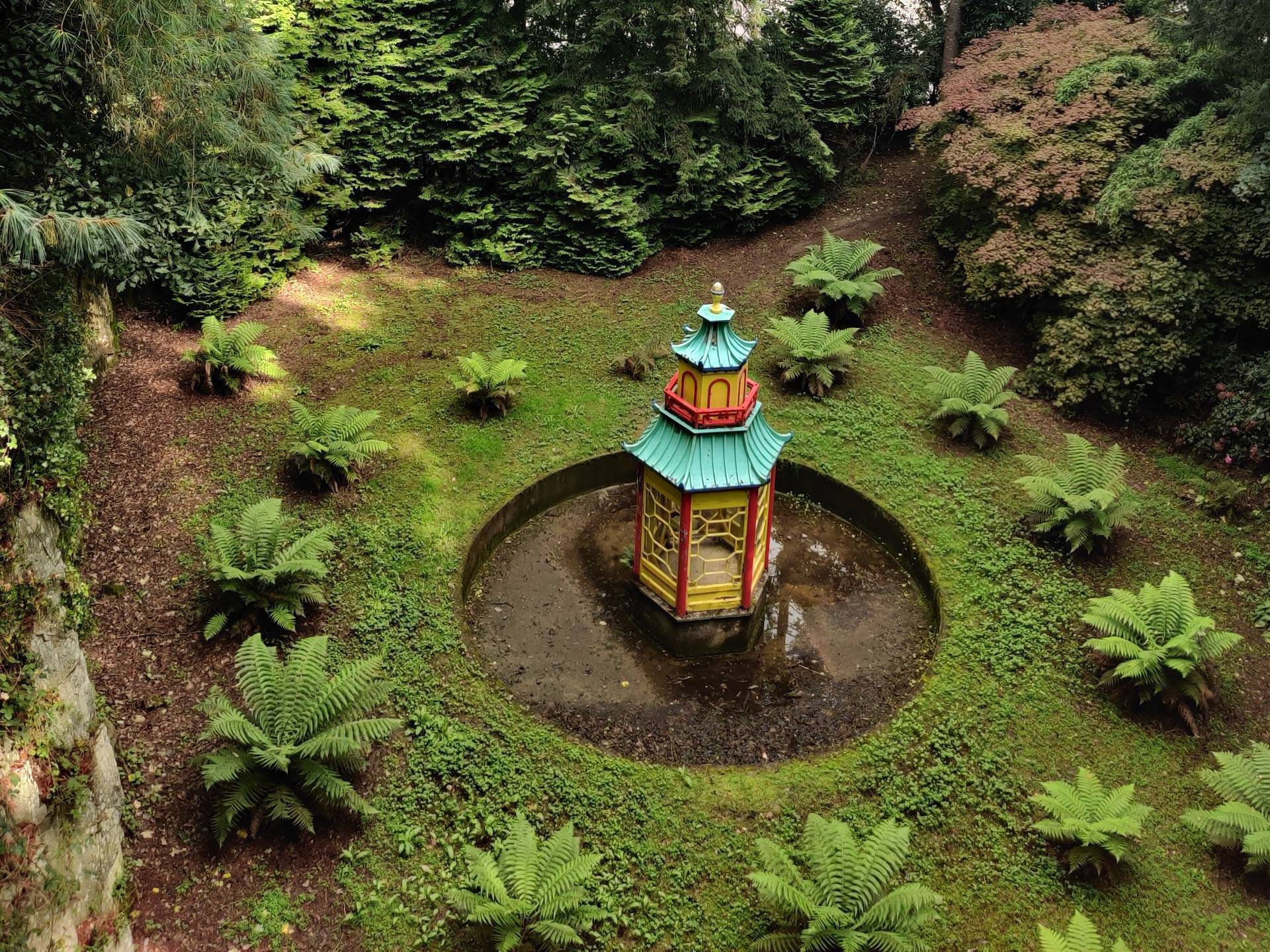
The Chinese pagoda is among the many architectural gems to be found in the Co Waterford gardens Mount Congreve. 

The Chinese pagoda is among the many architectural gems to be found in the Co Waterford gardens Mount Congreve. 

Every garden needs somewhere for the eye to go. Without a destination, the gaze slides over a space regardless of how well the plants are growing. A focal point fixes that. It draws you through the garden, creates something to look at and to move towards, and once you arrive, gives you a new vantage point from which to read the rest of the space. 

Think of it as punctuation as much as decoration, the full stop that gives the sentence around it its meaning, the sentence in the garden context is the surrounding planting.

A regular-sized suburban garden with one well-chosen focal point, such as a feature pot, a piece of sculpture, or even a standard tree amongst low planting, will feel more balanced and less chaotic than a space cluttered with competing ideas.

What matters most with a feature is not what it's made from, nor the size or style, but where you position it. That could be at the end of a sightline, at a bend in a path, at the point where the eye would otherwise run off the edge of the property and land on the neighbour's fence, get that but right, and even a simple terracotta pot can anchor an entire garden.

As gardens grow larger, the possibilities open up. Several focal points allow you to build an actual journey through a garden, drawing people from one area to another, each with its own mood and character.

Structural features don’t just act as markers in your garden, they create atmosphere. File picture

A formal urn at the end of a clipped path creates a very different space from a worn bench half-hidden behind a rambling rose. 

The transitions, the paths between those destinations, and the glimpses ahead become as important as the features themselves. That sense of something always further to discover is what separates a garden from one that has simply been planted to one in which you feel compelled to walk around.

Statement tree: The Juneberry, Amelanchier lamarkii. File picture

The feature does not have to be a structure. A well-grown specimen tree, such as a multi-stemmed Amelanchier lamarckii, or a Carpinus betulus Fastigiata used as a vertical exclamation mark, can do the same work as stone or timber; it's just something to draw the eye. 

The point is not what the feature is made of but what it does and how it defines the space around it.

These features don’t just mark act as markers, but they create atmosphere. A clipped yew cone in a formal scheme says something completely different to a lichen-covered limestone boulder half-buried in a wildflower meadow, even if both are performing the same design and structural role. 

When you are choosing a feature, the question is not only where it goes but what effect it creates, and whether that effect ties in with the overall style of the garden or whether a deliberate contrast is what you are after.

The best place to see an example of a feature creating a striking contrast is in one of my favourite places in the world, and that is in Co Waterford. 

The Chinese pagoda, in Mount Congreve, which was commissioned by Ambrose Congreve in the late 1970s and set dramatically into a former quarry above the River Suir, is the last thing that you expect to see in this rural great Irish garden, but there it is. 

Carpinus betulus Fastigiata or hornbea, acts as a vertical exclamation mark, says Peter Dowdall. File picture

This pagoda is to undergo a major conservation project in partnership with the Irish Follies Trust. The pagoda was inspired by Congreve's travels through Asia, and in a garden renowned the world over, it represents something close to the purest expression of what a garden feature can achieve. It is part folly, part viewing point, and entirely an act of deliberate storytelling within a landscape.

Ambrose Congreve understood that a feature does not simply occupy space; it transforms the character of the ground around it. 

Tucked into the quarry, rising unexpectedly above the surrounding planting, the pagoda creates its own pocket of atmosphere within the broader garden. You are still in Waterford. But for the length of your visit to that corner of the garden, the garden has taken you somewhere else. 

That capacity to create a different and unique mood within the same space is exactly what this Chinese pagoda achieves.

I have photographs of this feature from my very first visits as a small child in the early eighties, when it was at its very best, and I am delighted to learn that the restoration project will involve stabilising the structure, recovering key architectural elements, and gathering historic drawings and oral histories to inform the conservation approach.

The Irish Follies Trust has noted that garden follies form an important part of Ireland's designed landscapes, and that observation extends well beyond grand estates. 

The logic behind the Mount Congreve pagoda and the logic behind a carefully positioned stone trough in a cottage garden are the same logic, to give a specific part of the garden its own identity.

x

More in this section

Revoiced

Newsletter

Had a busy week? Sign up for some of the best reads from the week gone by. Selected just for you.

Cookie Policy Privacy Policy Brand Safety FAQ Help Contact Us Terms and Conditions

© Examiner Echo Group Limited