Irish Examiner view: Shameful behaviour on pensions

Since January, employers have been legally obliged to enrol eligible employees in the My Future Fund scheme.
News that a number of large companies plotted to push their workers into inadequate pension schemes ahead of the introduction of pension auto-enrolment this year is disturbing.
The plan, reported upon by journalist Ken Foxe, was for those companies to get employees into pension schemes that would cost the companies less than the State-designed scheme, but would also provide very little return for workers.
What makes the plot even more worrying was that this was not about a few small businesses struggling to deal with a new set of requirements — it involved large companies, employing thousands of people, who enjoyed the services of financial advisers.
The rationale for compulsory enrolment in a pension scheme is compelling.
Ireland’s population is ageing and, historically, too few workers have saved enough for retirement.
Longer life expectancy is to be celebrated.
But demographic changes, with the number of working people relative to the number of retirees declining, mean the State pension cannot be relied upon indefinitely to give retired people a decent standard of living.
Since January, employers have been legally obliged to enrol eligible employees in the My Future Fund scheme, provided those employees were not already in a workplace pension scheme.
The introduction of the new system was well signposted and even delayed to give employers more time to prepare.
It appears that some employers used that time, not to ensure compliance, but to identify ways to reduce their contributions.
Employers’ contributions to the My Future Fund start at 1.5% of workers’ gross pay, rising to 6% after 10 years.
The companies planning the inferior scheme would pay just 1% with no provision for their contribution to increase.
The implications for workers, had those schemes gone ahead, might not have become apparent for decades.
Fortunately, the Department of Social Protection got wind of the inferior schemes.
One large company reportedly abandoned its plans following contact from officials, while new regulations, introduced last December, ensured that workplace pension schemes must offer contribution arrangements at least as favourable to participating workers as those under the State-sponsored scheme.
The safeguards are welcome.
Yet the story raises questions about the behaviour of some companies.
Pension auto-enrolment is designed to improve workers’ retirement security.
That some large employers sought to undermine that objective is more than disappointing — it is shameful.
Five years ago this weekend, this country was consumed with talk of covid restrictions and when they might be lifted.
The public was desperate to see the end of prohibitions — on travel, on socialising, on playing sport — which by then had been dictating how we lived for 15 months.
This weekend also marks the fifth anniversary of the fall of Kabul to the Taliban, and the beginning of what the UN describes as a regime of gender apartheid and human rights abuses which has affected millions of Afghan women and girls.
Scenes of the chaotic retreat of US personnel from Kabul, and the desperate attempts of terrified Afghans to get on the last planes out, filled our screens for a week or so. What has happened since then has not.
One of the first acts of the Taliban was to ban the education of teenage girls.
While it assured the international community that the closure of girls’ secondary schools was temporary, the ban remains in place.
The United Nations Educational, Cultural and Scientific Organization (Unesco) this week reported that an estimated 2.4m Afghan girls have now been excluded from secondary education.
The prohibition on women studying in universities was also supposed to be temporary — it was not.
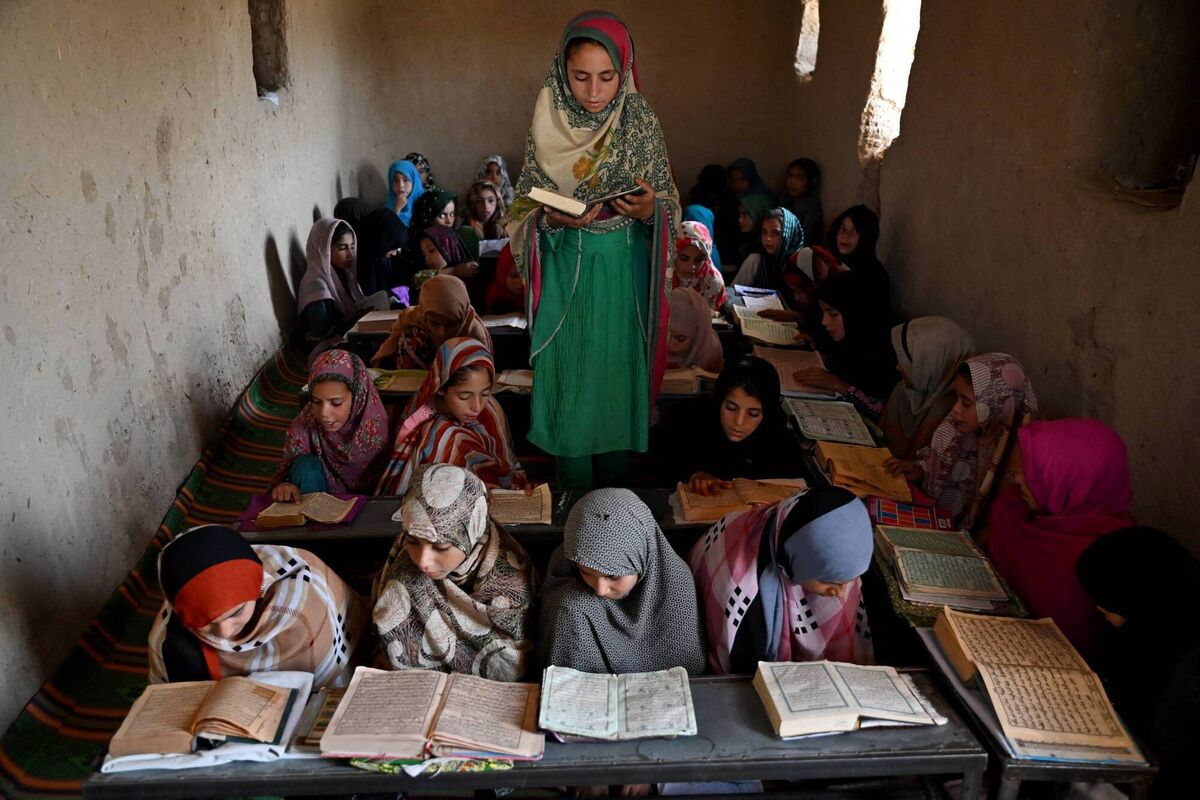
Women were pushed out of the workplace in the following months, women unaccompanied by a male family member were banned from travelling, and women began to vanish from public office, the health service, the education system, and the media.
Indeed, the law on the propagation of virtue and prevention of vice appears designed to remove all traces of women from the public sphere.
Women must be completely covered outside their homes; their voices cannot be heard in public; they are barred from parks, sports facilities, and gyms; and even beauty salons — once a refuge and meeting place — have been shut down.
Women are not the only ones suffering in Afghanistan — the UN estimates that as many as 28m people, out of a population of 45m, are living in poverty.
But women are suffering additional hardships.
Five years ago, we complained about being told where we could go, what we could do, and who we could meet.
Those restrictions were lifted, and our lives moved on.
Five years ago, the Taliban marched into Kabul and introduced restrictions that have curtailed the lives of more than 20m Afghan women and girls to an unimaginable degree.
Who will act to lift those restrictions?
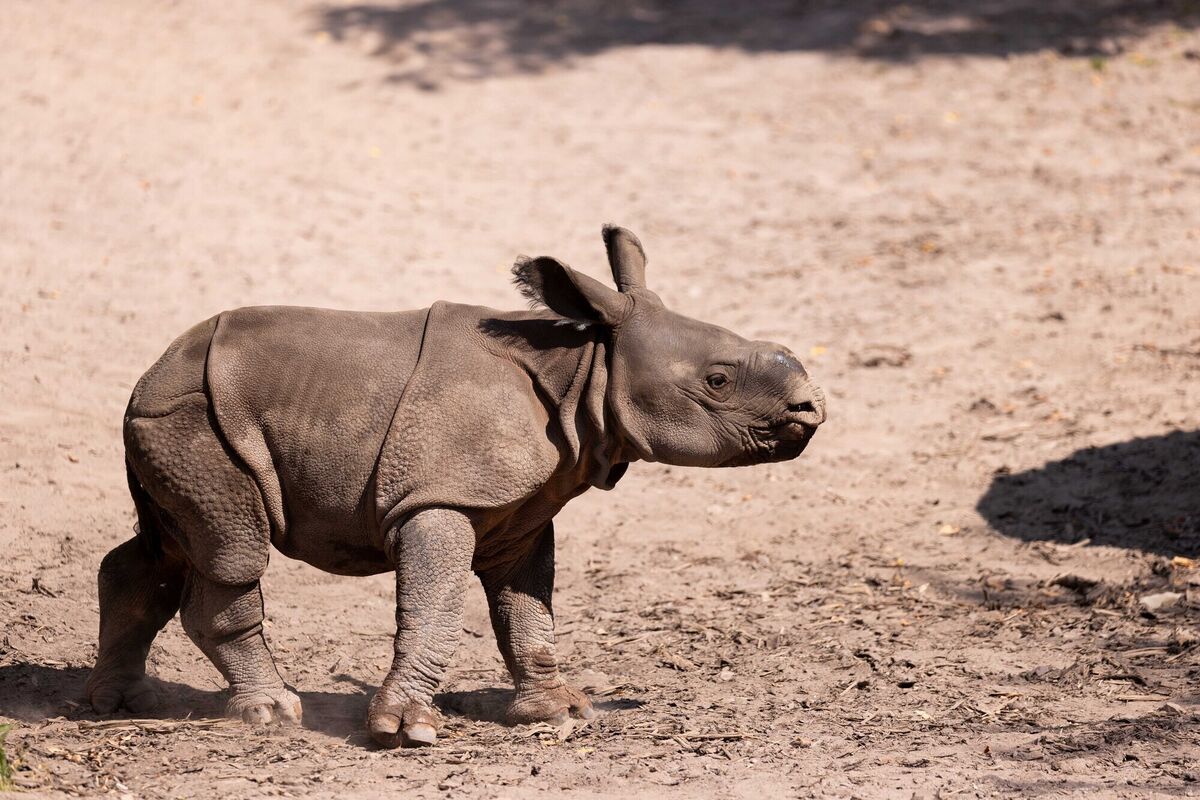
Fota Wildlife Park has invited visitors to suggest a name for its latest arrival, a rare Indian rhino calf, born last month.
The calf’s birth is the latest in what has been a busy summer for Fota; since June, staff have welcomed two Sumatran tiger cubs, three Asian lion cubs, a Nubian giraffe calf, two European bison calves, and now a baby rhino.
The births of endangered and vulnerable species at Fota and Dublin Zoo are causes for celebration and a reminder of the important role these organisations play in conservation and in raising public awareness of the dangers of reduced global biodiversity.
People have long had a fascination with seeing rare and exotic animals up close — Fota and Dublin Zoo make that possible in a way that bears little resemblance to the zoos of yesteryear when vulnerable wild animals were caged and displayed for public delectation.
Today, those institutions are focused on conservation, saving wildlife, and inspiring the public to learn about and care for the natural world. We are fortunate to have them.
CONNECT WITH US TODAY



Be the first to know the latest news and updates