Irish Examiner view: Undermining confidence in our legal system
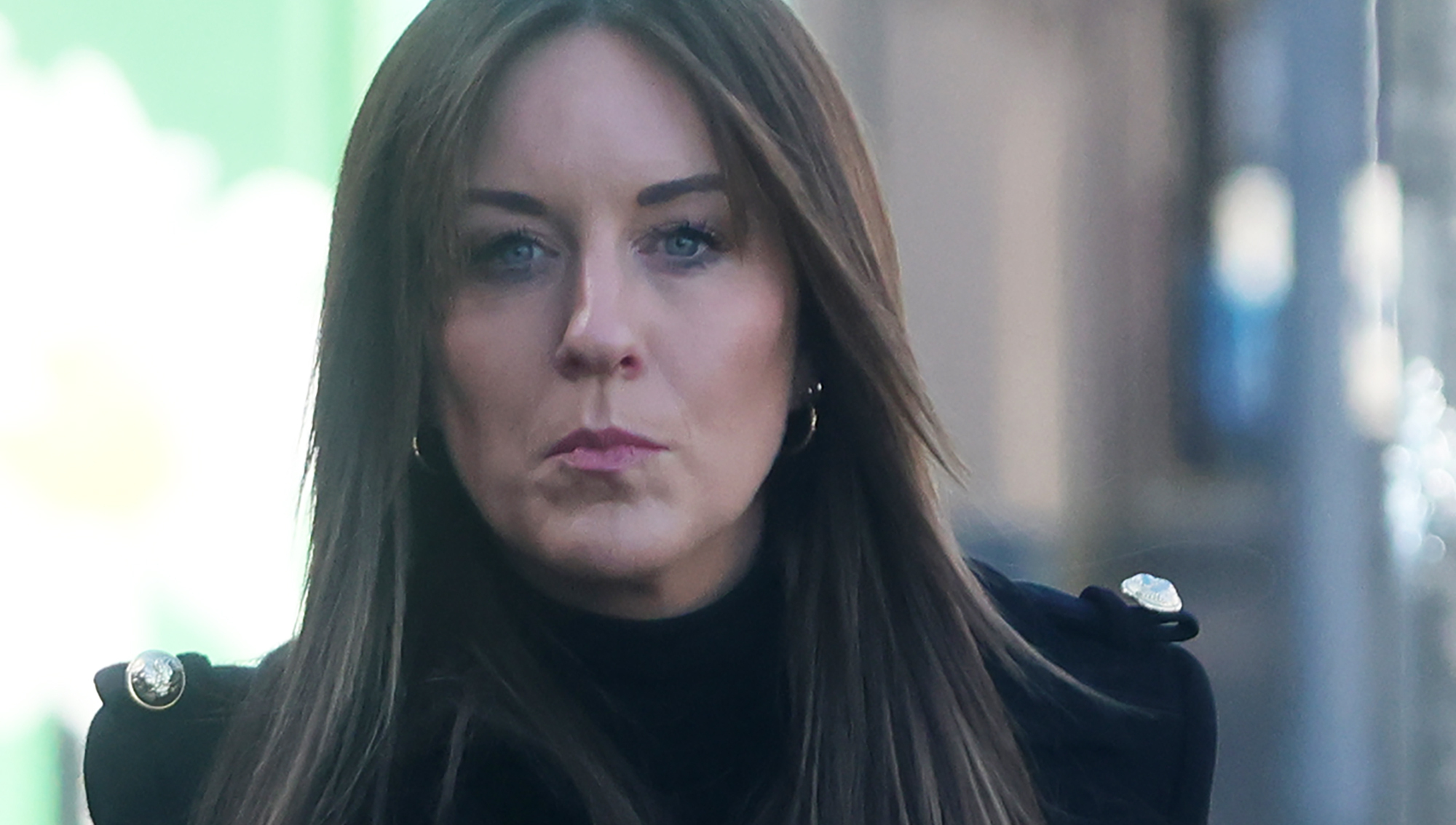
Alison Chawke was convicted of an unprovoked assault on a man in his 50s. Her release after less than one month of her 12-month sentence is hard to swallow. Picture: Brendan Gleeson
Public disquiet is entirely understandable in relation to the early release of a prisoner convicted of an unprovoked assault on a man in his 50s, where she bit his face and was involved in eye-gouging and throwing a pint glass at the victim and his friend.
It is hard to find any reason to disagree with a prison sentence that was set at 26 months, with 14 of those months suspended. If anything, one could quibble with the leniency shown to her.
But to learn now that after less than one month of the 12-month sentence being served, the 41-year-old woman has been released and allowed to enjoy the rest of the summer however she pleases while at liberty, is hard to swallow, particularly for the innocent victims.
We know the prisons are overcrowded and that this is a huge part of the problem, but we don’t know why she was selected to be given a get-out-of-jail-free card.
It was widely reported at the time that Alison Chawke appeared to recoil in shock when she learned in court that prison doors would close behind her.
Perhaps unfortunately for her, the case attracted significant interest, not least because she is the daughter of one of the country’s most high-profile publicans. But she deserves little sympathy for that. What she did in a public setting was a crime against two men entitled to feel safe on a social night in a well-run premises.
Now the case is back in the public eye and this time the issues are of even greater public concern. Anyone attending a circuit criminal court anywhere in the country will doubtless be struck by the painstaking manner in which sentences are delivered. The judge sets out the facts, sets out the principles of sentencing, looks at aggravating and mitigating factors, victim impact, and the particular circumstances of the accused.
It is an act of careful calibration where every effort is made to give a sound and just sentence and to give it in full view of the public.
One of the principles is also deterrence of others who might be inclined to act like a hooligan and whack the living daylights out of someone else.
The sentence arrived at was 12 months. The sentence served was 28 days.
Who could that possibly deter?
Who could feel any sense of reassurance that justice is served?
And, certainly, it does nothing to assuage suspicions that this being a well-to-do person is not a factor in her early release.
The real problem here is that the metrics used to decide on who stays inside and who gets out are not as open to public scrutiny as a court case where justice needs to be not just done, but seen to be done.
We can complain about sentences being harsh or lenient and so forth but at least we can see what is happening.
How the prison door opened for Alison Chawke rather than for someone else is something citizens are left to contemplate in darkness.
It is entirely predictable that people will come up with any number of speculations in this kind of void, ultimately undermining public confidence in our justice system.
The World Health Organization’s warnings about the virulent spread of the ebola outbreak in the Democratic Republic of the Congo are chilling.
After our own experience of covid, there is no reason why we should struggle to appreciate the depths of suffering, yet it is hard to imagine how we could have gone through it in areas isolated to the point of lacking even basic medical amenities and in places politically and socially unstable due to conflicts close to borders with South Sudan, Rwanda, and Uganda.
Now the WHO is saying that it is spreading faster than health authorities can contain it and that it is on track to become the deadliest such outbreak on record, eclipsing the West African ebola outbreak of 2014 to 2016 when 11,000 people died.
So far, the present outbreak has recorded 4,300 cases and 2,000 fatalities. It was declared formally as recently as May, although later revealed to have been in circulation since February.
In this part of the world, we may look to self-interest and ask about the risk to us. The EU’s European Centre for Disease Prevention and Control’s advice on the matter is reassuring insofar as it considers the likelihood of infection for people from Europe travelling to or living in affected countries as low, provided they follow recommended precautions.
As ebola spreads through direct contact with the blood or other bodily fluids of people or animals with the infection this type of exposure is regarded as avoidable.
“The overall risk for the general population in Europe is currently very low,” the centre states.
Words of comfort for Europe, but as we know from experiences of covid and climate change, we inhabit a tiny planet sharing vulnerabilities across borders. It behoves those of us now unaffected to live up to our shared responsibilities, not least in support of research into finding vaccines for the various viruses that cause the disease.
We love a party. The truly heartening thing about the communal gatherings throughout Ireland for the partial solar eclipse was that it was a family event that gave us a very real feeling for our place in the universe.
It might have served for some brief moments to remind us of the miracle of our own lives and — at least while we’re wearing the tinted glasses — see our own personal problems being eclipsed too.
But certainly the astronomical event proved to work at the down-to-earth personal level, finding a way into the hearts and minds of many.
Junior Certificate students who now have more space studies in their new science curriculum may have been encouraged to educate their parents and grandparents about what we were about to see, or almost see.
With these signs of a popular interest in space, maybe it is time astro-physics took an even bigger role in the curriculum for Junior and Leaving Certificate.
With so many of us looking so enthusiastically to the skies and beyond, maybe it is time the Department of Education took its cue to take one small step — and boldly go.
CONNECT WITH US TODAY



Be the first to know the latest news and updates