Irish Examiner view: Duty of care owed to prisoners
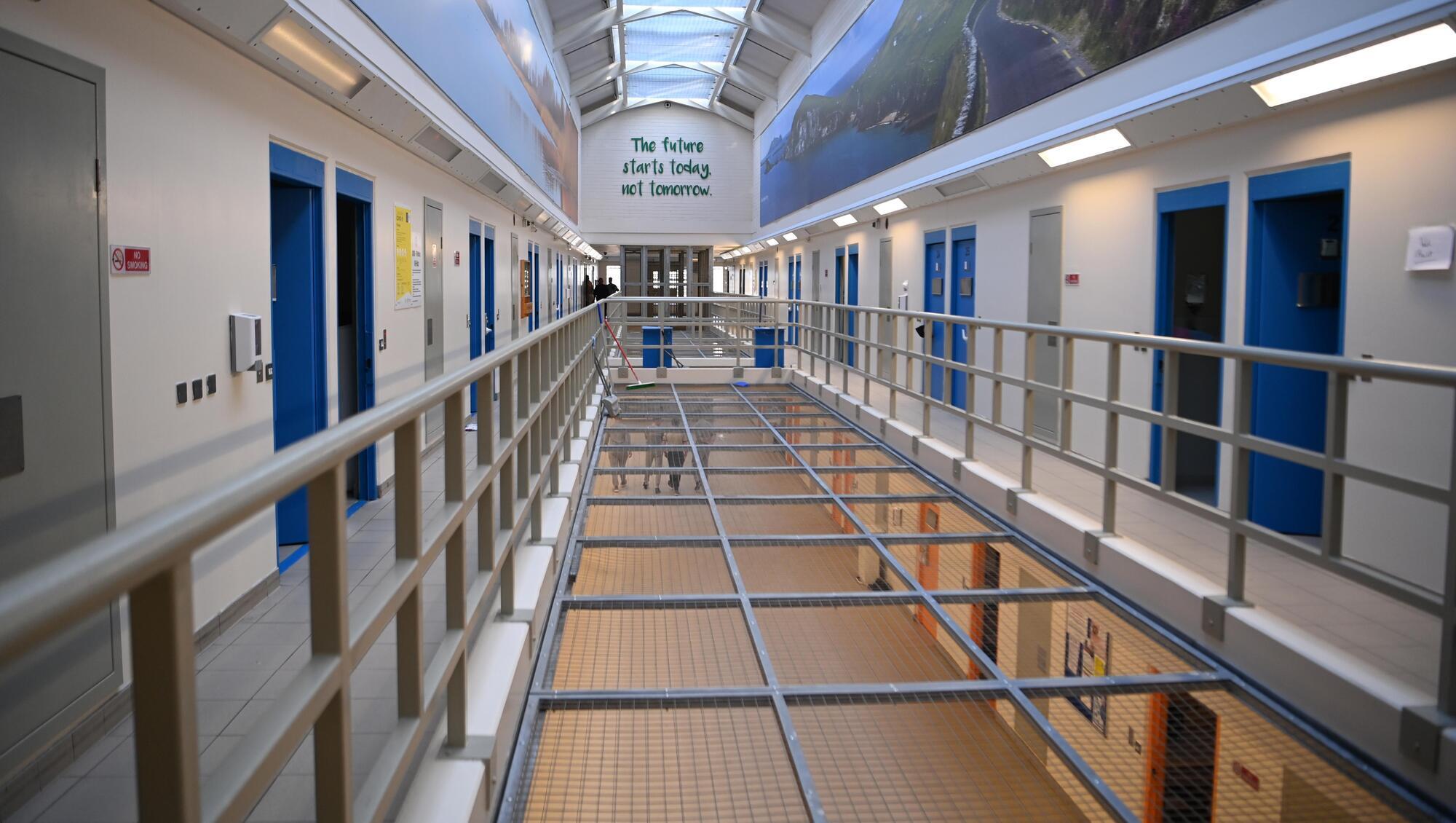
According to the justice minister, approximately seven out of 10 prisoners have addiction issues. Picture: Dan Linehan
Our prison system is known to be under pressure on several fronts, with overcrowding a particular problem.
Last year we learned that hundreds of inmates were sleeping on mattresses, for instance, because there was so little space in our prisons.
As reported here this week by Mick Clifford, that system also faces significant challenge in terms of nursing capacity.
There are no addiction nurses employed by the Irish Prison Service, even though thousands of prisoners suffer from addiction issues.
According to the justice minister, approximately seven out of 10 prisoners have addiction issues, and with roughly 5,700 inmates in Irish prisons that means almost 4,000 current prisoners are addicted to one drug or another.
This is an extraordinary revelation which raises several troubling questions.
For one, how did this situation develop?
As reported here, nurses specialising in this area were employed in the prison system up to 10 years ago, but when they left or moved elsewhere they were simply not replaced.
This is a hugely disappointing oversight, one which is difficult to understand: If the need for addiction nurses was recognised over a decade ago why has that need been forgotten now?
The lack of such specialised care has wide implications, both for the prisoners concerned and for society at large.
There is a duty of care owed to those prisoners and in due course the State may rue its failure to hire addictions nurses if one of those inmates seeks legal redress for the lack of specialised medical care.
In a wider context, locking up drug addicts without addressing their addictions is pointless.
It is widely accepted that drug addiction is a major driver of crime in our society, therefore tackling addiction would surely help to reduce crime levels.
Society as a whole would then benefit from targeted action here — specifically, the appointment of nurses trained in addiction treatment.
If such nurses could resolve addiction issues among prison inmates then that driver of crime would surely be weakened.
And that would be good news for everyone.
Our everyday household bills continue to rise, with the conflict between the US and Iran, and the resultant issues with goods getting through the Strait of Hormuz, a major contributor to those price rises.
The CSO has confirmed the extent of those increases, its latest consumer price index showing the cost of fuel, clothes, and energy have surged in the last twelve months.
In recent weeks, several energy companies have announced price hikes, including Electric Ireland, Yuno Energy, and Prepaypower.
Those increase make it all the more significant to read criticism from the ESRI aimed at the Government for not focusing its efforts to mitigate the impact of energy bills more precisely.
Claire Keane of the ESRI said the Government's recent policy measures have been "largely untargeted”, meaning that a significant share of the support available goes to higher-income households.
“More targeted measures could better protect vulnerable groups at a lower cost," she added.
The ESRI has made this point in the past and has also offered concrete examples of targeted measures.
Two months ago it estimated that households in Ireland experiencing energy poverty would need an average of approximately €480 a year to move out of energy poverty, at an estimated total cost of around €370m.
That estimate is significantly lower than the amount spent on universal electricity credits in 2024 — between €550m and €575m.
It is possible, then, that targeted measures could deliver similar support at roughly 65 per cent of the cost.
Those experiencing difficulties paying for their energy represent a sizeable cohort of society.
Earlier this year, Sean Murray reported that one in seven households in Ireland cannot afford to keep their home warm or pay their energy bills in full.
If this issue can be addressed in a more efficient way — and at two-thirds of the cost of the existing support — then there is no excuse for any delays.
The focus of sports fans may be on matters in Canada, Mexico, and the US at present — the three red cards in the World Cup’s opening fixture, between Mexico and South Africa, were the first major talking point from the tournament but surely not the last.
Soccer fans here had their own news to digest on Friday with the announcement that the FAI’s request to hold the Republic of Ireland’s Nations League fixture with Israel on October 4 overseas had been approved by Uefa, the sport’s European governing body.
The game will now be held behind closed doors in a neutral venue.
Read More
For months controversy has raged about the fixture, with campaigners calling for a boycott of the game because of Israel killing thousands of Palestinians in Gaza, and the prospect of major protests around the game if it went ahead in Dublin.
The decision to move the game has been welcomed by the FAI and brings weeks of highly charged discussions, including a lengthy debate in the Dail this past week, to an end.
It must be stated that as the organisation with the power and authority to rule definitively on this issue, Uefa should have been far more proactive here.
It has been conspicuously slow to face up to its responsibilities and show leadership on this matter.
That may not surprise long-time observers of the governing body, but it is disappointing nevertheless.

CONNECT WITH US TODAY



Be the first to know the latest news and updates