Shona Murray: The EU has imposed sanctions on Russia, yet they fail to do so on Israel
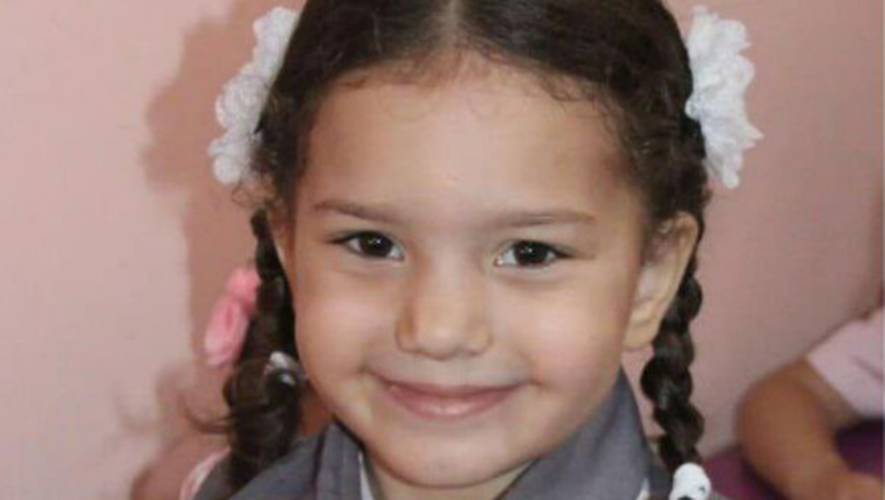
Hind Rajab is only one of thousands of Palestinian children who have been killed in Israel's genocide in Palestine.

Last month, A UN commission of inquiry found that Israel is deliberately targeting Palestinian children, resulting in genocide, crimes against humanity in Gaza and war crimes in the occupied West Bank.
Among other things, the report says Israeli forces "deliberately carried out acts inflicting death and severe bodily and mental harm on hundreds of thousands of Palestinian children.”
It documents the shooting dead of a 10-day-old breastfeeding baby inside a tent by a drone equipped with an infrared camera. Also cited is the notorious killing of five-year-old Palestinian girl Hind Rajab, who was trapped for hours in a car after members of her family were killed as rescuers were prevented from getting to her.
"The severe physical and psychological injuries, collective trauma, orphanhood, separation, disability, repeated displacement, starvation and collapse of the education and healthcare systems have destroyed these children's childhoods and will continue to affect them throughout their lives in Gaza," the report said.
There are countless other examples. A recent investigation by B’Tselem — the Israeli human rights organisation — documents the killing of seven-month-old Sam Abu Haikal. Footage obtained by B’Tselem shows an Israeli soldier fired at the car as it was slowing to a stop.
“The car was far from the soldiers and posed no danger to them whatsoever,” the analysis shows. Moments later, in the video obtained by B’Tselem, “seven-month-old Sam’s father, Fahed, is seen just after his son was shot”.
“Fahed is holding baby Sam in his arms, trying to stop the bleeding from his head with his hands, while Sam’s mother, Daniyah, who was also injured by the gunfire while holding her son, is seen sitting on the ground, next to the car.”
These examples are too plentiful and frankly upsetting to continue to write. We’d need weeks to list them.
This week the EU rightfully proudly announced the passage of the 21st sanctions package against Russia — the biggest and most complex listing given Europe’s assiduous commitment to carving away European investment in and linkage to Russia’s war economy.
Yet, in direct contrast to these imperative, historic measures is the resistance by so many European governments and the European Commission to seeking any sort of sanction against Israel for the day-to-day carnage imposed on Palestinians.
This is despite the wider cause of many Israeli institutions being the eradication of conditions compatible with life in Palestine, for Palestinians.
On Thursday, over 4,200 Israeli settlers and members of far-right groups stormed the compound of the Al-Aqsa mosque — the third holiest site in Islam. The action in occupied East Jerusalem occurred on a Jewish holiday, with security minister Ben Gvir celebrating the move.
Israeli heritage minister Amichai Eliyahau told KAN, the Israeli public broadcaster, that “our ultimate goal is to regain control of Gaza and re-establish settlements.”
Last month in London an Israeli real estate event advertised the sale of land in Israeli settlements in East Jerusalem and the occupied West Bank despite such settlements being against international law. Yet, Israel can act with such impunity there is no need to hide this stuff anymore.
Earlier this month, the prospect of banning trade with Israeli settlements — in line with the International Court of Justice, and EU law, came once again to the table for EU countries to deliberate on.
Foreign affairs ministers were presented with three options in total by the European Commission. Two others included high tariffs on settlement goods in a bid to isolate them by making them uncompetitive, or an import licensing system.
The European Commission insisted that the measures required unanimous support by all 27 countries, arguing that they were within the realm of foreign policy which needs unanimous backing. Reaching such a threshold on a matter so divisive was impossible from the outset.
Legal experts as well as several governments, including the Irish Government, argued that the measures should be categorised as trade sanctions, which require no qualified majority support — meaning votes from 15 out of 27 member states could pass the proposals.
In June, former EU Commission DG trade director, Ignacio García Bercero, wrote to the European Commission saying “claims that such a prohibition can only be adopted through unanimity are inconsistent with case law from the European Court of Justice...(They) are grounded in political rather than legal considerations."
It’s no surprise that the countries which consistently block any and every effort at EU level in responding to Israel’s transgressions demanded the requirement of unanimous support.
“We must now focus on ensuring that these discussions with the Israeli government remain productive, despite the election campaign. That is where I believe our efforts should be concentrated. That is the key thing we can do,” German foreign minister Wadephul told reporters defending his country’s position as a key blocker.
While Antonio Tajani, Italy’s foreign minister said the measures are “a political rather than a commercial” choice and should therefore require unanimous endorsement.
Not everyone in Europe feels this way. Former EU trade commissioners, Cecilia Malmström and Pascal Lamy — who is also former head of the WTO — told the European Council on Foreign Relations: “The EU needs to rapidly adopt a bloc-wide ban covering both goods and services.”
"This move would not be a sanction on Israel but rather a measure to ensure the consistency of EU trade policy with international law, as required by the EU’s foundational treaties,” they said.
It is so hard to understand the active decision by the EU's current leadership — as well as so many EU governments — to abandon their obligations and moral duty in the face of such suffering and injustice.

CONNECT WITH US TODAY



Be the first to know the latest news and updates