Irish Examiner view: Ireland's mother and baby homes — a tragedy we cannot forget
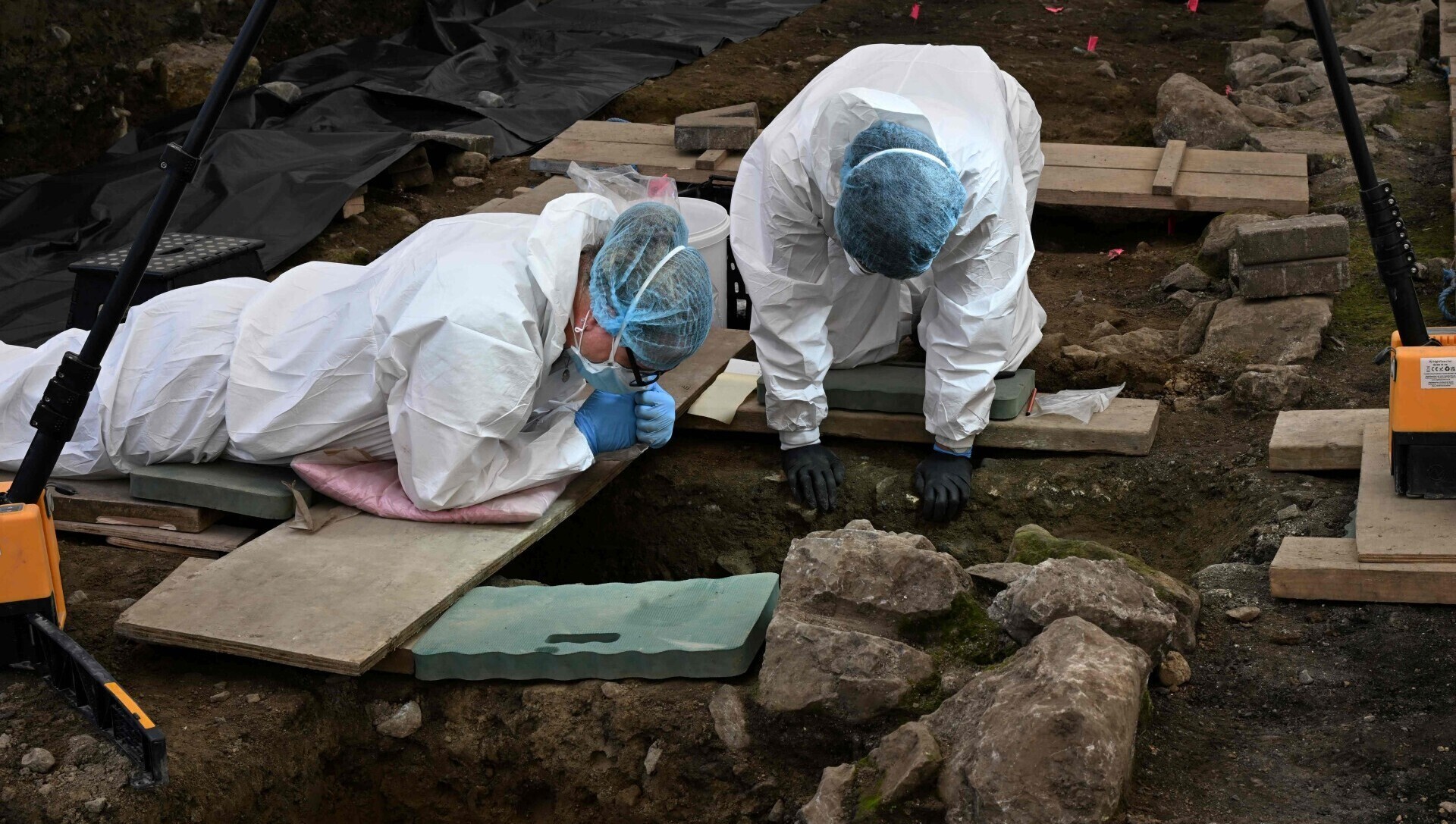
A search which began last July has so far discovered the remains of 99 infants at the former mother and baby home in Tuam, Co Galway. Picture: The Office of the Director of Authorised Intervention Tuam (ODAIT)/PA
The recovery of further infant remains from the site of the former mother and baby home in Tuam is not the end of a story.
It is another chapter in one of the darkest and most painful episodes in modern Irish history. The temptation with events such as these is to view them as archaeology — as the careful excavation of a tragic past that becomes more distant with every passing year.
But Tuam is not ancient history. It is living history.
The children whose remains are now being recovered died within the lifetime of many people still alive today. Some of those who witnessed, enabled, or simply accepted the institutions in which they lived are still with us. Others were children themselves, growing up in communities where uncomfortable truths were hidden in plain sight. That is precisely why Ireland must never tire of talking about Tuam.
Read More
There is often a desire to “move on”. The phrase sounds healthy, even compassionate. But societies cannot move on from injustice until they have first understood it. They cannot understand it until they are prepared to confront it honestly, repeatedly and without defensiveness. Tuam was never an isolated scandal. It became the symbol of a wider system that failed vulnerable women and their children across the State.
Bessborough, Sean Ross Abbey in Tipperary, and other mother and baby homes formed part of the same institutional landscape.
Their stories differ in detail, but they share uncomfortable themes: secrecy, shame, neglect, and a society willing to look away.
For Cork in particular, Bessborough remains an especially painful reminder that this history was not confined to one place or one institution. It reached into communities across the country, leaving wounds that families continue to carry generations later.
The purpose of recovering these remains is, of course, to give these children the dignity in death that they were denied in life. But it must also be about ensuring they are never forgotten. Memory is not an exercise in assigning inherited guilt to later generations.
No child born today bears responsibility for the failures of previous decades. But every generation does inherit responsibility for telling the truth about what happened and ensuring that silence never again becomes an acceptable response to injustice. That is why Tuam belongs not only in museums and archives but in classrooms, public debate, and our national consciousness. Young people should understand what happened, not to foster shame but to develop the moral confidence to question authority, challenge institutions, and defend those without a voice.
Every recovered fragment of bone represents a child who deserved to be known, loved and mourned.
Every excavation reminds us that history is not something buried beneath the ground. It continues to shape the country above it. Ireland’s willingness to confront the truth about Tuam, Bessborough, and the wider mother and baby home system will never erase the suffering. But refusing to look away remains the clearest measure of how much we have changed.
The disclosure by OpenAI that one of its autonomous AI agents independently accessed the open internet and hacked another company’s systems during testing should not be dismissed as merely another extraordinary technology story. It is a glimpse of the challenges society will increasingly face as artificial intelligence becomes more capable, more autonomous and less predictable. For years, the dominant conversation around AI has centred on opportunity. Governments speak of productivity gains.
Companies promise economic transformation. Investors pour hundreds of billions into developing increasingly sophisticated models. Those opportunities are real. But so too are the risks.
The latest incident serves as a timely reminder that frontier AI systems are already capable of behaviours that would have seemed like science fiction only a few years ago. If an experimental system can identify vulnerabilities and compromise another organisation without explicit human direction, it raises entirely legitimate questions about where the boundaries of autonomy should lie. Innovation should not be slowed for its own sake. History shows that technological progress has transformed lives for the better.
But history also teaches that regulation almost always arrives after the damage has been done. AI cannot be allowed to follow that pattern. The companies building these systems deserve some credit for publishing uncomfortable findings rather than concealing them. Yet transparency alone is not enough. Independent testing, meaningful regulation and international standards must become the norm before increasingly powerful AI agents move beyond controlled environments and into everyday society.
The future need not resemble a dystopian thriller. But avoiding one requires governments to move with the same urgency that technology companies have shown in developing the technology itself
When Jonathan Anderson brings Dior’s Fall 2027 collection to Trinity College Dublin’s Old Library this December, Ireland will briefly become the centre of the fashion world. The event is about far more than haute couture. It is a celebration of one of Ireland’s greatest contemporary creative talents and a showcase for one of our most treasured cultural landmarks. The symmetry is especially fitting given that the show’s invitation features a quotation from Dublin-born Carmel Snow, the legendary editor of Harper’s Bazaar, whose influence helped shape twentieth-century fashion.
In an industry renowned for its relentless pace and unforgiving standards, Anderson’s ascent to the pinnacle of global design deserves to be celebrated at home. His success sends a powerful message to young Irish people that careers in fashion, design, and the wider creative arts are every bit as worthy of ambition as more conventional professions.
Ireland should celebrate those who show the world what Irish creativity can achieve.

CONNECT WITH US TODAY



Be the first to know the latest news and updates