Cancer patients should not have to choose between heat and treatment
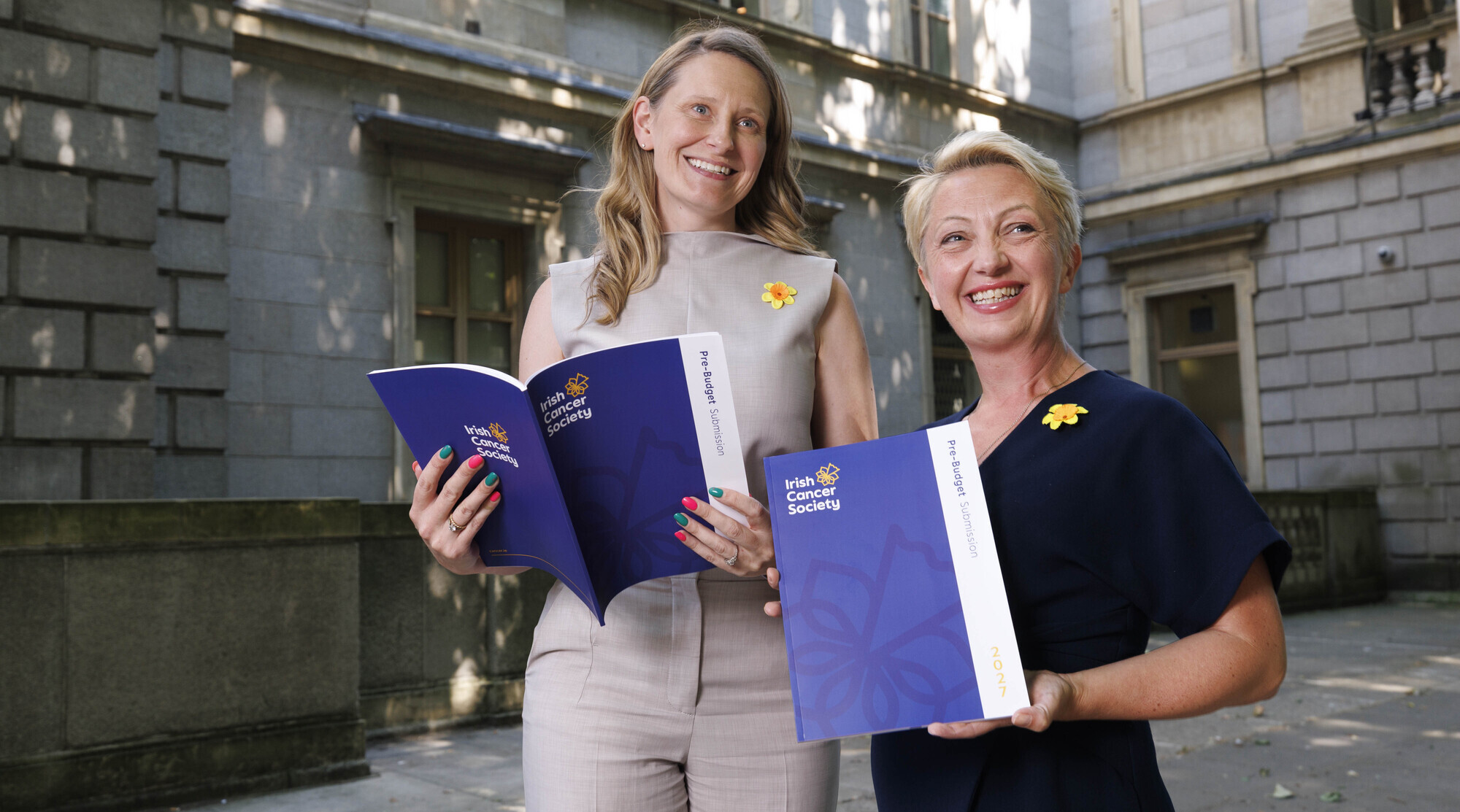
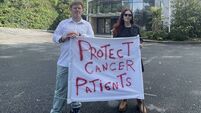
Nikki Gallagher (right), CEO of the Irish Cancer Society, with survivor Aoife Habenicht from Kildare for the launch of the charity's 2027 pre-Budget submission. Picture: Conor McCabe Photography
Cancer affects every family in Ireland. Right now, more than 230,000 people in Ireland are living with or beyond a cancer diagnosis, and over 46,000 more will hear the words “you have cancer” for the first time this year.
What we don't hear about quite as much is what happens to a person’s or family's finances after that diagnosis lands.
The Irish Cancer Society recently published new research, drawn from surveys and direct conversations with patients and their families, that puts a number on something many of us have long suspected: cancer is more than just a health crisis. For most households, it is also a severe and sudden economic shock.
On average, household income falls by €16,200 a year following a cancer diagnosis. This causes significant financial strain for people. To cope, 56% of patients and families told us they were forced to dip into their savings. One in 10 took out a loan or ran up credit card debt. One in 10 missed bill payments altogether and 7% fell into rent or mortgage arrears.
For cancer patients, this loss of income comes at a time when costs are mounting. The bills can be overwhelming. Every month, someone without a medical card can face up to €400 in medical expenses alone including prescriptions, GP visits and consultant fees.
Read More
Getting to and from treatment adds up to another €300 a month between fuel, tolls and parking. We modelled a real journey from Ballina to University Hospital Galway and found that a patient attending daily appointments could pay up to €240 in a single week just to get to the hospital and park.
Household bills also increase when cancer visits a home. A third of the people we surveyed reported higher heating costs since diagnosis and almost as many again saw their electricity bills climb. One woman told us the price of a bag of coal hit €30, and she was “eating through it” just to stay warm during treatment.
For families caring for a loved one at end of life, our palliative care nurses report some households are going without fuel entirely in their loved one's final days.
We can do better for cancer patients. Ireland is a wealthy country. As more of us are diagnosed with cancer, and as more of us survive thanks to real progress in treatment, we have to decide what to prioritise in order to best support the people going through it seriously.
That's why, ahead of Budget 2027, the Irish Cancer Society is asking Government for three practical, costed measures to address financial hardship.
First, automatic access to medical cards for all cancer patients, from diagnosis through the duration of their treatment so no one has to fight through multiple appeals.
Second, reduce the Drugs Payment Scheme threshold to €40 a month or less for cancer patients, easing the relentless cost of medication for those without a medical card.
Thirdly, an automatic entitlement to the Fuel Allowance and Household Benefits Package for patients with an advanced or end-of-life diagnosis, so nobody has to choose between traveling for treatment or heating their home in their final weeks.
Together, these measures would cost a little over €87 million. Against a health budget running into the billions, and in a country of Ireland's means, that is not an extravagant ask. However, financial hardship is only part of the challenge facing cancer patients.
Inadequate infrastructure is causing significant delays in diagnostics and to treatment. We have heard several reports from patients about radiotherapy machines breaking down during their treatment because they have reached the end of their operational life. Delays, interruptions and reactive repairs cause huge difficulties for patients and they amount to a very inefficient use of precious State resources.
We know that cancer infrastructure has not kept pace with growing demand as the population grows and ages. That is why the Irish Cancer Society is also calling on Government, as part of Budget 2027, to make additional investment in this area.
We need a realistic approach to capital planning and funding cancer care equipment. Investment in physical infrastructure, equipment and digital systems, including replacing ageing radiotherapy equipment and expanding diagnostic capacity, is essential if the health system is to keep pace with growing demand.
Investing in increased capacity before it becomes a crisis is always preferable than dealing with the consequences afterwards. Such an investment represents better value for money for the State, the health service and the taxpayer.
People going through cancer treatment should be able to focus on getting well. They should not have to lie awake calculating whether they can afford both the heating bill, medical expenses or the drive to chemotherapy next week.
Nor should they be worrying about delays in diagnosis, delays in treatment or whether the equipment they depend on will be working when they need it. Budget 2027 is a real opportunity for Government to address these concerns and make a positive impact on the lives of so many people.
- Nikki Gallagher is CEO of the Irish Cancer Society


CONNECT WITH US TODAY



Be the first to know the latest news and updates