EU leaders talked in Dublin while Israel's genocide continued targeting children in Gaza
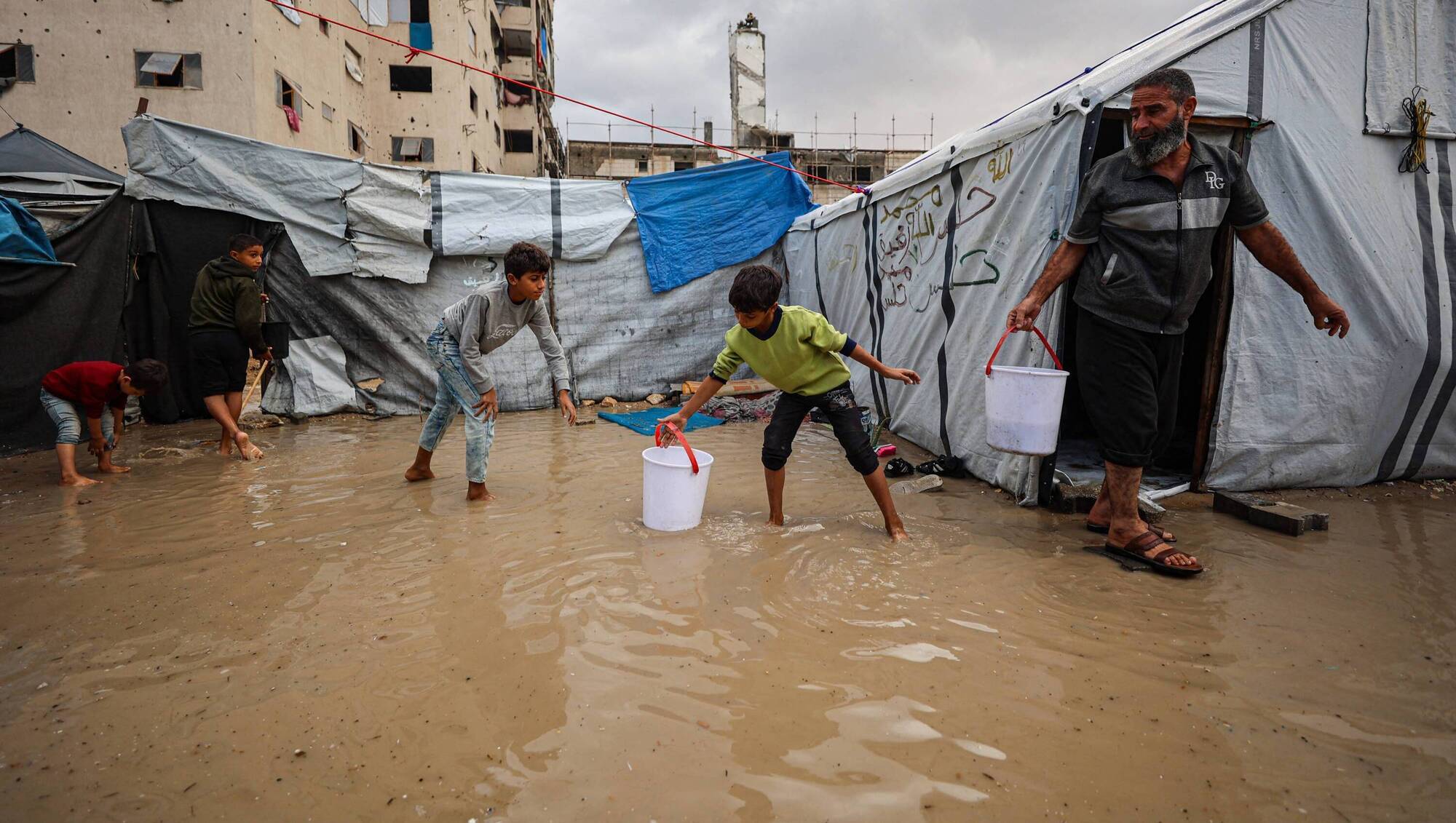
Displaced Palestinians attempt to clear water outside their flooded tents amid heavy rainfall in Gaza City's Al-Remal neighbourhood on November 7, 2026. Photo: Omar Al-Qattaa/AFP via Getty Images
Against the background of a genocide that is deliberately targeting children, and ongoing widespread and systematic sexual violence, rape and torture in Gaza and the West Bank, EU leaders visited Dublin.
Ireland’s EU presidency and recent election to the United Nations Human Rights Council present an opportunity to demonstrate through actions, not words, our commitment to combating impunity for genocide in Gaza, and for the widespread and systematic human rights violations against the Palestinian people.
As Israel’s largest trading partner, the EU grants Israeli goods preferential access to European markets under the EU–Israel Association Agreement. The European Commission has proposed a partial suspension of the agreement, citing a material breach by Israel of Article 2 of the agreement — the commitment to respect for human rights and democratic principles, as a matter of special urgency.
Multiple UN special rapporteurs have argued that given the gravity and scale of the human rights violations documented, full suspension is not a matter of political discretion but a legal imperative incumbent on the EU, and represented the minimum measure required by international law.
In an oft-cited opening, the UN Charter commits "we the people of the united nations" to save succeeding generations from the scourge of war. Less cited is the commitment to establishing the conditions under which justice and respect for the obligations arising under international law can be maintained.
Read More
That commitment requires UN member states to follow through, not only as a minimum act of compliance, but to act to break the cycle of impunity that has led to a crisis of credibility for international law. The evidence of atrocity crimes against the Palestinian people could hardly be more compelling.
The latest report of the UN Commission of Inquiry on the Occupied Palestinian Territory, including East Jerusalem, and Israel, published on October 26, 2026, concluded that while genocide is continuing in Gaza, the Israeli authorities and forces have committed the crimes against humanity of torture, rape and other forms of sexual violence in the West Bank, as well as persecution.
Sexual violence, they concluded, has been used to displace, subjugate and destabilise the Palestinian people and includes the gravest forms — rape, reproductive violence and other forms of sexual violence that amount to torture. This follows on from the earlier conclusions of the Commission of Inquiry, set out in one of the most devastating reports ever presented to the UN Human Rights Council, “The essence of childhood has been destroyed”.
In a wide-ranging report, the commission concluded that the Israeli government and security forces have deliberately destroyed the sanctity of childhood, including family ties, identity, innocence, safety and future. Much of the harm suffered by Palestinian children, they concluded, was not incidental but intended to destroy the existence of the Palestinians in Gaza as a group (evidence of genocidal intent).
Since children embody the biological and social continuity of the group, there were reasonable grounds to conclude that these acts form part of a deliberate strategy to destroy the future of the Palestinians in Gaza by targeting their children.
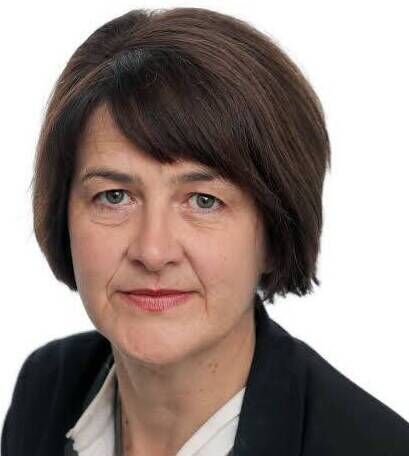
As Nobel Peace prize laureate, and former chair of the Commission on Inquiry, Navi Pillay, has said: “Children in Gaza have lost their childhood. With no education available, they are forced to worry about survival amid attacks, uncertainty, starvation and subhuman living conditions.”
The gendered nature of genocide in Gaza has also been highlighted by Pillay, who as a judge of the International Criminal Tribunal for Rwanda, recognised for the first time, rape and sexual violence as acts of genocide.
More than a human can bear is the title of yet another devastating report from the Commission of Inquiry, this time documenting Israel's systematic use of sexual, reproductive and other forms of gender-based violence.
It includes the targeting of reproductive healthcare facilities, direct attacks on maternity wards and Gaza’s main in-vitro fertility clinic, combined with the use of starvation as a method of war.
Drawing on the extensive reporting of the Commission of Inquiry, the 2026 Report of the Secretary General on Sexual Violence in Conflict included for the first time Israeli armed and security forces in its ‘blacklist’, citing a climate of impunity that enables the commission of conflict-related sexual violence.
Ireland has committed to an EU Presidency premised on upholding values, as the indispensable foundation of our Union. At the recently concluded session of the UN Human Rights Council, Ireland committed to continuing to press for appropriate collective action in response to egregious Israeli breaches of international law and human rights, including at EU level.
The failure to make progress to end the EU–Israel Association Agreement under Ireland’s presidency is a missed opportunity.
Ireland must seize this moment for collective action, if our human rights commitments and those of the European Union, are to be more than empty promises. As the Commission of Inquiry has said, it is more than a human can bear.
- Professor Siobhán Mullally is director of the Irish Centre for Human Rights at the School of Law, University of Galway, and former United Nations special rapporteur on trafficking in persons.

BLACK FRIDAY
Already a subscriber? Sign in

CONNECT WITH US TODAY



Be the first to know the latest news and updates