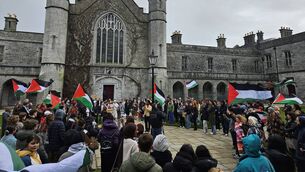
Crime has become a rallying cry for the Irish far right
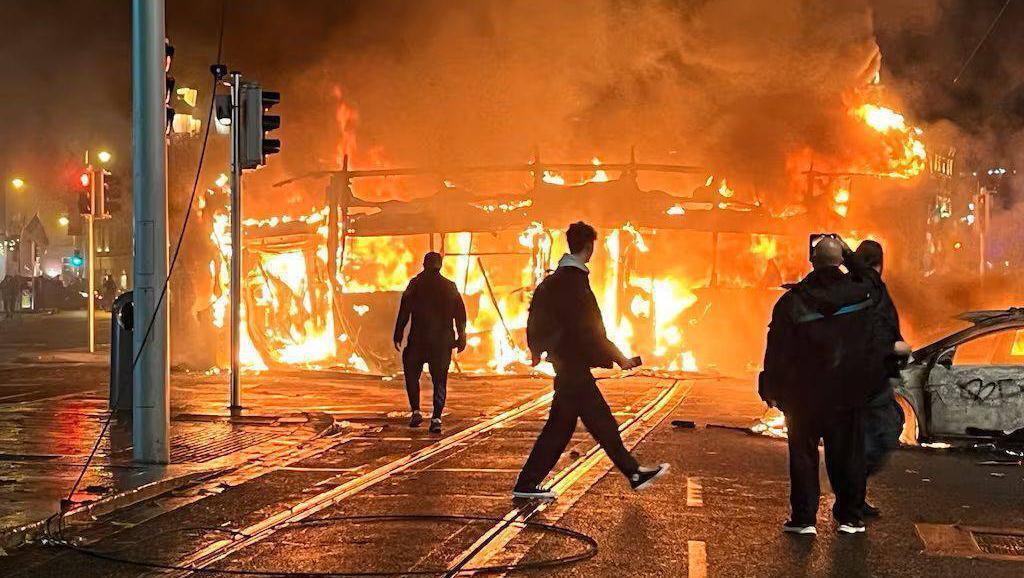
Online hate speech after Riad Bouchaker's crime fuelled the Dublin riots of November 2023
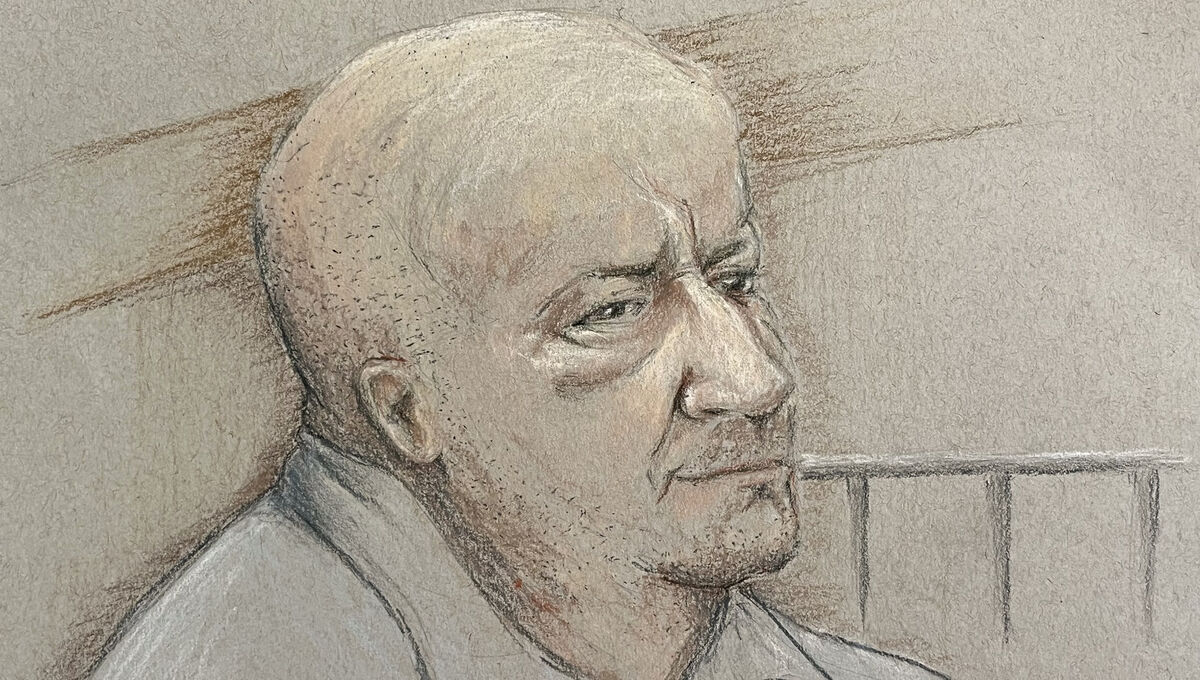
The recent sentencing of Riad Bouchaker for a crime that horrified the country and led to some of the worst urban violence in modern Irish history, raises important questions about the extent to which crime and security issues have become a rallying cry for the far right in Ireland.
The unrest erupted on November 23, 2023, when false rumours spread online that an asylum seeker was responsible for a serious assault on children near a school in Dublin in Parnell Square East. A number of social media posts incorrectly referred to the attacker as an "illegal immigrant" and a "fakeugee" (i.e. a fake refugee).
Riad Bouchaker is in fact a naturalised Irish citizen who has been living in Ireland for 20 years. Gript, a right-wing news platform in Ireland, was one of the first to suggest publicly that the perpetrator was Algerian.
That claim on X, the social media site, was shared by right-wing leaders such as Tommy Robinson and was subsequently amplified in several Telegram channels and social media groups.
As misinformation spread online, tensions at the scene of the stabbing quickly escalated, resulting in rioting and looting that effectively brought the capital to a standstill, inflicted damage that ran to tens of millions of euro, and saw the largest number of riot police deployed in the history of the State.
Read More
Just days beforehand, on November 17, Josef Puška ─ a Slovakian citizen who moved to Ireland 10 years ago ─ was sentenced to life imprisonment for the tragic and untimely murder of 23-year-old schoolteacher, Ashling Murphy. The highly emotional trial dominated Irish national media, particularly the victim impact statement delivered by Ashling’s boyfriend, Ryan Casey.
Perhaps predictably, the case was weaponised by anti-immigration organisers to stoke racial anger in the week prior to the riots culminating in a successful campaign to send the hashtag #ForAshling viral. Ashling Murphy’s murder was invoked almost immediately by online commentators on November 23.
Radical-right discourse frequently links non-European immigrants, asylum-seekers, or ethnic minorities to rising crime rates, using racially charged tropes or unverified claims. While research in this area is still in its infancy, emerging studies specifically identify crime and security as key lynchpins of populist radical-right self-legitimation and respectability.
In Sweden, for example, researchers have identified crime as a key "proxy discourse" that has normalised exclusionary policies and supported the political mainstreaming of the Swedish far-right.
President Trump emphasised building a wall on the southern border with Mexico — implying, against empirical evidence, that most crime in the US is committed by Latin American immigrants.
In Israel, Benjamin Netanyahu has long staked his political survival on being Israel's ultimate security guarantor, which has driven the mainstreaming of the populist right during the 2010s. The same dynamic can be seen in the linking of immigrant groups with concerns for the safety of women and children in protests across Britain and Northern Ireland.
The truth about the links between migration and crime is in fact much more nuanced.
A summary of research published by the Migration Observatory at the University of Oxford suggested that migration did not affect violent crime or property crime rates on average, with non-citizens more likely to be convicted or incarcerated for drug offences but less likely for violent offences, compared to British citizens.
A spokesman for the organisation said: "Once you control for age, what we found is that we would expect the foreign national prison population to be bigger than what we actually see in reality."
Indeed, the threat of violence may lie much closer to home, with reports linking two out of every five people arrested after participating in the 2024 Southport riots to reports of domestic abuse.
In the North, more than a third of those arrested during the violent disorder in Ballymena and surrounding towns had previously been reported to the PSNI for domestic abuse.
The pivot away from overt racism and towards crime and the protection of vulnerable groups works well for the radical right, particularly in liberal democracies where legal equality still makes overt bigotry socially unacceptable.
Firstly, it reframes aggressive hostility towards immigrants as a response to attack rather than threat: we are not the aggressor, "they" are.
Secondly, discussion of crime and security facilitates a "changing of the subject" to neutral, "respectable" second-order concerns. This rhetorical shift is particularly effective when combined with the language of grievance and victimhood; witness claims of "concerned citizens" being "silenced" by elites or media censorship.
Thirdly, and relatedly, the invocation of "law and order" concerns allow supporters of the radical right to claim the moral high ground in the face of legal, social, and political opposition.
The strong grip of crime and security framings with audiences and their potentially powerful mobilising effect once again throws the spotlight on online platforms and systemic failures to moderate violent extremism.
Further investment in this area together with more transparent public communication about crime and migration both represent important barriers to further street violence in the future.
- Professor Claire Hamilton is professor of Criminology at Maynooth University

BLACK FRIDAY
Already a subscriber? Sign in

CONNECT WITH US TODAY



Be the first to know the latest news and updates