Openness built Ireland’s economy — perceived hostility to migrants will undermine it
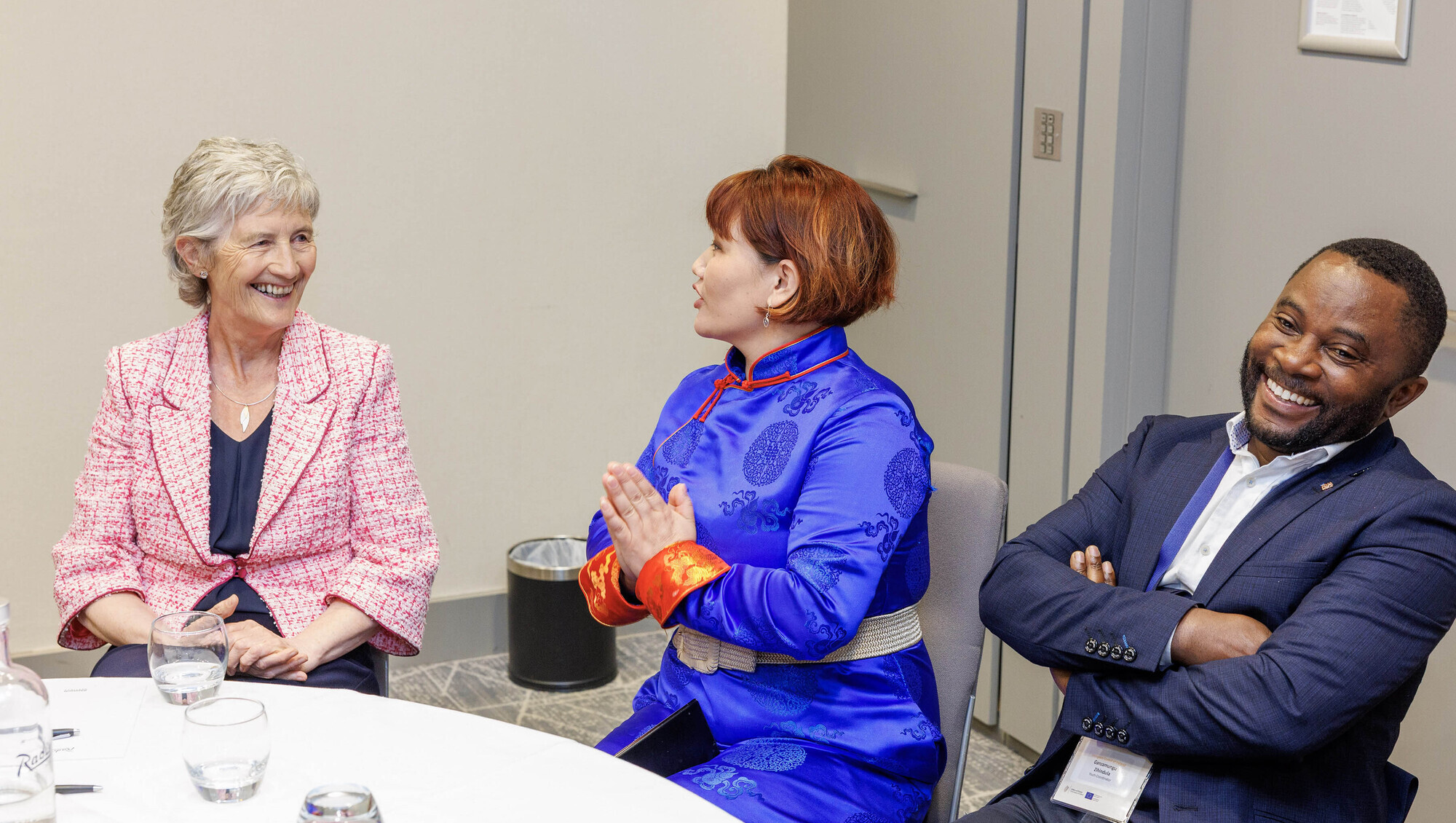
President Catherine Connolly with Gonchigkhand Byambaa, Mongolian nomad, before she addressed the National Migrant Inclusion Conference in March this year. Picture: Marc O'Sullivan
An open, globally focused economy like Ireland's relies on international talent to maintain its momentum.
According to the Central Statistics Office (CSO), Ireland’s workforce reached record highs in 2025, with unemployment hovering near full employment at 5% as of August 2026. International workers account for about 20% of total employees — roughly one fifth of all employees across the State.
These workers contribute across all sectors and levels — from specialised technology professionals and hospitality staff filling critical workforce gaps, to the heart of our healthcare sector, and the construction workers building much-needed homes and upgrading infrastructure.
Ireland’s economic success and vitality depend on keeping pathways open for these international workers, ensuring incoming talent can relocate, settle into their roles, and integrate smoothly into broader society.
The Irish Examiner's Rural Ireland Thinks poll, conducted recently by Ipsos B&A, reveals a complex picture of public sentiment.
While 60% of respondents agree immigration benefits the economy and 54% view migrant contributions positively, only 23% approve of how the Government manages asylum numbers.
Read More
These statistics reflect real public anxiety, particularly surrounding pressure on housing, healthcare and public infrastructure.
While a regulated immigration system is a necessity for any economy, the Government must deliver clear, effective migration management without damaging the core principles of inclusion and openness that generated our economic growth.
Administrative friction currently threatens that economic growth. Employers and workers are forced to navigate two separate Government entities — the Department of Enterprise, Trade and Employment for permits and the Department of Justice for visas.
Delays of about 17 weeks have been reported for Irish Residence Permit (IRP) renewals — with physical card delivery taking an additional two weeks from approval — while average processing times for family reunification in some cases is exceeding 18 months.
Forcing these skilled workers to live apart from their families for more than a year and a half creates a major barrier to retaining talent. This administrative friction is also apparent in the education sector, where several of our members report visa rejections at an unprecedented rate.
This has a direct knock-on effect on funding at a time when the sector is already challenged in this regard. Most European countries use the Single Permit Directive to ensure applicants deal with a single authority.
Although an inter-departmental working group is preparing to introduce this directive in Ireland, the Government must accelerate this transition to simplify administration and remove unnecessary friction.
Compounding these administrative obstacles are restrictive legislative proposals. The proposed Irish Nationality and Citizenship (Amendment) Bill aims to extend naturalisation residency requirements from five to eight years, alongside introducing mandatory language and civic tests.
Increasing the residency requirement to eight years puts Ireland at a distinct disadvantage compared to European peers. Countries such as France, Germany and the Netherlands maintain five-year thresholds for citizenship.
Making the path to citizenship longer and more onerous signals to prospective global talent that Ireland is less welcoming than its neighbours.
Changes to citizenship law must be predictable and fair, avoiding punitive adjustments for international workers who have already built their lives here and contributed to our communities.
Businesses across the country report growing concern from international staff who face hostility while commuting or going about their routines. This reality prompted Ibec to launch its 'Open for Business' campaign late last year.
When healthcare staff, tech specialists or construction workers feel unsafe in their neighbourhoods, society suffers a moral failure and incurs a severe economic risk. Foreign direct investment and international professionals flow toward stable, welcoming societies.
Maintaining safe workplaces and inclusive communities is essential to protecting employee wellbeing and preserving Ireland's international standing.
Government policy must reflect the reality that firm administrative controls and an inclusive society work together. The solution to legitimate public frustration over infrastructure, housing and public services is to invest the revenue generated by an expanding economy — not to damage the openness that created that wealth in the first place.
Dynamic, modern economies rely on diverse skills, perspectives and experiences to thrive. By eliminating administrative backlogs, ensuring policy predictability and fostering safe, inclusive communities, Ireland can protect its economic foundations, the richness of its diversity, and remain a bright spot for international talent.
- Kara McGann is head of skills and social policy at Ibec

BLACK FRIDAY
Already a subscriber? Sign in

CONNECT WITH US TODAY



Be the first to know the latest news and updates