Majo Rivas: An English language test sounds reasonable — it's not as simple as it sounds
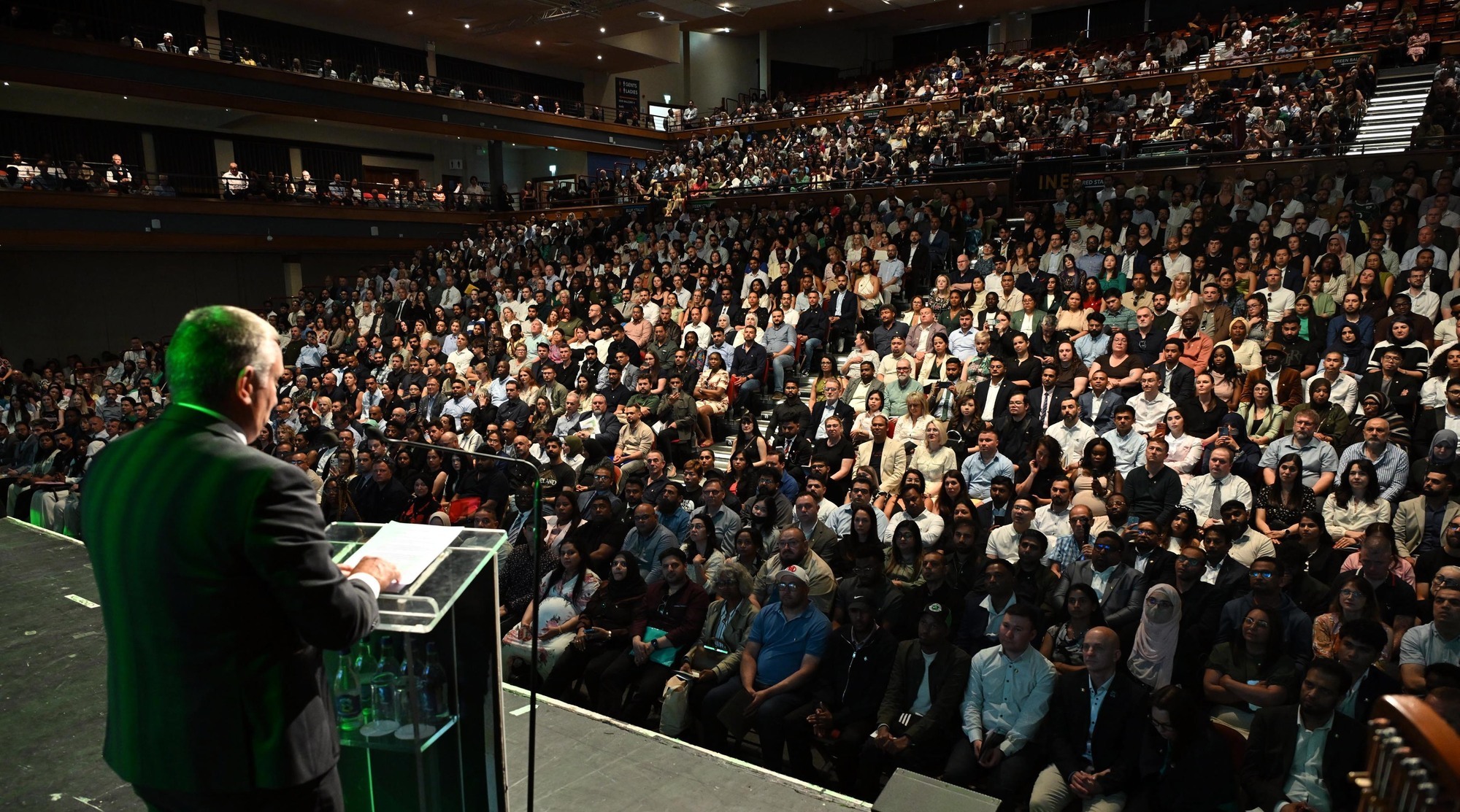
Minister of State Niall Collins addressing new Irish citizens at the citizenship ceremony last June. Photo: Don MacMonagle
Immigrants are human. It seems obvious but it often feels that many need reminding.
Immigrants are human. Some of us are funny, others not so much; some of us have disabilities, others care for those with disabilities, those who are older or young children; some of us parent alone or even while parenting with someone else, we struggle to find affordable childcare.
Some immigrants have intellectual disabilities or communicate differently, and communicate with non-verbal methods like body language, picture boards or even with their behaviour. Some immigrants have unmet literacy needs in their own languages or, while they can speak English, may struggle with writing or reading it.
People who were born Irish can also fit into one or more of these groups, but unlike immigrants they will not have their sense of security or right to participate in general elections taken away because they cannot pass an English test.
The Taoiseach recently announced that people seeking Irish citizenship must pass a language test in English (and possibly Irish?), they will also have to prove that they are “economically self-sufficient” and pass a civics test.
Read More
These conditions may appear logical but if applied rigidly in the context of services and supports in Ireland, it will be unreasonable. An English test may not seem like a big deal, but we are missing detail on how this test will be carried out.
Will the test be in writing only or will it also be aural? Will there be reasonable accommodations or exemptions for those with disabilities? Who will administer the test? Will a company make a profit off immigrants or will the Department of Justice (DOJ) venture into delivering standardised testing?
And you will excuse my incredulity… if the DOJ cannot bring itself to address the immigration registration backlogs which have plagued the immigration system for over a decade, I don’t know how they’ll manage to administer English tests.
There is not sufficient investment in the provision of English classes. Many immigrants to Ireland are proficient in English, these immigrants — myself included — do not need English classes.
English classes that are available, accessible, acceptable and of quality are key to those immigrants who don’t have the same privilege. Do not get me wrong, being able to communicate proficiently in English is something that is positive for a person’s integration and autonomy.
In 2016, a report carried out by the ESRI and funded by the then Department of Justice and Equality highlighted that migrants experience significant disadvantage due to lack of English proficiency and emphasised the need to address the English language skills of the migrant population in Ireland. I want more people to be able to learn English, but that is not the reality.
The reality is that, often, English classes provided or funded by local Education and Training Boards (ETBs) are perhaps on a Thursday 9am to 12 noon or on a Monday and Tuesday morning — despite research demonstrating that more intensive programmes are associated with better outcomes (ETBI, 2018).
In practical terms, these morning classes are not suitable for someone in full-time employment. And then there are those with caring responsibilities or who parent alone, in a context where affordable childcare or respite are gold dust.
Learning English is incredibly important and, if that’s the goal, it should be encouraged and supported not used as a barrier to access security of immigration status and political participation.
One in five adults in Ireland struggles with reading and understanding information (CSO, 2024). I had the privilege of supporting Irish adults like this — salt of the earth people who struggled with filling in forms or understanding letters from government agencies.

I wouldn’t dream of taking away their Irish passports because they cannot pass an English test.
The reality is that these English tests will disproportionately impact those on lower incomes who work full time to keep the country going and cannot go to an English class on a Monday and Tuesday morning.
The English tests will disproportionately affect refugees who get protection in Ireland sometimes after being displaced for years and who could not access education even in their own language or who are affected by such significant trauma that it affects their ability to learn or pass a test.
The tests will disproportionately affect those who have caring responsibilities — usually women — and who cannot find affordable childcare or respite so they can attend an English class on a Thursday morning.
Lastly, I wonder how will these tests be applied to people who are disabled, who may have an intellectual disability or communicate differently? Will they get any reasonable accommodation or exemption? Will their disability be a barrier to access citizenship?
Immigrants are human. I don’t think asking for a citizenship system that recognises our humanity is too much to ask.
- Majo holds a degree in law from the Universidad Nacional de Asunción in Paraguay and a Master of Laws from the University of Toronto. Majo has worked in advocacy on women’s rights, migrant rights, disability rights and access to government supports. The views and opinions expressed here are strictly personal.

CONNECT WITH US TODAY



Be the first to know the latest news and updates