Female TDs haven't gone quiet — they're being drowned out
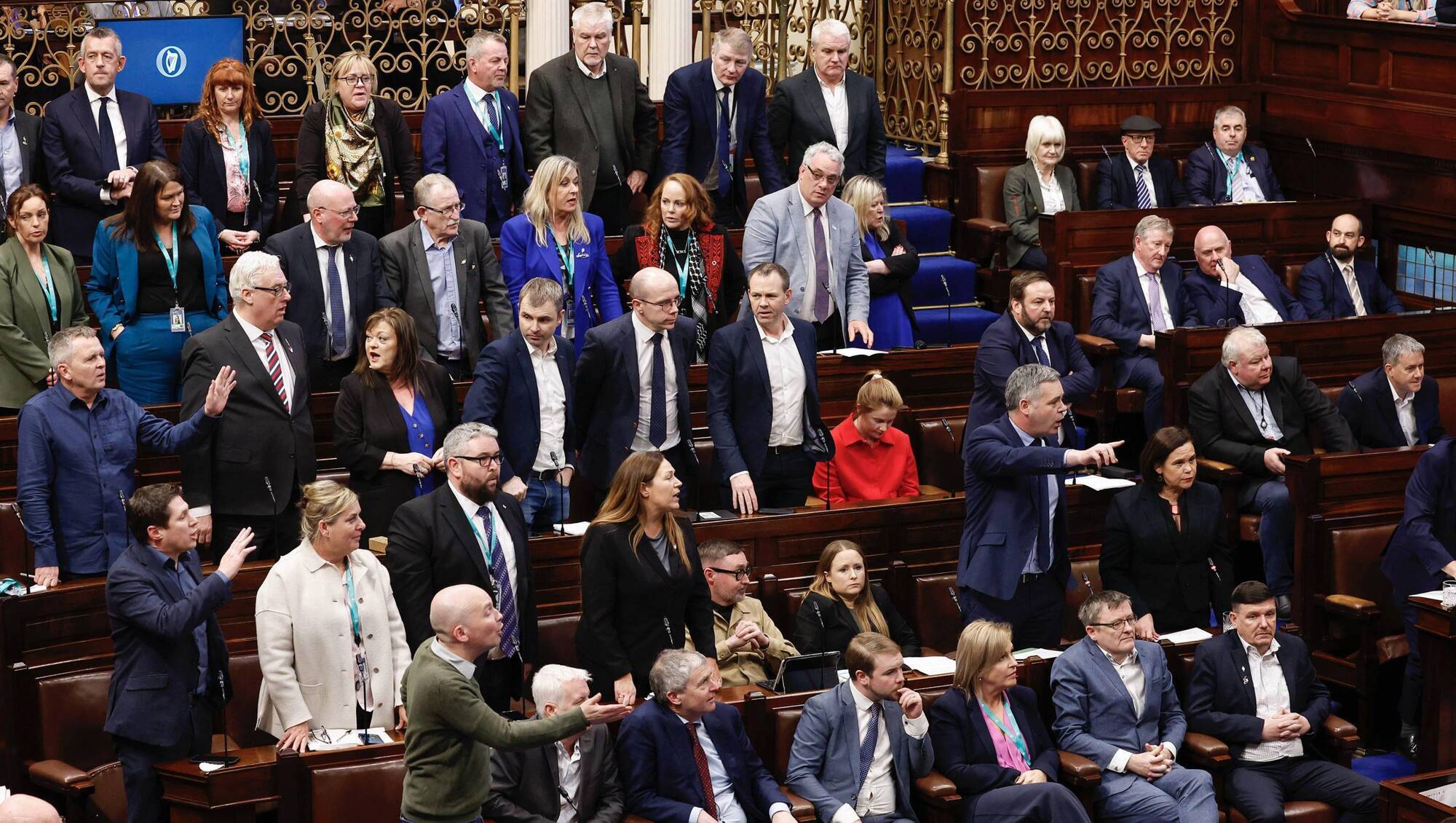
More women sit in the Dáil than ever, and they have not stopped asking questions about contentious topics. Photo: Flickr Houses of Oireachtas
When researchers at UCD asked members of the Oireachtas about the abuse they receive, two issues stood out. Two-thirds linked it to immigration. Almost half linked it to women's rights, with housing and LGBT+ issues not far behind.
The worry around statistics like this is obvious. If speaking on these issues brings threats and harassment, and women bear a heavier share of it, women politicians might censor themselves and stop speaking out.
International research adds to the concern: migration is the issue most often cited by both women and men as drawing violence.
This is not only an academic concern. If the people who receive the most abuse withdraw from the issues that attract it, the debate narrows to whoever is left, and the Dáil stops reflecting the full range of views in the chamber. So I went looking for the silence.
Using data downloaded from Data Explorer at Oireachtas.ie, I built a dataset of every parliamentary question asked in the Dáil between May 2016 and early October this year: 560,050 questions from 288 TDs, each matched to the TD's gender, party and time in office.
I then identified every question on the four issues most linked to abuse: housing, immigration, women's rights and LGBT+.
Why written parliamentary questions? They are one of the few parts of a TD's job that TDs control almost entirely. Nobody allocates them, they are less performative than questions on the Dáil floor, and every one goes on the public record.
If women were retreating from contested issues, this is where it should show. It doesn't. Women are still asking about these topics.
Over the past decade, women TDs have raised housing and immigration as widely as men. In 2025, 81% of women TDs asked at least one immigration question, against 75% of men.
On women's rights and LGBT+ issues, a larger share of women than men asked questions in every single year. The typical woman TD asks about as many questions as the typical man, both overall and on immigration.
This fits with research by UCC's Dr Fiona Buckley and colleagues, who found that while Irish women politicians are more likely than men to feel afraid, they are no less willing to speak on controversial topics.
And yet something has shifted. From 2017 to 2024, women asked a bigger share of Dáil questions than their share of seats. In 2023 they asked 29% of all questions while holding 23% of seats.
Since the 2024 election that has reversed. Women now hold almost a quarter of Dáil seats, more than ever, but they have asked just 21% of questions this year.
The sharpest change is on women's rights. Between 2017 and 2019, the average woman TD asked between two and four times as many women's rights questions as the average man. This year, it is roughly one for one.
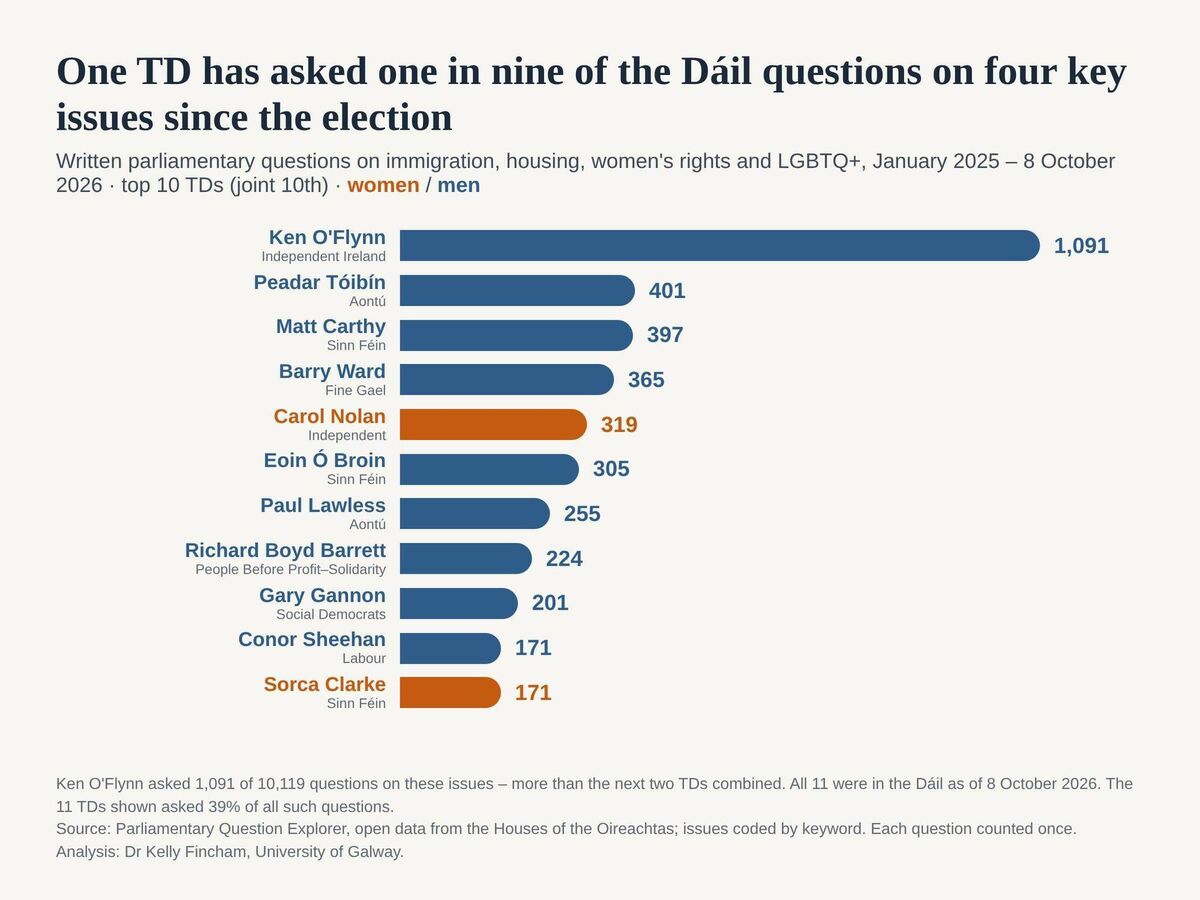
How can women's share fall if women haven't stopped asking? The answer perhaps lies with a small number of very prolific askers.
Since 2025, TDs asking more than 1,000 questions a year account for 39% of all immigration questions, almost a quarter of housing questions, a third of women's rights questions and almost half of LGBT+ questions.
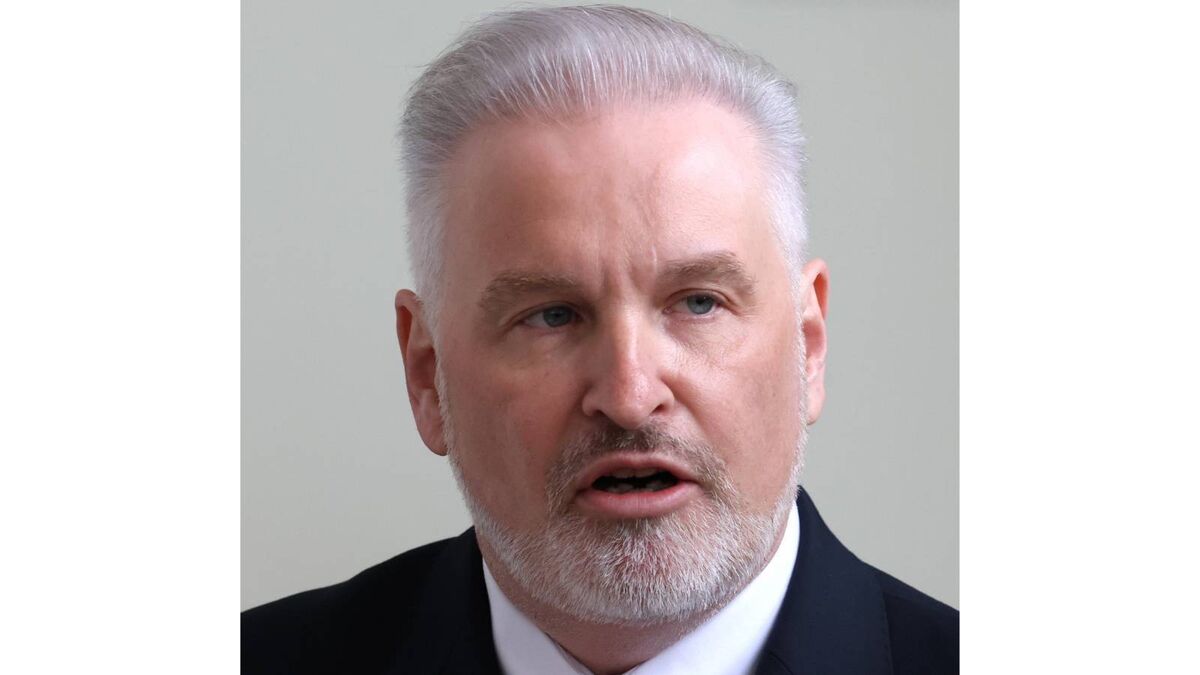
Most are men, and on women's rights and LGBT+ issues the increase comes largely from one TD elected in 2024 — Cork North Central's Ken O'Flynn. That might also change what the numbers mean.
A simple count treats every question alike: a question challenging supports for trans people, migrants, women seeking abortion or people experiencing homelessness counts the same as one supporting them. The volume may be the same. The framing is not.
This matters beyond the Dáil chamber. Research on abuse and women in politics tends to ask one question: who goes quiet? These findings suggest we also need to start asking who fills the space.
It also matters whose framing dominates the record that journalists, researchers and future historians will use to judge what the Dáil cared about.
There are limits to what the data can tell us. These are patterns, not causes. Nothing here shows that abuse, or anything else, drove the change, and this year's figures run only to early October.
The next step is to read what the questions actually say: which are constituency casework, which raise the issue itself, and how women and men frame each issue.
But one thing is already clear. More women sit in the Dáil than ever, and they have not stopped asking questions about contentious topics. The question now is whether they can still be heard.

CONNECT WITH US TODAY



Be the first to know the latest news and updates