Colin Sheridan: Mao's murderous legacy still overshadowed by symbolism
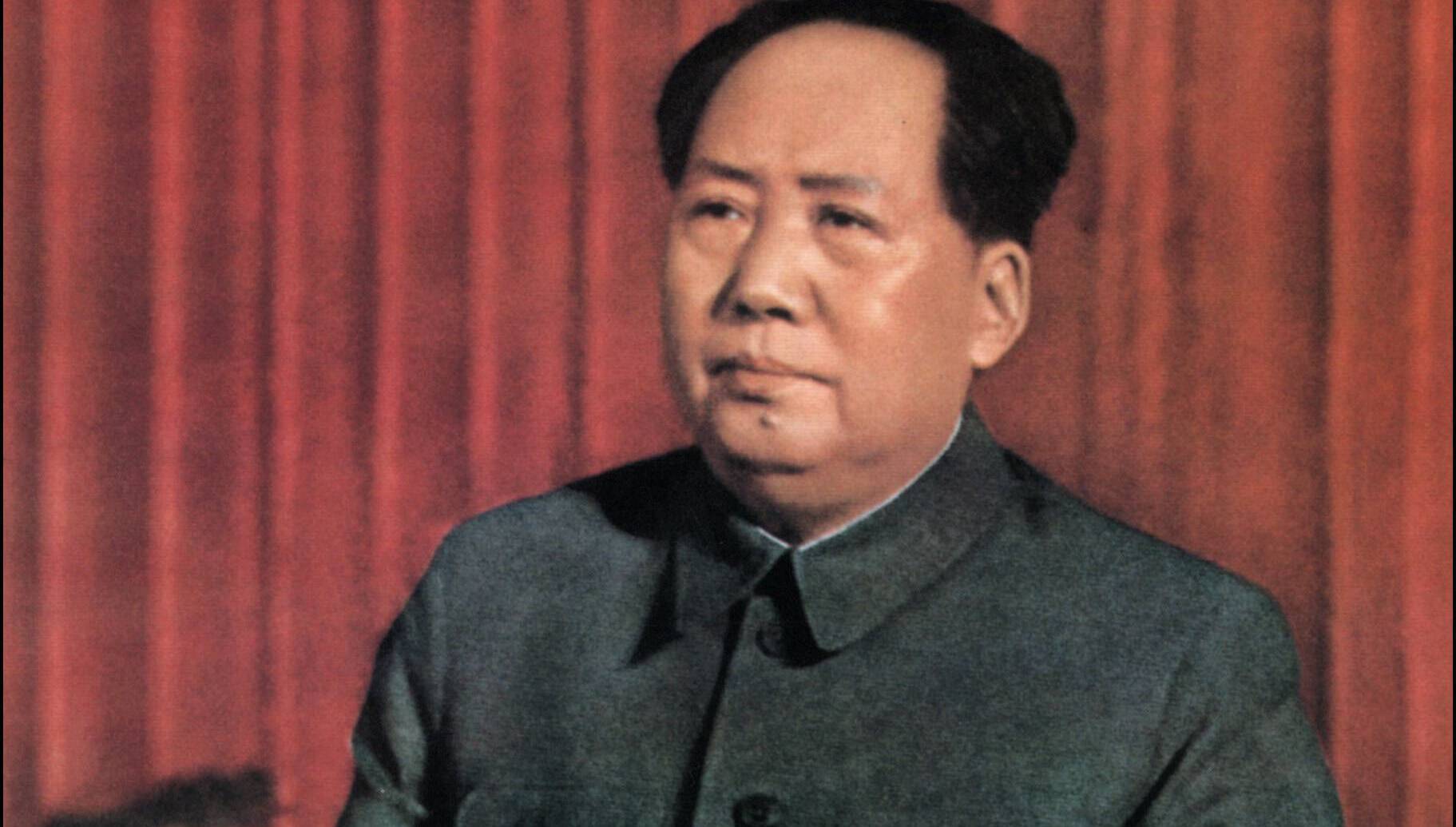
A retouched picture released by Chinese official news agency of Mao Zedong, Chairman of the Chinese Communist Party from 1935 until his death in 1976, delivering a speech 'about correctly handling contradiction among the people' at the standing committee of the State Council in Beijing in 1957. Picture: AFP via Getty Images

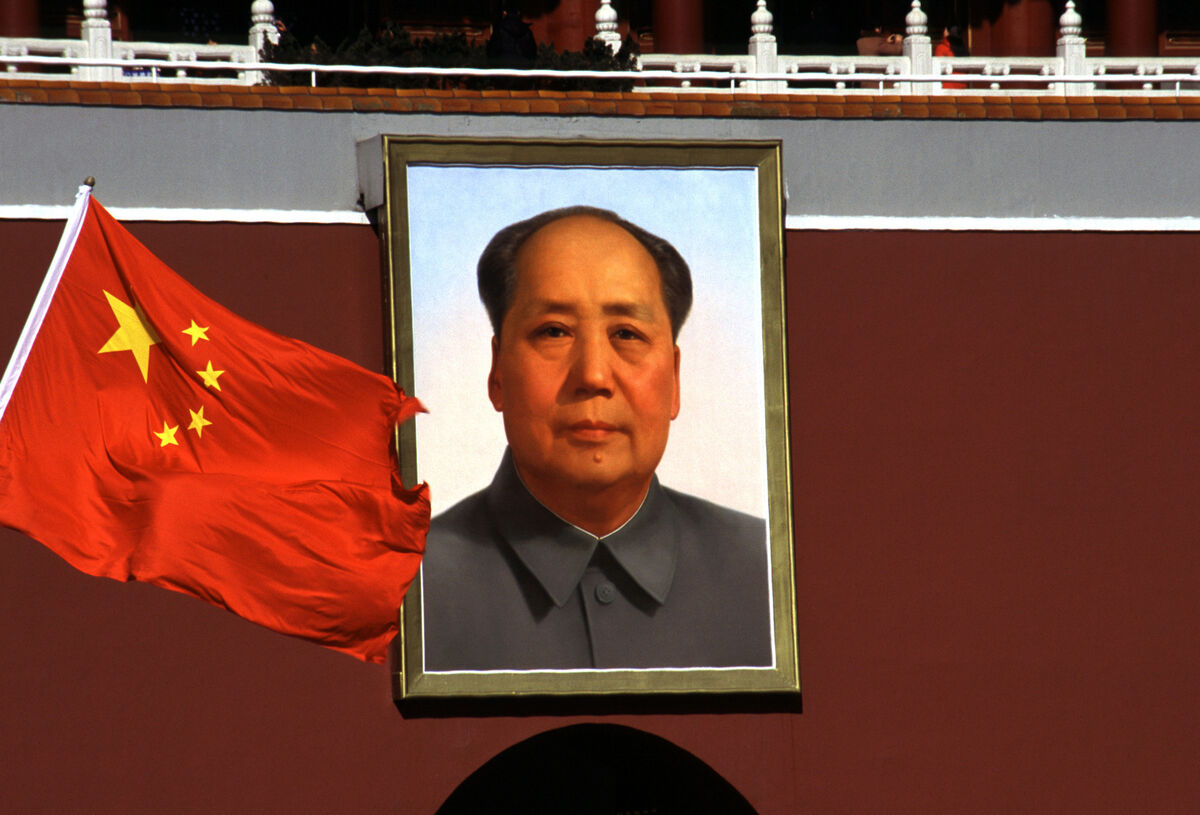
Fifty years after his death, Mao Zedong remains remarkably easy to recognise. The high forehead, swept-back hair and buttoned tunic require little introduction. His face still looks down upon Tiananmen Square. It appears on Chinese banknotes and in souvenir shops; reproductions of Cultural Revolution posters have long since become collectables.
Andy Warhol turned Mao into pop art. For generations in the West, the chairman could be encountered on posters and T-shirts, with little consideration of what wearing the face of Mao might actually mean.
It is difficult to imagine the iconography of many other dictators surviving quite so comfortably. Mao died on September 9, 1976, aged 82, having dominated China for almost three decades.
Half a century later, his extraordinary cultural afterlife presents an uncomfortable question: why has there never been the same moral reckoning with Maoism that accompanied some of the other murderous ideologies of the 20th century?
The comparison with Nazism requires care. The histories, ideologies and crimes are different, and reducing them to a league table of human wickedness illuminates little. But there is nevertheless a legitimate question about memory.
Mao proclaimed the People's Republic in 1949 after the Communist victory in the Chinese Civil War. His revolution transformed a vast, impoverished country emerging from invasion, civil conflict and foreign domination. To admirers, particularly across the developing world, Mao represented national independence as well as communism.
Read More
But the human cost of his rule was immense. The Great Leap Forward, launched in 1958, was Mao's attempt to propel China towards industrial and agricultural abundance at extraordinary speed. Rural life was collectivised, labour diverted into grandiose schemes, and production figures falsified as officials competed to satisfy political demands.
The result was one of history's great famines. Estimates of the number who died vary considerably, but run into the tens of millions.
Then came the Cultural Revolution in 1966. Mao mobilised young Red Guards against supposed bourgeois and counter-revolutionary elements. Teachers, intellectuals, officials and ordinary citizens were humiliated, beaten and persecuted. Families were torn apart. Historical and cultural objects were destroyed. Millions were displaced or sent into the countryside.
And yet, while Chinese people were experiencing the reality of Mao's revolution, something very different was happening thousands of kilometres away.
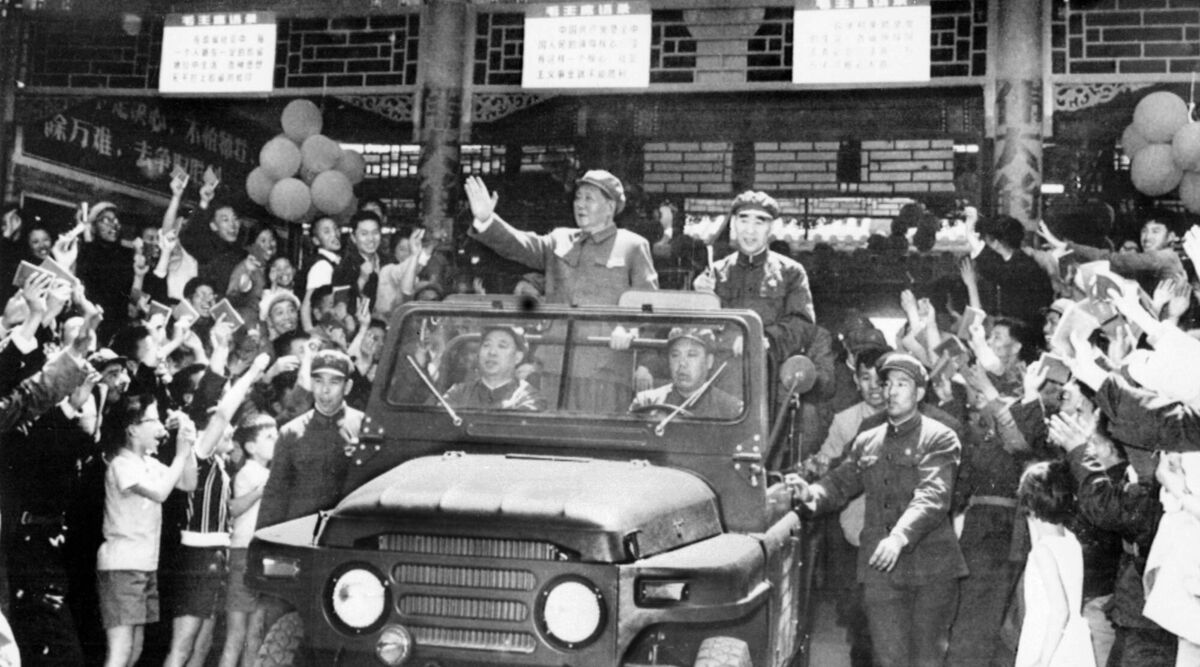
Mao was becoming cool. To sections of the Western New Left of the 1960s, the Soviet Union had become grey, bureaucratic and compromised. Mao's China seemed to offer something more intoxicating: revolution in motion.
travelled astonishingly well. Mao's language of permanent struggle, anti-imperialism and resistance to established authority found audiences far beyond China. His influence appeared among radicals in France and Italy, revolutionary movements in Asia and Latin America and liberation struggles across the post-colonial world.
Even Albania became, for a period, China's unlikely ideological partner in Europe. Enver Hoxha's fiercely Stalinist regime sided with Beijing during the Sino-Soviet split, after both governments denounced Nikita Khrushchev's de-Stalinisation as ideological betrayal.
China supplied Albania with economic and military assistance; delegations travelled between Beijing and Tirana; Maoist literature and Cultural Revolution material circulated there. It was one of the Cold War's strangest relationships: one of Europe's smallest and most isolated countries aligned with the world's most populous.
Ireland was hardly swept by Maoism. Our socialist tradition had deeper indigenous roots in James Connolly, Jim Larkin, republicanism and the labour movement, while the Communist Party of Ireland remained Marxist-Leninist rather than Maoist.
But even here, Mao's revolution found believers. In 1965, a radical student group called the Internationalists emerged at Trinity College Dublin. It subsequently evolved into the Communist Party of Ireland (Marxist-Leninist), which proclaimed its faith in Marxism-Leninism and "Mao Tsetung Thought".
Elsewhere, the Irish Communist Organisation was also influenced by Maoism, with an affiliated Young Communist Group operating in Cork.
These organisations were tiny. They never approached serious electoral significance. But their existence matters because Ireland was participating, however marginally, in an international phenomenon. For young radicals looking out from the 1960s, Mao could appear not principally as the ruler responsible for famine and persecution but as the leader of an anti-imperialist revolution happening in real time. That distance between image and experience is perhaps central to understanding Mao's survival.
In 1991, Jung Chang helped close it. , her extraordinary account of three generations of women in her family, sold millions of copies by making China's violent 20th century intensely personal.
Chang had been a Red Guard as a teenager before turning against Maoism. She later spent more than a decade, with her Dundalk-raised historian husband Jon Halliday, researching , published in 2005. Last year, returned to the story of her family and the China she left behind.
Chang's interpretation of Mao has been challenged by other China scholars, particularly over some of the claims in her biography. But the importance of was partly that it did something political histories struggle to achieve: it made ideology human.
Yang Jisheng's monumental subsequently documented the Great Famine with the rigour of a Chinese journalist who had spent decades inside the system. His own foster father died of starvation.
The remarkable thing is that such acts of remembering remain politically sensitive.
Mao's successors did abandon much of Maoism in practice. Deng Xiaoping's reforms transformed China, encouraged private enterprise and opened it to the global economy. Today's China — skyscrapers, high-speed rail, global corporations and extraordinary manufacturing power — would have been almost unimaginable in 1976.
But the Communist Party never performed a comparable political repudiation of Mao himself. It could not easily do so. Mao was not simply a former leader. He was the revolutionary founder of the People's Republic and therefore part of the origin story from which the Communist Party derived its legitimacy.
Tear Mao completely from the foundations and uncomfortable questions arise about the structure built upon them.
That makes history a matter of contemporary politics. In , the Pulitzer-winning journalist Ian Johnson describes Chinese writers, filmmakers and independent historians attempting to preserve memories of famine, political campaigns and persecution that the state would prefer to control.
Under Xi Jinping, that struggle over history has intensified. China's leadership has attacked what it calls "historical nihilism": interpretations of Communist Party history that undermine its official account of China's rise.
The battle over Mao, in other words, is not really about a man who died 50 years ago. It is about who owns the past.
There is another reason Mao's legacy remains difficult to disentangle. China in 1949 was not China in 1976, still less China today. Mao's defenders point to national unification, increased literacy, improvements in public health and China's emergence from what many Chinese understand as a century of foreign humiliation.
Perhaps that is what makes the persistence of Mao's image so fascinating 50 years after his death. Mao succeeded not merely in becoming a ruler but in becoming a symbol — and symbols are much harder to kill.
That does not mean China has forgotten. Johnson's underground historians demonstrate precisely the opposite. Families remember. Survivors remember. Writers remember. The question is which memories are allowed to become history.
Fifty years after Mao Zedong died, his portrait still hangs above the entrance to the Forbidden City, looking across Tiananmen Square. Perhaps its continued presence tells us something more important than whether Mao himself is still revered.
It tells us that revolutions do not end when their leaders die; the struggle over what they meant can last generations.
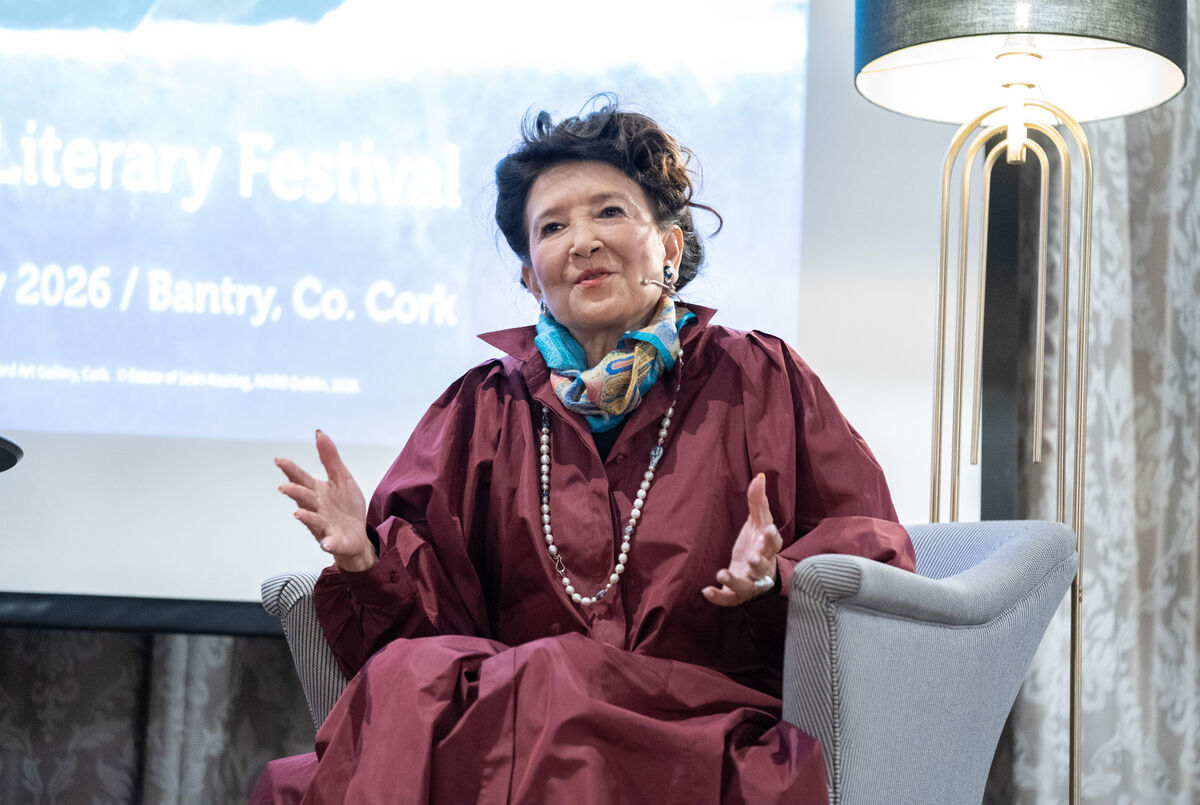
- Listen back to Jung Chang speaking to Deirdre O'Shaughnessy live at the West Cork Literary Festival last July on irishexaminer.com or by searching for The Deirdre O'Shaughnessy Podcast.

CONNECT WITH US TODAY



Be the first to know the latest news and updates