Gloria Steinem personified America’s feminist movement

The activist made the movement mainstream — and became a receptacle for its hopes and disappointments
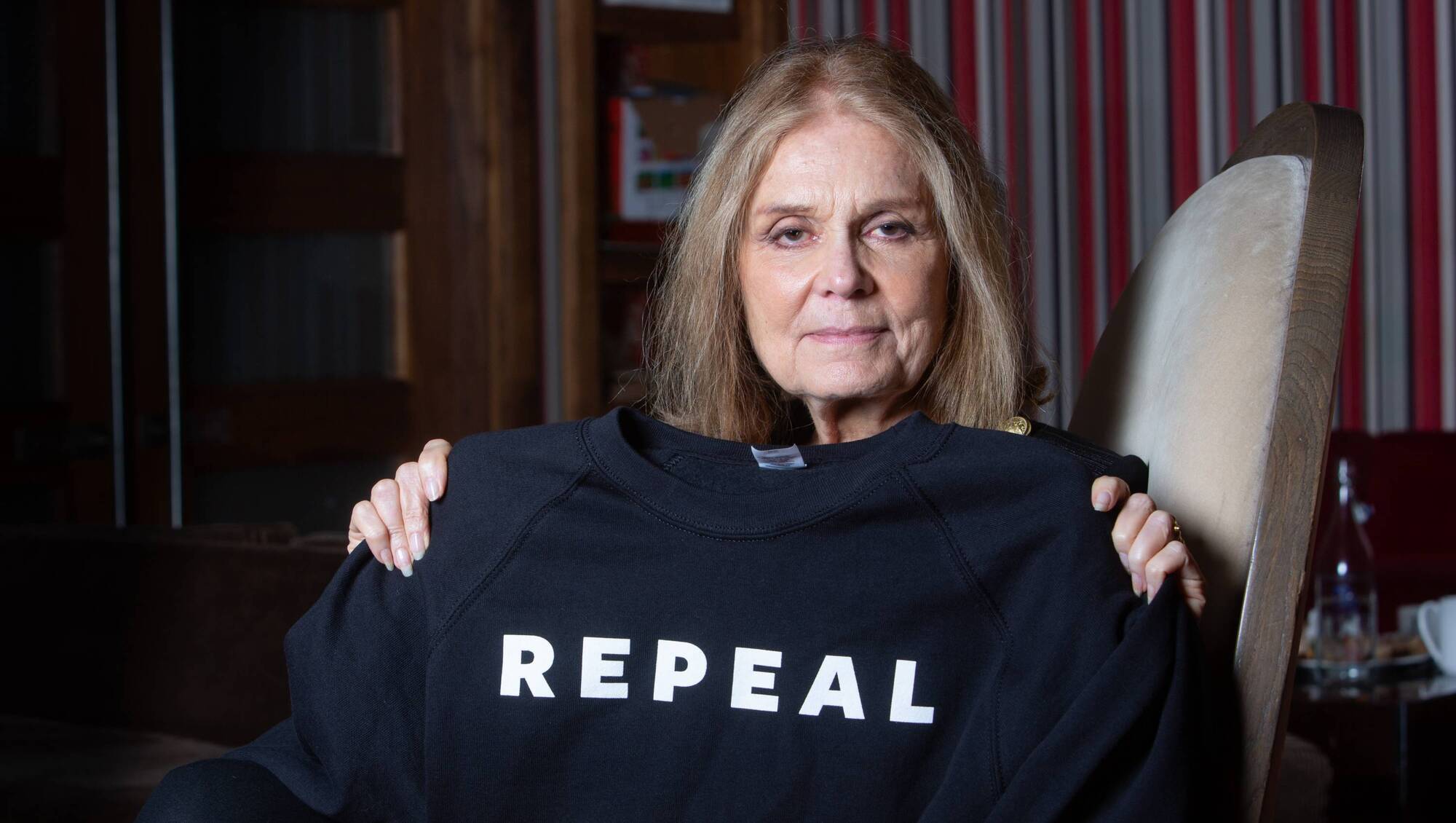
Activist and writer Gloria Steinem  at the West Cork Literary Festival in Bantry in 2016. ‘Steinem stood in for a large swath of feminists – intellectuals and activists, writers and organisers, liberals and radicals, lesbians and Playboy bunnies — and did her best to respect them all.’ Picture: Darragh Kane
Activist and writer Gloria Steinem  at the West Cork Literary Festival in Bantry in 2016. ‘Steinem stood in for a large swath of feminists – intellectuals and activists, writers and organisers, liberals and radicals, lesbians and Playboy bunnies — and did her best to respect them all.’ Picture: Darragh Kane

By the time she died on Wednesday, at 92 years old at her home in New York, Gloria Steinem was synonymous with feminism, a kind of human mascot for the movement.

So it can be easy to forget that when she was born, feminism was over. It was something that had been faddish years before, among women who were now old ladies; something that seemed, in retrospect, like it might have been a bit overwrought and out of touch.

To the girl Gloria Steinem, growing up in Ohio in the 1930s and 40s, the suffrage movement that had gained women the right to vote less than two decades prior probably seemed remote — especially to a girl like her, growing up itinerant and poor under the care of a single mother who was plagued by a violent and debilitating mental illness. You might say that growing up, Steinem had worries that were more immediate than the status of women.

But experience has a way of radicalising women about their own gendered condition. Steinem attended Smith, and her education opened up previously unhoped for possibilities. En route to a postgraduate fellowship in India in 1957, when she was in her early 20s, she had an illegal abortion in London. Later, in 1969, while she was working as a journalist for New York magazine, she attended an “abortion speak-out” put on by a group of radical women from the emergent fringe of what was then called the Women’s Liberation movement.

The women, crowded into a church near Washington Square Park, talked about being blindfolded in the backs of cars as the mobsters drove them to motels, where illegal abortions were performed by drunk, lascivious or simply cruel doctors. They talked about having to threaten suicide, over and over, to get a legal exemption; they talked about lying in hospital wards, hemorrhaging or riddled with sepsis, unsure that they would live. Their rage at the pain and humiliation struck something in Steinem. She had already been writing about women’s status — her famous article “A Bunny’s Tale”, in which she went undercover at the Playboy Club, ears and all — had been published six years before. But the woman Steinem would become was born on that March day, in that church.

The woman who walked out would become one of the most successful and visible faces of the second wave, a figurehead who came to personify the feminist movement itself. The former journalist, keenly aware of both the dynamics of mass media and of the potential uses of her own willowy good looks, deployed stardom and glamour in the service of the feminist cause.

She was not the first famous feminist, but she might be said to have been the first famous feminist of the celebrity era, forging a public persona halfway between Madonna and Joan of Arc 

Her magazine Ms, launched in 1972, brought the women’s liberation movement, once largely confined to the hip downtowns of major cities such as New York and Chicago, to newsstands across America. But Steinem’s work was not exclusive to the media: she also campaigned relentlessly, and sometimes successfully, to make the feminist movement a power player within the Democratic party, brokering her own support in exchange for policy commitments from candidates.

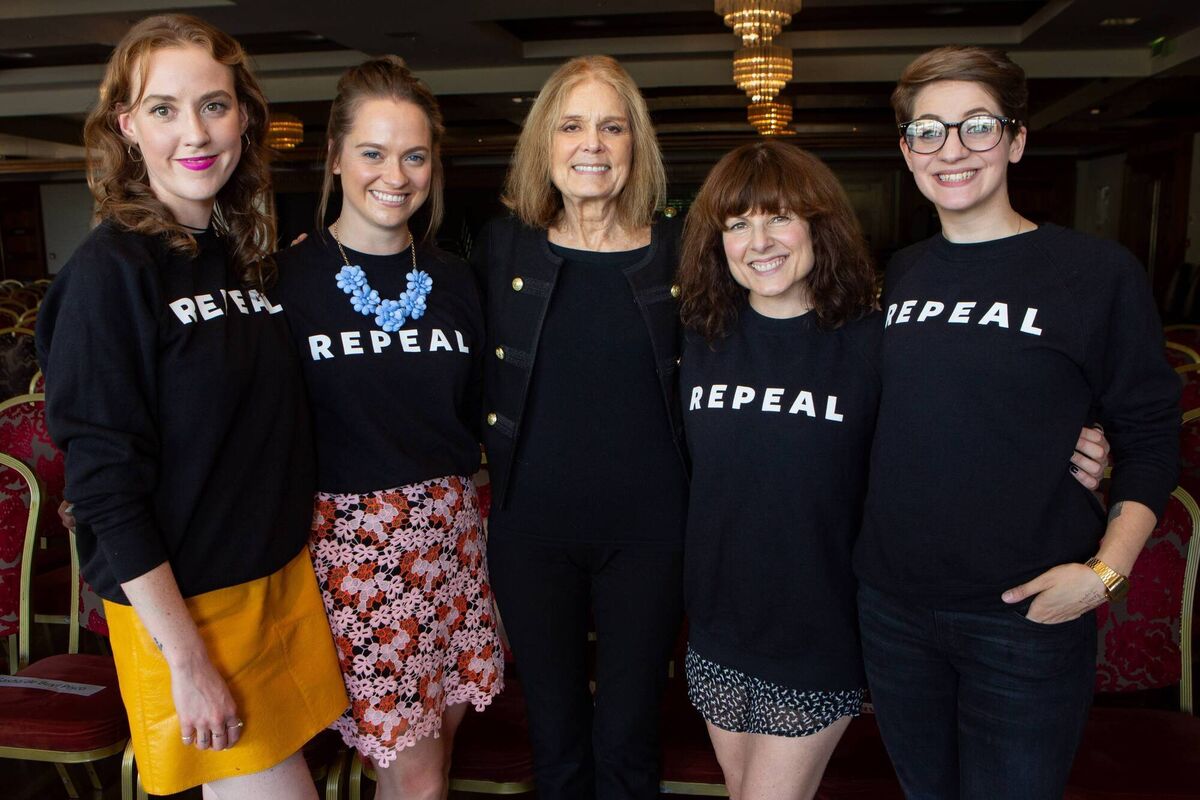
Author Louise O’Neill, Aoife Murray, Tara Flynn and Sasha Buyl-Pisco with activist and writer Gloria Steinem at the West Cork Literary Festival in Bantry in 2016.

Steinem’s image — powerful, beautiful and connected — lent feminism an allure and mass appeal. Few accomplished so much in making women’s rights and dignity a mainstream American concern, but Steinem’s aim, to her credit, was always to use her own more palatable image to direct attention to other people’s work, to more expansive visions for justice and to more challenging ideas. Not everyone followed her; not everyone took her up on her work’s invitation to move from feminism’s more gentle demands to its more radical ones. Some did.

Steinem’s position as an embodiment of women’s struggle meant that her public persona became a receptacle for all its hopes and disappointments What does it mean to be a figurehead and a human symbol for a movement that aspires to represent fully half of the human race? Steinem’s position as an embodiment of women’s struggle meant that her public persona became a receptacle for all its hopes and disappointments; she was both credited with feminism’s achievements and blamed for its failures, even when these achievements and failures were not hers. Critics have blasted Steinem’s move to insert herself as the representative of feminism as a kind of savvy and opportunistic ambition. I prefer to think of it as a kind of generosity. She stood in for a large swath of feminists — intellectuals and activists, writers and organisers, liberals and radicals, lesbians and Playboy bunnies — and did her best to respect them all.

Both at the peak of the second wave and in the latter decades of her life, this role was one of dedicated coalition building. The feminist movement, in the second wave era as now, was amorphous and internally fractious, deeply divided by disagreements over priorities, tactics, and even ultimate aims. Perhaps it was because of the power of Steinem’s celebrity, or her formidable gifts as a fundraiser, that when Steinem took a side in these rifts, that side tended to win.

But in a movement, like many others, where political differences often became personal vendettas, Steinem was an uncommonly gracious opponent — unusually willing to engage in self-criticism, to engage across deeply felt difference, and to encourage younger feminists whose visions did not exactly match her own. 

She lent her advice and imprimatur to feminist initiatives ranging from the anodyne and corporate to the incendiary and radical

 From her perch on the Upper East Side, she acted as an elder stateswoman and patron saint for a movement that had changed beyond what her younger self would have recognised. Feminists of all different generations made pilgrimages uptown to kneel beside her chair. For years, she seems to have answered every email, taken every meeting, and met everyone’s little daughter.

What will the feminist movement be without her? Any honest account of the status of women in Steinem’s life would have to admit that feminism, as a political movement for women’s liberation, is in a moment of precipitous retreat. In the decades after she founded Ms, at the height of the second wave, the movement’s grassroots activist energy diminished. Both the academy and the organised radical left largely lost interest in women’s status. If the rise of social media briefly looked like it might channel women’s ongoing discontent with the violence and indignity of their lives into measurable political action, it quickly proved to be more effective in mobilising mass male resentment and spreading viral misinformation about birth control. Roe was struck down.

Organised feminism, now, is largely the province of a few liberal NGOs, righteous but battered, which are coming in for more and more persecution from the Trump regime and its allies. If feminism is to be revived, now, it will have to be rebuilt. Without Steinem, the task will be that much harder.

  • Moira Donegan is a Guardian US columnist

More in this section

Revoiced

Newsletter

Had a busy week? Sign up for some of the best reads from the week gone by. Selected just for you.

Cookie Policy Privacy Policy Brand Safety FAQ Help Contact Us Terms and Conditions

© Examiner Echo Group Limited