Colin Sheridan: Ratko Mladić is dead, but the lessons of Srebrenica remain as Gaza raises uncomfortable questions
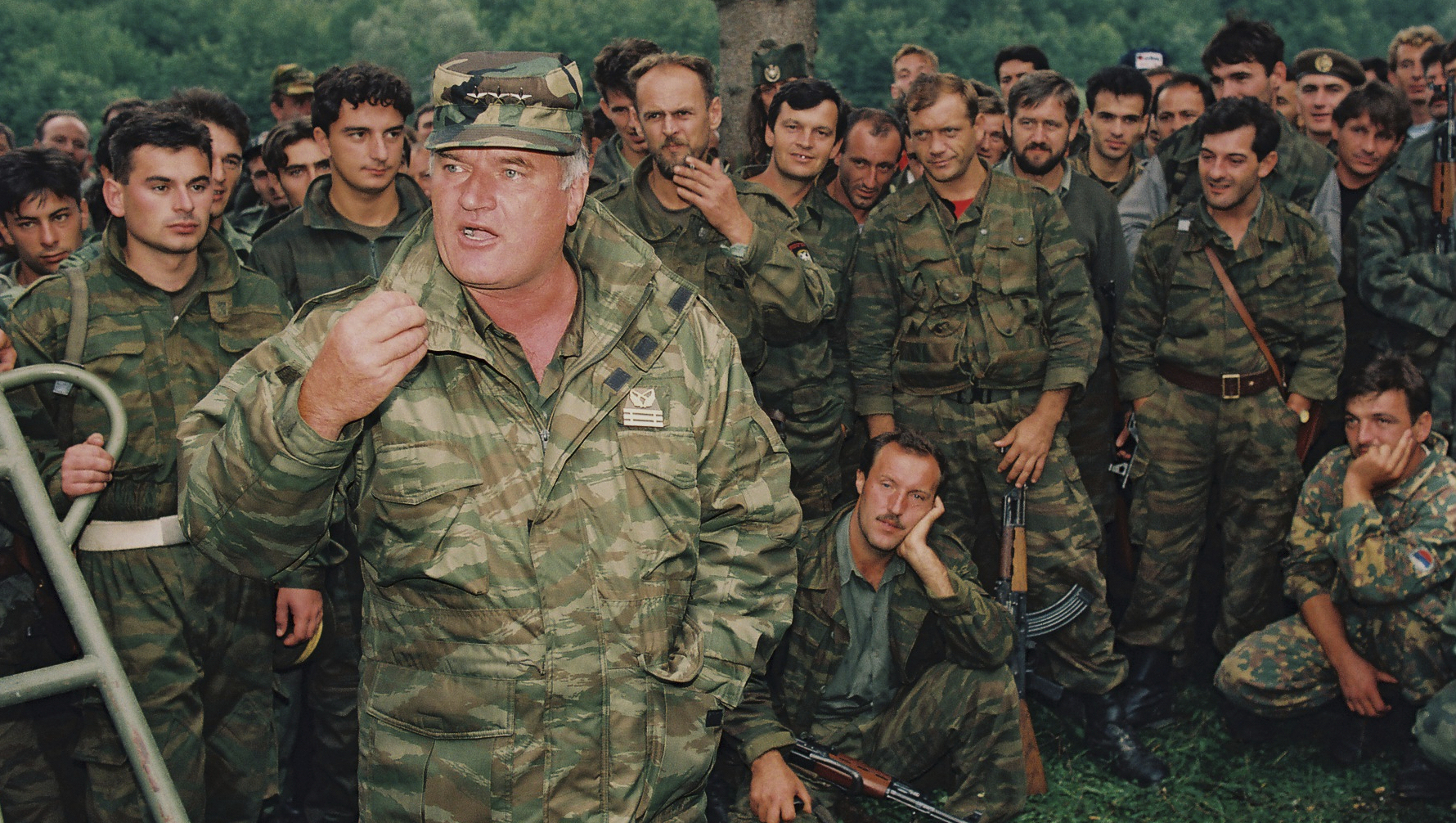
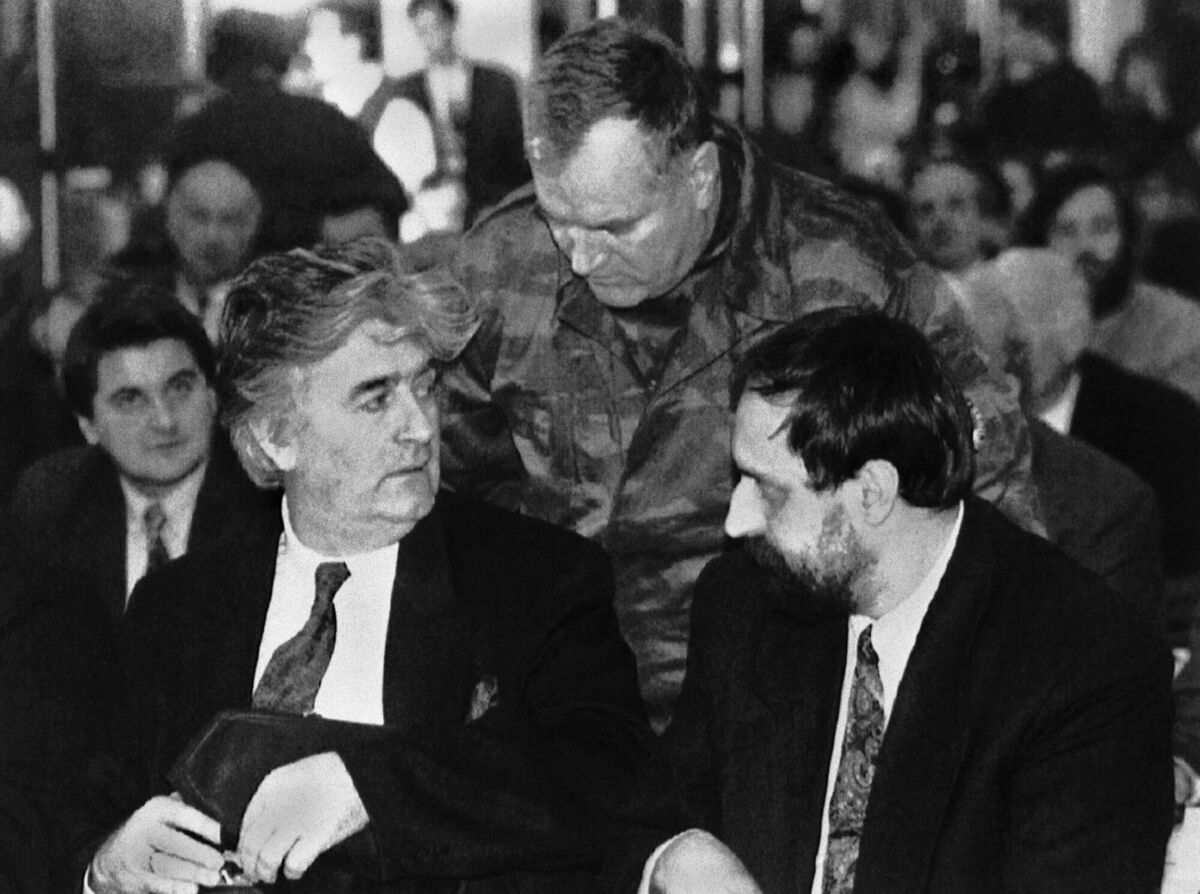
Bosnian Serb general Ratko Mladić speaks to soldiers near the Bosnian town of Cazin in
September 1994. He died on Thursday, aged 84, in UN custody in The Hague. Picture: Radivoje Pavicic/AP

Ratko Mladić is dead. The photographs are not.
For those of us old enough to remember the Bosnian war, they are part of the visual memory of the 1990s.
We remember the skeletal men behind the wire. We remember Sarajevo: Apartment blocks dissected by artillery, people sprinting across streets because somewhere, invisible in the hills, a sniper was killing.
We remember the graves. And we remember Mladić handing sweets to the children of Srebrenica.
There is something almost unbearable about that footage now. Mladić smiles. He pats children on the head. He reassures terrified people that they will be safe.
HISTORY HUB
If you are interested in this article then no doubt you will enjoy exploring the various history collections and content in our history hub. Check it out HERE and happy reading
Behind the performance, the machinery of murder was already moving.
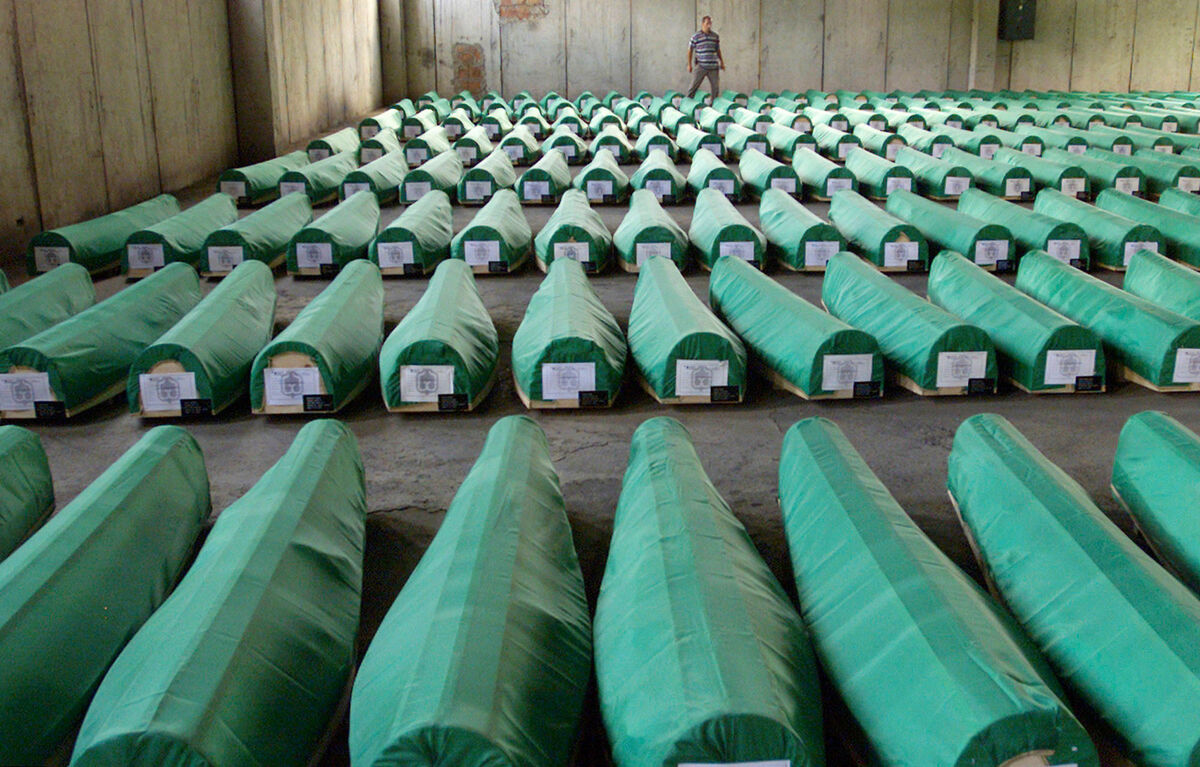
The men and boys would be separated from their families. More than 8,000 Bosniak Muslims would be murdered. Their bodies were bulldozed into mass graves.
Some were subsequently dug up and moved again in an attempt to conceal the crime.
The children got sweets. Their fathers and brothers got a bullet in the head.
This is what Mladić was.
He died on Thursday, aged 84, in UN custody in The Hague, serving the life sentence imposed upon him for genocide, crimes against humanity, and war crimes.
His forces had already spent years terrorising Sarajevo with artillery, mortars, machine guns, and snipers.
Around 10,000 civilians were killed during that siege.
At Srebrenica, a place the UN had promised was a “safe area”, Mladić’s forces completed the act that would make his name synonymous with European barbarism.
He even provided the commentary.
Entering Srebrenica, Mladić announced that the time had come for revenge against the “Turks”, reaching centuries backwards for an ethnic grievance with which to justify what was about to happen.
We understand that language now. We understand the dehumanisation and the collective punishment. We understand what happens when powerful people decide that the civilian population among whom its enemy exists has itself become the enemy.
Or at least we say we do.
Because something will happen following Mladić’s death that should make us profoundly uncomfortable.
The photographs will appear again. The skeletal bodies and the desperate mothers and the rubblized buildings.
Newspapers will publish thousands of words about the lessons of Srebrenica. Politicians will remind us of Europe’s shame.
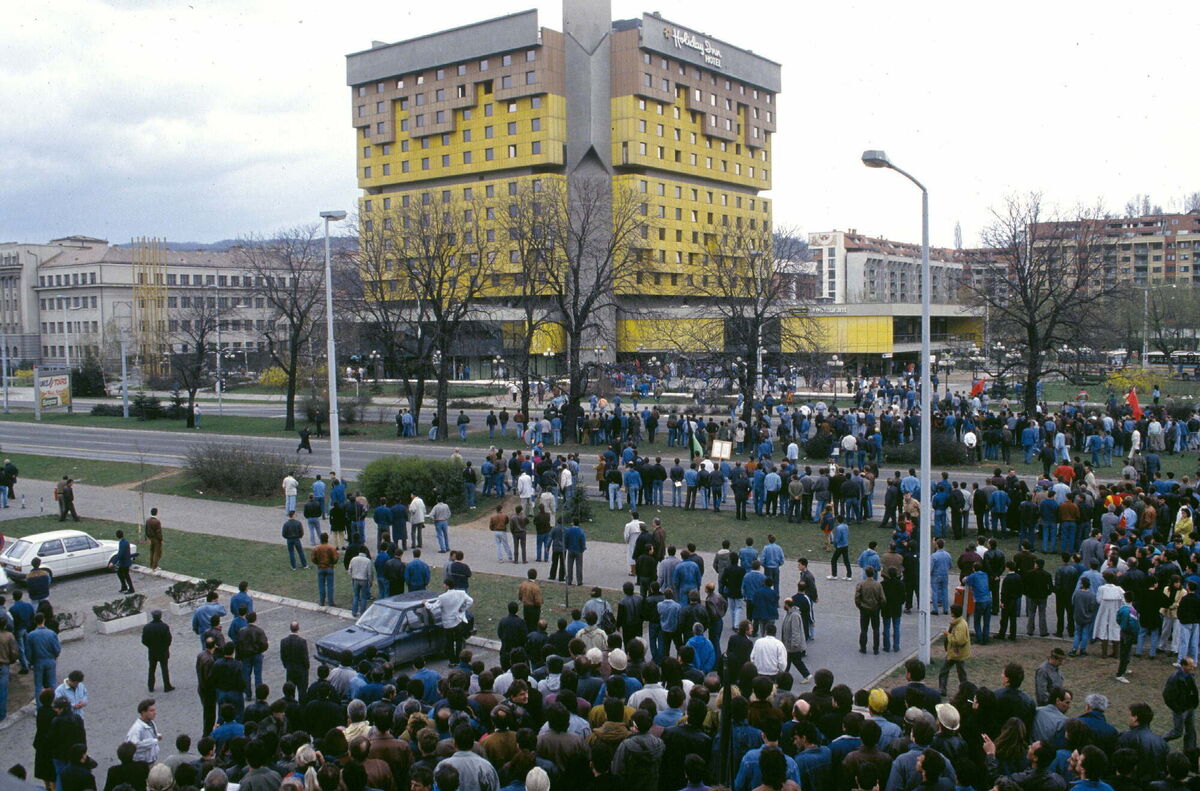
There will be solemn talk about man’s capacity for cruelty and the terrible consequences of allowing ethnic hatred to metastasise into extermination.
And somewhere among it all somebody will inevitably whisper those two most useless words in modern political history: Never again.
Then put the photographs from Gaza beside them. Do not caption them. Just look. Look at the skeletal bodies and the parents carrying dead children, themselves sniped in the head.
Look at the destroyed hospitals and the incinerated tents. Look at the rats, raiding the rubble, bodies that may never be discovered rotting underneath. Look at the mass graves.
Then tell me which century we are looking at.
That is what makes our remembrance of Mladić so grotesquely comfortable. We have learned to recognise atrocities perfectly, provided they happened long enough ago.
The photograph from Bosnia is evidence. Yet, somehow, the video from Gaza requires context. The dead Bosnian child indicts the man who killed him. The dead Palestinian child demands a “nuanced debate”.
Thirty years have passed since Srebrenica and this week a four-year-old Palestinian boy, Mohammad Abdel-Salam Taha, was killed after an Israeli air strike in central Gaza.
Another four-year-old was killed the following day. Ten-year-old Amal Abu Khater was shot in the back, according to her family and medics, while eating inside her family’s tent.
Read More
Two weeks ago we reached 300 children killed in Gaza in 300 days. All during a ceasefire.
That’s this month. Not 1995. And while we prepare our retrospectives about the savagery of Mladić, Israel has threatened further attacks on Gaza over the launching of balloons, drones, and kites.
Israeli defence minister Israel Katz said kites would be treated like drones even when they carried no explosives. Think about the obscenity of the chronology. We are remembering the children of Srebrenica while Palestinian children are still being targeted and killed as you read these words.
We are condemning the destruction of Sarajevo while Gaza lies in ruins. We are congratulating ourselves for understanding the dangers of dehumanising rhetoric after senior Israeli political figures have spent years telling us, openly, what they think of the people upon whom this violence has been inflicted.
Mladić invoked revenge on the “Turks,” Benjamin Natanyahu speaks of Amalek, and Yoav Gallant promised the “complete siege” of Gaza: “No electricity, no food, no fuel”, insisting Israel was fighting “human animals”.
And unlike Mladić today, the people responsible for the conduct of this war do not sit behind glass in The Hague.
They travel and meet presidents and negotiate trade deals. With Ireland. Their military is armed and supported by the most powerful country on earth.
And therein lies the actual lesson of Mladić: Not simply that he was evil. That is easy now. History has done all the heavy lifting for us. There has been a trial with evidence and a judgement. There has been a cell in The Hague.
We can look backwards and arrange everyone neatly into their assigned roles: Victims here, perpetrators there, cowards and appeasers somewhere in between.
But history does not feel like history while you are living through it. That is the part we apparently refuse to learn.
The people who commit atrocities do not necessarily live in bunkers or announce themselves as monsters.
They wear suits and hold press conferences and talk about security. They invoke ancient grievances. They describe entire populations as threats, then animals. They assure us that every hospital, school, refugee camp or apartment block contains an enemy.
And their allies tell us the situation is complicated, but Bosnia was complicated too. Until suddenly it wasn’t. Until the graves were opened and the bodies were identified and the testimony was heard. Until the footage was replayed and the men responsible grew old.
Then everything became wonderfully simple.
That is why I am less interested in hearing Western politicians tell me what they think of Mladić than in hearing what they are prepared to do about the atrocities taking place before their eyes.
Committed by Israel against the Palesenian people. Condemning yesterday’s war criminal costs nothing. The moral test is recognising today’s.
Perhaps in 30 years there will be commemorations for Gaza. Perhaps schoolchildren will be shown photographs of emaciated Palestinians and ruined hospitals and dead children with bullet holes in their skulls and ask how the world could possibly have allowed such a thing to happen.
Perhaps everybody will know the answer by then. Everybody always does eventually.
Mladić is dead. We do not honour his victims by congratulating ourselves for finally understanding what he was. We honour them by understanding what their photographs were trying to teach us.
Look at Srebrenica. Look at Gaza. And ask yourself why one is history’s warning and the other, even now, is something the West insists upon debating.

CONNECT WITH US TODAY



Be the first to know the latest news and updates