EU presidency is a chance for Ireland to finally start regulating Big Tech
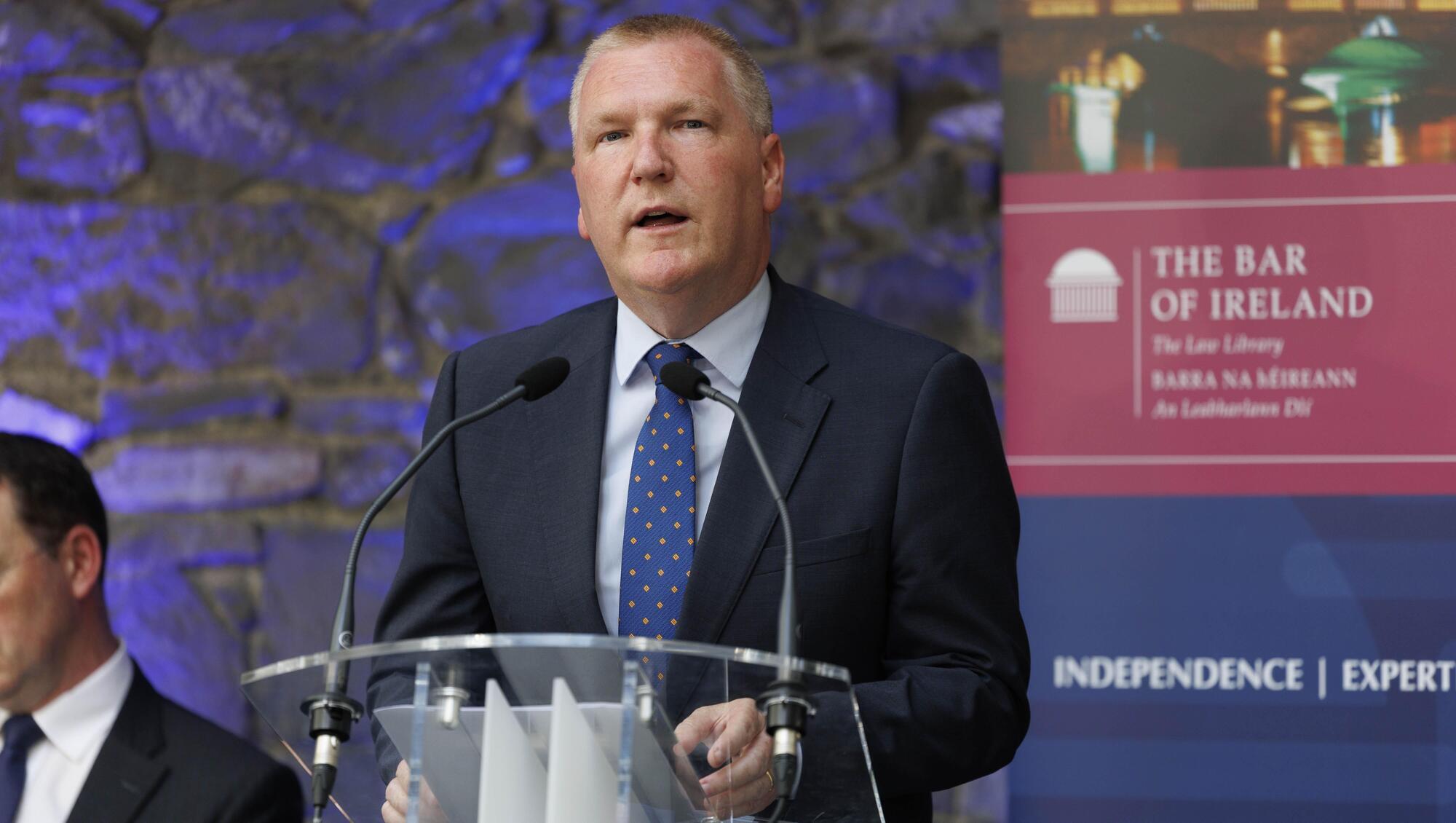
Michael McGrath, European commissioner for Democracy, Justice, the Rule of Law and Consumer Protection, has been given responsibility for overhauling consumer protection rules for the tech sector under the upcoming Digital Fairness Act. Picture: Conor McCabe Photography
While the national mythology of the Celtic Tiger eulogises the corporate tax regime, policymakers in other European capitals have long traced Ireland’s growth miracle to a more cynical source: our soft-touch policing of the US multinational companies that make Ireland their EU base.
Amid intense pressure from EU counterparts and institutions, successive Irish governments have worked hard in recent years to alter this perception. Money and political will have been deployed to demonstrate that Ireland takes seriously its responsibilities to regulate multinationals on behalf of Europe.
The ongoing presidency of the EU — the first Ireland has hosted in over a decade — is an acid test of how far the country really has come in its approach to policing multinationals. Ahead of a busy autumn of contentious negotiations on digital regulation, officials in Brussels, Berlin, and Paris are watching with bated breath.
The now-infamous 2005 dispatch from the , which described the IFSC as the "Wild West of European finance", captured the growing unease in European policy circles at Dublin’s role as the single point of failure for EU financial services regulation.
The office blocks of the financial district — and the letterbox companies that were housed within them — served as a visual representation of the government’s tolerance of dodgy international finance.
By the mid-2010s, the much-maligned data protection commissioner had come to serve as a more striking spatial symbol of Ireland’s apparent disinterest in enforcing EU regulations.
Read More
The watchdog, tasked with securing the data protection rights of all EU citizens against global behemoths like Google and Microsoft, was to be found unglamorously housed beside a Centra twice its size in Portarlington. A minor detail perhaps, but one which only heightened concern among an already sceptical European regulatory community that Ireland was not serious about policing the companies under its jurisdiction.
Faith in Ireland’s regulatory commitment reached its nadir in the early 2020s, during the negotiations to finalise the EU’s online safety rulebook, the Digital Services Act.
Eager to ensure that Dublin’s soft-touch policing of tech companies would not compromise the rules’ effectiveness, fellow member states voted to strip Ireland of its privileged position as the fulcrum of European tech supervision and to hand those powers to the European Commission instead. An unprecedented and very public humiliation.
Cue long-overdue reflection within government buildings about Ireland’s stock in the EU and the sustainability of light-touch regulation. Fortuitously, this reflection came just as the UK’s exit from the EU was necessitating a broader recalibration of Ireland’s alliances and engagement within the bloc.
Money, and crucially political will, were deployed to shore up and reform Ireland’s reputation for regulation.
Fast forward to today, and some positive effects of that effort can be seen. Senior-level governance of the Data Protection Commission has been reformed and government has steadily — if not lavishly — increased the supervisor’s budget. In Coimisiún na Meán, Ireland boasts an online safety watchdog that is the envy of Europe.
And as if keen to emphasise that the transfer of online safety regulatory responsibilities from Dublin to Brussels was unnecessary, the regulator has wasted no time in launching a slew of investigations into the very tech companies that for so long could rely on an easy ride from Dublin.
This effort has not gone unnoticed in the corridors of EU power, and it has helped restore the trust needed for Ireland to play a greater leadership role in Brussels’ tech policymaking.
An Irish official (Anthony Whelan) has recently been chosen to lead the European Commission’s enforcement of digital competition rules, while Michael McGrath, the Irish commissioner, who has been given responsibility for overhauling consumer protection rules for the tech sector under the upcoming Digital Fairness Act.
But Ireland’s improved standing faces a critical acid test. Having formally assumed the rotating presidency of the EU Council in July, Ireland faces the real business of steering the ship of the bloc on everything from the war in Ukraine to migration policy from this month.

Under its presidency, European counterparts expect the Irish government to deliver policy consensus on several contentious digital regulations that pit the interests of EU citizens against those of the multinational tech companies long seen in government and the civil service as beyond reproach.
From protecting children from the harms of addictive social media to protecting SMEs from the alarming rise of genAI-orchestrated cyberattacks, Ireland will be guiding an EU policy trend that is heading inexorably towards ever greater regulation of the tech sector. If the government takes its role seriously, the tech multinationals are likely to feel pain from a source they long counted on to defend them to the hilt.
Officials from across the EU will return to Dublin this month for a new round of presidency programming, hoping that the government will cement its newly improved standing on tech regulation.
Admittedly, not everyone retains that hope. In July, 60 leading academics signed an open letter calling for the government to take the extraordinary step of recusing itself from all negotiations concerning digital policy during the presidency, alleging that the country’s reliance on big tech companies creates "insurmountable conflicts of interest" with its Presidency responsibilities.
When it comes to policing multinationals, Ireland’s reputation has turned a corner in recent years. Over the next few months, the government has a golden opportunity to condemn to the history books those painful accusations that our economic growth and prosperity are unfairly built on a foundation of soft-touch regulation.
- Owen Bennett is a fellow at the Hertie School Centre for Digital Governance owenbennett.eu

CONNECT WITH US TODAY



Be the first to know the latest news and updates