Russia is escalating from hybrid threats to 'kinetic' attacks on Europe, EU ministers hear
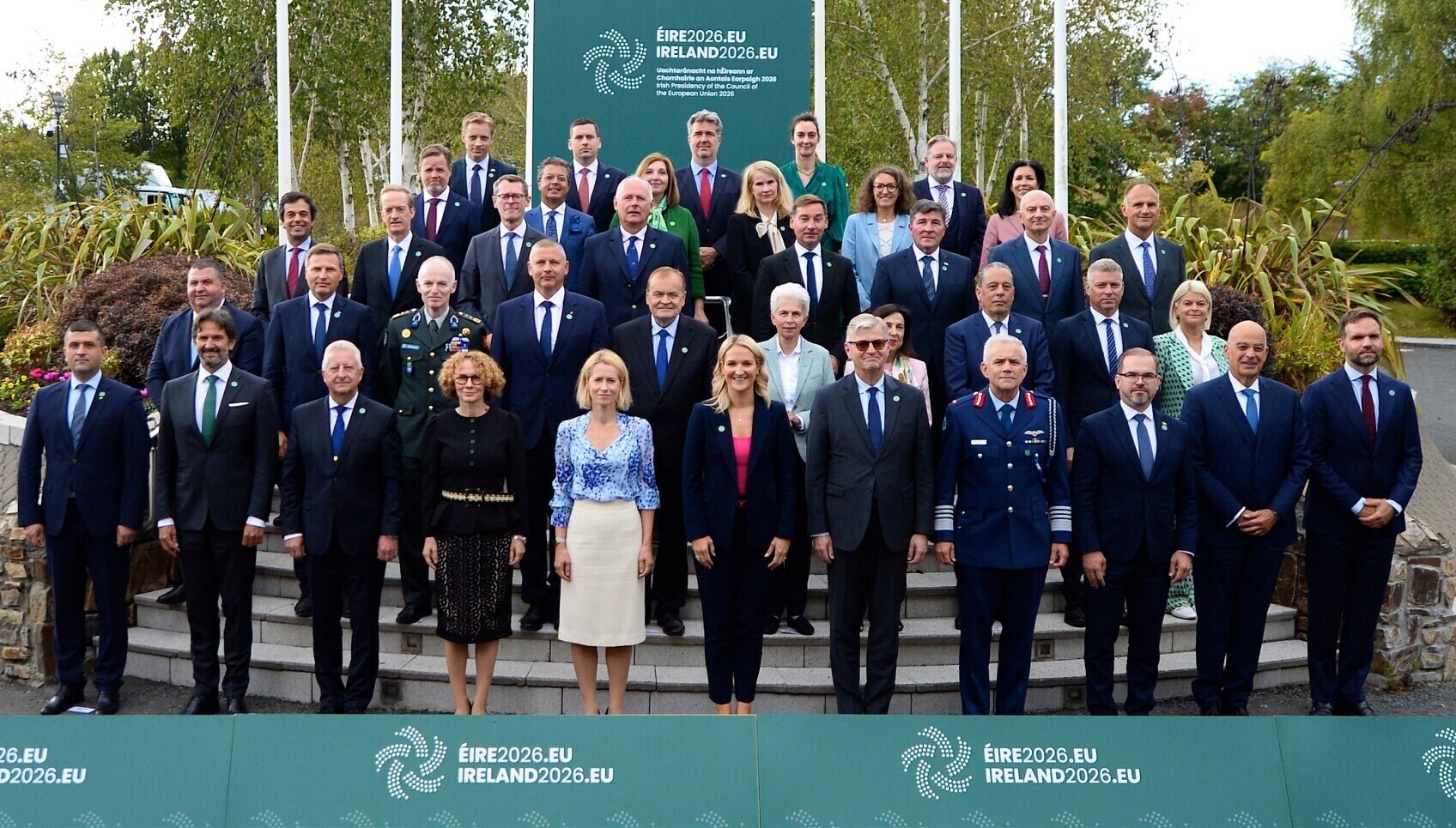
Defence minister Helen McEntee next to EU diplomatic chief Kaja Kallas front and centre of the group at the EU defence ministers' informal meeting in Co Wicklow. Picture: Ireland2026eu/PA
Russia has moved from posing hybrid “threats” to Europe to carrying out hybrid “actions”, defence minister Helen McEntee has said.
Speaking at the EU defence ministers' meeting in Co Wicklow, Ms McEntee announced that the Government is providing €10m towards the construction of a “combat training” centre in Ukraine.
Flanked by EU diplomatic chief Kaja Kallas, the minister cited air and land incursions in the last 24 hours in Romania, Latvia, and Estonia, and, last month, in Germany.
Ms Kallas said that Russia’s attacks in Europe are increasingly “kinetic”, or physical, and that Russia was “testing us all the time”.
She said the EU “really needs to respond” and that was one of the reasons why she was establishing a high-level expert group — to determine “how to respond to these types of attacks”.
The EU, along with member states and the UK, are increasingly identifying Russia as being behind various hybrid attacks, including drone and plane incursions, arson attacks and acts of sabotage, cyber attacks and attempted assassinations.
Ms McEntee said the threat to Europe is not just about Russia’s war in Ukraine: “We are not just talking about hybrid threats; we are starting to see threats materialise.
"As recently as the last 24 hours, we’re starting to see our colleagues in Romania, Latvia, and Estonia, and Germany speaking of incursions into their own airspace and also into their own land domain.
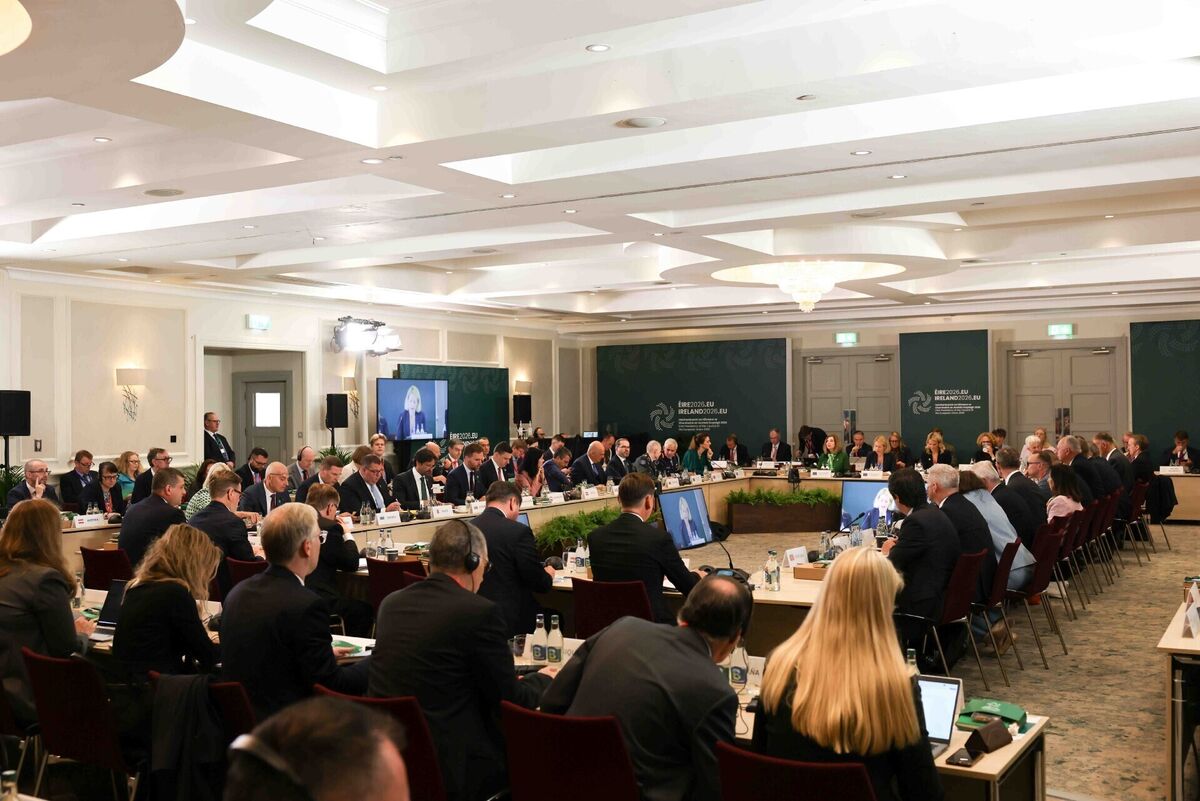
“It’s absolutely essential, when we talk about supporting Ukraine, at home here in Ireland, that we remind people — I don’t think they need reminding — that we are talking about all of our security. We are talking about national security and keeping people safe, and that is by ensuring support for Ukraine and [keeping] pressure on Russia.”
Read More
The minister added: “We’re not just talking about protecting the people of Ukraine, we are talking about protecting the people of Europe and indeed Ireland. I think it’s understood by people of Ireland, but it is important we get that message across: It is not just a threat — these are actions we are starting to see occur in Europe and EU member states, so we need to work together.”
Ms McEntee announced that, as part of the €125m package for Ukraine announced by Taoiseach Micheál Martin last July, €10m of this would go towards the construction of a military training centre.
She said that with €3m coming from Denmark, this will allow Ukraine to progress what is “a critical piece of infrastructure for them in their combat and in their training priorities at the moment”.
EU Military Assistance Mission in support of Ukraine (EUMAM Ukraine) is described by the EU as being aimed at “strengthening the capacity of the Ukrainian Armed Forces to defend Ukraine’s territorial integrity”.
On Ukraine, EU diplomatic chief Kaja Kallas said July and August had been the “deadliest months for the civilians” as a result of Russian missile and drone attacks on cities across the country, including its capital Kyiv.
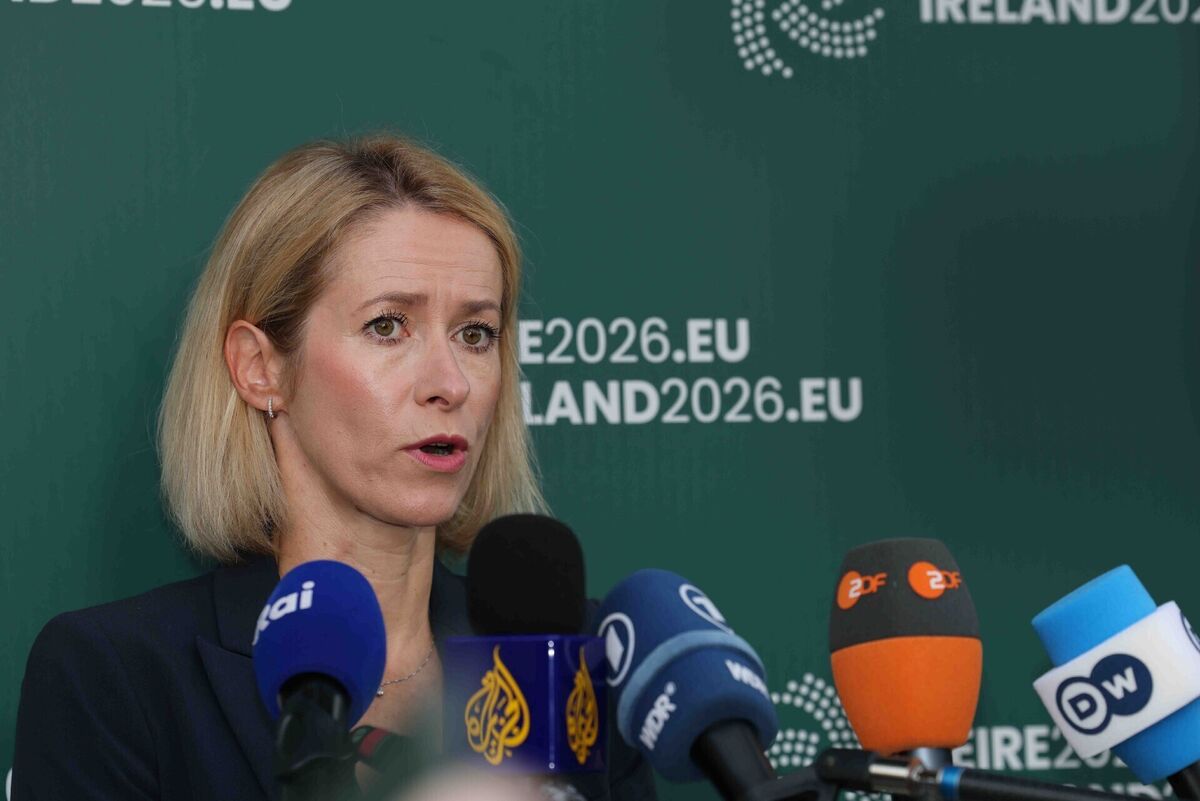
“Russia is really escalating to hurt the people of Ukraine as much as possible to break them,” she said.
The EU foreign policy chief said Russia was “more ruthless and destructive” but that the army was getting “bogged down” and relying more on “killing civilians from the skies”.
She said the “main issue is air defence” for Ukraine.
“They are lacking interceptors,” Ms Kallas said. “We know that some of the countries have interceptors that will expire soon. So, it would be very good if those would be given to Ukraine so that they can use them to protect their people.”
Ms McEntee said that more than 400 Ukrainian civilians were killed in July in air attacks by Russia and that there was “continuing, unwavering” support for Ukraine, both militarily and politically.
The minister said financial support for Ukraine was also critical, not least coming into the winter months. Russia this week threatened intensified attacks on the country’s energy infrastructure.
In addition to EU defence ministers attending the day-long event, Minister of Defence of Ukraine Yevhenii Khmara joined the meeting online.
The event was also attended by Nato deputy secretary general Radmila Shekerinska.
Ms Shekerinska spoke on Monday at the Dublin-based Institute of International and European Affairs, where she said it was “rational” for European countries to increase spending on defence investment because of the increasing threat from Russia.
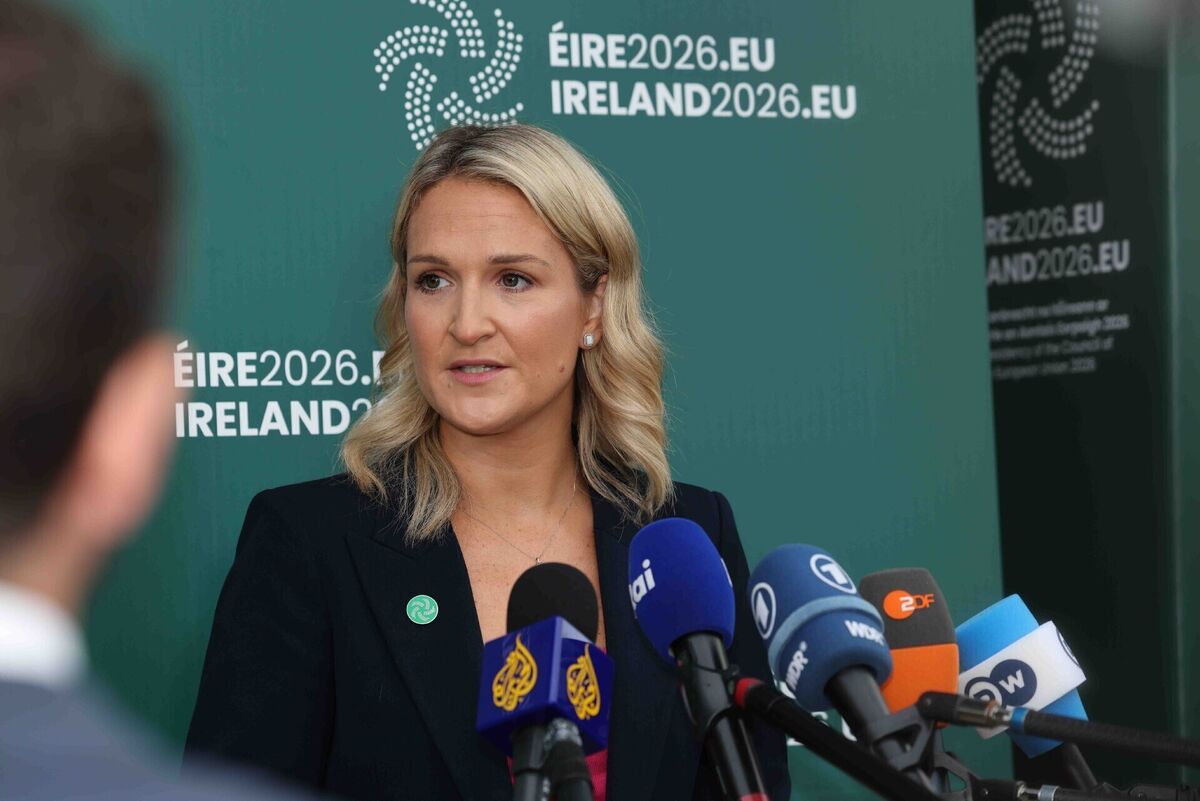
Gardaí and Defence Forces ran a significant security operation for the event, with the Defence Forces counter-drone technology visible at the event and Air Corps planes and helicopters circling regularly. The elite Army Ranger Wing was also thought to be nearby.
The Irish Naval Service patrol vessel the LÉ Samuel Beckett could be seen patrolling off the coast, supported by a British Royal Navy warship positioned outside Irish territorial waters.
As well as a significant uniform and plainclothes presence, the Garda ERU’s ‘Stoof’ Armoured Tactical Truck, purchased from Germany last year, was also positioned at the hotel grounds.
Both Ms McEntee and Ms Kallas were questioned repeatedly by international and national media about Ireland’s contribution to defence.
Asked about Ireland’s contribution to maritime security, given it had the lowest defence spend in the EU, Ms Kallas said: “We will discuss maritime security, and as you say, it is a great concern for all of us because there are cables that are underneath the sea and that are really affecting the everyday lives of people.
“So, of course, the member states are making different contributions to defence. It very much depends on whether they feel that the threat is real or not. I think we have seen all the news that the threat level has risen. It also requires contributions from everybody, so that we would be stronger together.”
Asked if Ireland is doing enough, she said: “Well, I have not looked into the island's budget to be the judge.” Told it was 0.2% of GDP, she said: “Well yes, yeah.”
Responding to the presence of the British navy outside Irish territorial waters to assist Ireland in providing military security for the EU presidency, Ms Kallas said: “Well, of course we know that Ireland is a neutral country, and that is why also the defence spending has been lower, and it is also clear that you [Ireland] have much better neighbours than some of the other European countries have.”
She added: “We have, as the European Union, good cooperation with the United Kingdom, and I think we are also very like-minded partners. We see the UK minister also joining us tonight and tomorrow, so we can discuss what more we can do on topics that concern all of us.”
Responding to questions on this and whether Ireland was doing enough, Ms McEntee said: “What I can assure people is that our funding will continue to increase. We have increased our budget by 43% in the last four years alone, and we are having discussions as we speak about our budget [for 2027].”
She said European countries can be assured that both she and the Irish Government as a whole are committed to increasing defence spending.
The minister said Ireland was also committed to increasing its cooperation with member states, including in the area of maritime security and technology.
Asked about the fact that Ireland’s security for the EU presidency involved naval and air support from the likes of France and Britain, she said: “I won’t get into security details, but what I can say is we have a significant security operation in place.” She said Gardaí were being supported by the Defence Forces and that they have been in contact with international colleagues for many years on security matters and that Ireland was “no different” than any other EU country in that regard.
Ms McEntee added: “We are investing significantly in having a new military radar. We are investing significantly in counter-drone technology, which you can see in operation. We are also investing in our maritime space.”
Questioned about the violence against Palestinian farmers in the West Bank by Israeli settlers, Ms Kallas said: “These videos that are coming from the West Bank and the violent settlers are extremely disturbing, and all the member states have condemned those attacks. But the question, of course, is what more can we do?” The EU diplomatic chief said there were some member states that have proposed that they should ban trade with settlements.
“So far, we do not have a concrete proposal that the member states can discuss, and we also know that not all member states are on board. We need the qualifying majority to go ahead. Clearly, a strong action would be something that would send a clear message.”
She said countries against taking action might explain their positions: "There are member states that have different views, and that is why we have not been able to move forward.”
Ms McEntee said the actions over the summer showed that “the Israeli Government are going in the wrong direction”, and that there was a “need to respond effectively” to the problem.
She said Irish legislation banning trade with the settlements was due to come into effect soon and that the EU “should collectively respond in a similar way”.
The meeting also discussed the possibility of any potential future EU-led military mission in Lebanon after the UN mission UNIFIL, which Ireland is part of, ends in December.
Ireland's involvement in an EU mission is currently blocked by the Triple-Lock, which requires a UN-mandate. Legislation to remove the bind on Ireland's overseas missions has been delayed to the next Dáil term, but the Government appears determined to try and pass it through all stages speedily.
- Cormac O’Keeffe, Security Correspondent

CONNECT WITH US TODAY



Be the first to know the latest news and updates